What is Ecosophy?

Manola Antonioli

— École nationale d’architecture Paris La Villette (France), LAA – UMR 7218 LAVUE CNRS — Contact: antonioli.manola@wanadoo.fr

Published: 2018-10-01

Parts of this article were published in Manola Antonioli, “What is Ecosophy?”, in Constantin V. Boundas, Schyzoanalysis and Ecosophy (London: Bloomsbury, 2017).
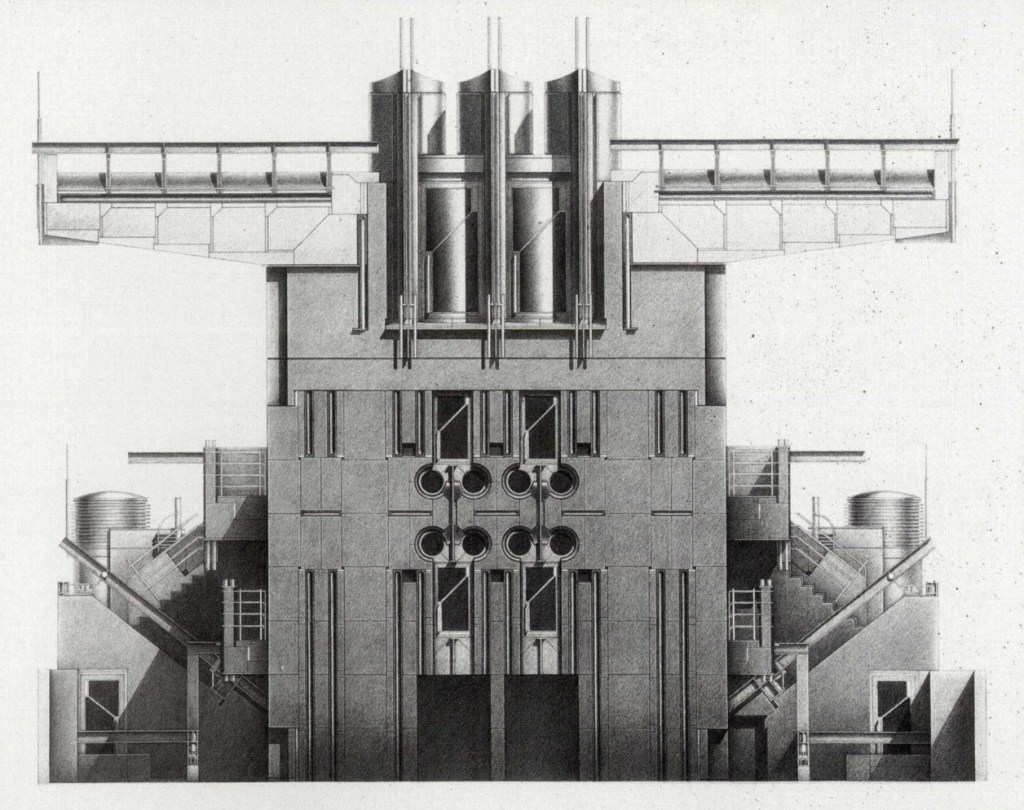
Shin Takamatsu, SYNTAX, 1990

The term “ecosophy” appears almost at the same time (without precise knowledge of the influence between the two schools of thought) in the work of the Norwegian philosopher Arne Naess and Félix Guattari1:

“Ecosophie” est composé du préfixe”éco-” que l’on trouve dans “économie” et dans “écologie”, et du suffixe “-sophie” que l’on trouve dans “philosophie”[…] La sophia n’a aucune prétention scientifique spécifique, contrairement aux mots composés de logos (“biologie”, “anthropologie”, “géologie”, etc.), mais toute vue de l’esprit dite “sophique” doit être directement pertinente pour l’action […] La sophia signifie le savoir intuitif (acquaintance) et la compréhension, plutôt que la connaissance impersonnelle et abstraite2. [“Ecosophy” is composed of the prefix “eco-” that is found in “economy” and “ecology”, and of the suffix “-sophy” that is found in “philosophy”[…] The sophia has no particular scientific claim, unlike logos compound words (“biology”, “anthropology”, “geology”, etc.), but any “sophic” standpoint must be directly relevant to action […] Sophia indicates intuitive knowledge (acquaintance) and understanding, rather than impersonal and abstract knowledge.]

The prefix “eco” also refers to the Greek oïkos, which stands for house, household, habitat and, by extension, our environments. Based on the suffix sophia, Guattari then described ecosophy as a complex ethico-political articulation (one might add, as we will see, aesthetico-philosophical) “between the three ecological registers (the environment, social relations and human subjectivity)3”. In a recent book, entitled Pour une écologie de l’attention, the Swiss intellectual Yves Citton deserves credit for drawing attention to the common fundamental orientation of these two approaches to ecosophy: “the necessary concatenation of several primarily interdependent levels” and the “core understanding that individuals do not pre-exist the relations that shape them4”, which is also a fundamental statement of the Deleuze-Guattari philosophy:

“Relationism has an ecosophical value because it dispels the belief that entities or people can be isolated from their environment. Talking about interaction between entities and their environment leads to misconceptions, because an entity is an interaction5”.

In opposition to the standardized discourse about “sustainable development”, which emphasizes (often in a sanctimonious and guilt inducing manner) the relations between “individuals” and their environment, ecosophy (especially in its Guattarian variant, which I specifically refer to here) draws our attention to the plurality of ecologies, environments, habitats, that do not “surround” us as a container would envelop its contents, but that define us and that we constantly define and reconfigure in a network of relations.

First of all, we need to emphasize the plurality of ecologies. On the one hand, there is a “managerial6” ecology that aims to save our resources and reduce the environmental impact of our modes of production and consumption. Its purpose is to extend (in a supposedly more “durable” and “sustainable” way) the same lifestyles and modes of production adopted by the western world since the successive industrial revolutions, with the goal of spreading them to so-called “emerging” countries. In this “green capitalism” or “eco-business” we can see no questioning of the purpose and need for the market production of material or immaterial goods (such as knowledge and culture), no real environmental wisdom (sophia), but rather a last attempt (that we now know is inevitably doomed to failure) to save the economic system and the values associated with the ideals of “development” (regardless of whether they are sustainable or not), “growth”, “consumption”.

Another ecology, more radical, from which ecosophy stems, considers that “the ecological crisis refers to a more generalized social, political and existential crisis” and that it cannot be solved by ad-hoc measures to safeguard natural environments. According to Guattari, the political, social and economic issues today, elude more and more “party politics” and require the reforming of social practices that are better suited to local based and global planetary problems. This perspective is not only about transforming the context of traditional capitalist economy in a “sustainable” way, but also about developing alternative “life conditions” that allow us to escape the “not only unsustainable, but also unwanted nature of a development system that encourages the ‘fabrique de l’infélicité’ [manufacture of infelicity]7”. This project, on a global scale, implies promoting any new practices (slowing down, short cycles, pooling knowledge and creativity, downsizing, new production and consumption paradigms) that allow us to “enhance the links to each other and to our environment8”.

According to Guattari, environmental awareness does not only concern natural environments, built areas or physical territories, but also the reinvention of individual or collective “existential territories”, in accordance with the intrinsic link between humanity and the biosphere, both depending on the increasingly more complex “technosphere” which surrounds them. This global shift in the purposes of human activities largely depends on the evolution of cities (where a large percentage of the global population is living), as Guattari tries to demonstrate in his essay entitled “Pratiques écosophiques et restauration de la cité subjective [Ecosophic Practices and Restoration of the Subjective City]9”.

Around the world, urban areas look more and more like an “archipelago of cities”, whose components are connected by all kinds of flows and networks, a scattering of deterritorialized world-cities. This global networking of urban areas has, on the one hand, homogenised the equipment, communication and transportation means, lifestyles and mindsets of globalised elites, on the other hand, it has exacerbated differences between habitat areas. The old centre-suburb structure has been deeply transformed and gave rise to a three-way segmentation between over-equipped and over-connected urban areas, lacklustre middle-class residential areas, and increasingly more prevalent poverty belts all over the world (Major European cities suburbs, slums or favelas in South America and Asia, homeless people found in the streets and parks all over cities in so-called “rich” countries). Deterritorialization of advanced capitalism has produced, at the urban level, a generalized reterritorialization based on polarization: rich/poor, integration/disintegration.

According to Guattari, the answer to these problems goes far beyond the fields traditionally assigned to architecture, urban planning, economy, to engage a large number of socio-political, ecological, ethical and aesthetical practices and reflexions. Therefore we cannot separate the problems related to physical infrastructure, communication, transportation and services provided by “existential” functions in urban environments. The urban phenomenon is at the heart of economic, social, ecological and cultural issues, and, as such, cannot be reduced to the matter (though still essential) of new construction techniques and the introduction of new materials that help combat all forms of pollution and nuisances.

Guattari then suggests that future urban renovation programs systematically involve, for the purposes of research contracts and social experimentation, not only architects, urban planners, politicians, but also social sciences researchers and more importantly future inhabitants and site users. The goal is then to anticipate, by a collective approach, the evolution of the built framework, but also new lifestyles (neighbourhood practices, education, culture, sports activities, transportation, children or elderly care, etc.):

“Ce n’est que dans un climat de liberté et d’émulation que pourront être expérimentées les voies nouvelles de l’habitat, et pas à coups de lois et de circulaires technocratiques10 [Only in a climate of freedom and emulation can new habitat approaches be experimented, and not through laws and technocratic bulletins].”

Architects and urban planners are thus asked to become “polysemic and polyphonic artists”, not working in universal contexts, intended to be reconfigured in response to so-called basic needs that are defined once and for all (as in urbanism and modernist architecture), even if these needs are now expanded to integrate the requirements for environment preservation, “comfort”, “well-being” or inhabitants’ health. Projects that wish to initiate an ecosophical reconversion will have to push for the development of new aesthetical, ecological and social living paradigms, based on singularities defined by collective procedures of analysis and dialogue.

Still within the framework of French political and philosophical ecology, André Gorz repeatedly uses the adjective “ecosophical”, in his book Misère du présent. Richesse du possible11, referring explicitly to Félix Guattari in a chapter devoted to the necessary mutations of the city of the future and by mentioning the Guattarian proposal of “Cité subjective [subjective City]”. According to Gorz12 a new urban policy is also necessary for an alternative society project to take hold: through the organization of social space and activities, landscaping, equipment, sites that can be made available to the inhabitants, “la politique de la ville appelle les auto-activités à se développer, leur en donne les moyens, les reflète à elles-mêmes comme étant non pas des improvisations éphémères ni des palliatifs subalternes adoptés faute de mieux, mais bien ce qu’une société qui demande à naître attend de tous et de chacun : projet commun proposé à tous, porteur de liens sociaux nouveaux13. [city policy calls for auto-activities to grow, gives them the means to do so, reflects them back not as ephemeral improvisations or sub-par palliatives used for lack of a better solution, but as what an emerging society expects from each and everyone: a common project for all, ready to create new social connections.]”

Strangely enough, most current urban conversion projects seem to ignore or underestimate the importance of the collective demand for a new “urban nature” which is expressed in practices as diverse as the proliferation of public parks and shared vegetable gardens, guerilla gardening, permaculture or urban culture, the function of landscape, artistry, research on urban biodiversity14 . The introduction of living organisms is generally limited to plants, more for their aesthetical function than for their ethical, social and political importance, whereas the presence of animals in the city15 is rarely taken into account.

In many works, the geographer Nathalie Blanc emphasized on several occasions the need to rethink urban and rural, city and nature categories in regards to their role in the built and non-built environment, in our social and political performances and to renounce the ingrained environmental notion of “rural”, “virgin” or “untamed” nature, when our lives are ever more rooted in cities:

“C’est là qu’il y a besoin d’un réaménagement des catégories. [this is where categories need to be redesigned]. Ce qui ne veut pas dire faire l’impasse sur la “nature rurale” ou la “nature sauvage”, bien sûr, mais repenser leur place en l’articulant avec celle de “nature urbaine”[…] Et c’est là un vrai enjeu intellectuel. Il faut l’affirmer avec force16. [Which, of course, does not mean overlooking “rural nature” or “untamed nature”, but to rethink their place together with “urban nature”[…] That is the true intellectual issue. It needs to be strongly stated].

Calls for “urban nature” and real “landscaping projects”, a search for new common spaces, participatory approaches, based on dialogue and appropriation (not reducible to the concept of “property”) now emerge as some of many leads to an “ecosophical” city and the assertion of the need for a sharing of the sensitive, where environmental criteria are taken into account as part of a political and wider aesthetical project.

Topics

The section Écosophies of the European Journal of Creative Practices in cities and Landscapes, looks for contributions that challenge the speculative and practical dichotomy, approaching the issue of the city, its environment and the mental life of its inhabitant as a “nomad science”. A nomad science does not proceed through universal assumptions, nor through practical bureaucratic or policy-oriented prescriptions. Rather, Ecosophy follows an ethico-aesthetic paradigm, based on a sensitive dimension, operating by affects and singularities.

The section calls for contributions in the following topics:

Non-managerial practices and alternative life conditions. Beyond the paradigm of the “sustainable development” that wishes to salvage the existing model of production and consumption, what are the practices that truly challenge it? Beyond the universally valid concepts of “innovative”, “sustainable” or “participative”, can we think of practices that produce alternative forms of organisation and territorialisation?

Culture and the aesthetic paradigm. Ecosophy calls for what Félix Guattari has defined an ‘aesthetic paradigm’. In this case, ‘aesthetic’ should not be understood as the specific field of art, reserved to a select few, but more generally in the etymological sense of aesthesis, sensitivity, sensitive dimension, operating by affects and singularities, a basis for any ‘minor’ science. In a broader sense, is it possible to understand culture as a set of aesthetic practices through which we express individual and collective subjectivities?

Technologies for the subjective city. Félix Guattari opposed the utopia of the “Celestial Jerusalem” with the possibilities of the “subjective City”, in which the sad deterritorialisation of life under capitalism, and its false antidotes in nationalism and religious fundamentalism are challenged by an existential nomadism in which we reapproriate different lines of “machinic, communicational and aesthetic deterritorialisations.” What are the tools to activate these processes of subjectivation? How does the role of professional figures—architects, urbanists, psychologists, sociologists, etc.—change vis-à-vis the challenges posed by the subjective city?

Écosophies, power and knowledge. Guattari’s Three ecologies was published posthumous in 1995. Today, some of the radical ideas contained in it such as participation, urban nature, common space, gender inclusiveness, etc., have become —at least formally—integral part of many cities’ policy guidelines, and incorporated in research project and university courses. What is the relation between Ecosophy and the other “royal sciences”? What are the power relations involved in the capture of Ecosophy by the apparatuses of city government?

References

Antonioli, Manola (ed.). Machines de guerre urbaines. Paris: Editions Loco, 2015.

Berardi, Franco. “La fabrique de l’infelicité.” Multitudes, 8 (March-April 2002).

Blanc, Nathalie. Les animaux et la ville. Paris: Odile Jacob, 2000.

— — —, “Environnements naturels et construits : une liaison durable”, in Afeissa, H.S. (ed.), Ecosophies, la philosophie à l’épreuve de l’écologie. Bellevaux: Editions MF Dehors, 2009.

Citton, Yves. Pour une écologie de l’attention. Paris: Seuil, 2014.

Gorz, André. Misères du présent. Richesse du possible. Paris: Galilée, 1996.

Guattari, Félix. Les Trois écologies. Paris: Galilée, 1989.

— — —. The Three Ecologies. London and New Brunswick, NJ: The Athlone Press, 2000.

— — —. Qu’est-ce que l’écosophie? Textes agencés et présentés par Stéphane Nadaud. Paris: Lignes/IMEC, 2013.

Naess, Arne. Écologie, communauté et style de vie. Paris: Dehors, 1989.

— — —. Ecology, Community and Lifestyle. Cambridge: Cambridge University Press, 2009.

  1. Arne Naess, Écologie, communauté et style de vie (Paris: Dehors, 1989); Félix Guattari, Les Trois écologies (Paris: Galilée, 1989) and Qu’est-ce que l’écosophie? Textes agencés et présentés par Stéphane Nadaud (Paris: Lignes/IMEC, 2013). [Available in English: Arne Naess, Ecology, Community and Lifestyle (Cambridge: Cambridge University Press, 2009) and Félix Guattari, The Three Ecologies (London and New Brunswick, NJ: The Athlone Press, 2000).

2. Arne Naess, Écologie, communauté et style de vie, p. 72. (quotes translated from the French edition).

3. Félix Guattari, Les Trois écologies, p. 12-13. / Félix Guattari, The Three Ecologies, p. 28.

4. Yves Citton, Pour une écologie de l’attention (Paris: Seuil, 2014), p. 45. (quotes translated from the French edition).

5. Félix Guattari, Qu’est-ce que l’écosophie ?, p. 33 and p. 66. (quotes translated from the French edition).

6. Yves Citton, Pour une écologie de l’attention, p. 156. (quotes translated from the French edition).

7. Ibid. , p. 157. Yves Citton borrows the expression “fabrique de l’infélicité” from an article bearing this title by Franco Berardi (Bifo) published in issue 8 of the Multitudes periodical (March-April 2002).

8. Ibid. , p. 156.

9. Ibid. , p. 31-58.

10. Ibid. , p. 52.

11. André Gorz, Misères du présent. Richesse du possible (Paris: Galilée, 1996).

12. Ibid. , p. 161-165.

13. Ibid. , p. 162.

14. Cf. Manola Antonioli (ed.), Machines de guerre urbaines (Paris: Editions Loco, 2015).

15. Cf. Nathalie Blanc, Les animaux et la ville (Paris: Odile Jacob, 2000). (quotes translated from the French edition)

16. Nathalie Blanc, “Environnements naturels et construits : une liaison durable”, in Afeissa, H.S. (ed.), Ecosophies, la philosophie à l’épreuve de l’écologie (Bellevaux: Editions MF Dehors, 2009), p. 229. (quotes translated from the French edition).

Copyright © 2018 Manola Antonioli

This work is licensed under the Creative Commons BY License.

https://creativecommons.org/licenses/by/4.0/

Teaching climate change in the Anthropocene: An integrative approach

Robin Leichenko and Karen O’Brien

Department of Geography, Rutgers University, USA, and, Department of Sociology and Human Geography, University of Oslo, Norway

Original article: Anthropocene 30 (2020) 100241, http://dx.doi.org/10.1016/j.ancene.2020.100241

A B S T R A C T

Why are we still educating college and university students through a Holocene lens? How can we expect young people to engage with the transformative challenges required to meet the targets of the Paris Agreement when climate change education is organized in a narrow and linear fashion? Climate change courses and teaching modules largely emphasize scientific literacy through a focus on physical processes, documentation of rising emissions, and empirical evidence of a changing climate. Classroom explorations of responses to climate change are often limited to “business-as-usual” policy options, new technologies, and behavioral interventions to reduce emissions or promote adaptation. Such approaches make it difficult for students to recognize the social dimensions of climate change and to identify openings and entry points for sustainability transformations. This article argues that it is time to rethink climate change curricula within higher education and adapt it to the Anthropocene. We present an integrative approach to climate change education that focuses on humans as active and reflexive agents of large-scale systems change, incorporates economic, political, cultural, psychological, and emotional dimensions of the issue, and fosters active engagement with transformations to sustainability.

1. Climate change education for the anthropocene

Public awareness of humanity’s impact on the global environment has increased dramatically over the past several years. Growing recognition of the gravity and urgency of the threat has led to a surge of concern and environmental activism among young people, as evident in the Fridays for Future climate strikes, climate marches, and expanding participation in organizations such as the Extinction Rebellion and the Sunrise Movement (Stuart and Gunderson, 2019). More and more young people recognize that they will experience the greatest impacts and bear the costs of adapting and implementing effective climate solutions. They are describing climate change as a “climate crisis” or “climate emergency” that requires immediate action.

Are colleges and universities adequately responding to this urgent challenge and preparing students to engage with the scope, scale, speed, and depth of the transformations that are called for? In particular, are they preparing students to meet the targets of the Paris Agreement and to reach the United Nations Sustainable Development Goals? Despite increasing recognition of the complexity of the problem and the need for transformative solutions, climate change education at the college and university level is largely organized in a narrow and linear fashion (Hindley and Wall, 2018). That is, climate change courses and curricular interventions primarily emphasize scientific literacy through a focus on physical processes, documentation of rising emissions, and empirical evidence of a changing climate. Classroom explorations of responses to climate change are often limited to “businessas-usual” policy options, new technologies, and behavioural interventions to reduce emissions or promote adaptation. As a result, students have difficulty recognizing social, psychological, and emotional dimensions of the issue, and often fail to see openings, possibilities, and entry points for active engagement with sustainability transformations.

In this contribution, we argue that it is time to recalibrate how we are teaching climate change within higher education and adapt it to the new proposed epoch, the Anthropocene. The Anthropocene denotes a period of pervasive human influences on global environmental systems (Steffen et al., 2015). Recognizing the Anthropocene means fundamentally rethinking our understanding of connections between humans and nature. It means seeing humans as active and reflexive agents of large-scale systems change, capable of responding with wisdom and foresight to reduce risk and vulnerability (Bai et al., 2016). It also means recognizing the political, economic, and cultural dimensions of climate change and drawing attention to the powerful actors, interests, and practices that shape uneven development policies and practices (Leichenko and O’Brien, 2019).

By adapting climate change education to the Anthropocene, we can engage students with positive and empowering frameworks that motivate critical reflection and action on the types of transformative responses needed to adapt and thrive.

2. Teaching climate change: an integrative approach

The Holocene epoch, which began 11,700 years ago, is often described as the time when environmental conditions enabled human civilization to develop and flourish (Steffen et al., 2004). During this epoch, humans began to transform the land, exploit minerals and other resources, and harness the energy of fossil fuels, releasing stores of carbon and other greenhouse gases into the atmosphere. The impacts of these environmental changes over the past centuries have been profound, leading many scientists to suggest that we are living in a new epoch, the Anthropocene (Chin et al., 2017). In this new proposed geological epoch, and particularly over the post-1945 period that Steffen et al. (2011) suggested as the Great Acceleration, humans have been under- mining the very conditions that have allowed them to thrive. The enabling conditions for human and non-human life are being transformed at a rate and scale unprecedented since the dawn of civilization, creating a multitude of challenges with respect to sustainability (Chin et al., 2017).

A shift from a Holocene to an Anthropocene perspective places society at the center of analyses of climate change, revealing how particular human-environment relationships and forms of societal organization are dramatically transforming the global environment (Lövbrand et al., 2015). Yet, most courses on climate change in higher education still approach the problem through a Holocene lens. This approach focuses on the ways that human activities are affecting different components of the Earth system (e.g., the biosphere, atmosphere, hydrosphere, and cryosphere). It recognizes that humans are experiencing and adapting to the impacts of climate and environmental change, but human activities are nonetheless framed as “external” stressors that are undermining “natural” systems. In other words, many climate change courses have not fully integrated the human and social dimensions of environmental change.

Below, we describe three axioms of an integrative approach to teaching climate change that can help prepare students for the challenges of the Anthropocene. We draw upon our own experiences teaching aspects of climate change for more than two decades within universities in the United States and Europe, as well as our recently published textbook, Climate and Society: Transforming the Future (Leichenko and O’Brien, 2019). Each axiom emphasizes a need for new ways of seeing and engaging with climate change in order to motivate transformative thinking and action.

Axiom 1. Worldviews, values, and emotions shape how we relate to climate change

An Anthropocene lens highlights interconnections between environmental and social facets of climate change and calls for an integrative approach to climate change education. Such an approach links climate change to underlying worldviews and beliefs about how humans relate to each other, to non-human species, to the natural world, and to the future. Recognition of these linkages is already occurring in some fields, for example in the acknowledgement of hybrid “socio-natures” in critical physical geography (Lave et al., 2018). Drawing attention to the ways that norms and values both reflect and influence social systems and human–environment relationships, an integrative approach requires awareness of assumptions and biases within different climate change discourses. Making norms and values explicit within classroom discussions can help students recognize those that are taken for granted, whether related to energy use, transport, food, or fashion. Why are meals with meat the norm in most cultures, rather than meals that are plant-based? Why are single-occupancy automobiles the dominant mode of transport in many places, rather than bicycles or public transportation? How are growing preferences for “fast-fashion” contributing to rising energy usage and climate change? Recognizing the influence of worldviews and values not only allows questioning of the perceived norms and “necessities” that contribute to high-energy lifestyles, but also opens opportunities for discussion of alternative ways of living and being.

Approaching climate change education from the perspective of the Anthropocene also means recognizing that emotions shape understandings of and engagement with the issue (Head, 2016; Ryan, 2016). Climate change has become an emotional issue for many students, and learning about observed environmental changes, scenarios for the future, and the implications for biodiversity, livelihoods, coastal communities, urban settlements, and health and well-being can lead to feelings of powerlessness, anger, fear, sadness, and grief. Students who have been directly affected by extreme events such as hurricanes or wildfires may experience both short and longer-term psychological and emotional impacts. Teaching about the emotional dimensions of climate change can help students relate to a wide range of feelings, and to explore how possibility, a sense of purpose, and constructive hope can motivate action (Ojala, 2012).

Recognizing the subjective dimensions of climate change is also vital for effective communication about the issue (Moser and Dilling, 2011). While presentation of evidence-based observations and datasets are useful for identifying causal relationships, patterns, and trends, research from the social sciences and humanities increasingly highlights the importance of narratives for engaging diverse audiences (Veland et al., 2018). Acknowledging the limits of traditional science communication can also open space in the classroom for exploring the role of art, film, literature, and music as effective means of connecting both intellectually and emotionally with the issue (Bostic and Howey, 2017). These forms of communication, which may entail use of art, video, or design, move climate change education beyond the realm of equations, graphs, and data, requiring a capacity to integrate different ways of knowing and relating to different viewpoints. By incorporating climate change in the context of the Anthropocene into the broader curriculum, educators can present fresh perspectives that help students see a wider range of solutions and entry points for critical engagement (Galafassi et al., 2018; Wodak, 2018).

Axiom 2. How we frame the issue of climate change influences the types of solution identified

Climate change is often perceived as an environmental issue best addressed through technical, managerial, and behavioural solutions implemented through climate policies and international agreements. Yet, other discourses and framings of the issue are also important to introduce into the classroom, as they draw attention to the many dimensions of climate change, as well as the diversity of solutions that are currently discussed and debated. A critical social framing, for example, highlights the role of power, politics, vested interests, and unequal economic and trade policies in driving greenhouse gas emissions. It also recognizes the legacy of colonialism, development policies, and inequalities based on factors such as gender, race, class, and indigeneity, which have marginalized groups of people and influenced their vulnerability and capacity to adapt to climate change. Such an approach questions assumptions about ever-increasing rates of economic growth, ever-expanding consumption, and rising levels of social inequality. It also considers how globalization and urbanization processes drive climate change and influence responses. By situating climate change within its dynamic social context, the critical social discourse draws attention to a wider range of responses that extend beyond environmental policies (Leichenko and O’Brien, 2019).

An examination of different discourses and framings of climate change can also help students make sense of climate change skepticism. Many students have family members, friends, or neighbors who hold different views on climate change. An awareness of the dismissive discourse helps students understand why actors who are heavily invested in fossil fuel industries or industrial agriculture may not take climate change seriously, and in some cases work against climate and energy policies. The dismissive discourse is not only about the denial of the science of climate change. It also includes those who accept the science but dismiss or minimize the importance of climate change relative to other pressing social and economic issues. The dismissive discourse likewise relates to those who express concern about climate change but fail to take action, underestimating their own capacity to influence change (Norgaard, 2011).

Recognizing multiple discourses and perspectives on climate change also brings out the many significant dimensions that need attention within climate change curricula. These dimensions include the political, economic, cultural, emotional, and ethical, which draw upon research and knowledge from the social sciences and the environmental humanities (Bostic and Howey, 2017). Incorporating history, language, literature, philosophy, economics, politics, and geography into climate change education can provide students with broader and deeper understandings that enable them to integrate and contextualize the problem, while at the same time highlighting the many ways of engaging with climate change activism (O’Brien et al., 2018).

Axiom 3. Transformations to sustainability are possible and already underway

Recent reports of the IPCC (2018, 2019) identified multiple pathways to achieve sustained emissions reductions. These reports also documented a variety of strategies for adaptation intended to decrease vulnerability to climate change impacts and build resilience. Yet, neither mitigation nor adaptation will be sufficient for thriving in the Anthropocene. The notion that successful responses to climate change will require transformative action is increasingly recognized (IPCC, 2018; TWI2050, 2018TWI2050, 2018). Many questions remain, however, about what transformation processes entail and which factors may activate or accelerate transformative change. Recognition is also growing that not all transformations will have equitable or desirable effects, and there is concern that the potential for resistance and conflict are often overlooked (Blythe et al., 2018).

Teaching about transformations is vital to climate change education, as more and more students are eager to engage with transformative solutions. Education for transformation requires critical thinking, the capacity to take perspectives, and actionable frameworks that help students make connections between the practical, political, and personal spheres of transformation (O’Brien, 2018). Within the practical sphere, a wide range of technical and behavioral changes are being proposed to achieve measurable results. Yet, the success or failure of these efforts is closely link to systems and structures associated with the political sphere. Strategies and interventions that challenge social and cultural norms, rules, regulations, and institutions can lead to resistance from vested interests, which often gives rise to social movements, political activism, and support for political candidates who advocate climate action. The personal sphere of transformation is where students can explore how beliefs, values and worldviews – including their own – influence how they relate to climate change and how they engage with solutions and actions in political and practical spheres.

Activating a sense of individual and collective agency within the classroom is also critical for initiating larger-scale changes (Petersen and Barnes, 2020). Through experiential learning, such as 30-day experiments with personal change, students gain a stronger sense of agency and a better understanding of how they can contribute to societal shifts, not just at the individual level but also at the cultural and systemic levels. By experimenting and engaging with change, students become aware of the relationships between individual change, collective change, and systems change, as well as the “ripple” effects created by their actions (O’Brien et al., 2019).

3. Transforming climate change education

Courses and modules on climate change are increasingly becoming part of the regular curriculum in colleges and universities (Molthan-Hill et al., 2019). As these courses and programs are developed, providing integrative, “Anthropocene”-ready learning tools and conceptual frameworks will be critical for our students. Addressing climate change through an integrative approach involves questioning accepted norms, rules, institutions, policies, and practices that perpetuate unsustainable resource use. Such approaches also allow students to see climate change as both an environmental and social problem that is rooted in particular understandings of human-environment relationships and humanity’s place in the world. By drawing attention to worldviews and values, the power of framings and discourses, and possibilities for transformative action, integrative approaches can help students identify responses that appeal to diverse understandings of climate change and its solutions.

The proposed geologic epoch of the Anthropocene introduces a powerful meta-narrative about human-environment relationships and their implications for Earth system processes. Beyond changes to individual courses, incorporating an Anthropocene lens may also require broader changes to the structure and content of some science and social science programs, and may necessitate the formation of new interdisciplinary programs and courses of study. Through our roles as researchers, teachers, and higher education leaders, we can play a key part in promoting transformative changes at the scales necessary both to limit warming to 1.5 C (IPCC, 2018) and to promote an equitable and sustainable world. Rethinking how we teach climate change in the Anthropocene is a necessary step for reimagining how society can thrive in this new epoch.

Declaration of Competing Interest

The authors declare that they have no known competing financial interests or personal relationships that could have appeared to influence the work reported in this paper.

References

Bai, X., van der Leeuw, S., O’Brien, K., Berkhout, F., Biermann, F., Brondizio, E.S., Cudennec, C., Dearing, J., Duraiappah, A., Glaser, M., Revkin, A., Steffen, W., Syvitski, J., 2016. Plausible and desirable futures in the Anthropocene: a new research agenda. Glob. Environ. Chang. Part A 39, 351–362. doi: http://dx.doi. org/10.1016/j.gloenvcha.2015.09.017.

Blythe, J., Silver, J., Evans, L., Armitage, D., Bennett, N.J., Moore, M.-L., Morrison, T.H., Brown, K., 2018. The dark side of Transformation: latent risks in contemporary sustainability discourse. Antipode 50,1206–1223. doi: http://dx.doi.org/10.1111/anti.12405.

Bostic, H., Howey, M., 2017. To address the Anthropocene, engage the liberal arts. Anthropocene 18, 105–110. doi: http://dx.doi.org/10.1016/j.ancene.2017.06.002.

Chin, A., Beach, T., Luzzadder-Beach, S., Solecki, W.D., 2017. Challenges of the “Anthropocene. Anthropocene 20, 1–3. doi: http://dx.doi.org/10.1016/j.ancene.2017.12.001.

Galafassi, D., Kagan, S., Milkoreit, M., Heras, M., Bilodeau, C., Bourke, S.J., Merrie, A., Guerrero, L., Pétursdóttir, G., Tàbara, J.D., 2018. ‘Raising the temperature’: the arts on a warming planet. Curr. Opin. Environ. Sustain. 31, 71–79. doi: http://dx.doi.org/10.1016/j.cosust.2017.12.010.

Head, L., 2016. Hope and Grief in the Anthropocene: Re-Conceptualising Human–nature Relations. Routledge, New York, NY.

Hindley, A., Wall, T., 2018. A unifying, boundary-crossing approach to developing climate literacy. In: Leal Filho, W. (Ed.), Implementing Sustainability in the Curriculum of Universities. Springer International Publishing, Cham, pp. 263–278. doi: http://dx.doi.org/10.1007/978-3-319-70281-0_16.

IPCC, 2018. Global Warming of 1.5C. An IPCC Special Report on the Impacts of Global Warming of 1.5C Above Pre-industrial Levels and Related Global Greenhouse Gas Emission Pathways, in the Context of Strengthening the Global Response to the Threat of Climate Change, Sustainable Development, and Efforts to Eradicate Poverty. Intergovernmental Panel on Climate Change.: http://www.ipcc.ch/report/sr15/.

IPCC, 2019. Climate Change and Land: an IPCC Special Report on Climate Change, Desertification, Land Degradation, Sustainable Land Management, Food Security, and Greenhouse Gas Fluxes in Terrestrial Ecosystems. Intergovernmental Panel on Climate Change. https://www.ipcc.ch/srccl/.

Lave, R., Biermann, C., Lane, S.N., 2018. Introducing critical physical geography. In: Lave, R., Biermann, C., Lane, S. (Eds.), The Palgrave Handbook of Critical Physical Geography. Palgrave Macmillan, Cham, pp. 3–21.

Leichenko, R., O’Brien, K., 2019. Climate and Society: Transforming the Future. Polity Press, Cambridge, UK; Medford, M.A., USA.

Lövbrand, E., Beck, S., Chilvers, J., Forsyth, T., Hedrén, J., Hulme, M., Lidskog, R, Vasileiadou, E., 2015. Who speaks for the future of earth? How critical social science can extend the conversation on the Anthropocene. Glob. Environ. Chang. Part A 32, 211–218. doi: http://dx.doi.org/10.1016/j.gloenvcha.2015.03.012.

Molthan-Hill, P., Worsfold, N., Nagy, G.J., Leal Filho, W., Mifsud, M., 2019. Climate change education for universities: a conceptual framework from an international study. J. Clean. Prod. 226, 1092–1101. doi:http://dx.doi.org/10.1016/j.jclepro.2019.04.053.

Moser, S.C., Dilling, L., 2011. Communicating climate change: closing the science action gap. In: Dryzek, J.S., Norgaard, R.B., Schlosberg, D. (Eds.), The Oxford Handbook of Climate Change and Society. Oxford University Press, New York, pp. 161–174.

Norgaard, K.M., 2011. Living in Denial: Climate Change, Emotions, and Everyday Life. MIT Press, Cambridge, Mass.

O’Brien, K., 2018. Is the 1.5C target possible? Exploring the three spheres of transformation. Curr. Opin. Environ. Sustain. 31, 153–160. doi:http://dx.doi.org/10.1016/j.cosust.2018.04.010.

O’Brien, K., Selboe, E., Hayward, B., 2018. Exploring youth activism on climate change: dutiful, disruptive and dangerous dissent. Ecol. Soc. 23, 42. doi: http://dx.doi.org/10.5751/ES-10287-230342.

O’Brien, K., Hochachka, G., Gram-Hanssen, I., 2019. Creating a culture for transformation. In: Giuseppe, F., Geoghegan, H., Arnall, A. (Eds.), Climate and Culture: Multidisciplinary Perspectives of Knowing, Being and Doing in a Climate Change World. Cambridge University Press, Cambridge, UK, pp. 266–290.

Ojala, M., 2012. Hope and climate change: the importance of hope for environmental engagement among young people. Environ. Educ. Res. 18, 625–642. doi: http://dx.doi.org/10.1080/13504622.2011.637157.

Petersen, B., Barnes, J.R., 2020. From hopelessness to transformation in geography classrooms. J. Geog. 119, 3–11. doi:http://dx.doi.org/10.1080/00221341.2019.1566395.

Ryan, K., 2016. Incorporating emotional geography into climate change research: a case study in Londonderry, Vermont. USA. Emotion, Space and Society 19, 5–12. doi: http://dx.doi.org/10.1016/j.emospa.2016.02.006.

Steffen, W., Sanderson, A., Tyson, P.D., Jäger, J., Matson, P.A., Moore III., B., Oldfield, F., Richardson, K., Schellnhuber, H.J., Turner II., B.L., Wasson, R.J., 2004. Global Change and the Earth System: A Planet Under Pressure. Springer, Berlin.

Steffen, W., Persson, Å., Deutsch, L., Zalasiewicz, J., Williams, M., Richardson, K., Crumley, C., Crutzen, P., Folke, C., Gordon, L., Molina, M., Ramanathan, V., Rockström, J., Scheffer, M., Schellnhuber, H.J., Svedin, U., 2011. The Anthropocene: from global change to planetary stewardship. Ambio 40, 739–761. doi: http://dx.doi.org/10.1007/s13280-011-0185-x.

Steffen, W., Broadgate, W., Deutsch, L., Gaffney, O., Ludwig, C., 2015. The trajectory of the anthropocene: the great acceleration. Anthr. Rev. 2, 81–98. doi: http://dx. doi.org/10.1177/2053019614564785.

Stuart, D., Gunderson, R., 2019. Toward climate-catalyzed social transformation? Roar Magazine . May 3, 2019 https://roarmag.org/essays/toward-climate-catalyzed-social-transformation/.

TWI2050, 2018. Transformations to Achieve the Sustainable Development Goals (Report Prepared by E World in 2050 Initiative). – The World in 2050. International Institute for Applied Systems Analysis (IIASA), Laxenburg, Austria.

Veland, S., Scoville-Simonds, M., Gram-Hanssen, I., Schorre, A., El Khoury, A., Nordbø, M., Lynch, A., Hochachka, G., Bjørkan, M., 2018. Narrative matters for sustainability: the transformative role of storytelling in realizing 1.5C futures. Curr. Opin. Environ. Sustain. 31, 41–47. doi:http://dx.doi.org/10.1016/j.cosust.2017.12.005.

Wodak, J., 2018. The anthropocene as a transformative pedagogical platform. In: Sierra, M., Wise, K. (Eds.), Transformative Pedagogies and the Environment: Creative Agency Through Contemporary Art and Design. Common Ground, Champaign, IL, pp. 185–211.