Peta J White PhD a, Nicole M Ardoin PhD b, Chris Eames PhD c, Martha C Monroe PhD d
https://doi.org/10.1016/S2542-5196(23)00271-1
Under a Creative Commons license
Summary
Collective action is essential to address planetary health as current and future environmental challenges are socioecological and require coordinated, informed, and sustained action from all societal sectors. Education that engages intergenerational communities is a crucial means of building collective action as it provides opportunities to develop an informed citizenry capable of making the necessary decisions to work towards planetary health. Schools are valuable sites of community learning and action, and will benefit from a new orientation towards and commitment to educator training, curriculum development, and youth agency. This orientation is supported by the Organisation for Economic Co-operation and Development’s Programme for International Student Assessment’s (PISA) 2025 Science Framework, which measures the competence (skills and knowledge) of 15-year-old students. This Personal View describes a new concept, Agency in the Anthropocene, a contributing element of the 2025 Science Framework that defines the way science education could develop agency and hope in this era of socioecological challenges that are impacting planetary health.
Introduction
Human-caused environmental degradation is having impacts on human health and wellbeing.1, 2 Without meaningful, collective action to address current and ongoing socioecological challenges, such as climate change, biodiversity loss, water scarcity, and pollution, the Earth’s systems will continue to be greatly impacted and the quality of human life will most probably diminish.3 Moreover, although such changes affect all people worldwide, historically marginalised populations are often the first and most affected by environmental degradation4 and associated social justice issues.
Health researchers have documented numerous ways in which the degradation of the environment impact human physical and mental health. Poor indoor and outdoor air quality, for example, are linked with asthma and other respiratory illnesses,5, 6 and toxic levels of particulate plastics are being found in people (eg, lung tissue and blood), as well as in numerous other species.7, 8 Climatic changes have led to starvation and human migration as well as increasingly frequent and severe wildfires, mudslides, and storms, which damage ecosystems and human-made structures and have a range of other cascading impacts.9 The commercial development of natural areas and the climate-induced redistribution of biodiversity leads to increases in the transmission of zoonotic diseases.10, 11 Concern about, and impacts of, climate change and related environmental issues relate to rising levels of ecoanxiety, depression, and other mental health challenges.12, 13, 14
Concurrently, researchers have been exploring how a healthy environment supports and enhances human health and wellbeing. Biodiversity provides many human health benefits, most notably serving as a source of medicines and food.15 Spending time in nature-rich areas has resulted in documented improvements in various mental and physical health outcomes (eg, improved attention span, decreased stress, lower BMI),16 such that health-care providers have begun to write prescriptions urging patients to spend time outdoors.17 As health researchers continue to provide evidence of the connections between the biophysical environment and human health, scientists are cataloguing the health of the planet, showing how human actions are disrupting ecological integrity. For example, regular reports on environmental issues, such as climate change and biodiversity loss,1, 18 provide increasing evidence of the scope and scale of human impacts on Earth systems.
The intricate and systemic interdependence of human health and the health of the planet are central to the concept of planetary health,19 and refer to a suite of socioecological challenges. A degraded environment harms human health, whereas an optimal environment supports human health. Similarly, human actions impact the environment, and those impacts can be both negative and positive for humans and the environment. The relationship between humans and the environment is complex with inextricable linkages. The fact that human actions to work towards planetary health are challenging is therefore concerning, although perhaps not surprising. The factors behind failed action or inaction are complex and varied,20, 21 and focusing on the extent of the socioecological crisis can result in mental health impacts for some people. Nowhere is this more evident than the anxiety exhibited by people working to address these multifaceted challenges.22, 23
To motivate and support informed and engaged action and to work to overcome crisis paralysis that some individuals are experiencing, we propose that education (formal, informal, and non-formal) is crucial to build hope, knowledge, and skills. Climate change education can result in systemic change that develops agency and competencies not only among young people, but in adults as well.24 In this Personal View, we introduce the concept of Agency in the Anthropocene,25 which emphasises the development of competencies that underpin agency (individual and collective). We also share examples of how some educational programmes are working to address the entanglement of human and planetary health.
The role of education
Education has long been seen as a solution to environmental problems, originally because it was believed that increasing awareness and knowledge about the value of resource conservation influences the transformation of attitudes and behaviour towards the natural world.26 Therefore, strategies, such as education, communication, and public engagement, are regularly included in international agreements—eg, the Convention on Biological Diversity and the Convention on Wetlands. Although many such agreements emphasise the importance of public awareness more broadly, they also describe the education of young people through school programmes as essential mechanisms to build a current and future constituency for the environment.27 Although increasing awareness and knowledge are still essential, we now know that building skills and providing opportunities to increase efficacy are also crucial goals of educational programmes.
At a minimum, the goals of education are to provide awareness and information and, in some nations, to increase skills and support youth development and efficacy in working towards change.28, 29 An emphasis on critical thinking and problem solving is even more important when recognising that the challenges that will be most essential to resolve in 10–20 years might not be recognised or even known today. Internationally, curricula are designed to prepare youth to learn and act, build proficiency in questioning, communicate, synthesise information, and assess various options.28 In the last decade, researchers have encouraged educators to teach students how to critique sources of information to enable students to make informed decisions in a world of social media-promulgated misinformation and disinformation.30
In many nations, the natural and social sciences, as well as the humanities, have successfully focused on educating young people about environmental issues and strategies for sustainability.31 The artificial disciplinary boundaries maintained in some school contexts, however, have been found to inhibit learning and engagement in interconnecting systemic challenges,32 particularly when addressing interdisciplinary and transdisciplinary issues, such as those impacting human and planetary health. Yet, many young people report that their desire to learn about climate change and the environment more broadly comes from an interdisciplinary perspective—for example, interest in social justice, rather than in science or geography, is more likely to bring students to environmentally related coursework and career paths.33 Evidence also suggests that impacts from socioecological challenges are encouraging young people to find ways to educate themselves, as evidenced by escalating participation in the School Strikes 4 Climate, which take a social justice perspective with the desire to influence public policy.34 Youth are finding their voices, organising large events, managing media, gaining activist-related skills and efficacy, and influencing decision makers.35
Educational reform
The importance of youth voice in addressing socioecological challenges has implications for both education and the environment. Globally, public education is designed and intended to mirror society’s vision for the future by providing opportunities for young people to gain knowledge and skills to engage in the world. The development of curricula is a political process and, therefore, tends to be driven by those with power.36 National movements and global awareness result in various educational priorities, from creating an efficient workforce capable of engaging in productive work, to building problem-solving skills that enable young people to address future not-yet-defined challenges. As the impacts of challenges, such as climate change and biodiversity loss, become more apparent, we must question whether our current educational systems are adequately designed to prepare young people to recognise and address the socioecological challenges related to how we generate energy, produce food, process waste, and design our communities, among myriad other decisions. Beyond knowing about these processes, young people should learn about the ways in which people are working to bring about change and gain the skills to work together to shape the future.25
In addition, to ensure science education is fit for the future, it is undergoing a reform,37 which could initiate transformation in many contexts. Since 2000, the Organisation for Economic Co-operation and Development (OECD) has worked to support nations as they endeavour to strengthen their educational policy and programmes. By creating an internationally appropriate assessment of 15-year-olds, the Programme for International Student Assessment (PISA) enables nations to track progress in reading, mathematics, and science competencies and compare their students’ abilities with those of other nations. The 2018 PISA assessment suggested, unfortunately, that environmental knowledge, attitudes, and actions are not equally strong among individuals aged 15 years worldwide.38 Students who scored highly on an environmental sense of purpose were more likely to take at least one environmentally related action, such as reducing energy at home or participating in activities that favour environmental protection, after accounting for socioeconomic status and gender. However, many more students (80%) care about the environment to some degree, but report being unlikely to act. A combination of environmental awareness, self-efficacy, sense-of-purpose, and parental support appears to increase the probability of a young person taking action. These findings led the OECD to support development of a new set of competencies for school education. To prepare young people to navigate and work to improve the world, they need a set of competencies that enable them to understand the challenges, weigh and critique potential solutions, recognise intersecting systems linked to solutions, and work towards enacting just and equitable solutions in their communities and nations.
Agency in the Anthropocene
Recognising the intersectional nature of human lifestyles and planetary health has led scientists to describe our current epoch as the Anthropocene, or the age of humans, in which human actions are fundamentally altering Earth’s systems.39, 40 Changes to these human–planetary relationships are needed and require agency, or the ability of a person to “positively influence their own lives and the world around them” and have “the capacity to set a goal, reflect, and act responsibly to effect change”.41 We propose a working definition of Agency in the Anthropocene to guide this challenge for young people: those with Agency in the Anthropocene work individually and collectively with hope and efficacy to understand diverse perspectives on socioecological systems and act to create a more just and resilient future.25
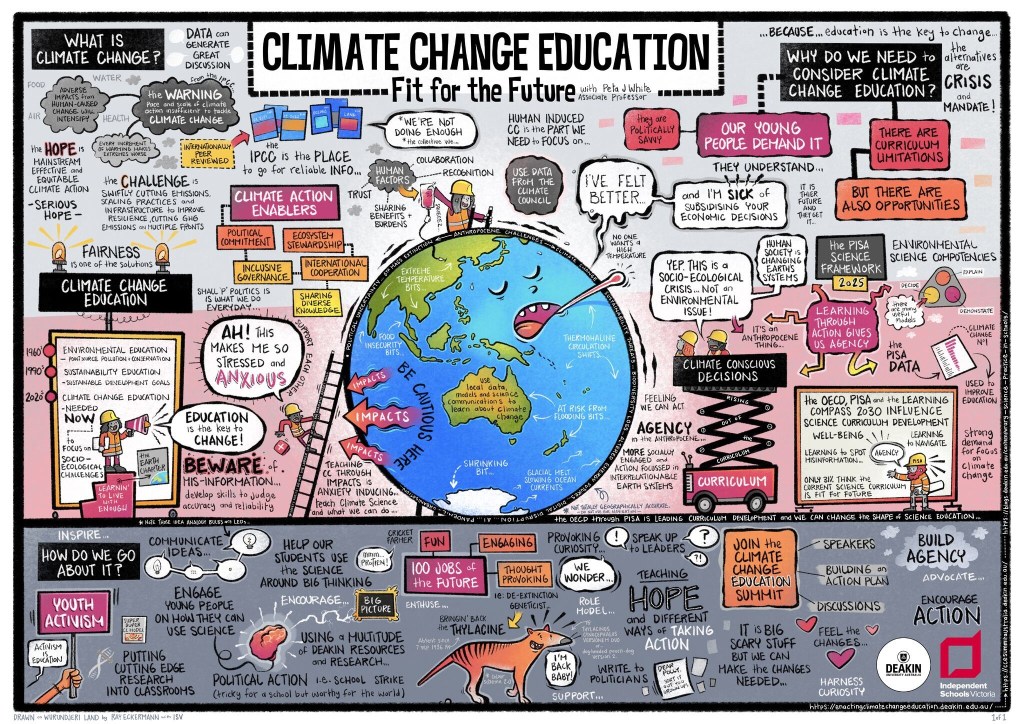
Using this definition, our work contributed to the PISA Science Framework 2025 by identifying a set of competencies that young people need in order to gain Agency in the Anthropocene (panel). We consider these to be enduring competencies,42 which support knowledge, skills, values, and attitudes that lead to action and lifelong learning. Next, we discuss each of the competencies.
Panel
Competencies for Agency in the Anthropocene25
A 15-year-old student who shows Agency in the Anthropocene can:
- 1.Explain the effects of human interactions with Earth’s systems
- 2. Make informed decisions to act on the basis of evaluation of diverse sources of evidence and application of creative and systems thinking to regenerate and sustain the environment
- 3. Show hope and respect for diverse perspectives in seeking solutions to socioecological crises
Agency in the Anthropocene requires understanding to inform action. This concept is best understood in terms of Earth systems, which include and refer to “the structure and functioning of the Earth as a complex, adaptive system”,43 and is typically taught in science classes. The basic earth systems (eg, water and nutrient cycles, and soil formation and erosion) are typically taught in science classes, in which natural and biophysical topics are addressed, but do not always include how these systems impact and are impacted by humans. Human health and wellbeing, and that of all species, depend on systems that recognise and use diverse knowledges in transdisciplinary ways. This focus expands the traditional science curriculum and enables recognition of the interdependence of social and ecological systems and how those systems change over time. Having agency means acknowledging that technologically mediated human interactions with Earth systems have had positive outcomes in terms of human nutrition, health, and longevity, but also have had increasingly negative influences, due to the exploitation of Earth’s resources beyond capacity and renewability,44, 45 and in the production of wastes. These outcomes are underpinned by social, cultural, and economic factors influenced by values and social norms developed through experiences with Earth systems.46
Agency in the Anthropocene requires an ecocentric worldview that positions humans within the environment, not separate from it,47 as well as relational practices that emphasise belonging to place and people.48 This ecocentric worldview develops an ethic of care that leads to expanding concentric circles of concern and action for the health and wellbeing of oneself, one’s family, one’s friends, one’s community, all species, and the planet. An ecocentric worldview situates this care in relation to Earth systems and creates a multidimensional sense of being in the world, spanning the intrapersonal to interpersonal to ecospheric.49 Such a multidimensional perspective guides how one thinks and acts in relation to the world (intrapersonal); in relation to others, both human (through social justice) and non-human (through ecological justice); and in relation to the systems of which one is a part. This relational positionality addresses what it means to be human in the Anthropocene and moves thinking, caring, and acting beyond the individual to communities, local environments, and the Earth more broadly.
Agency in the Anthropocene requires drawing on diverse ways of knowing50 to critically evaluate information, misinformation, and disinformation,51 and to decide which actions can be taken in response to socioecological challenges. Critical evaluation of information sources can mean taking an objective approach by considering whether (and to what extent) source information concurs with the consensus of empirical knowledge, is based on peer review, or both. This critical evaluation can also take a subjective approach, which interprets perspectives on the basis of values and experiences. These socioecological challenges are multifaceted and, although individuals or small groups might tackle parts of the problem, diverse teams of young people who bring different competencies and perspectives are more likely to lead to creative and innovative solutions that will regenerate healthy social and ecological systems.
Agency in the Anthropocene means understanding that social structures have led to positive (eg, medical advances) and negative (eg, colonisation and resource exploitation) outcomes for human and planetary health,52 and that these outcomes have not been distributed equally among all people. Our current challenges entangle social and ecological dimensions and addressing them demands application of the principles of justice, such as fairness and equity. These principles are values based and culturally bound, often reflecting who holds power. The magnitude of the many socioecological challenges we currently face can be overwhelming for all, especially young people.34, 53 For some, the emotional load might lead to ecoanxiety, which might compound to climate anxiety at times and under specific circumstances.13 Hope for the future is often strongly linked to a sense of agency as well as the intention and ability to take action to address socioecological challenges.54 Taking action in the Anthropocene requires efficacy, which refers to a belief in being able to make a difference, personally and collectively.55 Efficacy is key because concern alone, although important, is not sufficient to motivate action. Achieving effective action on socioecological challenges relies on knowledge of causes of the crises and knowledge and skill in the potential steps towards resolution, and confidence and motivation to act for both human and planetary health.
Although environmental knowledge and ecocentric attitudes tend to correlate with each other,38 knowledge about the environment rarely predicts environmentally protective actions56, 57 because various motives and opportunities typically combine to nudge people towards behaviour changes.58, 59 Some variables, such as ecocentric beliefs, available time, relevant experience, and peer group and family support, might predispose learners to engage in pro-environmental activities;60 in other situations, environmental actions might be driven by community norms.61 Environmental knowledge is important as well intended actions could do more harm than good if people have insufficient understanding of the consequences of their actions. Supporting young people in developing agency requires much more than knowledge about environmental issues. The process of investigating issues and taking action has a long history in environmental education62 and, more recently, has evolved to include an emphasis on how to nurture action competence in schools.63, 64
School-based science education can therefore be an important way to help prepare youth to engage in socioecological actions by strengthening knowledge, awareness, and problem-solving skills.65 Some youth programmes form a connection with the community, which might eventually foster a new community norm, such as reducing the risk of wildfire66 or addressing climate change.24 Despite their success, such programmes are not widely implemented around the world. Educational reform might be stimulated by the PISA 2025 Assessment, which has the potential to nudge nations to implement programmes that engage youth in problem solving, shaping generations with willingness and preparedness to address pressing socioecological challenges.25
Agency in the Anthropocene in action: engaging young people in learning about socioecological challenges
Effective programmes that generate Agency in the Anthropocene rely on interdisciplinary content and support an action orientation that encourages youth leadership, peer interaction, and community involvement.67 The following three examples highlight these strategies in practice.
The first example illustrates learning about Earth systems and climate impacts (competency 1) through a bushfire risk-reduction whole-school, student-led project. Harkaway Primary School, a school located in a high fire-danger area in Victoria, Australia, implemented a student-led programme to develop student and community agency regarding risk management, specifically around bushfire preparation.68 In the wake of the devastating 2009 Black Saturday fires, leaders needed to build trust and confidence among their local community. School leaders collaborated with students to engage with local professionals and researchers to explore the situation and develop strategies to adapt to bushfire prevention and risk-reduction management strategies for the school and community. The students led investigations into bushfire zones, democratic processes, bushfire risk registers and risk reduction practices,69 mental trauma and anxiety, and community preparedness.70 Through this 4-year process, students learned to trust their instincts, create learning collaborations, and develop the agency required to make impactful community change. As a result, students produced the Bushfire Safety Manifesto.71
The second example illustrates engaging youth with evidence-based diverse knowledges to inform their development of action competence (competencies 2 and 3). The Enviroschools Programme operates in a third of all schools across Aotearoa New Zealand. Enviroschools aims to empower youth through engaging with Māori indigenous perspectives and knowledge to nurture sustainable social and ecological communities.72 From 2005 to 2009, for example, at Hukanui School (Hamilton), a student-centred, action-oriented project stemming from a student-identified need for a place to learn about the environment led to the codesign and construction of the so-called Living Room. The Living Room is an eco-classroom that embodies green building principles, indigenous ideas, and lifelong learning ideals.73 All students in the school spend time in the Living Room, learning about energy and water conservation and conducting ongoing projects of their own interest.
The third example illustrates facilitating youth civic engagement to gain experience in community decision making (competency 3). Various programmes around the world encourage youth to explore community issues; many such programmes guide youth to consider the consequences of various actions and work towards a goal of their choosing. The US-based non-profit organisation Earth Force blends civic education with exploration of local environmental issues. Earth Force’s model encourages students to learn about local organisations and decision makers who address an issue of interest and culminates by asking a decision maker to make a change. By focusing on decision makers rather than the environment itself, the youth learn who the decision makers are, how decisions are made, who influences decisions, and how the public can become engaged in community decisions. Such an approach builds civic literacy and enables youth to become active participants in civic discourse. After-school youth clubs also use the model in a programme called Community Action Projects for the Environment (CAPE), which partners with organisations and community leaders. In 2023, CAPE groups in Florida, for example, worked with decision makers to enhance pollinator habitat, protect urban trees, and install bridge railings on cycling paths.
Conclusion
Education is essential for creating informed, caring, and capable leaders, activists, and citizens who collaborate to protect and enhance socioecological integrity leading to improvements in planetary health at a time of substantial socioecological crises. International efforts, such as the OECD’s PISA initiative, among others, have begun to support nations in achieving this goal by considering the kinds of educational reform needed worldwide. Such conversations are guided by a vision that recognises the importance of working towards just, equitable, and collective environmental action to address pressing socioecological challenges through science education. This kind of transformative change requires a global population with the competencies and motivation to support communities in their identification of challenges, development of alternative strategies to address them, and taking positive, solutions-oriented actions.21
Focusing on developing Agency in the Anthropocene highlights the need for education systems to reconsider curriculum design, community resources, teacher professional learning, and student programming, among other key dimensions of systems change. Discussing and learning about the socioecological challenges that will increasingly impact current and future generations is unsettling and complex. Although educational systems are often encouraged to deliver programming that addresses various societal challenges, those we are experiencing in the Anthropocene are more widespread and laden with uncertainty than in the past, thus requiring a new vision for transformative education and engagement, while concurrently managing potential ecoanxiety. Our call for the development of Agency in the Anthropocene and the assessment of the competencies of 15-year-olds in the 2025 PISA will contribute to understanding how well we are progressing towards this vision. The examples that we have shared offer strategies that enable educators and educational systems to manage the breadth and depth of complex learning, build agency, and take action within a community context, while showing that such transformation is possible.
Contributors
All authors contributed equally to the conceptual development, writing, and editing of this Personal View.
For more on the Convention on Biological Diversity see https://www.cbd.int/
For more on the Convention on Wetlands see https://www.ramsar.org/
For more on the Programme for International Student Assessment see https://www.oecd.org/pisa/
For more on Harkaway Primary School’s Bushfire Safety Committee see https://www.harkawayps.vic.edu.au/bushfire-safety-committee
For more on The Enviroschools Programme see www.enviroschools.org.nz
For more on programmes on community issues see https://terezanet.cz/en and www.ecoschools.global
For more on Community Action Projects for the Environment see https://cape.ifas.ufl.edu
For more on Earth Force see https://earthforce.org
For more on the School Strikes 4 Climate see https://www.ukycc.com/youth-strike-4-climate and https://www.schoolstrike4climate.com/
Declaration of interests
We declare no competing interests.
Acknowledgments
The authors thank the OECD 2025 PISA Science Expert group as well as colleagues and educators from Harkaway Primary School, Hukanui School, and Community Action Projects for the Environment.
References
- 1Intergovernmental Panel on Climate ChangeSynthesis report of the IPCC sixth assessment report (AR6)https://report.ipcc.ch/ar6syr/pdf/IPCC_AR6_SYR_LongerReport.pdf (2023), Accessed 23rd May 2023Google Scholar
- 2S Whitmee, A Haines, C Beyrer, et al.Safeguarding human health in the Anthropocene epoch: report of The Rockefeller Foundation–Lancet Commission on planetary healthLancet, 386 (2015), pp. 1973-2028View PDFView articleView in ScopusGoogle Scholar
- 3SS MyersPlanetary health: protecting human health on a rapidly changing planetLancet, 390 (2017), pp. 2860-2868View PDFView articleView in ScopusGoogle Scholar
- 4G Brand, S Wise, G Bedi, R KickettEmbedding Indigenous knowledges and voices in planetary health educationLancet Planet Health, 7 (2023), pp. e97-102View in ScopusGoogle Scholar
- 5G-P Bălă, R-M Râjnoveanu, E Tudorache, R Motişan, C OanceaAir pollution exposure—the (in)visible risk factor for respiratory diseasesEnviron Sci Pollut Res Int, 28 (2021), pp. 19615-19628CrossrefView in ScopusGoogle Scholar
- 6JA Poole, CS Barnes, JG Demain, et al.Impact of weather and climate change with indoor and outdoor air quality in asthma: a work group report of the AAAAI Environmental Exposure and Respiratory Health CommitteeJ Allergy Clin Immunol, 143 (2019), pp. 1702-1710View PDFView articleView in ScopusGoogle Scholar
- 7L Bradney, H Wijesekara, KN Palansooriya, et al.Particulate plastics as a vector for toxic trace-element uptake by aquatic and terrestrial organisms and human health riskEnviron Int, 131 (2019), Article 104937Google Scholar
- 8CV Neves, CC Gaylarde, JA Baptista Neto, et al.The transfer and resulting negative effects of nano- and micro-plastics through the aquatic trophic web—a discreet threat to human healthWater Biol Secur, 1 (2022), Article 100080Google Scholar
- 9Q Zhao, P Yu, R Mahendran, et al.Global climate change and human health: pathways and possible solutionsEco Environ Health, 1 (2022), pp. 53-62View PDFView articleCrossrefView in ScopusGoogle Scholar
- 10GT Pecl, MB Araújo, JD Bell, et al.Biodiversity redistribution under climate change: impacts on ecosystems and human well-beingScience, 355 (2017), Article eaai9214Google Scholar
- 11RJ White, O RazgourEmerging zoonotic diseases originating in mammals: a systematic review of effects of anthropogenic land-use changeMammal Rev, 50 (2020), pp. 336-352CrossrefView in ScopusGoogle Scholar
- 12C Hickman, E Marks, P Pihkala, et al.Climate anxiety in children and young people and their beliefs about government responses to climate change: a global surveyLancet Planet Health, 5 (2021), pp. e863-e873View PDFView articleView in ScopusGoogle Scholar
- 13SK Stanley, TL Hogg, Z Leviston, I WalkerFrom anger to action: differential impacts of eco-anxiety, eco-depression, and eco-anger on climate action and wellbeingJ Clim Change Health, 1 (2021), Article 100003Google Scholar
- 14A Voşki, G Wong Parodi, NM ArdoinA new planetary affective science framework for eco-emotions: findings on eco-anger, eco-grief, and eco-anxietyGlob Environ Psychol, 1 (2023), Article e11465Google Scholar
- 15MR Marselle, T Hartig, DTC Cox, et al.Pathways linking biodiversity to human health: a conceptual frameworkEnviron Int, 150 (2021), Article 106420Google Scholar
- 16L Martin, MP White, A Hunt, M Richardson, S Pahl, J BurtNature contact, nature connectedness and associations with health, wellbeing and pro-environmental behavioursJ Environ Psychol, 68 (2020), Article 101389Google Scholar
- 17PY Nguyen, T Astell-Burt, H Rahimi-Ardabili, X FengEffect of nature prescriptions on cardiometabolic and mental health, and physical activity: a systematic reviewLancet Planet Health, 7 (2023), pp. e313-e328View PDFView articleView in ScopusGoogle Scholar
- 18World Wide Fund For NatureLiving planet report 2022: building a nature-positive societyhttps://wwflpr.awsassets.panda.org/downloads/lpr_2022_full_report.pdf (2022), Accessed 23rd May 2023Google Scholar
- 19R Horton, S LoPlanetary health: a new science for exceptional actionLancet, 386 (2015), pp. 1921-1922View PDFView articleView in ScopusGoogle Scholar
- 20L StegLimiting climate change requires research on climate actionNat Clim Chang, 8 (2018), pp. 759-761CrossrefView in ScopusGoogle Scholar
- 21NM Ardoin, AW Bowers, M WheatonLeveraging collective action and environmental literacy to address complex sustainability challengesAmbio, 52 (2023), pp. 30-44CrossrefView in ScopusGoogle Scholar
- 22L Head, T HaradaKeeping the heart a long way from the brain: the emotional labour of climate scientistsEmot Space Soc, 24 (2017), pp. 34-41View PDFView articleView in ScopusGoogle Scholar
- 23S Noy, R Patrick, T Capetola, C Henderson-Wilson, JW Chin, A LaMontagneMinding environment, minding workers: environmental workers’ mental health and wellbeingGlob Health Promot, 29 (2022)17579759221081881Google Scholar
- 24DF Lawson, KT Stevenson, MN Peterson, SJ Carrier, RL Strnad, E SeekampChildren can foster climate change concern among their parentsNat Clim Chang, 9 (2019), pp. 458-462CrossrefView in ScopusGoogle Scholar
- 25PJ White, NA Ardoin, C Eames, M MonroeAgency in the Anthropocene—supporting document to the PISA 2025 Science Framework. OECD Education Working Papershttps://www.oecd-ilibrary.org/education/agency-in-the-anthropocene_8d3b6cfa-en (2023), Accessed 18th Jun 2023Google Scholar
- 26International Union of Conservation of Nature–United Nations Environment Programme–World Wide Fund for NatureWorld conservation strategy: living resource conservation for sustainable developmentInternational Union for Conservation of Nature and Natural Resources, Gland (1980)Google Scholar
- 27A Reid, J Dillon, N Ardoin, JA FerreiraScientists’ warnings and the need to reimagine, recreate, and restore environmental educationEnviron Educ Res, 27 (2021), pp. 783-795CrossrefView in ScopusGoogle Scholar
- 28Organisation for Economic Co-operation and DevelopmentLearning compass 2030https://www.oecd.org/education/2030-project/teaching-and-learning/learning/learning-compass-2030/ (2019), Accessed 20th Jun 2023Google Scholar
- 29Organisation for Economic Co-operation and DevelopmentGovernance for youth, trust and intergenerational justice: fit for all generations?https://doi.org/10.1787/c3e5cb8a-en (2020), Accessed 20th Jun 2023Google Scholar
- 30J Osborne, D Pimentel, B Alberts, et al.Science education in an age of misinformationhttps://sciedandmisinfo.stanford.edu/ (2022), Accessed 23rd May 2023Google Scholar
- 31V Dawson, E Eilam, S Tolppanen, et al.A cross-country comparison of climate change in middle school science and geography curriculaInt J Sci Educ, 44 (2022), pp. 1379-1398CrossrefView in ScopusGoogle Scholar
- 32E Eilam, V Prasad, H Widdop QuintonClimate change education: mapping the nature of climate change, the content knowledge and examination of enactment in upper secondary Victorian curriculumSustainability, 12 (2020), p. 591CrossrefView in ScopusGoogle Scholar
- 33PJ White, JP Ferguson, N O’Connor Smith, H O’Shea CarréSchool strikers enacting politics for climate justice: daring to think differently about educationAust J Environ Educ, 38 (2021), pp. 1-14Google Scholar
- 34ML Bright, C EamesFrom apathy through anxiety to action: emotions as motivators for youth climate strike leadersAust J Environ Educ, 38 (2022), pp. 13-25CrossrefView in ScopusGoogle Scholar
- 35S Boulianne, M Lalancette, D IlkiwSchool strike 4 climate: social media and the international youth protest on climate changeMedia Commun, 8 (2020), pp. 208-218CrossrefView in ScopusGoogle Scholar
- 36MW AppleEducation and powerhttps://doi.org/10.4324/9780203143124 (2012), Accessed 20th Jun 2023Google Scholar
- 37Oxford University PressThe evolution of science educationhttps://www.oup.com.au/__data/assets/pdf_file/0028/186832/The-evolution-of-science-education-Oxford-University-Press.pdf (2022), Accessed 20th May 2023Google Scholar
- 38Organisation for Economic Co-operation and DevelopmentAre students ready to take on environmental challenges?https://www.oecd-ilibrary.org/education/are-students-ready-to-take-on-environmental-challenges_8abe655c-en (Dec 8, 2022), Accessed 20th Jun 2023Google Scholar
- 39PJ CrutzenGeology of mankindNature, 415 (2002), p. 23View in ScopusGoogle Scholar
- 40SL Lewis, MA MaslinDefining the anthropoceneNature, 519 (2015), pp. 171-180CrossrefView in ScopusGoogle Scholar
- 41Organisation for Economic Co-operation and DevelopmentFuture of education and skills 2030https://www.oecd.org/education/2030-project/ (2019), Accessed 20th Jun 2023Google Scholar
- 42R Hipkins, S Tolbert, B Cowie, P WaitiEnduring competencies for designing science learning pathwayshttps://www.nzcer.org.nz/research/publications/enduring-competencies-designing-science-learning-pathways (2022), Accessed 23rd May 2023Google Scholar
- 43W Steffen, K Richardson, J Rockström, et al.The emergence and evolution of Earth System ScienceNat Rev Earth Environ, 1 (2020), pp. 54-63CrossrefView in ScopusGoogle Scholar
- 44A JohnsonHow the Machiguenga manage resources: conservation or exploitation of nature?Advances in Economic Botany, 7 (1989), pp. 213-222View in ScopusGoogle Scholar
- 45D Ludwig, R Hilborn, C WaltersUncertainty, resource exploitation, and conservation: lessons from historyEcol Appl, 3 (1993), pp. 548-549CrossrefGoogle Scholar
- 46K Fisher, M ParsonsRiver co-governance and co-management in Aotearoa New Zealand: enabling Indigenous ways of knowing and beingTransnatl Enviro La, 9 (2020), pp. 455-480CrossrefView in ScopusGoogle Scholar
- 47AM NicholsBeing human: an ecocentric approach to climate ethicsBG Henning, Z Walsh (Eds.), Climate change ethics and the non-human world, Routledge, Milton Park (2020), pp. 133-149CrossrefGoogle Scholar
- 48H Cuervo, J WynA longitudinal analysis of belonging: temporal, performative and relational practices by young people in rural AustraliaYoung, 25 (2017), pp. 219-234CrossrefView in ScopusGoogle Scholar
- 49L SauvéBeing here togetherM McKenzie, P Hart, H Bai, B Jickling (Eds.), Fields of green: restoring culture, environment and education, Hampton Press, Cresskill, NJ (2009), pp. 325-335Google Scholar
- 50C McMichael, U Kothari, KE McNamara, A ArnallSpatial and temporal ways of knowing sea level rise: bringing together multiple perspectivesWiley Interdiscip Rev Clim Change, 12 (2021), p. e703View in ScopusGoogle Scholar
- 51D Freelon, C WellsDisinformation as political communicationPolit Commun, 37 (2020), pp. 145-156CrossrefView in ScopusGoogle Scholar
- 52M Mirzaei Rafe, KB Noaparast, AS Hosseini, N SajadiehThe application of critical realism as a basis for agency in environmental education: the case of Roy BhaskarAust J Environ Edu, 35 (2019), pp. 230-238CrossrefView in ScopusGoogle Scholar
- 53M Ojala, A Cunsolo, CA Ogunbode, J MiddletonAnxiety, worry, and grief in a time of environmental and climate crisis: a narrative reviewAnnu Rev Environ Resour, 46 (2021), pp. 35-58CrossrefView in ScopusGoogle Scholar
- 54C Li, M MonroeExploring the essential psychological factors in fostering hope concerning climate changeEnviron Educ Res, 25 (2019), pp. 936-954CrossrefView in ScopusGoogle Scholar
- 55I AjzenFrom intentions to actions: a theory of planned behaviorJ Kuhl, J Beckmann (Eds.), Action control, Springer, Berlin (1985), pp. 11-39CrossrefGoogle Scholar
- 56PW SchultzKnowledge, information, and household recycling: examining the knowledge-deficit model of behavior changeT Dietz, PC Stern (Eds.), New tools for environmental protection: education, information, and voluntary measures, National Academy Press, Washington, DC (2002), pp. 67-82View in ScopusGoogle Scholar
- 57JE Heimlich, NM ArdoinUnderstanding behavior to understand behavior change: a literature reviewEnviron Educ Res, 14 (2008), pp. 215-237CrossrefView in ScopusGoogle Scholar
- 58KC Busch, N Ardoin, D Gruehn, K StevensonExploring a theoretical model of climate change action for youthInt J Sci Educ, 41 (2019), pp. 2389-2409CrossrefView in ScopusGoogle Scholar
- 59R De YoungNew ways to promote proenvironmental behavior: expanding and evaluating motives for environmentally responsible behaviorJ Soc Issues, 56 (2000), pp. 509-526CrossrefView in ScopusGoogle Scholar
- 60J Whitburn, W Linklater, W AbrahamseMeta-analysis of human connection to nature and proenvironmental behaviorConserv Biol, 34 (2020), pp. 180-193CrossrefView in ScopusGoogle Scholar
- 61MC Monroe, C Crandall, L MaynardConservation behavior can defy traditional predictorsJ Environ Educ, 52 (2021), pp. 149-161Google Scholar
- 62HR Hungerford, RA Litherland, TL Volk, JM Ramsey, RB PeytonInvestigating and evaluating environmental issues and action: skill development programStipes Publishing, Champaign, IL (1990)Google Scholar
- 63B Jensen, K SchnackThe action competence approach in environmental educationEnviron Educ Res, 3 (1997), pp. 163-178CrossrefView in ScopusGoogle Scholar
- 64W Sass, J Boeve-de Pauw, D Olsson, N Gericke, S De Maeyer, P Van PetegemRedefining action competence: the case of sustainable developmentJ Environ Educ, 51 (2020), pp. 292-305CrossrefView in ScopusGoogle Scholar
- 65NM Ardoin, AW Bowers, NW Roth, N HolthuisEnvironmental education and K-12 student outcomes: a review and analysis of researchJ Environ Educ, 49 (2018), pp. 1-17CrossrefView in ScopusGoogle Scholar
- 66MC Monroe, HL Ballard, A Oxarart, VE Sturtevant, PJ Jakes, ER EvansAgencies, educators, communities and wildfire: partnerships to enhance environmental education for youthEnviron Educ Res, 22 (2016), pp. 1098-1114CrossrefView in ScopusGoogle Scholar
- 67E Sinakou, V Donche, J Boeve-de Pauw, P Van PetegemDesigning powerful learning environments in education for sustainable development: a conceptual frameworkSustainability, 11 (2019), Article 5994Google Scholar
- 68B Towers, A GoughNew school: a modern approach to disaster risk reduction and resilience education for childrenhttps://hazards.colorado.edu/news/research-counts/special-collection/new-school-a-modern-approach-to-disaster-risk-reduction-and-resilience-education-for-children, Accessed 25th Jun 2023Google Scholar
- 69United Nations Office for Disaster Risk ReductionWords into action guidelines: engaging children and youth in disaster risk reduction and resilience buildinghttps://www.undrr.org/engaging-children-and-youth-disaster-risk-reduction-and-resilience-building (2020), Accessed 25th Jun 2023Google Scholar
- 70B TowersSchool-based bushfire education: advancing teaching and learning for risk reduction and resiliencehttps://www.bnhcrc.com.au/sites/default/files/managed/downloads/briony_towers.pdf, Accessed 25th Jun 2023Google Scholar
- 71Harkaway Primary SchoolBushfire education for kids – a manifesto from Harkaway Primary Schoolhttp://www.youtube.com/watch?v=FP5R-gYZUPI (2021), Accessed 25th Jun 2023Google Scholar
- 72C Eames, H MardonThe Enviroschools Programme in Aotearoa New Zealand: action-orientated, culturally responsive, holistic learningA Gough, JCK Lee, EPK Tsang (Eds.), Green school globally. International explorations in outdoor and environmental education, Springer, Saskatchewan, Cham (2020), pp. 49-60View at publisherCrossrefView in ScopusGoogle Scholar
- 73SJ Wake, C EamesDeveloping an “ecology of learning” within a school sustainability co-design project with children in New ZealandLocal Environ, 18 (2013), pp. 305-322View at publisherCrossrefView in Scopus

 Institute for Interdisciplinary Research into the Anthropocene