The Anthropocene. A proposed new geological epoch which designates a shift to a planetary age dominated by human impacts across the geological processes of the Earth. Geologists dispute the duration, precision, relevance and even accuracy of the concept. But the term has increasingly entered the scientific lexicon as increasing numbers of experts across myriad disciplines recognise that for the first time in history, the future of the entire planet — for generations if not millennia to come — is now being fundamentally determined by the activities of the human species. But the Anthropocene is about far more than just climate change. It is about an entire system of life, whose design is to maximise resource extraction at the expense of expendable ‘Others’. It is bound up, intimately, with a global system of racism emerging from the legacy of centuries of colonialism. And it is inseparable from the ceaseless sequence of industrial wars, culminating in today’s permanent state of the endless ‘war on terror’.
Human-induced global heating — terraforming the Earth beyond recognition
It is the unprecedented impact of anthropogenic climate change that has, perhaps, played the biggest role in efforts to define the Anthropocene as a distinctive new era in Earth’s history. Multiple warnings backed by a global consensus of climate scientists have warned over the last few decades that human activities, through the escalating consumption of fossil fuel resources — the burning of oil, gas and coal — is destabilising the Earth’s natural carbon cycle.
For hundreds of thousands of years, the planet has sustained an equilibrium, a ‘safe operating’ space offering an optimum environment for human and other habitation — in which the quantity of carbon emitted and absorbed by planetary ecosystems remains stable.
But since the Industrial Revolution, as human civilisation has inexorably expanded, consuming greater quantities of fossil fuel energy along the way, associated carbon dioxide (CO2) emissions have exponentially increased — overwhelming the planet’s capacity for absorption. The result has been a steady increase in global average temperatures.
Scientists warn that the extra addition of CO2 into the atmosphere, capturing greater heat, is in turn playing escalating havoc with the Earth’s climate, weather and ecological systems. As human civilisation continues its expansion, as it continues to burn up escalating quantities of fossil fuels, the climate science community warns that above a certain level of CO2 and global heating, planetary ecosystems will shift passed a key tipping point into a new, dangerous era — one that is outside the boundaries of the preceding hundreds of thousands of years, outside anything human beings have ever experienced.
If we continue on this pathway of business-as-usual, conservative projections suggest we are heading toward anywhere between a 3 to 6 degrees Celsius global average temperature rise.
Others, such as Schroders, the global investment firm, have suggested we could be heading toward an 8C planet due to the current rate of fossil fuel consumption — the 8C temperature projection was also suggested by a study funded by US Department of Energy’s Climate Change Research Division, which highlighted the potential impact of ‘amplifying feedback loops’ triggered by altering earth system processes that might trigger further greenhouse gas loading.
Between 4–6C, most climate scientists agree that there would be such a degree of chaos that the planet would become largely uninhabitable. The variation is complicated, and depends on a concept called ‘Earth System Sensitivity’ — how sensitive the planet’s ecosystems are to the CO2 change. But even at a conservative estimate of sensitivity, a 3C planet, to which at minimum we are likely heading, should be considered “extremely dangerous”; and a global average temperature rise within the 3–4C threshold would probably create conditions that make the core infrastructures of human civilisation increasingly unviable.
To the extent that governments are taking seriously this threat, they are doing so largely with a view to assess the implications for their own functioning — and with a view to consider how to sustain business-as-usual amidst rising instability. This is the context in which many studies have concluded that our current climate change trajectory will increase the chance of conflict. For the most part, Western national security agencies that have examined the issue agree that while climate change does not automatically produce war, it acts as an ‘amplifier’ which increases the prospect of war, due to its impacts in terms of water scarcity, the degeneration of critical food systems, the failure of conventional energy supplies, and the unpredictable impact of extreme weather events. Such impacts can sometimes devastate infrastructures and lead to the collapse of public services. In those contexts, the proliferating outbreak of wars and conflicts is widely recognised to be a likely symptom of climate change on a business-as-usual pathway.
The problem is that this usually leads to little reflection on the need to change the human system that is producing this trajectory — instead, we are largely told of the need for a greater expansion of security powers to respond to the chaos of a climate-impacted world: the intensification of the same system that produced the problem.
On the polar opposite of the spectrum, we have outright state denialism rooted in the goal of protecting the system of endless fossil fuel exploitation at any conceivable cost. It is telling that the Trump administration, as of March 2019, was considering the creation of a White House panel to dispute the findings of dozens of US military and intelligence assessments on the grave security risks posed by climate change. Which is interesting, given that the Pentagon emits more fossil fuel emissions than as many as 140 different countries.
And yet, the preoccupation with war that emerges from the narrow lens of ‘national security’ through which the human gaze is obsessed primarily with physical threats to the interests of nation-states, is ultimately counterproductive, symptomatic of the fragmentary cognitive framing in which human institutions are currently capable of thinking and acting — it focuses myopically on how to uphold the survival of the business-as-usual operations of the state and the interests lobbying through it, overlooking the global existential character of the crisis as a threat to the whole species.
At the worst end of the scale, war would be the least of our problems: we have the risk of a ‘hothouse’ Earth. A study in the Proceedings of the National Academy of Sciences found that the risk of an uninhabitable planet is not simply a far off possibility that might be triggered at several degrees of temperature rise in a more distant future — it could be triggered imminently; and it is possible that it may already have been triggered at the current level of an approximate 1C temperature rise above the pre-industrial average, which NASA’s former chief climate scientist James Hansen had argued is the safe upper limit, beyond which we move into a dangerous and more unpredictable climate with some consequences that may be irreversible.
But climate change is only one facet of the crisis. Our civilisational model, which has exponentially increasing energy and resource consumption as its driving motor, has seen human activities, exploitation and waste-generation accelerate across the planet. This has driven an escalating biodiversity crisis leading to potentially irreversible changes to soils and oceans, underpinning mass species extinctions.
Human civilisation and the war on life
About 15 years ago, the UN’s Millennium Ecosystem Assessment provided one of the first and most damning insights into the destruction wrought by humans that defines the Anthropocene. The report pinpointed the mid-twentieth century as a marked tipping point into a new era, where rapidly intensifying industrial agriculture accompanied an escalating collapse of biodiversity.
Consumption of food, water and fuel has not only exponentially increased, it has exponentially encroached on habitats — more in the preceding 50 years alone than throughout all of human history. The extinction rate of species was “up to one thousand times higher than the fossil record”, when “every thousand mammal species, less than one went extinct every millennium”. The UN assessment projected that the rate is still going up, and will be “ten times higher” in the near future.
The situation is now far worse than expected. This year, the UN’s Intergovernmental Science-Policy Platform on Biodiversity and Ecosystem Services concluded that one million of the planet’s 8 million animal and plant species are at risk of going extinct in the near future, due to the expansion of human societies that has driven climate change, the loss of habitat, overfishing, pollution and invasive species.
Numerous studies have warned that our present trajectory is heading toward the collapse of our current form of civilisation. One model developed with NASA funding indicated that the current endless growth model of human civilisation was likely to lead to diminishing returns and deepening economic stratification, eventually culminating in collapse. All civilisations, the model seemed to show, tend to follow a growth trajectory consisting of an increasing intensification in complexity, whereby greater layers of complexity are continuously innovated to solve problems.
With each new layer, more complex problems are generated, requiring a further even more complex layer of problem-solving to address them, which in turn generates further problems. The cycle, drawing on the work of archaeologist Joseph Tainter who studied dozens of past civilisations, suggests that any civilisation will eventually collapse under the unsustainable weight of its own complexity due to excessive resource consumption and internal maldistribution of wealth — unless consumption and distribution begin to be rectified in time.
This particular model was fairly simple, focusing on a smaller number of variables to explore the general plausibility of the core hypothesis. A few years later, a far more complex scientific model with thousands of data inputs was developed by Anglia Ruskin University’s Global Sustainability Institute. with funding from the British Foreign Office. When run forward on a business-as-usual trajectory, the model suggested that human civilisation would probably collapse around 2040 amidst an eruption of converging climate, energy, food and water crises that would devastate major economies amidst an epidemic of food riots. Conventional war might happen — but either way, the planet would likely experience a proliferation of civil unrest within, between and across borders.
This year, a scenario analysis backed by the former head of Australia’s military drew on the peer-reviewed scientific literature to outline a plausible business-as-usual trajectory, based on what we know about how planetary ecosystems can respond to human-induced CO2 emissions. The scenario took seriously the scientific evidence of a potential ‘hothouse’ Earth scenario. It suggested that by 2050, human societies would face “outright chaos” due to escalating climate-impacts on key ecosystems, with two billion people suffering from water scarcity and another billion requiring relocation just to survive. The prospects would severely strain the capacity of human civilisation to function, and increase the chances of its collapse. The authors of this analysis called on the national security sector, the agencies of war, to respond more appropriately to these risks by supporting a comprehensive World War 2 style mobilisation to transition to a post-carbon civilisation.
While perhaps well-intentioned, the report did not recognise that war agencies might be structurally incapable of undertaking such a response precisely due to their embeddedness in the institutions captured by the very same fossil fuel system — and that such a transformation would conceivably imperil their very reason for being.
Another assessment in the form of a scientific briefing commissioned to feed into the UN’s Sustainable Development report found that one of the key drivers behind the growing risk of collapse is the very nature of the endless growth model of capitalism, as currently structured. The more we escalate our consumption of resources, raw materials, minerals and energy, the more we are using up the cheapest and most plentiful resources, and therefore the greater the costs of continued production. Drawing on the pioneering work of environmentalist Professor Charles Hall, the study advocated a focus on the ‘energy return on investment’ (EROI) of national and global energy systems to measure how efficient they really are (EROI measures the quantity of energy used to extract energy). The answer? Efficiency is declining for largely geological reasons. As the costs increase due to the need for greater quantities of energy and more complicated mechanisms of exploitation; the returns to society diminish. As we are using ever increasing quantities of energy and resources just to extract more energy and resources, the surplus we have left to sustain the financing of the public goods and services necessary to maintain a functioning civilisation is declining. This doesn’t mean we are running out of energy — but it means that as the energetic and environmental costs of energy extraction increase, we effectively have less and less spare to invest back into key social goods.
French economists Victor Court and Florian Fizaine showed in a recent global EROI study that we are well passed the maximum levels of efficiency. The amount of energy we can extract from fossil fuels compared to the energy used to extract it was once lucratively high — around 44:1 in the 1960s. Since then it has inexorably declined to just over 30 overall, accompanied by a long-term slow-down in the growth rate of the global economy, a decline in productivity, and an expansion of debt. At this rate of decline, by 2100 we are projected to extract the same value of EROI from fossil fuels as we were in the 1800s. While there might be more actual total energy being produced by end of century, the surplus energy available could be at nineteenth century levels if we continue on a business-as-usual path of fossil fuel-dependence.
This predicament is already driving social unrest, communal polarisation and the resurgence of populism in a situation where neither governments nor wider publics really understand why economies continue to experience chronic dysfunction, instability and tepid growth.
The report to the UN forecasted that this trajectory means that the current economic system, which depends on endless growth to survive, simply cannot be sustained. It therefore portends a future of increasing unrest without a change of course. We will inevitably shift toward a new, different type of economy — if we don’t, then we face a heightened risk of social tensions that could cascade into conflict; and at worse we may well face the danger of collapse.
War in the mirror of civilisation
The risk of collapse is inherently entwined with war — industrial civilisation’s growth trajectory has not only enabled the technologies of war, but is in turn enabled by them.
Earlier this year, the main scientific committee established to determine the accuracy and nature of the definition of the Anthropocene signed off on its initial proposal positing 1950 as the starting date for the new geological era.
The sign off is the first stage of a longer scientific process to properly investigate and test what is still, in raw scientific terms, a mere hypothesis. The scientists based their preliminary evaluations on the mid-twentieth century as a major tipping point into a new era of human interference with the Earth’s geology, characterised by industrial expansion, the proliferation of agricultural chemicals, and most significant of all, the invention and deployment of the atomic bomb. The latter’s radioactive debris became embedded in sediments and glacial ice, becoming part of the geologic record. All this demonstrates an unprecedented and unmistakeable human footprint across the planet whose impacts will be seen for decades, centuries and millennia to come.
War, then, is carved into the sinews of the Anthropocene. While the twentieth and twenty-first centuries can be seen as exemplifying the inherently ecocidal dynamic of the exponential growth of human civilisation, they have also exhibited another parallel feature: the systematic proliferation of war, mass violence, and multiple forms of genocide.
These parallel features — ecocide and genocide; the destruction of our environmental life-support systems, and our direct destruction of the lives of members of our own species — do not coincide haphazardly, but are symptoms of the system of human life itself, in its current form.
From 1945 onwards, human civilisation was caught between the clash of two pseudo-scientific industrial ideologies of endless growth: capitalism and communism — the former premised on extreme privatisation and individuation, the latter premised on extreme nationalisation and collectivisation.
Both paradigms saw the Earth as little more than an external repository of resources to be exploited ad infinitum for the endless consumption of a human species, now self-defined by its capacity for technologically-driven industry.
Both promised that their paradigms would herald utopian oases of industrial prosperity for their respective societies.
In reality, both not only ‘Otherised’ the Earth itself as merely a resource to be consumed by human beings as a predator species, they simultaneously ‘Otherised’ large sections of working populations in and beyond their own demarcated territories, as little more than instruments by which to endlessly accelerate industrial productivity; and they both went on to mindlessly ‘Otherise’ each other whenever they clashed with each other (and even when they did not).
The result was that in their very different efforts to expand, both systems resulted in the mass deaths of millions of people on a colossal scale.
The Soviet Union and Maoist China deployed brutal collectivisation methods on their path toward accelerating productivity, which produced foreseeable mass deaths. This included the generation of devastating artificial famines. Stalin’s policies eliminated between 20 and 60 million people; Mao’s ‘Great Leap Forward’ caused 27 million people to starve to death.
But liberal Western governments also left a trail of blood of a quite distinct kind, in the first major spate of violence since the dawn of the Anthropocene as so far tentatively defined.
From 1945 onwards, Western governments under the leadership of the United States — bearing the mantle of leader of the ‘Capitalist Free World’ — pursued a continuous sequence of direct and covert military interventions across the world. Western military interventions generated a continuum of violence in over 70 developing nations across Asia, Africa, South America and the Middle East from mid-century until today.
British historian Mark Curtis calculates that the total number of direct and indirect deaths from these interventions is approximately 8.6–13.5 million — a conservative underestimate, he qualifies. The interventions were often aimed at quelling nationalist movements for self-determination. Although publicly justified as defensive actions to repel communist subversion, Curtis’ evaluation of historical archives from the US and British governments revealed that policy planners had deliberately inflated the communist threat to justify a militarism aimed at defending Western business interests and acquiring control of critical resources and raw materials. In the Middle East, the biggest prize was control of strategic fossil fuel reserves, the very lifeblood of economic growth.
Development economist J. W. Smith has offered a higher estimate of the death toll, which he puts somewhere between 12–15 million deaths directly due to Western military interventions, with further “hundreds of millions” dying as an indirect consequence of the destruction and reconfiguration of their economies. Smith traced how Western interventions paved the way for the imposition of new capitalist social relations designed to extinguish domestic resistance and forcibly integrate developing countries into the global capitalist economy.
In the twenty-first century, this war trajectory has escalated, not waned. The driving motor remains the use of force to expand access to resources and labour, in order to lubricate the ever-expanding networks of global capital. It is a process sanitised, though, by various ideologies of humanitarianism, benign developmentalism, and ‘national security’.
The principal interventions of the ‘war on terror’ in Iraq and Afghanistan, for instance, are resource wars in core ways.
British Foreign Office documents prove clearly that American and British policy-planners saw the invasion and occupation of Iraq as a way to consolidate access to one of the world’s largest oil reserves, while ensuring the continued flow of to global markets with a view to help stabilise the global economy. In Afghanistan, Congressional records have revealed longstanding US-Western efforts to establish a trans-Afghan pipeline route for the transport of oil and gas from Central Asia to Western markets, bypassing US rivals Iran and Russia. In the 1990s, the US and British even funnelled support to the Taliban in a failed bid to establish the ‘security’ needed to pursue the plan.
Consecutively, the Obama and Trump administrations both continued to back the pipeline project which remains under construction.
In the Anthropocene, resource wars are bipartisan.
Both conflicts wrought colossal violence. Although the more widely accepted estimates of deaths in the hundreds of thousands are terrible enough, higher scale estimates could be more accurate, ranging up to a total of around 4 million people killed directly and indirectly across both conflicts since 1990.
Since then, war in the Anthropocene has intensified and proliferated in new and surprising ways as the more vulnerable nodes of human civilisation have begun to experience overlapping levels of failure and collapse due to the slow acceleration of converging climate, energy, food and water crises. The 2011 Arab Spring uprisings spiralled into a protracted, coalescing amalgamation of riots, civil wars and armed conflicts encompassing multiple theatres, Syria, Yemen, Libya and beyond.
The Arab Spring had been triggered by food price shocks which were, in turn, driven by a confluence of economic-energy shocks interacting with a series of climate shocks which had led to droughts and extreme weather crises across the world’s major food basket regions. Many Arab Spring countries from Syria to Egypt to Yemen had slashed subsidies for food and fuel in preceding years, largely due to the collapse of state revenues — many of them had been former major oil exporters, but in the mid-1990s had experienced peaks of their domestic conventional oil resources. As production thus declined, so did export revenues. With subsidies in the years before 2011 disappearing, coupled with global price spikes due to rampant market speculation on commodity prices coupled with global food shortages, prices of staple foods in these largely import-dependent countries rocketed. As the price of bread became unaffordable, people across the region hit the streets.
The Earth system crisis of the Anthropocene played a critical role in prolonging and amplifying this Middle East crisis, which in turn drove migration and asylum seeking from 2011 to 2015 to an unprecedented degree. Some 11.5 percent of the population of Syria alone has been killed in the ensuing conflict. The West, Russia, Iran, Turkey, Saudi Arabia, Qatar and the UAE have vied for control of Syria for a range of geopolitical reasons, not least of which was its centrality to potential transhipment routes for oil and gas to global markets. Partisans of these different forces tend to absolve their favoured side(s) of complicity, but it is worth noting that prior to the 2011 uprising the State Department was actively negotiating with Syria and EU officials to push forward a pipeline route through the country to transport Iraqi oil to Europe; Russia simultaneously saw Assad’s efforts to capitalise on Syria’s strategic position vis-a-vis the region’s energy corridors as a fundamental threat to Putin’s own gas export plans — the war provided the ideal spoiler, with each side using it to try to further their own interests, the Syrian people be damned.
In the Anthropocene, so-called anti-imperialists have few qualms about fighting resource wars in their own self-interest.
The million plus migrants that turned up on the shores of Europe did so as a direct result of these wars. They were escaping devastating geopolitical conflicts amplified by vested interests, but which had also been created or exacerbated by severe droughts amplified by climate change.
According to the co-author of a key study of the climate-migration connection, Dr Raya Muttarak — a senior lecturer in geography and international development at the University of East Anglia: “The effect of climate on conflict occurrence is particularly relevant for countries in Western Asia in the period 2010–2012, when many were undergoing political transformation during the so-called Arab Spring uprisings.” Muttarak and his team showed that climate change laid the groundwork for the simmering tensions which led to the outbreak of war in Syria and across parts of the region, by generating droughts that led to mass migration.
The mass migration triggered by these processes, in turn, have transformed and radicalised politics across the Western hemisphere. They provided the fodder for extreme nationalist narratives funded by colossal quantities of ‘dark money’ from a cross-section of trans-Atlantic right-wing elites, many of whom hold vested interests in perpetuating deregulation for fossil fuel giants and other giant corporations.
The mass migration thus stoked nativist fears that helped fuel the rise of extreme nationalist movements, which suddenly found renewed constituencies for their views and policies with increasing numbers of ordinary citizens who felt disillusioned with the prevailing order, but had no way of making sense of it. They knew, can feel, that something is deeply wrong, that the old order is collapsing, but their diagnosis is incomplete, narcissistic, fragmented and symptom-oriented. As such, it has led to incomplete, narcissistic, fragmented and symptom-oriented political reactionism.
The series of victories for the far-right that followed the eruption of Earth system crisis in the Middle East between 2011 and 2015 can thus be seen as a direct consequence of an incoherent cognitive response to the crisis, which reacted purely to its chief symptom: the desperate mass movement of vulnerable peoples.
We thus witnessed a series of seismic shifts in the reconfiguration of Western political systems, a hardening and centralising of power, a self-centring of values, a defensive rejectionism of science, and a polarising of identities, manifesting in a string of extreme nationalist wins. In 2014, far-right parties won just under a quarter of all seats in the European Parliament. In 2015, David Cameron was re-elected as Prime Minister with a parliamentary majority, a victory attributed in part to his promise to hold a referendum on Britain’s membership of the European Union. Unbeknownst to many, the Tories had quietly established wide-ranging links with many of the same far-right parties that were now capturing seats in the EU. The following year in June, the ‘Brexit’ referendum shocked the world with its result: a majority vote to leave the EU. Six months later, billionaire real estate guru Donald Trump became president of the world’s most powerful country. Like the Conservatives in the UK, the Republicans too had forged trans-Atlantic connections with European parties and movements of the extreme-right. Since then, far-right parties have made continued electoral gains across Europe in Italy, Sweden, Germany, France, Poland and Hungary; they are now just short of a third of seats in the European Parliament — and they are rapidly consolidating elsewhere, in the Philippines, Brazil, India, Myanmar and beyond.
The troubles and tribulations of contemporary politics, the increasing polarisation between left and right, the chronic incapacity to engage constructively across ideological divides, have become a pantomime hyperreality obsessing our consciousness through our television screens, desk computers, laptops, smartphones and wearable devices. The missing link is the planetary context — the crises of contemporary politics are, indeed, tidal waves, but they are occurring on the surface of an ocean in turmoil, of which, for all intents and purposes, we remain oblivious.
Political crisis is a symptom of the accelerating Earth system crisis. And as Clausewitz famously said, war is a continuation of politics by other means.
Colonisation and globalisation in the Anthropocene
Not everyone agrees, though, that the Anthropocene began in the mid-twentieth century. Some argue that there is a strong geological case for the Anthropocene commencing with the dawn of modern global empire.
British geographers Simon Lewis and Mark Maslin have put forward a much earlier date for this unprecedented era, one that “adheres to the geological criteria for defining an epoch: 1610. This date marks the irreversible exchange of species following the collision of the Old and New worlds”, which coincided with “an associated unusual drop in atmospheric CO2 captured in Antarctic ice cores.”
This alternative dating for the Anthropocene derives from the measurable impact of farming in relation to the colonisation of America by the Spanish, a pivotal event which many historians see as marking the inception of a new, distinctive age of empire that facilitated the birth of global capitalism. The drop in CO2 at the time, visible today in the ice cores, resulted from “vegetation regrowth on abandoned farmlands following the deaths of 50 million indigenous Americans (mostly from smallpox brought by Europeans). The annexing of the Americas by Europe was also an essential precursor to the Industrial Revolution and therefore captures associated later waves of environmental change.”
This alternative dating offers a compelling re-envisioning of the Anthropocene that associates it directly with the violence of empire, with the 1610 date providing the bridge connecting the historical violence of colonial discovery with its ensuing expansionism through biological conquest.
This encompassed the mass ‘free market’ famines in Ireland and India, which saw the deaths of one million and up to 12 million respectively; as well as the trans-Atlantic slave-trade which saw the deaths of as many as 65 million Africans over five centuries — a blood-drenched international regime that was inextricably linked to the formation of a capitalist world system that helped facilitate Britain’s industrial revolution.
By this standard, the Anthropocene — encompassing the period in which the human species most profoundly and near-permanently began transforming the very geology of the Earth — simultaneously represents the rapid expansion of empire, and with it, the systematic construction of new racial categories to legitimise the emerging system of global apartheid that came with it.
In this very period, we saw the dawn of scientific racism, the formal and scientifically-justified concept of multiple races, the grotesque legacy of which we continue to struggle with today. The idea that there are different ‘races’ can be traced back to the political appropriation and distortion of neo-Darwinian theories of evolution to underpin racial hierarchies which positioned white Europeans at the pinnacle of civilised human advancement in this juggernaut of global industrial expansion.
Racism, then, is not discrimination against other ‘races’. It is the very act of creating the notion of a distinctive ‘race’ of people — that is, of possessing common generalised characteristics, an act inseparable from the very dawn of the Anthropocene, which witnessed the emergence of a civilisation defined by its insatiable hunger for resources and labour.
Polarised constructions of the ‘Other’ have played a crucial ideological function throughout the Anthropocene, cleaving human beings from the environments in which they find themselves, and cleaving them apart from each other into exploitative factions of power. And so it is no surprise that the formalisation of racism as a global system appeared to solidify during the industrial revolution, as the human species’ domination of the Earth began to reach exponential acceleration.
In the early nineteenth century, racism manifested largely as a religious ideology linked to interpretations of the Bible, viewing non-European groups as inherently inferior due to their heathen beliefs and ancestry, and frequently targeted Jews. From the mid-nineteenth to the early twentieth centuries, racism evolved on the basis of scientifically-justified biological theories which attributed fixed traits, behaviours, characteristics, abilities and disabilities to constructed groups of people based on their supposedly distinctive biological characteristics. Since then, racism has continued to evolve and is largely underpinned by a cultural theory which still projects homogenised constructions of different social groups with common traits and characteristics, but derived instead from their affiliation to a culture, ethnicity, nation, language or faith. Often, racism today borrows from across these subliminal theories — its proponents frequently not even recognising what they are doing.
The late sociologist Stuart Hall famously described “race” as a “floating signifier”. Rather than being a fixed concept, he explained, race has always been a deeply and inherently political construct, projected by powerful dominant groups, justifying unequal power relations with other groups. As such, it is a construct that changes and adapts to historical circumstance. Far from being exclusively biologically determined, Hall showed that the new type of cultural racism moves beyond discrimination related to skin colour. Instead, it focuses on the imagined cultures of people, generalised abstractions about their beliefs and practices, projecting a hierarchy of cultures. Racialised stereotypes can thus cut across colour divides, and ‘non-racial’ categories like faith, culture and civilisation can become racist code for similar discriminatory practices. One result is the projection of an unsurpassable divide between the “West” and “the Rest”, in which “Westerners” are seen as “civilised”, “safe”, “known”, while “migrants”, “Muslims”, “asylum seekers”, “foreigners” and so on are viewed as “uncivilised”, “dangerous”, and “different”.
The deepening and acceleration of identity-politics is a defining feature of the tail-end of the Anthropocene, as the endless growth project of maximum extraction, exploitation and centralisation of resources invents and entrenches multiple divides between human beings on its path of self-legitimisation. And so, too, the devastating impacts of the Earth system crisis remain racialised, with the worst consequences disproportionately affecting the poorer, darker nations around the world.
War is, perhaps, the most visible surface-symptom of the Anthropocene’s defining feature.
In the Anthropocene, we all become Others.
It is not yet too late to begin to actively redefine the meaning of the Anthropocene.
For ultimately, the character of the Anthropocene so far is a reflection of the system of human civilisation within the prevailing paradigm. This is a life-destroying paradigm, a death-machine whose internal logic culminates in its own termination. It is a matrix of interlocking beliefs, values, behaviours and organisational forms which functions as a barrier, not an entry-point, to life, nature and reality.
And in that sense, the end of this paradigm is utterly inevitable. But this does not erase the choice before us — which is to decide whether humanity will perish in the ashes of this paradigm, or plant seeds of a new life-affirming paradigm by building out an emerging system for the flourishing of a new ecological civilisation.
If human civilisation is to survive, it will not be what we see before us — erected on the blood of millions; premised on the exhaustion of planetary resources; crushing the bones of the poor, vulnerable and weak; hell-bent on self-annihilation — that does so. This is a paradigm beguiled by a techno-hyperreality of its own projection; a utopian simulacrum of endless growth, desperately attempting to conceal its own dystopic core from self-awareness.
And so our task is to reflect on what we have truly done to each other, and to the planet; and to recognise that these two phenomena are part of the same self-defeating paradigm: one which perpetually constructs a hyperreality of divisions, borders, and boundaries around projected externalisations of the ‘Other’, seemingly necessitating exploitative, parasitical behaviours. What emerges from this recognition is the relinquishing of the binary delusions that have riven the path of civilisation for hundreds of years, and thereby an embracing of a new vision of what it means to be human — retrieving the essence of our existence as beings who, together, have come from, and will inevitably return to, the Earth itself.
Dr. Nafeez Ahmed is a bestselling author, investigative journalist, international security scholar, policy expert, film-maker, strategy & communications consultant, and change activist. The focus of Ahmed’s work is to catalyse social change in the public interest by harnessing radical, systemic approaches to understanding the interconnections between the world’s biggest problems …
Edited by Neil H. Shubin, University of Chicago, Chicago, IL, and approved February 6, 2015 (received for review July 6, 2014)
Abstract
With overwhelming evidence of change in habitats, biologists today must assume that few, if any, study areas are natural and that biological variability is superimposed on trends rather than stationary means. Paleobiological data from the youngest sedimentary record, including death assemblages actively accumulating on modern land surfaces and seabeds, provide unique information on the status of present-day species, communities, and biomes over the last few decades to millennia and on their responses to natural and anthropogenic environmental change. Key advances have established the accuracy and resolving power of paleobiological information derived from naturally preserved remains and of proxy evidence for environmental conditions and sample age so that fossil data can both implicate and exonerate human stressors as the drivers of biotic change and permit the effects of multiple stressors to be disentangled. Legacy effects from Industrial and even pre-Industrial anthropogenic extirpations, introductions, (de)nutrification, and habitat conversion commonly emerge as the primary factors underlying the present-day status of populations and communities; within the last 2 million years, climate change has rarely been sufficient to drive major extinction pulses absent other human pressures, which are now manifold. Young fossil records also provide rigorous access to the baseline composition and dynamics of modern-day biota under pre-Industrial conditions, where insights include the millennial-scale persistence of community structures, the dominant role of physical environmental conditions rather than biotic interactions in determining community composition and disassembly, and the existence of naturally alternating states.
The Anthropocene is an informal term that is gaining wide currency for the present epoch of Earth’s history, when humans dominate a majority of natural processes globally (1, 2). The biological effects of climate change receive the greatest attention (3–6): secular warming, ocean acidification, and novel precipitation patterns are now pervasive (7, 8) (Fig. 1). However, many other human pressures—most particularly nutrification, habitat conversion, and the overexploitation and introduction of species—also intensified with the expansion of human populations and technology during the Industrial Revolution and the post-World War II “Great Acceleration” (2, 4, 17, 18) and are equally relevant to conservation and restoration efforts, as well as to basic ecological research. These pressures, moreover, started much earlier during preceding centuries to millennia at regional scales, both on land and in coastal seas, and have been accompanied by biological-stress syndromes (19), such as decreased body size, population size, trophic levels, and diversity, as well as functional and complete extinction of species (14, 20–24). These nonclimate factors are now as global as climate change (Fig. 1).
Fig. 1.
Historical trends in environmental conditions and technology over the last 5 million years, culminating in the Anthropocene, when human activities achieved a global signature. Most biological data (Top) are from studies conducted after World War II, and thus short-term variability has occurred in the context of trends rather than stationary means in climate, nutrients, and other human pressures. The deeper historical reach of paleobiological data challenge assumptions of stability and equilibrium and show that many populations, species, communities, and biomes had undergone significant changes in abundance, structure, and function at regional scales well before the mid-20th century. Note changes in scale along the x axis, where the present day is operationally set at 1950 CE (radiocarbon definition). Based on signals in sedimentary records and notwithstanding earlier effects on biota, geologists will likely formalize the start of the Anthropocene Epoch either at 1950 CE (i.e., when bomb-generated radionuclides appear and isotopically depleted industrial nitrates increase strongly) or at 1850 CE, with the culmination of the Industrial Revolution in Europe and North America, when atmospheric pCO2 first reached the upper limit of Holocene variability (the previous ∼12,000 y) (2, 9). Sources are as follows: ocean pH (adapted from ref. 8); temperature anomalies from a 1961–1990 baseline for the Plio-Pleistocene (reprinted from ref. 6 with permission from AAAS), Holocene to 1850 CE (10), and post-Industrial Revolution (HarCRUT3 data from ref. 11), all lowered by 0.3 °C to fit the 1986–2005 baseline used to project future changes (reprinted with permission from ref. 12); human cultural evolution (2); land-animal extinction phases, regional fisheries (13), and catch-based global data (reprinted with permission from ref. 14); land conversion (reprinted from ref. 15, by permission of the Royal Society); and anthropogenic reactive nitrogen input to biosphere (reprinted with permission from ref. 16), which now equals total natural N2 fixation (dashed line).
Today, even lakes in remote, high-altitude and -latitude settings receive atmospheric deposition of nitrates from industrial fertilizers (16, 25), and more than half of all land area inclusive of the Arctic has been converted to range, crop, or densely settled “anthromes” (15). The human footprint in marine settings has been more difficult to evaluate because these areas are further from direct observation, but seasonal hypoxia linked to the runoff of cultural nutrients occurs in all oceans and at more than 400 sites globally, having doubled each decade since the 1960s (26), and 32–57% of the world’s fisheries are assessed as overexploited or collapsed, with the remainder fully exploited (14). Both terrestrial and marine biologists now speak of a historically cumulative “Anthropocene defaunation,” a concept that includes many kinds of ecological disruption (e.g., refs. 27–30). More biological changes are almost certainly locked into place, much as additional decades of warming are inevitable from current levels of atmospheric CO2.
For biologists now fully embedded in the Anthropocene, the disconcerting working assumptions must be that (i) any area or biota under study today is not fully natural, given current human stresses and legacies of past stress, and (ii) interannual to -decadal variability is probably superimposed upon a trend rather than a stationary mean. These realizations underscore the arbitrary nature of most proposed ecological baselines, which are often defined by the first scientific observations (usually from the early 20th century, at best), by the oldest digitized records (1980s or younger), or by the personal experience of a scientist or manager (for discussion of the shifting baselines syndrome, see ref. 31) (Fig. 1). These realizations also suggest (iii) that many analytical subjects—species and populations, communities and habitats, landscapes and gradients, ecosystems and nutrient cycles—may well be in disequilibrial states, a fundamental challenge to experimentation, modeling, and prediction. Ecologists and conservation biologists increasingly recognize that unexpected relationships and outcomes often emerge as study durations exceed a decade, that directional change in climate and other environmental factors can compromise experimental controls, and that most field experiments incorporate legacy effects, such as species depletion or habitat change, that are only later appreciated (e.g., refs. 32–34).
The thesis of this Perspective is not simply that historical data of many types are needed, but that (i) the power of young fossil records to contribute critical data has been transformed in the last few decades by three revolutions in the earth sciences and (ii) paleobiologic analysis of records from the last few centuries and millennia is already challenging our understanding of ecological dynamics and contributing to conservation, restoration, and management efforts in a young field becoming known as conservation paleobiology (for reviews, see refs. 35–40). Paleobiology relies on a fundamentally different source of biological data from that of traditional ecology, drawing on naturally accumulated assemblages of skeletal and other dead remains rather than direct observation of living individuals and interactions (Fig. 1, Top). However, death assemblages forming on seafloors and land surfaces today, the precursors of fully buried fossil assemblages, include individuals drawn from still-standing populations. This overlap in the time frames of paleobiological and modern biological data provides a means of cross-validating shared data types (e.g., phenotype, DNA, abundance, range size), testing space-for-time assumptions, answering basic “before–after” questions, and building extended time series for extant (and recently extinct) species, communities, and ecosystems. Such time series are fundamental to framing and evaluating synthetic models, much as the integration of geohistorical and modern data has transformed our understanding of climate dynamics and is unveiling the interaction of climate and carbon cycles (e.g., ref. 41). Along with sedimentary cores, which are rarely taken [e.g., at long-term ecological research sites (LTERS)], death assemblages have been a severely underexploited source of biological data.
Integrating paleobiological, archeological, and biological data—and training—will thus become only more important as the 21st century unfolds. If we are to alter the trajectories of the most troubling biological trends in the modern world, or at the least manage biodiversity and ecosystem function in the certainty of continued climate and other change, we need to understand baseline dynamics, stressors, and biotic response on the centennial and longer time frames that encompass suspected natural and anthropogenic drivers.
Three Revolutions in the Earth Sciences That Have Transformed the Power of the Fossil Record
Fidelity of (Paleo)biological Information.
The first-order concern with all geohistorical records—ice cores, tree-rings, sediment cores, and biological remains in both natural and archeological contexts—is their fidelity, or faithfulness, to the original signal. Over the past two decades, taphonomic research on postmortem processes has dramatically increased the kinds of biological information that can be confidently extracted from fossil specimens, especially from the durable tissues that are most likely to be preserved under the more or less oxygenated conditions of soils, caves, lake floors, and seabeds (shells, bones, pollen, and other biomineralized or refractory organic tissues). Ancient DNA (aDNA) analysis can now exploit a larger array of materials and preservational settings than previously assumed, with a temporal scope to 1 Ma (million years ago) and full paleo-genomes now within reach (42). Diet, home range, growth rate, and other life-history information are regularly reconstructed for specimens from well-dated assemblages using many of the same isotopic, elemental, and histologic (e.g., sclerochronologic) methods applied to live-collected individuals, revealing both the vulnerability of species undergoing past population bottlenecks and their unsuspected trophic and life-history flexibility (43–46).
Taphonomic research has also quantified the reliability of paleoecological information at the community (assemblage) and metacommunity levels (for a review, see ref. 47). Concern with postmortem alteration of species richness and relative abundance has largely proven to be an oversimplification, notwithstanding the potential of interspecies differences in tissue durability, population turnover, and postmortem transportation to distort the record. In principle, the potential for postmortem bias of assemblage composition should be high where multiple generations of dead remains might accumulate before being sequestered by permanent burial, with habitats of different destructive intensity imposing a range of durations of such “time-averaging” (see table 1 in ref. 47). Despite these differences, research on the net effects of postmortem processes on community-level information, usually by comparing the naturally accumulating death assemblage with the local living assemblage, finds remarkably modest postmortem bias in a majority of cases, at least for the groups that have received the most intense evaluation (shelled mollusks, corals, land mammals, and wind-pollinated flora). Metaanalysis and modeling find that, in coastal soft-sediment habitats with minimal human modification, the difference in diversity between a time-averaged molluscan death assemblage and samples of a local, “nonaveraged” living assemblage can be predicted almost entirely from the contrast in temporal scale, much as biological samples from a large area differ from those from a small area (48, 49). Although death assemblages pool temporal variability and some spatial variability in local living assemblages, they still accurately detect environmental gradients and more closely approximate the species composition and abundance structure of the larger metacommunity, a stubborn data gap for biologists. Mammal death assemblages collected from open ground, raptor roosts, and marine flotsam have comparable ecological fidelity, with habitat- to regional-scale spatial resolution (50–52). Some clades with delicate skeletons have intrinsically poor preservation, of course, requiring analytic partitioning, and postmortem attenuation is stronger in some settings than others. Overall, however, rather than being compromised by myriad postmortem processes, death assemblages of key groups in undisturbed study areas have proven to be largely unbiased, albeit typically coarser, samples of their source communities. This fidelity is an extraordinary boon for the analysis of biodiversity, providing insights into species that are rare or otherwise difficult to sample, locally extirpated, or newly extinct (see examples in ref. 47).
A second key metaanalytic discovery is that strong live–dead discordance in species composition and relative abundance is a legacy of recent ecological change in the living assemblage: the living assemblage has apparently shifted away from its prior composition, which the time-averaged death assemblage remembers (53). This finding for marine mollusks overturns former assumptions that live–dead discordance is caused by poor postmortem preservation and seems to be general. For example, in Yellowstone National Park, elk have declined in the last decade in response to wolf reintroduction and are proportionately more abundant in death than in living assemblages; bison have increased in response to management changes and are proportionately more abundant alive than dead (ref. 54; see other examples in refs. 47 and 53, including the use of live-only species to detect new community states and species invasions). Only anthropogenic stressors seem to be capable of creating this magnitude of live–dead discordance, even in naturally variable environments such as lagoons, presumably because humans tend to produce a rapid, sustained change in environmental conditions (long-term press disturbance) or, in the case of introduced species, can overcome natural barriers to migration. Where human pressures are long-standing, or where postmortem destruction or deep burial is rapid (reducing the time frame for time averaging), baseline shifts may have occurred outside the memory of the local death assemblage, resulting in no live–dead discordance. This effect makes live–dead discordance a powerful and yet conservative method for detecting anthropogenic baseline shifts (more prone to false negatives than to false positives) (53).
Proxy Evidence of (Paleo)environmental Conditions.
For modern experimental and (geo)historical studies alike, testing for a biological response to environmental change requires environmental information that is accurate, spatially and temporally proximate, and not inferred from the populations under study. For periods before direct scientific observations—and in areas where monitoring is still limited—environmental conditions can be estimated from indirect, proxy variables that have been calibrated to direct measurements of conditions in modern environments. Data from tree rings, banded speleothems, and particulate charcoal in cores are examples of proxy records for past temperature and rainfall (e.g., ref. 35). Increasingly sophisticated analysis is reducing uncertainties in calibration and revealing the full magnitude of recent changes at the local to regional scales relevant to conservation and management (e.g., refs. 55 and 56).
The portfolio of methods is now diverse. Biological proxies remain important in all settings, for example indicator species of wetlands, seagrass, or ice cover and multispecies “transfer functions” used to infer temperature and salinity (57). However, as with niche models that use present-day bioclimatic associations to anticipate the future redistribution of species (see paleontologic tests of their reliability by refs. 58 and 59), there are concerns that the transfer–ecology approach is vulnerable to (i) failure of observed species’ distributions to reflect their full tolerances, (ii) inability to account for shifting biotic interactions and evolutionary adaptation, and (iii) assumptions of the statistical methods used (57, 60). Analysis of paleo-environmental conditions, including pollution and many aspects of ecosystem structure, has thus shifted increasingly from taxonomic to other biological, physical, and especially chemical evidence [isotopic and elemental ratios; environmental aDNA; molecular biomarkers of metabolism and organic-matter source; and indicator minerals of oxidation potential (Eh), pH, and salinity], achieving a new level of independence from ecological assumptions and expanding the dimensions of inference (e.g., refs. 45 and 61–66). For example, H isotope ratios of leaf waxes now supplement dust, pollen, and charcoal proxies of paleo-aridity, and all can survive transport to marine basins, permitting those sediments to capture the climate of both the ocean and the adjacent airshed (64). Elemental data from corals can establish that mortality is associated with the stress of anomalously high rather than low sea temperatures and can test for changes in levels and drivers of mortality (66).
Advances in Geochronology.
Testing hypotheses about biological change requires reliable information on the ages of specimens and assemblages. Decadal-, centennial-, or millennial-scale dating precision can suffice, depending on the question at hand. Recent advances in geochronology have broadened the scope of hypotheses that can be tested by (i) increasing the precision and accuracy of age estimates, (ii) expanding the list of materials that can be dated, and (iii) reducing the required mass of individual samples for analysis. For fossil records from the most recent ∼2 My, numerical age estimates rely on relatively short-lived natural radioisotopes and on cultural markers, such as nuclear bomb fallout, metal and persistent organic pollutants such as polychlorinated biphenyls (PCBs), and introduced species.
Radiocarbon remains the principal workhorse for records extending to ∼55 thousand years ago (ka) (67). The shift to accelerator mass spectrometry (AMS) 14C analysis during the 1990s improved the precision of age determinations to ±20–50 y (1 SD) for Holocene samples (the last 11.7 ka) and permitted analysis of carbon samples ∼one-tenth the mass previously required. Bomb production of 14C and dilution of 14C and 13C by fossil-fuel burning are persistent challenges for isolated young samples, but regional marine reservoir effects are now well-known and long tree-ring, speleothem, and coral records permit radiocarbon years to be calibrated to calendar years by accounting for natural variation in 14C production. New field, laboratory, and calibration protocols have similarly enhanced other methods. Amino acid racemization dating is applicable to carbonate shells up to ∼1 Ma in cool waters and can yield decadal resolution within the Holocene; U-Th dating is applicable to corals, speleothems, and bones up to ∼500 ka and provides decadal resolution within the last few thousand years; and optically stimulated luminescence is applicable to mineral grains deposited in terrestrial settings up to several hundred thousand years with resolution ±5–10% (66, 68–70). Naturally occurring 210Pb, which rains out rapidly from the atmosphere, remains a powerful method with approximately decadal resolution for sediments deposited within the past ∼150 y. Bomb-generated 137Cs is becoming more difficult to detect owing to radioactive decay, but longer lived plutonium isotopes and their daughters produced at the same time can take its place as a global geochemical marker.
Finally, both Bayesian and classical statistical inference are now used to interpolate sample ages between dated tie points within cores, typically with decadal resolution, providing more robust age models. Bayesian methods are also being used to temporally correlate records from widely separated areas, usually with a smaller loss in temporal acuity (e.g., two cores each capturing a local history with decadal resolution can now be correlated to each other with centennial precision) (71). These advances are all stunning improvements in age determination for individual specimens and host sediments, fully adequate to test for biological trends on decadal and longer scales.
Paleobiological Perspectives on Conservation, Management, and Ecological Theory
Persistence and Disassembly.
The ability of species and communities to persist over long periods is of great theoretical and practical interest, regardless of whether persistence reflects resistance to change in the face of environmental perturbation (robustness) or an ability to rebound from an altered state (resilience)—although the question of dynamics remains a key issue. At the community level, the historic range of variability of a community structure rather than of a particular species composition is now used as a dynamic target for management for federal lands in several countries (72), with paleoecological records from the last 3–4 ky used to establish the antiquity (“fundamental resilience”) of a forest type (73).
Evidence from the fossil record underscores the importance of scale and context. For example, over the last ∼6 ky of fairly stable climatic conditions, pollen analysis reveals the multimillennial persistence of terrestrial communities in many biomes and continents (73–75). Vegetation varied on decadal and centennial scales in concert with precipitation but maintained a structure and dominant functional type despite turnover in species and considerable pre-European land use. Some postcolonial, “secondary” forests have been similarly persistent for the last few centuries. In contrast, during strong climate changes between 50 and 6 ka, plant, insect, and mammal species exhibited individualistic shifts in their geographic range boundaries, meaning that species tended to relocate independently rather than as cohesive sets, resulting in novel or no-analog communities of still-extant species (refs. 76⇓–78; in the sea, see refs. 79 and 80). Until human pressures emerged, climate-driven reshuffling of species entailed little evolutionary extinction (refs. 81 and 82; and see Unprecedented and Unsuspected Changes below).
Individualistic shifts in latitude, elevation, and bathymetry are now being detected by biologists, relying on the resurvey of an area that was first studied decades ago (e.g., refs. 34 and 83–85). Such modern-day corroborations are stimulating novel analyses of living populations in light of geologic history, finding, for example, that present-day endemism is most strongly correlated with the velocity of postglacial climate change rather than with a threshold temperature or particular direction of change (86) and that populations along the margin of a species’ range still exhibit low genetic diversity, a legacy of Quaternary expansion (87). Young fossil records alone show (i) just how pervasive changes in species’ distributions are likely to become, constituting both local losses and additions, (ii) that novel groupings are most likely to emerge near the edges rather than centers of biogeographic provinces or ranges (88, 89), (iii) that species most able to cross former boundaries and those showing strongest population declines are not random draws from their parent community (79, 90), and (iv) that species associations suggesting biotic interactions are rare and inconstant (91).
All of these dynamics can be expected as climate continues to change, arguably requiring new strategic approaches to management, conservation, and restoration (refs. 80 and 92; but see ref. 93). As a further challenge, many late 20th to early 21st century communities are geologically novel assemblages because of the introduced species they include, sometimes in key roles (e.g., ref. 80; and see Ranking Multiple Stressors below), placing a premium on having data of sufficient temporal scope to test whether dynamics and ecosystem processes differ fundamentally from those of communities assembled under natural conditions.
Regardless of how we choose to respond, the lessons from young fossil records are clear. To a first approximation—that is, with the exception of some obligate relationships—environmental conditions, including substratum type and disturbance regime, are better predictors than biotic interactions in determining which species assemble into and persist as a community. On decadal and longer time frames, stable conditions promote stable, persistent communities, and environmental change promotes community disassembly and reassembly into novel communities, probably for the same reasons that community composition varies spatially along environmental gradients. Once together, species may interact strongly or weakly, with more or less cascading effects: top-down changes—depletion or elimination of higher trophic levels—and loss of habitat-forming ecosystem engineers are typically anthropogenic and can dismantle a community in the absence of other environmental change (see Unprecedented and Unsuspected Changes below). The fossil record of the dynamics of extant species across the landscape or seascape indicates that the webs of biotic interactions observed in stable communities are allowed by stable environments rather than being a fundamental cause of community stability, as is evident from their modification or dissolution when species migrate (individualistically) in response to environmental change.
Alternative Stable States, Phase Shifts, and Recoveries.
The ability of populations and communities to alternate between discrete states under a single set of conditions has been difficult to demonstrate in modern systems (small-scale patch dynamics aside). Commonly, only a single shift can be recognized and is suspected to be anthropogenic, driven either by climate, habitat modification, and/or an increase or decrease in the density of a single species, particularly a top predator or ecosystem engineer (94⇓–96). The rapid shift or collapse to a new state after some threshold stress is crossed (a nonlinear dynamic suggesting initial resistance), the ability to rebound to a former state after alleviation of stress (resilience), and the existence of warning signs for impending phase shifts, regardless of drivers, are important but challenging issues for field tests (but see ref. 97). Lags in response to stress and otherwise slow regime changes are particularly problematic for establishing cause and effect.
Lakes and coral reefs have received the greatest attention from biologists and are highly amenable to paleobiological analysis, which can test for patterns of change under fully or reasonably natural conditions where the existence of alternative stable states should be most clear. Lake and exceptionally high-resolution marine records of finfish reveal bimodal, decadal-to-centennial alternations in the abundance of key species that have persisted over millennia during pre-Industrial times (ref. 98; and see pollen studies cited above). Likely driven by climate, these alternations show that shifts in state are fully natural, perhaps with attractor states, and provide a baseline for evaluating the effects of commercial fishing and other human impacts. In the southern California pelagic system, for example, regular alternation in dominance by anchovies and sardines over the last ∼2 ka largely exonerate commercial harvesting as the primary driver of boom-and-bust populations of comparable decadal scale observed in the 20th century (99). In the NE Pacific and other oceans, strongly fluctuating populations of these species and other fish (salmon, hake) are linked to regional changes in temperature and productivity over past millennia up until climatic reorganization and commercial fishing within the last 100–150 y (98, 100). In tropical reefs, both historical documents and paleobiological analysis show that community structures have changed dramatically in the 20th century, in some cases to dominance by fleshy macroalgae or sponges (see next section). However, over the preceding 500 ky, different but remarkably consistent coral, red algal, and foraminiferal reef communities, all dominated by calcifiers, alternated on ∼100-ky time scales linked to the alternation of warm (highstand) and cooler, less favorable (lowstand) climatic regimes (101). Fossil records show that evolutionary survival entailed shifts of coral species both away from and back toward the core tropics (102) and that proximity to coral refugia during cool-water lowstands is the strongest correlate of modern-day richness in reef fish (ref. 103; for management implications, see ref. 104).
Alternating phases can thus emerge at multiple time scales. However, they are generally associated with evidence of change in environmental conditions, arguing against the existence of autogenically modulated alternating stable states in a strict sense, and some of the most impressive state changes within the last 2 My are unique to the Anthropocene (see next section). The power of fossil records for retrospective analysis could be productively focused on developing a stronger empirical understanding of possible harbingers of impending shifts, regardless of driver, such as increasing variance, decreasing resilience, and loss in trophic redundancy, and on anticipating community structures and compositions expected under future climate states (e.g., sponge-dominated reefs under ocean acidification) (105). Historical and paleobiological data that document rates and stages of past declines and recoveries (e.g., multidecadal to centennial perspectives of refs. 20, 23, 106, and 107) are also needed to frame expectations and parameterize regional models for restoration, moving beyond hypothetical diagrams of hysteresis. Compared with short-term assessments, metaanalysis using (geo)historical baselines reveals a lower frequency (10–50%) and magnitude of recovery, especially in species abundance and ecosystem structure, and finds that recoveries often require decades or more and attention to multiple stressors (ref. 106; and see Ranking Multiple Stressors below). This hard truth—even for marine systems, which are arguably less altered by human pressures than terrestrial systems (30)—needs to spur collaborative analyses and action, not discouragement or denial.
Unprecedented and Unsuspected Changes.
One of the key contributions of young fossil records is documentation of the unprecedented changes that have occurred in virtually all biomes within the last few centuries, especially evidence of sudden biotic collapse or shifts after millennia of stability or fluctuation around a stationary mean. Such data typically recalibrate our sense of scale, revealing large, unsuspected changes—mostly declines—(i) in the abundance and distribution of still-extant species and in the flexibility of their life-history and diet (e.g., refs. 31, 43, 44, and 108) and (ii) in the richness and complexity of communities and food webs (examples later in this section).
Fossil records do not carry the effort alone. Dramatic changes that occurred before professional scientific observations in an area can be revealed by written records—even the ancient Romans complained about declines in fish abundance (109)—and can be augmented by morphologic, isotopic, aDNA, and other analyses of archeological materials and museum-archived specimens (39, 110). Maps, photographs, and economic data can also draw back the veil on trends, especially for habitat and ecological changes at local-to-regional scales (23, 111–113), and experiments can test historical hypotheses of effect (e.g., ref. 114). In most instances, however, paleobiological analysis is needed to construct a documentary record that is sufficiently long, broad in scope (of taxa and environmental variables), and consistent in quality (determined by natural processes of fossil accumulation) to (i) verify or even recognize that change has occurred, (ii) evaluate the human and coupled human–natural stresses that might have caused or influenced biological change, and (iii) acquire a reasonable sample of variability and dynamics before the onset of those stresses.
Trophic simplification and diversity loss are common predictions of environmental stress, whether bottom-up (modification of nutrients and primary productivity, loss of habitat complexity, removal of habitat-former) or top-down (loss of consumers, especially predators). Top-down trophic cascades from the removal of apex consumers have now been recognized in all biomes but remain challenging for direct biological analysis: top-down effects can take years to decades to become evident due to long generation times and/or high motility of key species; processes commonly operate on much larger spatial scales than are amenable to experimentation; and populations of apex species are by now mostly reduced or extirpated (115).
Fossil records provide compelling evidence that, in the relatively recent past, many food webs were richer, with longer chains, more interactions, and different (mostly climate-controlled) dynamics of species substitution. For example, N-isotope analysis of 14C-dated bones shows that the Hawaiian petrel, a widespread and generalist oceanic predator, has fed at a significantly lower trophic level in the last 100 y than in the preceding 3,000 y, notwithstanding the arrival ∼950 y B.P. of humans to Pacific islands (116). Foraging segregation of petrel populations also decreased markedly, indicating less abundant prey. These changes suggest a rapid change in the composition of oceanic food webs well before direct scientific observation and are probably related to the development of commercial fishing. Shallow-water communities have also undergone significant simplification, mostly within the last few centuries, linked to the rise of sediment and nutrient runoff from colonial and industrial agriculture (refs. 117–119; but see ref. 120) and to top-down commercial extirpation of herbivores and filter-feeding invertebrates capable of keeping primary production in check (13). For example, the branching corals Acropora and Porites dominated Caribbean reefs for millennia (and for longer periods where records are sufficient) but, within the 20th century, have been widely replaced by turbidity-tolerant foliose Agaricia or noncalcifying taxa (refs. 121 and 122; and, in the Pacific, see ref. 118). Diatoms and other proxy records show that estuarine and lacustrine ecosystems have become more plankton-rich and detritus-based in recent decades to centuries, depending on the timing of watershed development and/or removal of key consumers, even when systems had been naturally eutrophic and episodically hypoxic over previous millennia (123⇓–125).
Simplification of food webs and diversity loss are also evident in terrestrial records over the last 50 ka, usually with human involvement and entailing high extinction intensities (29, 126–128). Significant mammal and bird extinctions started with human expansion out of Africa in the Late Pleistocene, making initial contact with independently evolved faunas and eventually reaching Pacific islands by a few thousand years ago [approximately half of all mammal species >50 kg lost by ∼11 ka) (128); loss of ∼1,000 Pacific nonpasserine landbirds alone via pre-Industrial hunting, habitat change, and species introductions (129)]. A second phase of this “sixth extinction” began in the 15th century associated with European exploitation and agricultural colonialism (e.g., ref. 29), and a third, late 20th Century phase is underway related to the latest acceleration in human populations and global markets [manifest in the International Union for the Conservation of Nature (IUCN) Red List] (Fig. 1). The ecological consequences of regional species losses (and additions of introduced species) have been significant. For example, mammal food webs in Iberia exhibited relatively constant richness and structure for ∼800,000 y within the Pleistocene, with waning species being replaced by phylogenetically related species during each climate cycle, only to undergo dramatic reductions of richness and interactions in the Holocene (130). This change in structure and dynamics was not associated with a change in climate but occurred in two phases with (human-associated) extinction of mega-fauna and, as part of the Neolithic Revolution, the introduction of modern horse and cattle; the loss of specialist species actually increased connectivity, with humans as a new generalist predator (and see ref. 131).
Ranking Multiple Stressors.
Most regions today are under multiple anthropogenic pressures, but these variables occur in the context of natural processes such as orbital and other climate oscillations [El Niño Southern Oscillation (ENSO) and North Atlantic Oscillation (NAO)]. The potential for natural cycles and trends to amplify, mask, or reverse the effects of human pressure is thus a large concern in conservation. A related challenge is to disentangle the (probably compounding) effects of multiple human stressors. Rigorously determining the roles of different stressors—and of sequential application of stressors—requires datasets with sufficient temporal scope to look back past their onset, arguably a century at minimum even in remote areas and multiple centuries to millennia in many others. Given data of sufficient temporal scope, the roles of suspected stressors, human and otherwise, can be differentiated by comparing the timing, sign, and magnitude of changes in a target species or community or ecosystem (the response variable) with events in cultural history and with levels of variability and mean state before the onset of suspected activities.
The most contentious topic, among both biologists and paleobiologists, is the role of climate as a driver of biological change. In terms of species extinction, a fundamental tension exists between the persistence of most extant species despite strong Pleistocene climate variability and, on the other hand, the dramatic declines predicted for the future using bioclimatic envelope models and extrapolating from regional reductions in population sizes and genetic diversity (e.g., refs. 3, 4, 6, 82, and 84). Climate change was probably solely responsible for the extinction of some Eurasian and North American large-mammal species within the last 50 ky and may have reinforced the effects of hunting on others (132), modulating a simple “overkill” hypothesis for Pleistocene extinctions (and see refs. 126 and 128). If restricted to in situ evolution, many tetrapods will not survive projected warming unless rates of adaptation accelerate more than a thousandfold above those observed paleontologically (133).
Nonetheless, taking a global perspective of terrestrial vertebrate biodiversity over the last 2 My, the most compelling first-order pattern for elevated extinction is a close association with phases of human colonization and technological advance (e.g., ref. 127). The same can be said for marine mammals, although their extinctions arguably did not become significant until the Industrial Age (21, 23, 30, 31, 108). Among marine ectotherms, documented extinctions of corals, shelled mollusks, and fish are few, and those known are difficult to link to the present warming phase or to other warm pulses in the last 2 My (134). It is possible that, as with insects (82), the species most vulnerable to climate change were lost during the first strong Pleistocene excursions, leaving an inherently resilient subset able to survive subsequent climate changes up to the present day. Regional extirpation, short of global extinction and reflecting shifting ranges (see Persistence and Disassembly and Alternative Stable States, Phase Shifts, and Recoveries above), can still have large regional consequences, as shown by multicentennial and millennial disruptions of Pacific coral reef growth during past periods of high ENSO variability such as projected for the next century (135). The potential effects on biodiversity, community structure, and ecosystem function of the anthropogenic climate changes that are now unfolding (Fig. 1) thus should not be underestimated.
However, it would be equally wrong to underestimate the role of human pressures other than climate in creating the modern-day and future world. Overharvesting of wild species, species introductions, (de)nutrification, and other habitat modifications are intentionally excluded as “local effects” in many tests of climate impacts, but (i) are equally or more deeply rooted than post-Industrial warming, (ii) have become global since the 1950s (Fig. 1), and (iii) commonly emerge as the strongest correlates of biotic change at local to regional scales, both in biological and geohistorical analyses that consider multiple drivers (for examples, see refs. 40, 96, and the rest of this section). Such activities can have strong feedbacks on regional climate. For example, in New Zealand, pollen records show that wetland and lake landscapes today reflect changes in water balance driven by deforestation by pre-Industrial humans rather than recent or deep-past climate change (ref. 136 and in Europe, see ref. 137). The mixed results of climate-only studies may thus derive from unconsidered interacting variables (see discussions in refs. 6 and 17, and many others). Many biologists identify climate change as the greatest threat for future biodiversity loss but recognize that many changes today are smaller or different from expected, and they attribute these contradictions to other, usually anthropogenic factors (e.g., habitat conversion or invasive species that limit colonization).
Geohistorical analysis can create data of practical value while we strive to develop a general explanatory model for the roles of climate and other factors. For example, exploitation has figured in 95% of all depletions of animal species in estuaries, based on metaanalysis of nine suspected factors including climate change (20). Multiple factors (usually exploitation plus habitat loss) figure in ∼45% of losses and in 78% of recoveries of species with commercial, cultural, or other special value (for comparable analyses of reefs and recoveries, see refs. 106 and 117). Such multifactorial syntheses of data from written, archeological, and paleontological archives establish otherwise unknown baselines, provide an empirical foundation for identifying the factors that have contributed most to observed declines, allow areas to be ranked by degree of damage, and confirm that recoveries tend to require more factors than declines. In targeted areas, geohistorical data have resolved fundamental questions on native and nonnative species, altering restoration plans. For example, pollen analysis shows that plant species on the Galapagos Islands that were widespread and difficult to control are actually returning natives (ref. 138; for other examples, see refs. 40 and 47). Young fossil records also show that nonnative species that become dominant or habitat-transforming can have cascading effects on other groups—a particular concern given that many late 20th to early 21st century communities are novel assemblages because of the introduced species they include, sometimes in key roles (e.g., refs. 80 and 90).
Finally, paleontological data can be especially valuable for assessing multiple stressors on endangered species, where baseline data may be scarce and sampling living individuals is difficult or unethical (e.g., refs. 43, 44, and 108). For example, the critically endangered fish Totoaba macdonaldi in the upper Gulf of California has declined over the 20th century in both abundance and body size, and biologists suspected both direct fishing pressure and degradation of habitat in the Colorado River delta, owing to river damming. Sclerochronologic comparison of modern and 1,000- to 5,000-y-old otoliths established that Totoaba growth rates and thus sexual maturation slowed significantly coincident with river damming (139). Recovery of this traditional fishery thus cannot be achieved solely by relieving fishing pressure but will require restoration of some minimum river flow, with a binational trial flooding now underway.
Conclusions
Given extensive paleontological evidence for biotic change, the conclusion must be that, absent such long-term perspectives, most biological benchmarks—for abundance, distribution, variability, drivers, and dynamics—and rate estimates that are embedded within the last 50–100 y are probably far from natural. Natural may not be an achievable or desirable goal. However, paleobiological data for the recent past confront us with the true status of modern-day biota and with the very real potential that climate-driven changes will result in elevated extinctions rather than community disruptions alone, owing to the continued press of other human factors and damage already sustained. Paleontological data, derived both from fully buried fossil assemblages and from death assemblages that are still accumulating alongside living populations, constitute a powerful source of insights into the dynamics of extant (and recently extinct) species, communities, and ecosystems over the interdecadal to millennial time frames at which environments undergo natural and human-driven change. Improved environmental proxies, age-control, and confidence in paleobiological evidence mean that disparate data types should no longer impede the development of a rigorous “Biology in the Anthropocene” that squarely faces legacy effects, ongoing trends, and disequilibrial states as default conditions. We should in fact embrace the modern world as an unnatural experiment in progress, no matter how uncomfortable our eventual discoveries may prove to be, and commit to greater integration of modern and paleo approaches in both research and training. The fossil record’s future includes its ability to provide critical data and new time frames for conservation, management, and ecological theory.
Steffen W, Grinevald J, Crutzen P, McNeill J (2011) The Anthropocene: Conceptual and historical perspectives. Philos Trans A Math Phys Eng Sci 369(1938):842–867.CrossRefPubMedGoogle Scholar
Bellard C, Bertelsmeier C, Leadley P, Thuiller W, Courchamp F (2012) Impacts of climate change on the future of biodiversity. Ecol Lett 15(4):365–377.CrossRefPubMedGoogle Scholar
Doney SC, et al. (2012) Climate change impacts on marine ecosystems. Annu Rev Mar Sci 4:11–37.CrossRefPubMedGoogle Scholar
Poloczanska ES, et al. (2013) Global imprint of climate change on marine life. Nat Clim Chang 3(10):919–925.CrossRefGoogle Scholar
Moritz C, Agudo R (2013) The future of species under climate change: Resilience or decline? Science 341(6145):504–508.Abstract/FREE Full TextGoogle Scholar
Aronson RB, Thatje S, McClintock JB, Hughes KA (2011) Anthropogenic impacts on marine ecosystems in Antarctica. Ann N Y Acad Sci 1223:82–107.CrossRefPubMedGoogle Scholar
Bopp L, et al. (2013) Multiple stressors of ocean ecosystems in the 21st century: Projections with CMIP5 models. Biogeosciences 10(10):6225–6245.CrossRefGoogle Scholar
Zalasiewicz J, Williams M, Waters CN (2014) Can an Anthropocene series be defined and recognized? Geol Soc Lond Spec Publ 395:39–53.CrossRefGoogle Scholar
Marcott SA, Shakun JD,Clark PU, Mix AC (2013) A reconstruction of regional and global temperature for the past 11,300 years. Science 339(6124):1198–1201.Abstract/FREE Full TextGoogle Scholar
Brohan P, et al. (2006) Uncertainty estimates in regional and global observed temperature changes: A new dataset from 1850. J Geophys Res 111(D12):D12106.CrossRefGoogle Scholar
IPCC (2013) Summary for Policymakers. Climate Change 2013: The Physical Science Basis. Contribution of Working Group I to the Fifth Assessment Report of the Intergovernmental Panel on Climate Change, ed Stocker TF, et al. (Cambridge Univ Press, Cambridge, UK).Google Scholar
Jackson JBC, et al. (2001) Historical overfishing and the recent collapse of coastal ecosystems. Science 293(5530):629–637.Abstract/FREE Full TextGoogle Scholar
Branch TA, Jensen OP, Ricard D, Ye Y, Hilborn R (2011) Contrasting global trends in marine fishery status obtained from catches and from stock assessments. Conserv Biol 25(4):777–786.CrossRefPubMedGoogle Scholar
Ellis EC (2011) Anthropogenic transformation of the terrestrial biosphere. Philos Trans A Math Phys Eng Sci 369(1938):1010–1035.CrossRefPubMedGoogle Scholar
Peñuelas J, et al. (2013) The human-induced imbalance between C, N and P in Earth’s life system. Global Change Biology 18(1):3–6.Google Scholar
Pusceddu A, et al. (2014) Chronic and intensive bottom trawling impairs deep-sea biodiversity and ecosystem functioning. Proc Natl Acad Sci USA 111(24):8861–8866.Abstract/FREE Full TextGoogle Scholar
Rapport DJ,Regier HA, Hutchinson TC (1985) Ecosystem behavior under stress. Am Nat 125(5):617–640.CrossRefGoogle Scholar
Lötze HK, et al. (2006) Depletion, degradation, and recovery potential of estuaries and coastal seas. Science 312(5781):1806–1809.Abstract/FREE Full TextGoogle Scholar
Rick TC, Erlandson JM, eds (2008) Human Impacts on Ancient Marine Systems: A Global Perspective (Univ of California Press, Berkeley, CA).Google Scholar
Gedan KB, Silliman BR, Bertness MD (2009) Centuries of human-driven change in salt marsh ecosystems. Annu Rev Mar Sci 1:117–141.CrossRefGoogle Scholar
Lötze HK, Worm B (2009) Historical baselines for large marine animals. Trends Ecol Evol 24(5):254–262.CrossRefPubMedGoogle Scholar
Strong DR, Frank KT (2010) Human involvement in food webs. Annu Rev Environ Resour 35:1–23.CrossRefGoogle Scholar
Catalan J, et al. (2013) Global change revealed by palaeolimnological records from remote lakes: A review. J Paleolimnol 49(3):513–535.CrossRefGoogle Scholar
Diaz RJ, Rosenberg R (2008) Spreading dead zones and consequences for marine ecosystems. Science 321(5891):926–929.Abstract/FREE Full TextGoogle Scholar
Jackson JBC (2008) Colloquium paper: Ecological extinction and evolution in the brave new ocean. Proc Natl Acad Sci USA 105(Suppl 1):11458–11465.Abstract/FREE Full TextGoogle Scholar
Barnosky AD, et al. (2012) Approaching a state shift in Earth’s biosphere. Nature 486(7401):52–58.CrossRefPubMedGoogle Scholar
Jackson JBC, Sala E, Alexander KE, eds (2011) Shifting Baselines: The Past and the Future of Ocean Fisheries (Springer, Berlin).Google Scholar
Wootton JT, Pfister CA, Forester JD (2008) Dynamic patterns and ecological impacts of declining ocean pH in a high-resolution multi-year dataset. Proc Natl Acad Sci USA 105(48):18848–18853.Abstract/FREE Full TextGoogle Scholar
Doak DF, et al. (2008) Understanding and predicting ecological dynamics: Are major surprises inevitable? Ecology 89(4):952–961.CrossRefPubMedGoogle Scholar
Rowe RJ, Finarelli JA, Rickart EA (2010) Range dynamics of small mammals along an elevational gradient over an 80‐year interval. Glob Change Biol 16(11):2930–2943.Google Scholar
Swetnam TW, Allen CD, Betancourt JL (1999) Applied historical ecology: Using the past to manage for the future. Ecol Appl 9(4):1189–1206.CrossRefGoogle Scholar
Hayashida FM (2005) Archaeology, ecological history, and conservation. Annu Rev Anthropol 34:43–65.CrossRefGoogle Scholar
Willis KJ, Birks HJB (2006) What is natural? The need for a long-term perspective in biodiversity conservation. Science 314(5803):1261–1265.Abstract/FREE Full TextGoogle Scholar
Dietl GP, Flessa KW (2011) Conservation paleobiology: Putting the dead to work. Trends Ecol Evol 26(1):30–37.CrossRefPubMedGoogle Scholar
Rick TC, Lockwood R (2013) Integrating paleobiology, archeology, and history to inform biological conservation. Conserv Biol 27(1):45–54.CrossRefPubMedGoogle Scholar
Dietl GP, et al. (2015) Conservation paleobiology: Leveraging knowledge of the past to inform conservation and restoration. Annu Rev Earth Planet Sci 43.Google Scholar
Foley AM, et al. (2013) Evaluation of biospheric components in Earth system models using modern and palaeo-observations: The state-of-the-art. Biogeosciences 10(12):8305–8328.CrossRefGoogle Scholar
Shapiro B, Hofreiter M (2014) A paleogenomic perspective on evolution and gene function: New insights from ancient DNA. Science 343(6169):1236573.Abstract/FREE Full TextGoogle Scholar
Chamberlain CP, et al. (2005) Pleistocene to recent dietary shifts in California condors. Proc Natl Acad Sci USA 102(46):16707–16711.Abstract/FREE Full TextGoogle Scholar
Newsome SD, et al. (2007) The shifting baseline of northern fur seal ecology in the northeast Pacific Ocean. Proc Natl Acad Sci USA 104(23):9709–9714.Abstract/FREE Full TextGoogle Scholar
Limburg KE, et al. (2011) Tracking Baltic hypoxia and cod migration over millennia with natural tags. Proc Natl Acad Sci USA 108(22):E177–E182.Abstract/FREE Full TextGoogle Scholar
Ramakrishnan U, Hadly EA (2009) Using phylochronology to reveal cryptic population histories: Review and synthesis of 29 ancient DNA studies. Mol Ecol 18(7):1310–1330.CrossRefPubMedGoogle Scholar
Kidwell SM, Tomasovych A (2013) Implications of time-averaged death assemblages for ecology and conservation biology. Annu Rev Ecol Evol Syst 44:539–563.CrossRefGoogle Scholar
Tomasovych A, Kidwell SM (2009) Fidelity of variation in species composition and diversity partitioning by death assemblages: Time-averaging transfers diversity from beta to alpha levels. Paleobiology 35(1):97–121.Google Scholar
Tomasovych A, Kidwell SM (2010) Predicting the effects of temporal scaling on species composition, diversity, and rank abundance distributions in benthic assemblages. Paleobiology 36(4):672–695.Abstract/FREE Full TextGoogle Scholar
Terry RC (2010) The dead do not lie: Using skeletal remains for rapid assessment of historical small-mammal community baselines. Proc Biol Sci 277(1685):1193–1201.CrossRefPubMedGoogle Scholar
Miller JH, Druckenmiller P, Bahn V (2013) Antlers on the Arctic Refuge: Capturing multi-generational patterns of calving ground use from bones on the landscape. Proc Biol Sci 280(1759):20130275.CrossRefPubMedGoogle Scholar
Pyenson ND (2011) The high fidelity of the cetacean stranding record: Insights into measuring diversity by integrating taphonomy and macroecology. Proc Biol Sci 278(1724):3608–3616.CrossRefPubMedGoogle Scholar
Kidwell SM (2007) Discordance between living and death assemblages as evidence for anthropogenic ecological change. Proc Natl Acad Sci USA 104(45):17701–17706.Abstract/FREE Full TextGoogle Scholar
Miller JH (2011) Ghosts of yellowstone: Multi-decadal histories of wildlife populations captured by bones on a modern landscape. PLoS ONE 6(3):e18057.CrossRefPubMedGoogle Scholar
Marlon JR, et al. (2012) Long-term perspective on wildfires in the western USA. Proc Natl Acad Sci USA 109(9):E535–E543.Abstract/FREE Full TextGoogle Scholar
Kelly R, et al. (2013) Recent burning of boreal forests exceeds fire regime limits of the past 10,000 years. Proc Natl Acad Sci USA 110(32):13055–13060.Abstract/FREE Full TextGoogle Scholar
Birks HB, et al. (2010) Strengths and weaknesses of quantitative climate reconstructions based on late-Quaternary biological proxies. Open Ecol J 3(6):68–110.Google Scholar
Williams JW, et al. (2013) The ice age ecologist: Testing methods for reserve prioritization during the last global warming. Glob Ecol Biogeogr 22(3):289–301.CrossRefGoogle Scholar
Davis EB, McGuire JL, Orcutt JD (2014) Ecological niche models of mammalian glacial refugia show consistent bias. Ecography 37(11):1133–1138.Google Scholar
Huntley B (2012) Reconstructing palaeoclimates from biological proxies: Some often overlooked sources of uncertainty. Quat Sci Rev 31(1):1–16.CrossRefGoogle Scholar
Gooday AJ, et al. (2009) Historical records of coastal eutrophication-induced hypoxia. Biogeosciences 6(8):1707–1745.CrossRefGoogle Scholar
Tripati AK, et al. (2010) 13C–18O isotope signatures and ‘clumped isotope’ thermometry in foraminifera and coccoliths. Geochim Cosmochim Acta 74(20):5697–5717.CrossRefGoogle Scholar
Castañeda IS, Schouten S (2011) A review of molecular organic proxies for examining modern and ancient lacustrine environments. Quat Sci Rev 30(21):2851–2891.CrossRefGoogle Scholar
Sachse D, et al. (2012) Molecular paleohydrology: Interpreting the hydrogen-isotopic composition of lipid biomarkers from photosynthesizing organisms. Annu Rev Earth Planet Sci 40:221–249.CrossRefGoogle Scholar
Rawlence NJ, et al. (2014) Using palaeoenvironmental DNA to reconstruct past environments: Progress and prospects. J Quat Sci 29(7):610–626.CrossRefGoogle Scholar
Clark TR, et al. (2014) Discerning the timing and cause of historical mortality events in modern Porites from the Great Barrier Reef. Geochim Cosmochim Acta 138(1):57–80.Google Scholar
Jull AJ,Burr GS, Hodgins GW (2013) Radiocarbon dating, reservoir effects, and calibration. Quat Int 299:64–71.CrossRefGoogle Scholar
Kaufman DS,Manley WF (1998) A new procedure for determining dl amino acid ratios in fossils using reverse phase liquid chromatography. Quat Sci Rev 17(11):987–1000.CrossRefGoogle Scholar
Rhodes EJ (2011) Optically stimulated luminescence dating of sediments over the past 200,000 years. Annu Rev Earth Planet Sci 39:461–488.CrossRefGoogle Scholar
Price GJ, Feng YX, Zhao JX, Webb GE (2013) Direct U–Th dating of vertebrate fossils with minimum sampling destruction and application to museum specimens. Quat Geochronol 18:1–8.CrossRefGoogle Scholar
Blaauw M, et al. (2007) A Bayesian framework for age modeling of radiocarbon-dated peat deposits: Case studies from the Netherlands. Radiocarbon 49(2):357–367.Google Scholar
Keane RE, et al. (2009) The use of historical range and variability (HRV) in landscape management. For Ecol Manag 258:1025–1037.CrossRefGoogle Scholar
Jackson ST (2012b) Conservation and resource management in a changing world: Extending historical range of variation beyond the baseline. Historical Environmental Variation in Conservation and Natural Resource Management, eds Wiens JA, Hayward GD, Safford HD, Giffen C (Wiley, Chichester, UK), pp 92–109.Google Scholar
Willis KJ, Bhagwat SA (2010) Questions of importance to the conservation of biological diversity: Answers from the past. Clim Past 6(6):759–769.CrossRefGoogle Scholar
Willis KJ, Bailey RM, Bhagwat SA, Birks HJ (2010) Biodiversity baselines, thresholds and resilience: Testing predictions and assumptions using palaeoecological data. Trends Ecol Evol 25(10):583–591.CrossRefPubMedGoogle Scholar
Davis MB (1981) Quaternary history and the stability of forest communities. Forest Succession: Concepts and Application, eds West DC, Shugart HH, Botkin DB (Springer, New York), pp 132–153.Google Scholar
Graham RW, et al. (1996) Spatial response of mammals to late Quaternary environmental fluctuations. Science 272(5268):1601–1606.AbstractGoogle Scholar
Williams JW, Jackson ST (2007) Novel climates, no-analog communities, and ecological surprises. Front Ecol Environ 5(9):475–482.CrossRefGoogle Scholar
Roy K, Jablonski D, Valentine JW (1995) Thermally anomalous assemblages revisited: Patterns in the extraprovincial latitudinal range shifts of Pleistocene marine mollusks. Geology 23(12):1071–1074.Abstract/FREE Full TextGoogle Scholar
Graham NA, et al. (2014) Coral reefs as novel ecosystems: Embracing new futures. Curr Opin Environ Sustain 7:9–14.CrossRefGoogle Scholar
Stewart JR (2009) The evolutionary consequence of the individualistic response to climate change. J Evol Biol 22(12):2363–2375.CrossRefPubMedGoogle Scholar
Coope GR (2004) Several million years of stability among insect species because of, or in spite of, Ice Age climatic instability? Philos Trans R Soc Lond B Biol Sci 359(1442):209–214, discussion 214.CrossRefPubMedGoogle Scholar
Moritz C, et al. (2008) Impact of a century of climate change on small-mammal communities in Yosemite National Park, USA. Science 322(5899):261–264.Abstract/FREE Full TextGoogle Scholar
Cheung WW, et al. (2009) Projecting global marine biodiversity impacts under climate change scenarios. Fish Fish 10(3):235–251.CrossRefGoogle Scholar
Chen IC, Hill JK, Ohlemüller R, Roy DB, Thomas CD (2011) Rapid range shifts of species associated with high levels of climate warming. Science 333(6045):1024–1026.Abstract/FREE Full TextGoogle Scholar
Sandel B, et al. (2011) The influence of Late Quaternary climate-change velocity on species endemism. Science 334(6056):660–664.Abstract/FREE Full TextGoogle Scholar
Hill JK, Griffiths HM,Thomas CD (2011) Climate change and evolutionary adaptations at species’ range margins. Annu Rev Entomol 56:143–159.CrossRefPubMedGoogle Scholar
Roy K (2001) Analyzing temporal trends in regional diversity: A biogeographic perspective. Paleobiology 27(4):631–645.Abstract/FREE Full TextGoogle Scholar
Macken A, Reed E (2014) Post-glacial reorganisation of a small mammal palaeocommunity in southern Australia reveals thresholds of change. Ecol Monogr 84(4):563–577.CrossRefGoogle Scholar
Terry RC, Li CL, Hadley EA (2011) Predicting small-mammal responses to climatic warming: Autecology, geographic range, and the Holocene fossil record. Glob Change Biol 17(10):3019–3034.CrossRefGoogle Scholar
Blois JL, et al. (2014) A framework for evaluating the influence of climate, dispersal limitation, and biotic interactions using fossil pollen associations across the late Quaternary. Ecography 37(11):1095–1108.Google Scholar
Jackson ST, Hobbs RJ (2009) Ecological restoration in the light of ecological history. Science 325(5940):567–569.Abstract/FREE Full TextGoogle Scholar
Murcia C, et al. (2014) A critique of the ‘novel ecosystem’ concept. Trends Ecol Evol 29(10):548–553.CrossRefPubMedGoogle Scholar
Knowlton N (2004) Multiple ‘stable’ states and the conservation of marine ecosystems. Prog Oceanogr 60:387–396.CrossRefGoogle Scholar
Folke C, et al. (2004) Regime shifts, resilience, and biodiversity in ecosystem management. Annu Rev Ecol Evol Syst 35:557–581.CrossRefGoogle Scholar
Rocha J, et al. (2015) Marine regime shifts: Drivers and impacts on ecosystems services. Phil Trans Roy Soc Biol Sci 370(1659):20130273.Google Scholar
Carpenter SR, et al. (2011) Early warnings of regime shifts: A whole-ecosystem experiment. Science 332(6033):1079–1082.Abstract/FREE Full TextGoogle Scholar
Finney BP, et al. (2010) Paleoecological studies on variability in marine fish populations: A long-term perspective on the impacts of climatic change on marine ecosystems. J Mar Syst 79(3):316–326.CrossRefGoogle Scholar
Baumgartner TR, Soutar A, Ferreira-Bartrina V (1992) Reconstruction of the history of Pacific sardine and northern anchovy populations over the last two millennia from sediments of the Santa Barbara Basin, California. CCOFI Rep 33:24–40.Google Scholar
Guiñez M, et al. (2014) Anchovy population and ocean-climate fluctuations in the Humboldt Current System during the last 700 years and their implications. Palaeogeogr Palaeoclimatol Palaeoecol 415:210–224.CrossRefGoogle Scholar
Tager D, et al. (2010) Community dynamics of Pleistocene coral reefs during alternative climatic regimes. Ecology 91(1):191–200.CrossRefPubMedGoogle Scholar
Greenstein BJ, Pandolfi JM (2008) Escaping the heat: Range shifts of reef coral taxa in coastal Western Australia. Glob Change Biol 14(3):513–528.CrossRefGoogle Scholar
Pellissier L, et al. (2014) Quaternary coral reef refugia preserved fish diversity. Science 344(6187):1016–1019.Abstract/FREE Full TextGoogle Scholar
Pandolfi JM, Connolly SR, Marshall DJ, Cohen AL (2011) Projecting coral reef futures under global warming and ocean acidification. Science 333(6041):418–422.Abstract/FREE Full TextGoogle Scholar
Bell JJ, Davy SK, Jones T, Taylor MW, Webster NS (2013) Could some coral reefs become sponge reefs as our climate changes? Glob Change Biol 19(9):2613–2624.CrossRefGoogle Scholar
Lötze HK, Coll M, Magera AM, Ward-Paige C, Airoldi L (2011) Recovery of marine animal populations and ecosystems. Trends Ecol Evol 26(11):595–605.CrossRefPubMedGoogle Scholar
Mueller AD, et al. (2010) Recovery of the forest ecosystem in the tropical lowlands of northern Guatemala after disintegration of Classic Maya polities. Geology 38(6):523–526.Abstract/FREE Full TextGoogle Scholar
Estes JA, ed (2006) Whales, Whaling, and Ocean Ecosystems (Univ of California Press, Berkeley, CA).Google Scholar
Lötze HK, Coll M, Dunne JA (2011) Historical changes in marine resources, food-web structure and ecosystem functioning in the Adriatic Sea, Mediterranean. Ecosystems (N Y) 14(2):198–222.CrossRefGoogle Scholar
Roy K, et al. (2003) Anthropogenic impacts and historical decline in body size of rocky intertidal gastropods in southern California. Ecol Lett 6(3):205–211.CrossRefGoogle Scholar
Myers RA, Baum JK, Shepherd TD, Powers SP, Peterson CH (2007) Cascading effects of the loss of apex predatory sharks from a coastal ocean. Science 315(5820):1846–1850.Abstract/FREE Full TextGoogle Scholar
McClenachan L (2009) Documenting loss of large trophy fish from the Florida Keys with historical photographs. Conserv Biol 23(3):636–643.CrossRefPubMedGoogle Scholar
Stein ED, et al. (2010) Historical ecology as a tool for assessing landscape change and informing wetland restoration priorities. Wetlands 30(3):589–601.CrossRefGoogle Scholar
Altieri AH, Bertness MD, Coverdale TC, Herrmann NC, Angelini C (2012) A trophic cascade triggers collapse of a salt-marsh ecosystem with intensive recreational fishing. Ecology 93(6):1402–1410.CrossRefPubMedGoogle Scholar
Wiley AE, et al. (2013) Millennial-scale isotope records from a wide-ranging predator show evidence of recent human impact to oceanic food webs. Proc Natl Acad Sci USA 110(22):8972–8977.Abstract/FREE Full TextGoogle Scholar
Pandolfi JM, et al. (2003) Global trajectories of the long-term decline of coral reef ecosystems. Science 301(5635):955–958.Abstract/FREE Full TextGoogle Scholar
Roff G, et al. (2013) Palaeoecological evidence of a historical collapse of corals at Pelorus Island, inshore Great Barrier Reef, following European settlement. Proc Biol Sci 280(1750):20122100.PubMedGoogle Scholar
Cramer KL, Jackson JB, Angioletti CV, Leonard-Pingel J, Guilderson TP (2012) Anthropogenic mortality on coral reefs in Caribbean Panama predates coral disease and bleaching. Ecol Lett 15(6):561–567.CrossRefPubMedGoogle Scholar
Aronson RB, et al. (2014) Land use, water quality, and the history of coral assemblages at Bocas del Toro, Panamá. Mar Ecol Prog Ser 504:159–170.CrossRefGoogle Scholar
Aronson RB, et al. (2004) Phase shifts, alternative states, and the unprecedented convergence of two reef systems. Ecology 85(7):1876–1891.CrossRefGoogle Scholar
Pandolfi JM, Jackson JBC (2006) Ecological persistence interrupted in Caribbean coral reefs. Ecol Lett 9(7):818–826.CrossRefPubMedGoogle Scholar
Zillén L, et al. (2008) Past occurrences of hypoxia in the Baltic Sea and the role of climate variability, environmental change and human impact. Earth Sci Rev 91(1):77–92.CrossRefGoogle Scholar
Davidson TA, et al. (2010) Inferring past zooplanktivorous fish and macrophyte density in a shallow lake: Application of a new regression tree model. Freshw Biol 55(3):584–599.CrossRefGoogle Scholar
Yasuhara M, Hunt G, Breitburg D, Tsujimoto A, Katsuki K (2012) Human-induced marine ecological degradation: Micropaleontological perspectives. Ecol Evol 2(12):3242–3268.CrossRefPubMedGoogle Scholar
Grayson DK (2001) The archaeological record of human impacts on animal populations. J World Prehist 15:1–68.CrossRefGoogle Scholar
Burney DA, Flannery TF (2005) Fifty millennia of catastrophic extinctions after human contact. Trends Ecol Evol 20(7):395–401.CrossRefPubMedGoogle Scholar
Koch PL, Barnosky AD (2006) Late Quaternary extinctions: State of the debate. Annu Rev Ecol Evol Syst 37:215–250.CrossRefGoogle Scholar
Duncan RP, Boyer AG, Blackburn TM (2013) Magnitude and variation of prehistoric bird extinctions in the Pacific. Proc Natl Acad Sci USA 110(16):6436–6441.Abstract/FREE Full TextGoogle Scholar
Nenzén HK, Montoya D, Varela S (2014) The impact of 850,000 years of climate changes on the structure and dynamics of mammal food webs. PLoS ONE 9(9):e106651.CrossRefPubMedGoogle Scholar
Yeakel JD, et al. (2014) Collapse of an ecological network in Ancient Egypt. Proc Natl Acad Sci USA 111(40):14472–14477.Abstract/FREE Full TextGoogle Scholar
Lorenzen ED, et al. (2011) Species-specific responses of Late Quaternary megafauna to climate and humans. Nature 479(7373):359–364.CrossRefPubMedGoogle Scholar
Quintero I, Wiens JJ (2013) Rates of projected climate change dramatically exceed past rates of climatic niche evolution among vertebrate species. Ecol Lett 16(8):1095–1103.CrossRefPubMedGoogle Scholar
Harnik PG, et al. (2012) Extinctions in ancient and modern seas. Trends Ecol Evol 27(11):608–617.CrossRefPubMedGoogle Scholar
Woodward C, Shulmeister J, Larsen J, Jacobsen GE, Zawadzki A (2014) Landscape hydrology: The hydrological legacy of deforestation on global wetlands. Science 346(6211):844–847.Abstract/FREE Full TextGoogle Scholar
Cubizolle H, et al. (2012) Mire initiation, climatic change and agricultural expansion over the course of the Late-Holocene in the Massif Central mountain range (France): Causal links and implications for mire conservation. Quat Int 251:77–96.CrossRefGoogle Scholar
Coffey EED, Froyd CA, Willis KJ (2011) When is an invasive not an invasive? Macrofossil evidence of doubtful native plant species in the Galápagos Islands. Ecology 92(4):805–812.CrossRefPubMedGoogle Scholar
Rowell K, et al. (2008) Diverting the Colorado River leads to a dramatic life history shift in an endangered marine fish. Biol Conserv 141(4):1138–1148.CrossRefGoogle Scholar
Key insights on needs in urban regional governance – Global urbanization (the increasing concentration in urban settlements of the increasing world population), is a driver and accelerator of shifts in diversity, new cross-scale interactions, decoupling from ecological processes, increasing risk and exposure to shocks. Responding to the challenges of urbanization demands fresh commitments to a city–regional perspective in ways that are explictly embedded in the Anthopocene bio- techno- and noospheres, to extend existing understanding of the city–nature nexus and regional scale. Three key dimensions of cities that constrain or enable constructive, cross scale responses to disturbances and extreme events include 1) shifting diversity, 2) shifting connectivity and modularity, and 3) shifting complexity. These three dimensions are characteristic of current urban processes and offer potential intervention points for local to global action.
Urbanization in the Anthropocene
We live in turbulent times—the Anthropocene—where rapid changes are occurring in biophysical conditions driven by accelerating growth in human activity. New risks emerge from interactions at the interface of multiple systems including climatic, ecological, political, social, institutional, infrastructural, financial, and technological systems1,2,3,4. In a globalized world characterized by shifting patterns of inequality, new cross-scale interactions, and decoupling from ecological processes5,6,7,8, altered disturbance regimes increasingly lead to shocks that were previously contained within a geographic area or a sector, but now are becoming globally contagious9,10. Global urbanization (the increasing concentration in urban settlements of the increasing world population), is a driver and accelerator of many of these processes11.
The effects of multiple interacting changes that can be traced to the expansion of cities, generates new and extreme global vulnerabilities12,13, making global urban change a frontier of science for sustainability14,15. For example, cities are responsible for ~70% of global CO2 emissions from final energy use, but are disproportionately and increasingly exposed to the impacts of climate change, since 90% of urban areas—and the majority of the world’s population—are situated on coastlines16. A recent study shows that 339 million people live on deltas throughout the world. Of these 31 million people are living in the 100-year storm surge floodplains, 92% of whom live in developing or least-developed economies17. Further, in coming decades, climate-change driven migration is expected to increase dramatically. When migrants settle in larger cities they add to existing challenges, particularly in developing countries often unable to provide basic infrastructure or social protection in response to accelerated growth18,19,20. While some cities are already shrinking, the overall challenge is one of expansion, with the global urban footprint up by up to 1.3 million square kilometers between 2015 and 2050 (an increase of 171 percent over the 2015 figure)21. Given the overarching dominance of urban growth, we here consider ways in which interlinked social, ecological and technological system diversity and interlinkages support or hinder urban development and influence potential for cities to be positive drivers of local and global sustainability transformation. We argue that to position cities at the core of planetary change, better understanding of the city–regional scale is key.
Although urbanization has existed for millennia, in its present form it functions as an accelerating aspect of the Anthropocene. What is important is not just that cities and their hinterlands are interdependent but that the form of their interdependencies are increasingly complex and significant globally—as the COVID-19 pandemic has recently demonstrated22. Urban areas are dependent on extracting external, teleconnected resources that empower cities as economic, political, and cultural hubs, that in turn drive global flows of material, energy, and information23,24. A recent study shows that human energy expenditure since 1950 (~22 zetajoules (ZJ)), particularly related to fossil fuels, exceeds that across the entire prior 11,700 years of the Holocene (~14.6 ZJ)25. Urban resource demand is influenced by continuous changes in urban stocks such as population size, infrastructural and housing density, consumption patterns and lifestyles, and urban policy and management decisions26. Disconnection of cities from their hinterlands tends to lead to the undervaluation of remote nature—and associated deforestation and other habitat destruction, agricultural intensification, climate change, and the wildlife trade—are driving biodiversity loss27,28.
Uniform approaches to making technology and urban infrastructure ever more efficient are often reducing the redundancy needed for resilience in the face of global change and extreme events15,29. Innovating and transitioning societies along more sustainable development pathways that can reverse changes brought about by the intial onset of the Anthropocene is set in the context of a reality in which strategic decision making in and for cities is challenged by obdurate governance systems30. These have yet to embrace polycentric31, multi-scale32, and other governance innovations already articulated. In our current urban Social-Ecologial-Technological Systems (SETS)33, governance is characterized by decentralization and compartmentalization, intensively managed ecosystems34 and activities increasingly mediated through technologies and through support from socioeconomic infrastructures.
Cities have long been known to depend on their natural hinterlands35,36, but an increase in global connectivity and redundancy of supply systems have masked this dependence, particularly consequences of local resource exploitation, through long and complicated global supply chains. Now more than ever, flexible multi scale urban management that links the points of consumption to the extraction, production, and distribution of goods, is essential. It is well established that actions at the local scale can add up to positive or negative impacts at regional or global scales, potentially affecting distant areas through investment and political incentives as well as urban worldviews and lifestyles at an increasingly rapid pace7,13,24,37. In this context, envisioning and implementing ways to extend urban governance and sustainability initiatives beyond the local is a critical challenge38. In parallel with cities taking on more global responsibilities, global decision-making and linked institutions need to allow for local, polycentric, bottom-up embedded solutions and governance approaches to fit the cultural, fiscal, economic, and geographic contexts in which they are to function in order to mitigate “environmental reductionism” in society39.
We ask a critical question: What constrains or enables constructive, cross scale responses to disturbances and extreme events, and over the long term, transformations towards more sustainable and resilient cities? To address this complex question we focus on three key dimensions of cities as embedded in the Anthopocene bio-, techno- and noosphere to examine fundamental drivers and opportunities for sustainability and resilience solutions: 1) shifting diversity, 2) shifting connectivity and modularity, and 3) shifting complexity. We describe these three urbanization dimensions as especially characteristic of current processes. Additionally these dimensions offer potential intervention points for local to global action (Fig. 1a–c)
Shifting diversity—We see a recurring pattern of shifting diversity (Fig. 1a) with increased diversity at local scales and increased homogeneity at global scales. One example is the global food system8: although local and regional crop diversity have increased, the same kinds of bulk crops are grown on all continents40. This replication of local and regional diversity is further amplified by intensive long-distance trade, resulting in an increasingly diverse but standardized set of food commodities being available locally8. Estimates suggest that 20% of global cropland is being allocated to the production of commodities that are consumed in another country41, with significant impacts on deforestation levels42, masking the erosion of overall diversity. Similarly, migration in the form of urban–rural or international population movements by relatively privileged migrants spread environmentally impactful consumption habits around the world43.At the same time, cities are increasingly shifting away from analog ways of interacting, gathering data, and even decision-making towards digital alternatives with reduced redundancy and increasingly (fragile) reliance on a narrow range of energy and communication networks. While increasingly prolific and diverse, digitalization will generate both opportunities but also may create barriers to data access, and can even decrease diversity, such as when transportation, information, communication, and other critical urban infrastructure systems rely on a single systems, internet connectivity, to function. Such overreliance on single systems with impacts on myriad infrastructure systems will generate new reliability and security risks with as yet unknown potential consequences for urban resident life, not least when digital systems are threatened by climate or other extreme events and may stop functioning altogether44,45.
Shifting connectivity and modularity—We illustrate (Fig. 1b) how human activities, not least in urban regions, increase the spatial dimensions of connectivity and change modularity15. Although the drivers of these changes are not new (e.g., trade, transport, technology and consumption), the speed and scale at which they occur are unprecedented8. As urbanization proceeds (left to right in Fig. 1b), modularity is reduced and connectivity is increased, which has been argued to, after a breaking point, greatly reduce resilience of the system46. With low modularity in a highly connected system, responses become more synchronized. For example Tu et al.47, suggest that the resilience of the global food system has declined over the past decades due to increased interconnectedness and reduced modularity. They argue that, due to the structural characteristics of the food trade network, additional trade links will further erode the resilience of the global food system. In an economically, digitally, socially, and ecologically connected global network that is also connecting at faster and faster rates, several new and compounded risks emerge associated with an ever more hyper-cohesive world (e.g., climate change induced shocks occurring simultaneously with new global pandemics). A shift back to some intermediate form of connectivity and modularity would be needed to restore resilience to the system47. Such modularity that we focus on here can, for example, be promoted by institutions that allow for bottom-up, self-organized, and locally evolved management solutions that to a higher degree draw on civil society actors48. On the other hand, the experience of COVID-19 pandemic also shows that networks within and across cities can help enhance the functional resilience of the city in the face of major disasters49. For example, there have been large flows of aid through sister city networks across borders, for example from other cities to Chinese cities, but also later reciprocated strongly once these cities started to recover. This points to the need for a greater coordination and collaboration across cities, which can help turn the vulnerability of high connectivity into sources of resilience49.
Shifting complexity—We illustrate (Fig. 1c) the increasing physical and cognitive distance between (re)sources and consumers as well as actions and outcomes. In addition to diversity and the overall anatomy of local to global linkages, this point concerns the complexity of the linkages themselves. As cities grow, they expand in complexity50, both internally and in how they are embedded in regional to global systems. Globalization, advancing technological development, commodification, and sectoral compartmentalization are adding a growing number of intermediate steps51 between people and the resources they use, such as natural resources, information, and technology. This ever-greater cognitive distance makes it increasingly challenging for people to know the impacts of their consumptive decisions and also to design effective institutions to govern economic exchange and human interaction (e.g., the value–action gap52,53).
Fig. 1: Characteristics of urbanization in the Anthropocene over time.
Ecosystem service use is increasingly becoming commodified and commercialized, while information networks are increasingly global (and thus often far from what people can experience directly), and health services and transportation are increasingly provided by interacting, specialized actors and structures. For example, small household appliances often have long supply chains associated with their production, and there is little transparency regarding the sustainability of any production process along the chain. It can be challenging, almost impossible, to make positive choices for sustainable consumption with so many information steps within each step to understand or have information on to inform consumption practices. The subsystems interact as well, creating dizzying complexity for anyone trying to make sense of how to live sustainably, at individual or community decision-making levels. With increasing urban SETS complexity33,54 comes an increased complexity of governance. Cities require multiple city agencies to deal with waste, park management, public health, crime, transportation, infrastructure, and more. As the number of departments or agencies multiply, including ascendent sustainability and resilience departments, coordinating responses to build resilience and transform complex urban SETS along sustainability pathways faces institutional challenges of trade-offs between decisions still made in governance siloes11.
Urbanization for the Anthropocene
Building on the tradition of seeing the city and nature as interconnected, we argue for a response to the processes of urbanization that highlights the potential of both cities and their rural support areas as positive forces for sustainable development and governance.
Global sustainability will hinge on reshaping the nature of urbanization to bring it in balance with fundamental planetary limits and boundaries. We need a transformation of urbanization processes for a desired or “good” Anthropocene11,38,55,56,57.
1.Rescaling diversity—Diversity needs to match scales with emerging disturbance regimes to provide improved flexibility to respond to slow and fast local and global changes. Much of the diversity in and across urban areas is more or less intentionally designed and managed. Generating and acting on clear targets of desired diversity at different scales would be a first step towards building more options into how cities tackle regional sustainability challenges as well as prepare for and respond to emerging and even novel disturbance regimes and extreme events. Attention to and investment in diversity could include such strategies as 1) accelerating present trends of local and regional sourcing of more diverse foods, 2) intentionally designing hybrid green, blue, and gray infrastructure particularly with emphasis on diversity and flexibility, which may reduce vulnerability to disturbances58,59,60, 3) providing accessibility to regional and local multifunctional open space when mobility is reduced, for example during a pandemic61. In social contexts, diversity can be promoted by approaches such as co-management of urban commons48, and mobilizing different types of knowledge, which in turn can allow for multiple alternative opportunities for learning about and using the system. Plurality of institutional arrangements for managing different functions through processes of co-creation in parallel to streamlined planning processes may enable experimentation and simultaneous evaluation of multiple solutions to address challenges across urban regions15.
2.The anatomy of urbanization—managing connectivity and modularity—As discussed earlier, cross-scale linkages allow people to benefit from and draw on diversity external to their everyday environment. Linkages also allow disturbances to spread. Both reactive and proactive responses to change balance and actively work with connectivity and modularity for different aspects of the system (e.g., information vs. trade in goods or food) and in different situations and transformation towards more desirable and resilient ends. While a rich array of regional level studies of urbanization exist24, much of our knowledge about cities in the Anthropocene is either at a very high aggregate level, a global “urban”, or at the individual city level. These two perspectives need to be complemented by an intermediate level that explicitly addresses interlinkages and exchange. Cities are embedded in clusters of reciprocally interacting urban–rural multi-dimensional complexes characterized by different patterns, processes, and connections. Unpacking these complex relationships, accelerated by the exponential pace of urban change over the last few decades, can help us identify openings and opportunities for innovations in management of connectivity and modularity. Changes in technology and shifting norms and values alter urbanization trajectories but at the same time could present opportunities to shift those trajectories toward local, regional, and global sustainability.One example that could help steer urbanization pathways toward such positive trajectories is the initiation of new incentives for more sustainable landscape management that fosters new types of urban–rural connections, and also fosters city–city linkages focused on sustainability at larger scales. The flows and exchange that have been one of the characteristics of globalization are often seen as static, or difficult to change. However, the current COVID-19 pandemic has shown that these flows and exchanges can undergo fundamental change quite rapidly. For example, mobility has been curtailed by the COVID-19 lock-downs and overall restrictions on traveling, giving cities an incentive to rethink their approach towards urban space and suggest alternative options, as has occurred in cities across the world62. In many cities, systems for mobility are complemented by an emphasis on accessibility and modular design of the urban landscape to increase provision of essential services at a neighborhood scale. Managing globalization towards temporarily variable and more easily adjustable levels of modularity and connectivity across scale and within different subsystems (Fig. 1b) could provide an important new target for expanded urban resilience building.
3.Managing increasingly complex connections to the biosphere—Diversity, not least in the sense of increased specialization and longer functional chains with more interactions can also make functions more vulnerable, especially if it makes the linkages more opaque. On the other hand, functional diversity also allows for greater response diversity to deal with malign and unwanted change and disturbance that in turn nurtures resilience63. New crises will need complex responses where different actors/units can add complementary contributions, but this requires communication among actors, social trust, and ability to coordinate complexity.
If fundamental transformations are what we need to move towards sustainability11 we need to understand what the different pathways would mean. For example, the COVID-19 crisis has provided multiple examples of indirect, far-reaching effects of seemingly targeted decisions. In response to these open-ended outcomes, many cities have been collaborating with a wide range of actors, including the national and regional governments, and urban stakeholders and citizens. These collaborations have enabled design and implementation of immediate, short-term and long-term responses to the multiple dimensions of the pandemic, and international city networks have played a key role in peer learning, exchanging knowledge, experience, medical equipment and protective gears, and in taking leadership in policy making49,62. Even though the pandemic has had extremely severe economic, social, and health effects across the globe, there are also positive outcomes, e.g., in its Adaptation Plan 2020, Milan is using the crisis to question fundamental characteristics and expectations of the city and its scale, creating new visions for increased wellbeing62.
The future process of urbanization in the post-COVID-19 Anthropocene where globalization processes may be more wisely managed and consequences of different decisions are easier to anticipate and plan for, would likely be strikingly different and take on a new face. Although urbanization may look different post-COVID-19, jobs, infrastructure, and opportunities will still for the foreseeable future exist and mainly expand in urban areas—of all sizes, including suburbs and peri-urban areas. We expect a multipolar world to develop though, where thriving local and regional social, cultural, and ecological diversity and governance towards sustainability become more central, and a new urban–rural regional integration is possible. Global agendas such as the Sustainable Development Goals and the New Urban Agenda, provide a common roadmap and vision to engage local stakeholders, including the private sector and civil society in co-creating and building new urban visions and purposes. The three urbanization dimensions, as proposed in this paper, offer a framework for a potentially more successful realization of diverse positive urban visions and for guiding action towards a more regenerative urbanization in and for the Anthropocene.
References
Steffen, W., Broadgate, W., Deutsch, L., Gaffney, O. & Ludwig, C. The trajectory of the Anthropocene: the Great Acceleration. Anthr. Rev.2, 81–98 (2015).Google Scholar
Centeno, M. A., Nag, M., Patterson, T. S., Shaver, A. & Windawi, A. J. The emergence of global systemic risk. Ann. Rev. Soc.41, 65–85 (2015).ArticleGoogle Scholar
Homer-Dixon, T. et al. Synchronous failure: the emerging causal architecture of global crisis. Ecol. Soc.20, 6 (2015).ArticleGoogle Scholar
Keys, P. et al. Anthropocene risk. Nat. Sustain.2, 667–673 (2019).ArticleGoogle Scholar
Adger, W. N., Eakin, H. & Winkels, A. Nested and teleconnected vulnerabilities to environmental change. Front. Eco. Environ.7, 150–157 (2009).ArticleGoogle Scholar
Folke C., Biggs R., Norström A. V., Reyers B., Rockström J. Social-ecological resilience and biosphere-based sustainability science. Ecol. Soc. 21, 41 (2016)
Brondizio et al. Re-conceptualizing the Anthropocene: a call for collaboration. Glob. Environ. Change39, 318–327 (2016).ArticleGoogle Scholar
Nyström, M. et al. Anatomy and resilience of the global production ecosystem. Nature575, 98–108 (2019).ArticleCASGoogle Scholar
Rocha, J. C., Peterson, G., Bodin, Ö. & Levin, S. Cascading regime shifts within and across scales. Science362, 1379–1383 (2018).CASArticleGoogle Scholar
Cottrell, R. S. et al. Food production shocks across land and sea. Nat. Sustain. 2, 130–137 (2019).ArticleGoogle Scholar
Grimm, N. B. et al. Global change and the ecology of cities. Science319, 756–760 (2008).CASArticleGoogle Scholar
Seitzinger, S. P. et al. Planetary stewardship in an urbanizing world: beyond city limits. Ambio41, 787–794 (2012).ArticleGoogle Scholar
Acuto, M., Parnell, S. & Seto, K. C. Building a global urban science. Nat. Sustain.1, 2–4 (2018).ArticleGoogle Scholar
Elmqvist, T. et al. Sustainability and resilience for transformation in the urban century. Nat. Sustain.2, 267–273 (2019).ArticleGoogle Scholar
Solecki et al. City transformations in a 1.5 °C warmer world. Nat. Clim. Chang.8, 177–181 (2018).ArticleGoogle Scholar
Edmonds, D. A. et al. Coastal flooding will disproportionately impact people on river deltas. Nat. Commun.11, 4741 (2020).CASArticleGoogle Scholar
Parnell, S. & Walawege, R. Sub-Saharan African urbanisation and global environmental change. Glob. Environ. Change21, S12–S20 (2011).ArticleGoogle Scholar
Nagendra, H. et al. The urban south and the predicament of global sustainability. Nat. Sustain.1, 341–349 (2018).ArticleGoogle Scholar
Adger, W. N. et al. Urbanization, migration, and adaptation to climate change. One Earth3, 396–399 (2020).ArticleGoogle Scholar
Huang, K., Li, X., Liu, X. & Seto, K. C. Projecting global urban land expansion and heat island intensification through 2050. Environ. Res. Lett.14 (2019).
Acuto, M. et al. Seeing COVID-19 through an urban lens. Nat. Sustain3, 1–2 (2020).ArticleGoogle Scholar
Kennedy, C., Cuddihy, J. & Engel‐Yan, J. The changing metabolism of cities. J. Ind. Ecol.11, 43–59 (2007).CASArticleGoogle Scholar
Seto, Karen C. et al. Urban land teleconnections and sustainability. Proc. Natl Acad. Sci. USA109, 7687–7692 (2012).CASArticleGoogle Scholar
Syvitski, J. et al. Extraordinary human energy consumption and resultant geological impacts beginning around 1950 CE initiated the proposed Anthropocene Epoch. Commun. Earth Environ.1, 32 (2020).ArticleGoogle Scholar
Bai, X. et al. Defining and advancing a systems approach for sustainable cities. Curr. Opin. Environ. Sustain.23, 69–78 (2016a).ArticleGoogle Scholar
Diaz, S. et al. Pervasive human-driven decline of life on Earth points to the need for transformative change. Science 366, eaax3100 (2019).
Hendershot, J. N. et al. Intensive farming drives long-term shifts in avian community composition. Nature579, 393–396 (2020).CASArticleGoogle Scholar
Adger, N. et al. Governance for sustainability: towards a ‘thick’ analysis of environmental decision making. Environ. Plan. A35, 1095–1110 (2003). pages.ArticleGoogle Scholar
Ostrom, E. Beyond markets and states: polycentric governance of complex economic systems. Am. Econ. Rev.100, 641–672 (2010).ArticleGoogle Scholar
Brenner, N. & Schmid, C. Towards a new epistemology of the urban? City19, 151–182 (2015).ArticleGoogle Scholar
McPhearson, T. et al. Advancing urban ecology toward a science of cities. BioScience66, 198–212 (2016).ArticleGoogle Scholar
Andersson, E. et al. Reconnecting cities to the biosphere: stewardship of green infrastructure and urban ecosystem services. Ambio43, 445–453 (2014).ArticleGoogle Scholar
Cronon, W. Nature’s Metropolis: Chicago and the Great West (WW Norton & Company, 2009). ISBN 0-393-30873-1.
Beatley, T. Biophilic Cities: Integrating Nature into Urban Design and Planning (Island Press, 2011). ISBN-13: 978-1-59726-714-4.
Biermann, F. et al. Navigating the Anthropocene: improving earth system governance. Science335, 1306–1307 (2012).CASArticleGoogle Scholar
Morgan, K. & Sonnino, R. The urban foodscape: world cities and the new food equation. Camb. J. Regions Econ. Soc.3, 209–224 (2010).ArticleGoogle Scholar
Bai, X. et al. Plausible and desirable future in the Anthropocene: a new research agenda. Glob. Environ. Change39, 351–362 (2016).ArticleGoogle Scholar
Martin, A. R. et al. Regional and global shifts in crop diversity through the Anthropocene. PLoS ONE14, e0209788 (2019).CASArticleGoogle Scholar
MacDonald, G. K. et al. Rethinking agricultural trade relationships in an era of globalization. Bioscience65, 275–289 (2015).ArticleGoogle Scholar
FAO & UNEP. The State of the World’s Forests 2020. Forests, Biodiversity and People. (FAO & UNEP, Rome, Italy, 2020). ISBN 978-92-5-132419-6.
Winkler, R. L. & Matarrita-Cascante, D. Exporting consumption: lifestyle migration and energy use. Glob. Environ. Change61, 102026 (2020).ArticleGoogle Scholar
Galaz, V. et al. Machine intelligence, systemic risks, and sustainability. Nature Machine Intelligence (in the press).
Chester, M., Underwood, B. S. & Samaras, C. Keeping infrastructure reliable under climate uncertainty. Nat. Clim. Chang.10, 488–490 (2020).ArticleGoogle Scholar
Janssen, Marco A. et al. Toward a network perspective of the study of resilience in social-ecological systems. Ecol. Soc.11, 15 (2006).ArticleGoogle Scholar
Tu, C., Suweis, S. & D’Odorico, P. Impact of globalization on the resilience and sustainability of natural resources. Nat. Sustain.2, 283–289 (2019).ArticleGoogle Scholar
Colding, J. & Barthel, S. The potential of ‘Urban Green Commons’ in the resilience building of cities. Ecol. Econ.86, 156–166 (2013).ArticleGoogle Scholar
Bai, X., Nagendra, H., Shi, P. & Liu, H. Cities: build networks and share plans to emerge stronger from COVID-19. Nature584, 517–520 (2020).CASArticleGoogle Scholar
Alberti, M., McPhearson, T. & Gonzalez, A. in Urban Planet: Knowledge Towards Sustainable Cities (eds Elmqvist, T. et al.) Ch. 2 (Cambridge Univ. Press, 2018). ISBN 9781107196933.
Andersson et al. Enabling green and blue infrastructure to improve contributions to human well-being and equity in urban systems. BioScience69, 566–574 (2019).ArticleGoogle Scholar
Barr, S. Environmental action in the home: investigating the’value-action’gap. Geography 91, 43–54 (2006).
Gifford, R. The dragons of inaction: psychological barriers that limit climate change mitigation and adaptation. Am. Psychol.66, 290 (2011).ArticleGoogle Scholar
Markolf, S. A. et al. Interdependent infrastructure as linked social, ecological, and technological systems (SETSs) to address lock-in and enhance resilience. Earth’s Future6, 1638–1659 (2018).ArticleGoogle Scholar
Bennett, E. M. et al. Bright spots: seeds of a good anthropocene. Front. Ecol. Environ.14, 441–448 (2016).ArticleGoogle Scholar
Thomson, G. & Newman, P. Cities and the Anthropocene: Urban governance for the new era of regenerative cities Urban Studies 57, 004209801877976 (2018).
McPhearson, T., Andersson, E., Elmqvist, T. & Frantzeskaki, N. Resilience of and through urban. Ecosyst. Ser.12, 152–156 (2015).ArticleGoogle Scholar
Grimm, N. B., Steward, T. A. Pickett, Rebecca, L. Hale & Mary, L. Cadenasso. Does the ecological concept of disturbance have utility in urban social–ecological–technological systems? Ecosyst. Health Sustain.3, 1 (2017).ArticleGoogle Scholar
Elmqvist, T. et al. Urban tinkering. Sustain. Sci.13, 1549–1564 (2018).ArticleGoogle Scholar
Samuelsson, K., Barthel, S., Colding, J., Macassa, G. & Giusti, M. Urban nature as a source of resilience during social distancing amidst the coronavirus pandemic. Preprint at OSF https://doi.org/10.31219/osf.io/3wx5a (2020).
OECD. Cities Policy Responses. Tackling coronavirus (COVID 19): contributing to a global effort. http://oecd.org/coronavirus (2020).
Elmqvist, T. et al. Response diversity, ecosystem change, and resilience. Front. Ecol. Environ.1, 488–494 (2003).ArticleGoogle Scholar
This paper is a result of a workshop “Urbanization in the Anthropocene” held in Stockholm in January 2019. Funding for the workshop was provided by the Beijer Foundation. Gretchen Daily and Carl Folke are supported by the Marianne and Marcus Wallenberg Foundation. TM is supported by the US National Science Foundation through grants (#1444755, 1927167, 1934933, and 2029918).
Funding
Open Access funding provided by Stockholm University.
Author information
Affiliations
Stockholm Resilience Centre, Stockholm University, Stockholm, SwedenT. Elmqvist, E. Andersson, T. McPhearson, C. Folke & D. Ospina
Unit for Environmental Sciences, North-West University, Potchefstroom, South AfricaE. Andersson
Urban Systems Lab, The New School, New York, NY, USAT. McPhearson
Cary Institute of Ecosystem Studies, Millbrook, NY, USAT. McPhearson
Fenner School of Environment & Society, Australian National University, Canberra, AustraliaX. Bai
Mansueto Institute for Urban Innovation & Department of Ecology and Evolution, University of Chicago, Chicago, IL, USAL. Bettencourt
Department of Anthropology, Indiana University, Bloomington, Indiana, USAE. Brondizio
The Beijer Institute, The Royal Swedish Academy of Sciences, Stockholm, SwedenJ. Colding, C. Folke & D. Ospina
Department of Building Engineering, Energy Systems and Sustainability Science, University of Gävle, Gävle, SwedenJ. Colding
Natural Capital Project, Department of Biology and Woods Institute, Stanford University, Stanford, CA, USAG. Daily
School of Life Sciences, Arizona State University, Tempe, AZ, USAN. Grimm
Department of Geography, Humboldt University, Berlin, and Helmholtz Centre for Environmental Research – UFZ, Leipzig, GermanyD. Haase
School of Geography, University of Bristol, UK and African Centre for Cities, University of Cape Town, Cape Town, South AfricaS. Parnell
Department of Applied Economics, University of Minnesota, Minneapolis, MN, USAS. Polasky
Yale School of the Environment, Yale University, New Haven, CT, USAK. C. Seto
School of Human Evolution and Social Change, Arizona State University, Tempe, AZ, USAS. Van Der Leeuw
Contributions
T.E., E.A. and T.M. led the writing and all other authors contributed with discussions during the workshop 2019 and commented on the manuscript.
Rights and permissions
Open Access This article is licensed under a Creative Commons Attribution 4.0 International License, which permits use, sharing, adaptation, distribution and reproduction in any medium or format, as long as you give appropriate credit to the original author(s) and the source, provide a link to the Creative Commons license, and indicate if changes were made. The images or other third party material in this article are included in the article’s Creative Commons license, unless indicated otherwise in a credit line to the material. If material is not included in the article’s Creative Commons license and your intended use is not permitted by statutory regulation or exceeds the permitted use, you will need to obtain permission directly from the copyright holder. To view a copy of this license, visit http://creativecommons.org/licenses/by/4.0/.
Article in KronoScope · September 2019, DOI: 10.1163/15685241-12341440
Abstract
Although many SF texts proceed from the speculative premise that our species will continue to develop technologically, and hence become increasingly posthuman, our species’ continuance into even the next century is by no means assured. Rather, the Anthropocene exerts a new temporal logic; it is an age defined by an intensification of geological timescales. It is therefore noteworthy that many contemporary SF texts are ecologically interventionist and figure apocalyptic future temporalities which curtail the posthuman predilection common to the genre. This article analyses a tetrad of literary texts, written at various points during the last three decades, which summatively reveal the mutations of the (post)human temporalities figured by cli-fi texts. These four texts are: Kim Stanley Robinson’s Mars Trilogy (1992-1996); Jeanette Winterson’s The Stone Gods (2007); Michel Faber’s The Book of Strange New Things (2014); and Paolo Bacigalupi’s The Water Knife (2015).
Whilst geological epochs typically last thousands of years, over the last three centuries our species has engineered a significant enough impact on the Earth to instigate an epoch geologically distinct from the Holocene. Thus, although the International Commission on Stratigraphy (ICS) continues to prefer the term Holocene, the popular term Anthropocene becomes an increasingly more accurate classification of our present geological epoch with each day that passes. Although some scholars argue for an earlier onset of the Anthropocene epoch, the term was coined in the year 2000 by Paul J. Crutzen and Eugene F. Stoermerto, who define the Anthropocene as the rapid intensification of our species’ adverse impact upon our host planet, which has been particularly evident since roughly the “invention of the steam engine in 1784” (17-18).
The term Anthropocene is no expression of hubris, however, but rather a damning acknowledgement of the planetary changes prompted by our species’ unqualified failure to sustain a mutualistic interaction with the Earth. The repercussions of anthropogenic climate change will imperil the continuation not only of our own species but also, in the long-term, the viability of the vast proportion of all life on Earth. Even since the beginning of 2019, scholarship on the Anthropocene has dealt with subject matters as diverse as Anthropocene politics, the role of poetry in the Anthropocene, and the provisional nature of architecture in the Anthropocene (John S. Dryzek and Jonathan Pickering’s The Politics of the Anthropocene (2019), David Farrier’s Anthropocene Poetics (2019), and Renata Tyszczuk’s Provisional Cities (2019), respectively). The riotously interdisciplinary nature of the field of Anthropocene scholarship deftly reflects the all-encompassing nature of the planetary changes that are driving the epoch.
In his 2019 book The Uninhabitable Earth, David Wallace-Wells laments that, incredibly, since the beginning of the 1990s, our species has collectively “done as much damage to the fate of the planet and its ability to sustain human life and civilization […] than in all the centuries—all the millennia—that came before” (4). Beyond our own lifetimes, it will be the damage we have wrought on the Earth’s ecosystems that will stand as the perverse legacy of modern societies. The Anthropocene is concurrently a hyperobject—as Timothy Morton proposes in his 2013 work of the same name—which “spell[s] the end of environmentalisms that employ Nature” as a valid ontological category (199). Likewise, in their 2015 essay “Preface to a Genealogy of the Postnatural,” Richard W. Pell & Lauren B. Allen propose the term “postnatural” in order to better reflect the plethora of “anthropogenic interventions into evolution that are both intentional and heritable” and that have always characterised the interactions between our species and planet (79, emphases in original). Ecological discourses in the Anthropocene must therefore define our planet’s environmental circumstances as postnatural, in order to reject dichotomous thought processes which posit a distinction between our species and the purportedly natural world. Likewise, as Elizabeth Kolbert notes in her 2014 book The Sixth Extinction, globalisation is effectively “running geologic history backward and at high speed” and has now become a far greater influence than millions of years of tectonic drift on the dispersal of species worldwide (208). The drastic acceleration of planetary history—along with the need to deconstruct the presumptions of many of our species’ most established ontological models—is the terrifying new temporal logic of the Anthropocene.
Indeed, as Wallace-Wells notes, “we might better conceive of history not as a deliberate procession of years marching forward on a timeline but as an expanding balloon of population growth” (2019, 8). By inaugurating population growth as the decisive temporal metric of the Anthropocene, it becomes newly apparent that our species’ detrimental impact upon the Earth is not a gradual process but an inevitable and near-exponential trend. In this manner, social development can no longer be considered a mode of progress because it leads not to a telos (an Ancient Greek term for a determinate end or purpose) but to catastrophe. This abrupt schism in the logic of progress, formerly the overriding metanarrative of our species, is already reflected in a range of contemporary art; yet, as Wallace-Wells emphasises, although “[o]n-screen, climate devastation is everywhere you look,” it is rarely a central premise of these same fictional narratives (2019, 143). Likewise, as George Marshall states in his 2014 book Don’t Even Think About It, “science fiction fans of all people, [are] so unwilling to imagine what the future might really be like” (2). Although this is largely accurate, Marshall’s insinuation that the entire SF genre fails to imagine the future in realistic terms is certainly mistaken.
I nevertheless agree with Marshall’s implicit assertion that Science Fiction (henceforth SF) has long proceeded from the speculative premise that our species will continue to develop technologically. In his 2009 essay “SF Tourism,” Brooks Landon stresses that SF’s tendency of “constructing change as progress, and seeing science and technology as its driving force [are] central aspects of sf thinking” (34). Crucially however, there is significant evidence that the onset of the Anthropocene has more recently rendered the genre’s teleological orientation problematic. Indeed, within the contemporary SF genre, apocalyptic representations of climate change are particularly abundant, and this trend challenges the assumption that our species will continue to become increasingly technologically advanced. It therefore proves productive to read this contemporary wave of SF— which can be termed climate fiction (or cli-fi for short)—in conversation with the philosophical field of Critical Posthumanism. In her 1999 monograph How We Became Posthuman, N. Katherine Hayles states that “As we rush to explore the new vistas that cyberspace has made available for colonization, let us remember the fragility of a material world that cannot be replaced” (49). As a means of definition, Hayles argues that “[a]lthough the ‘posthuman’ differs in its articulations, a common theme is the union of the human with the intelligent machine” (1999, 2). In concord with her contention that technological and social progress are inextricably “seriated” (1999, 20), this article refers to our species as (post)humanity, and to our condition as being (post)human, supposing that we currently inhabit an intermediary stage between being human and posthuman. Although I have elsewhere proposed that SF texts generally theorise a dreamscape of “posthuman possibility” (see Hay 2019), it is pertinent to note that many modern SF texts are ecologically interventionist and curtail the posthuman dreamscape common to the genre by emphasising the apocalyptic temporal attributes of the Anthropocene epoch in our own time. Hence, as Hayles also recognises, the figure of the posthuman is a possibility entirely conditional upon (post)humanity’s achieving modes of symbiosis with its planetary environment.
By foregrounding the necessity for human societies to fast become less beholden to habitual patterns of environmental apathy, the diegetic societies of cli-fi texts such as the 2009 film The Age of Stupid, the 2016 Black Mirror episode “Hated in the Nation,” Cormac McCarthy’s The Road (2006), and Margaret Atwood’s Maddaddam Trilogy (2003-2013) dramatise the annihilation of the everyday. As Heather J. Hicks proposes in her 2016 work The Post-Apocalyptic Novel in the Twenty-First Century, such texts carry a “sense of inevitable change, imagining a move not to new lands, but to new times, with no return passage possible” (103). As Pramod K. Nayar asserts is true of Posthumanism in his 2014 book of the same name, cli-fi does not endeavour to ideologically reinscribe “the human as exceptional, separate from other life forms and usually dominant/dominating over these other forms” (4). Rather, whilst engaging imaginatively with the dystopian milieux of cli-fi texts, (post)human readers can no longer delude themselves that they are exceptional beings. As cli-fi’s deliberate interruption of the SF genre’s posthuman dream implies, if our species does not make vast progress towards attaining environmental symbiosis, a large portion of our species will not even survive into the next century.
Cli-fi texts, therefore, solicit their reader to consider the alarmingly default possibility that our species may not attain symbiosis with its environment rapidly enough to circumvent apocalyptic consequences. In his 1979 work Metamorphoses of Science Fiction, Darko Suvin states that “SF is distinguished by the narrative dominance or hegemony of a fictional ‘novum’ (novelty, innovation)” (63, emphasis in original), or, in many instances, by multiple nova. Hence, if it remains true that—as Tom Shippey asserts in his 2016 work Hard Reading—“science fiction depends on novelty” (27), then cli-fi texts are certainly defined by a very atypical variety of novelty; their SFnal (science fictional) nova work to elicit the reader to undertake a sustained reflection upon their own damaging and yet habitualised methods of interaction with their environment. Accordingly, cli-fi narratives are typically attuned towards the environmental surroundings of their texts’ diegetic worlds, which are shown to imperil and hence condition the continued existence of any nova. Thus nova become habitual entities comparatively, directly inverting the typified relationship between the novum and its mundane environment in the existing body of science fiction.
Cli-fi texts often exacerbate the tendency of the genre towards what Suvin recognises as an inherent “anthropological pessimism” (1980, 236); their ecological pessimism has a powerful didactic utility. In contrast to the “resonances and charms of Big Dumb Objects”—a term coined by Roz Kaveney in her 1981 article “Science Fiction in the 1970s”—with which the SF genre is characteristically obsessed, cli-fi novels are principally concerned with the Small Dumb Objects that (post)humans themselves are (25). Through the analysis of four cli-fi texts, the present study argues that SF focussed on the Anthropocene comprises an invaluable tool for coming to terms with the future of our planet. The four texts studied are: Kim Stanley Robinson’s Mars Trilogy (1992-1996), Jeanette Winterson’s The Stone Gods (2007), Michel Faber’s The Book of Strange New Things (2014), and Paolo Bacigalupi’s The Water Knife (2015). All these texts were written during the last three decades by European and American authors. This article reads this cross-section of representative cli-fi novels chronologically, in order to reveal the rapidly mutating elements of the Western outlook on climate change over even this short period of the Anthropocene epoch.
1 The Mars Trilogy
Written and released during the 1990s, the temporally expansive narrative scope of Kim Stanley Robinson’s Mars Trilogy is ostensibly similar to several great canonical SF series, such as Isaac Asimov’s Greater Foundation series or Ursula K. Le Guin’s Hainish Cycle. Yet on closer inspection, the Trilogy actually works to deconstruct the escapist underpinnings of such prior SF works. Red Mars (1992) documents the colonisation of a neighbouring planet by a number of (post)humans; Green Mars (1993) narrates their continuing efforts to terraform that planet; and Blue Mars (1996) concludes as Mars becomes a liveable environment for its colonisers and their offspring almost two hundred years after its colonisation first began. By satirising his readers’ desire to read SF which escapes their own temporality, Robinson makes it clear that it is critical they begin to prioritise their attitude towards their planetary environment in their present.
Although its opening line is “Mars was empty before we came. […] We are all the consciousness that Mars has ever had,” the error of such neo-colonialist Science Fiction in the Anthropocene ideologies is rigorously challenged throughout the Mars Trilogy (Robinson, Red Mars, 13). At the series’ outset, this line of dialogue posits an exceedingly anthropocentric appraisal of Mars, envisioning that (post)humans have an entitlement akin to manifest destiny to settle their neighbouring planet, a planet which has only gained any degree of consequence by virtue of their settlement of it. The narratorial persona which voices this retrospective entirely fails to recognise that—as Erika Cudworth and Stephen Hobden emphasise in their 2011 book Posthuman International Relations—because “Humans neither exist, nor have they developed, independently of other animate and inanimate systems,” they will always remain interrelated within the stochastically complex systems which comprise any planetary environment (187).
The first settlers of Mars in the Trilogy choose to artificially regulate the Martian day, a feat brought about by “the Martian time-slip, the thirty-nine and a half minute gap between 12:00:00 and 12:00:01, when all the clocks went blank or stopped moving” (Robinson, Red Mars, 33). The re-imposition of the familiar diurnal cycle not only brings an illusory sense of naturalness to their inhabitation of the alien planet, but also allows the (post)humans inhabiting Mars to approximate habitual sleep patterns and hence to begin to re-establish society, which is itself undergirded by the habitual. Nevertheless, the settlers perceive that “something in the slant and redness of the light was fundamentally wrong”—Mars’s marginally different visible light spectrum being enough to upset “expectations wired into the savannah brain over millions of years” (Robinson, Red Mars, 25). This passage emphasises just how irregular it is for our species to have ever had the need to inhabit Mars as a surrogate Earth, reminding readers that we will never find another planet that is as suited to our species’ idiosyncrasies as Earth is, since we evolved here and thus are highly adapted to living here.
Correspondingly, it is only midway through the second book of the Mars Trilogy that (post)humans are finally able to brave the Martian atmosphere and get “their clothes off” outside of settlements or buildings (Robinson, Green Mars, 432). Although Mars is perceived as a chance to start again, a “blank red slate” for the crew of the Ares to write upon, it is a tabula rasa which proves challenging to inscribe (Robinson, Red Mars, 108). After landing, “for day after day after day [there is] No change in the weather to speak of” (Robinson, Red Mars, 135). To disrupt this monotonous trend, the first Martians find it necessary to thicken the atmosphere in order to gradually make the planet more Earth-like and hence more conducive to (post)human life. Although many (post)humans on both Mars and Earth disagree with this course of action, many other groups with an interest in Mars desire the planet to become a facsimile of Earth, through a process of terraforming effected through methods which include the creation of an aerial lens that makes “the light some twenty percent greater than before” (Robinson, Green Mars, 179).
It is deeply ironic that, years after Mars has first been settled, the (post) humans back on Earth are fast “running out of oil” and so start “mining and oil drilling” in Antarctica (Robinson, Red Mars, 298). Transnational corporations from Earth soon attempt to lay a claim on Mars, and call for it to be further terraformed under the rationale that “we’re all colonies now” (Robinson, Red Mars, 460). As Robinson makes plain at this point and throughout the Trilogy, capitalist and ecological modes of thought utterly contradict each other. Yet as Cudworth and Hobden highlight, “the state system, global capitalism, the agricultural system and the biosphere” (2011, 108) have all emerged through a process of autopoetic co-evolution, and so these phenomena are not individually mutable, but rather invariably anastomotic as formations emergent from (post)human societies.
Whilst the great flood that decimates large parts of Earth in the Mars Trilogy is not caused by anthropogenic climate change, and instead by “a cluster of violent volcanic eruptions under the West Antarctic ice sheet,” it is exacerbated by the effects of (post)human overpopulation which has, by the year 2128, far exceeded Earth’s carrying capacity (Robinson, Blue Mars, 167). The colonists of Mars are soon overwhelmed by immigrants from Earth fleeing the effects of anthropogenic overpopulation, as Mars is eulogised as a way of “saving Earth from overpopulation with the gift of empty land” (Robinson, Blue Mars, 346). As Cudworth and Hobden emphasise, even beyond our direct influence upon our climate, “Human systems are embedded within a number of non-human systems, with the consequence that developments in one system may have implications elsewhere in the panarchy” (2011, 138).
Eventually, the (post)humans of Mars have lived on Mars for so long, and their cultures have diverged so far from those of their originary planet, that the chance to see Earth would be “So interesting that no rational person could pass up the opportunity” (Robinson, Blue Mars, 109). Accordingly, 102 years after the Ares mission departed Earth, a small number of the crew and their descendants return briefly as ambassadors for Mars. As a (post)human born on Mars, Nirgal’s acute feeling of euphoria at his first experience of Earth is palpable. Able to distinguish “Fifty different shades of green on the hills” for the first time in his life, he experiences sensory overload, and finds the natural beauty and enormity of Earth incredibly overbearing (Robinson, Blue Mars, 175). After becoming acclimatised to the planet, Nirgal realises that he has rapidly developed a strong desire to inhabit “a home place that had something like these tile roofs, these stone walls, here and solid these last thousand years” (Robinson, Blue Mars, 192). In contrast, on Mars his life has consisted of his “home town [being] crushed under a polar cap […] and every place since then had been just a place, and everything everywhere always changing” (Robinson, Blue Mars, 192).
At this point in the Mars Trilogy, Martian life is defined by constant strife and precarity, whereas life on Earth has been defined by stability for near innumerable generations until recently, when climate change has begun to gradually make the planet inhospitable to (post)humans. Nirgal therefore has a desperate urge to experience a truly quotidian social life, which Mars has failed to provide for him, but which Earth too can no longer provide. There is more than a hint of satire here. Earth has, to the Martians, become a planet which is alien, and hence they desire to experience and imaginatively colonise its novelty. Life on Mars seems all too familiar to them. The Martians’ desire to see Earth thereby lampoons the readers of the text since—despite occupying the privileged position of being able to experience a largely unspoiled Earth automatically and corporeally—they are currently choosing to spend their time reading a grass-is-always-greener SF novel which—to some extent at least—fetishises the idea of leaving Earth behind for another planet.
Fascinatingly then, despite Mars’s being the titular planet of Robinson’s trilogy, when the Swiss Alps are described as a “majestic white range” (Robinson Blue Mars, 190) in the chapter set on Earth, it is one of only two times in the entire Mars Trilogy that the word majestic is used, the other instance being immediately qualified by the word “ludicrous” (Robinson, Blue Mars, 346). By having Nirgal arrive on Earth as a (post)human born on Mars, Robinson is able to depict our own planet through a principally defamiliarised lens and show us how beautiful, breathtaking and appropriate our originary planet already is. Earth’s postnatural splendour directly contrasts with all the strife within the Trilogy’s narrative which has been provoked as a by-product of the attempts to make Mars inhabitable.
Robinson’s Mars Trilogy stresses that our species has appeared “only in the last moment of [Mars’s] long history” (Robinson, Red Mars, 13) and thus that the entire timescale on which our species has existed is cosmically insignificant in comparison to planetary timescales. In our own world, Earth’s current planetary conditions are unusually attuned to sustaining life, to the extent that—as Raworth states—without (post)human influence the planet’s “benevolent conditions would be likely to continue for another 50,000 years due to the unusually circular orbit that Earth is currently making of the sun—a phenomenon so rare that it last happened 400,000 years ago” (2018, 48). The more we come to recognise that our complexity as a species and as individuals pales in comparison with the Earth’s complexity, the more likely we are to care for the amazing planetary body we inhabit. Thus the Mars Trilogy’s true novum should not be considered to be Mars, or any of the events or technologies that are created upon it, but Earth, the readers’ conception of which the text attempts to defamiliarise in order that they come to care for it anew. Ultimately, Robinson’s Mars Trilogy exhibits a cautious—although satirically tempered—optimism that (post)humanity is capable of realising the importance of the planet it already inhabits and of working to safeguard it.
2 The Stone Gods
Written only a decade later, Jeanette Winterson’s The Stone Gods uses the Nietzchean motif of eternal recurrence to posit a far more fatalistic assessment of our relationship to our planetary environment. Within the novel, (post)humanity repeatedly becomes technologically developed enough to become an interplanetary species only through environmental necessity. Its (post)humans conceptualise their subsequent planetary exoduses as “only natural” (Winterson 2008, 4). This is deeply ironic, given that the need for “moving on” entirely results from their destruction of the natural. Each of the novel’s four temporally discrete sections is narrated from the perspective of a character named Billie, who appears to have been metempsychotically reborn in each timeframe. The recursive schema of Winterson’s text unequivocally refutes the application of linear conceptions of technological progress in the Anthropocene epoch and instead imagines this new temporality as an era of repeated ecological failure.
The opening of the text focuses upon the (post)human civilisation of Orbus who have been funding “the space mission for hundreds of years,” a myopic and fervent global agenda that reveals their preoccupation with escaping their originary planet (Winterson 2008, 5; emphasis mine). Despite assertions that, on the following planet they inhabit, “we’ll be more careful. This time we will learn from our mistakes,” the “Planet Blue” which the population of Orbus has earmarked for inhabitation is none other than Earth itself, and so it immediately seems inevitable that the enduring planetary symbiosis they seek is fated to elude them once again (Winterson 2008, 7; 74). By depicting climate change as a planetary function common to numerous planets which readily delimits (post)human development, The Stone Gods therefore insinuates that our species needs to constantly find new ways of reminding itself of our planet’s significance if it is to avoid the catastrophic mistake of taking it for granted.
The task of fostering effective environmental awareness is not an easy one. Kate Raworth argues in her 2017 work Doughnut Economics for the implementation of “economic thinking that unleashes regenerative [industrial] design in order to create a circular—not linear—economy, and to restore humans as full participants in Earth’s cyclical processes of life” (2018, 29). Raworth demonstrates that economic policies must—on a global scale— renounce their present telos of GDP growth, and instead adapt towards the realization of “a social foundation of well-being that no one should fall below, and an ecological ceiling of planetary pressure that we should not go beyond,” in order to realistically generate and maintain “a safe and just space for all” throughout the coming century (2018, 11, emphasis in original). Yet, as Naomi Klein argues in her 2015 book This Changes Everything, “it’s hard to keep [climate change] in your head for very long. We engage in this odd form of on-again-off-again ecological amnesia for perfectly rational reasons. We deny because we fear that letting in the full reality of this crisis will change everything” (Klein 2015, 4). Despite Raworth’s having proposed a brilliant and wholesale theoretical solution to the postnaturalisation of the Earth, we are, like the characters of Winterson’s novel, far too willing to refuse to confront the issue until we are outright forced to.
The ecological amnesia Klein details is particularly evident in Winterson’s novel when the celebrity and child abuser Pink McMurphy claims “Don’t blame me, […] I didn’t destroy [Orbus]” (Winterson 2008, 80). He exhibits a plain cognitive bias here, as his defensive tract is predicated upon a tu quoque (you too) fallacy; he presumes that he is exonerated from blame for contributing towards climate change because others are also to blame. As is evidently also the case on Orbus, our contemporary consumerist societies promote individualism at the cost of our capacity to work and think collectively—in this instance, in order to bear the cognitive burden of species-wide threats. Likewise, as Marshall states, because climate change is an unusually gradual variety of existential threat which “carries none of the clear markers that would normally lead our brains to overrule our short-term interests” and hence prompt us to act to mitigate a threat, we tend to “mobilize our own biases to keep it perpetually in the background” (2014, 229).
The Stone Gods strongly implies that Orbus itself was not humanity’s originary cosmic locale, but rather that its (post)humans came from a precursor planet too, as members of the crew sent to colonise Planet Blue recount in the form of a tale about the discovery of artefacts on “Planet White [which] shares the sun of Planet Blue” (Winterson 2008, 64). Since Planet Blue is Earth and Planet White is stated to have “an atmosphere that is ninety-seven per cent carbon dioxide” (Winterson 2008, 64) and “carbon dioxide constitutes 97 per cent of the Venusian atmosphere” (Kaufmann III 1978, 369), it is safe to assume that (post)humanity has moved from Venus to Orbus and then back to their previous planet’s next-door-neighbour within the diegesis of Winterson’s text. Winterson’s ludic implication is that (post)humanity’s civilisational progress is fundamentally recursive: that we move from planet to planet, irrevocably devastating each one with our voracity and short-sightedness, before developing spacecraft adequate to move us to another host planet in just sufficient time to escape annihilation.
The Stone Gods therefore plays on the concept of eternal recurrence, suggesting that (post)humanity is condemned to precipitate its own extinction time after time, in an endless causal loop. Although this may seem flippant, the novel’s conceit is rendered at least partially plausible by contemporary scientific theories which suggest that countless species of extraterrestrial life may indeed have brought about their own extinction events. Fermi’s paradox, which was proposed by Enrico Fermi in the early 1950s and has since been the subject of sustained scientific enquiry, centres around the mathematically implausible observation that our species has not yet come across any evidence that complex life is extant elsewhere in the universe than on Earth. Vilhelm Verendel and Olle Häggström’s answer to Fermi’s paradox, in their 2017 research paper “Fermi’s Paradox, Extraterrestrial Life and the Future of Humanity,” proposes that the disparity between the lack of evidence of extraterrestrial life and its high theoretical probability, given that there are “an astronomical number of exoplanets,” is the result of a “Great Filter” which occurs during the processes of technological development that all organisms undergo in order to become capable of departing from their home planet (Verendel and Häggström 2017, 14). Climate change is evidently one such Great Filter. Interpreted in this way, Fermi’s paradox becomes a compelling imperative to action on ecological grounds, a call to alter customary consumerism, which cumulatively have the effect that—as Keith Allaun states in the 2018 article “Fuel For Thought”— “If we continue to make single-use plastics at the same pace [as at present], by 2050 we are going to be dealing with an ocean that has more plastic in it, by weight, than fish” (Greenway, np).
By the conclusion of The Stone Gods, the planet that (post)humanity has settled is once more ecologically devastated, to the extent that Billie, meeting a person named Alaska, has no referent to determine her namesake and presumes that her name is “perhaps to match the colour code,” implying that in her time the American state has been drilled out of existence (Winterson 2008, 206). Likewise, the multinational MORE corporation which had subsumed the political system by growing large enough to take “over the Central Power” on Orbus is soon reincarnated on Earth, coming to exert a monopoly over “every station” of television (Winterson 2008, 71; 231). There is a disparaging amor fati in the way The Stone Gods portrays collective (post)human societies as existentially greedy and presumes that we will always revert to type and prize fiscal gain over ecological considerations, perpetually attempting to achieve economic growth purely for the sake of achieving economic growth.
Unfortunately, this novel’s misanthropic contentions only seem to have been confirmed by the often insincere and largely fiscally motivated “ecological advances” that have ensued since its publication. In his 2018 article “The Colour of Money,” Fred Pearce contends that, following the 2015 Paris Climate Change Agreement, although there has been “a huge upswing of investment in ‘green’ bonds that profess to finance long-term projects needed to fight against climate change” in the financial sector, these bonds often do not sufficiently discriminate between the technologies in which they invest (36). Purportedly green bonds support hydroelectric technologies, for example, which, despite generating renewable energy, also—according to Pearce—“flood ecosystems, displace thousands of people and spread waterborne diseases” and so have a negative impact on the environment on aggregate (2018, 39).
Capitalism and consumerism are anathema to ecological harmony, as The Stone Gods makes apparent through its imagery of “the huge double laser arches […] giant golden Ms […], glittering under the sky, adapting to the weather” (Winterson 2008, 31). This passage’s defamiliarised depiction of the ubiquitous McDonald’s logo suggests that billboards on Orbus have been implanted with a technology which makes them adaptive to the changing weather around them, presumably in order that the company’s logo can be glimpsed by potential customers in any light conditions. Such a bathetic use of technology—expending finite energy resources in order to attempt to prospectively increase revenues—demonstrates the dangerous fallacy that our species’ priorities should be geared towards economic growth regardless of the resultant impact on the environment.
The Stone Gods emphasises that the near-global predominance of anthropocentric ideologies encourages us always to “want the human story” (Winterson 2008, 36) and to consider only the short-term and human-related implications of any action. This is because we conceive ourselves to be “The only intelligent life in the Universe […]. Solitary, privileged” (Winterson 2008, 67). As Pearce states, “The fixation on fast returns makes [capitalism] seemingly ill equipped to cope with a long-term problem like climate change” (2018, 36); indeed, the (post)humans of Orbus absurdly believe that “Without a doubt, parking is the number-one issue facing the[ir] world” (Winterson 2008, 42). Yet we ourselves—since the lives we are living today will detrimentally impact the everyday lives of future generations of (post)humans—are just as short sighted as the ludicrously ignorant citizens of Orbus who, for instance, unconcerned about pollution levels so long as they can buy the “designer versions” of air-masks (Winterson 2008, 44).
In his 2017 article “Postmodernism—Posthumanism—Evolutionary Anthropology,” Wolfgang Welsch asserts that if environmental sustainability is ever to become prevalent, it will only be able to do so by fostering alternative ideologies which emphasise that “we are inherently worldly beings, deeply rooted in the process of evolution, […] participants in the process of life, sharing a great many traits with other living beings” (76). As Billie proclaims in The Stone Gods, “Human beings aren’t just in a mess, we are a mess.” Contemporary (post) human societies ought to pay close attention to Klein’s avowal that “the solution to global warming is not to fix the world, it is to fix ourselves” (Winterson 2008, 216; Klein 2015, 279).
Unlike in the diegetic world of Winterson’s novel, we do not yet possess any reliable means of interstellar travel. Given that a 2018 research paper by Bruce M. Jakosky and Christopher S. Edwards, titled “Inventory of CO2 Available for Terraforming Mars,” suggests that it will be impossible to terraform Mars in the “foreseeable future” (638), once we enter the stage of runaway global warming there will simply be no option for our “beginning again differently” by relocating to a nearby planet (Winterson 2008, 39). As Winterson’s novel implies through its recursive temporal schema, in the Anthropocene readers need to work fast to take care of the planet they currently inhabit if they are to avoid their impending extinction which—unlike in The Stone Gods—they will be unable to escape by means of a planetary exodus.
3 The Book of Strange New Things
Released seven years later, Michel Faber’s The Book of Strange New Things approaches the challenges of the Anthropocene in a different manner; but it is ultimately just as apocalyptic. The dire effects of climate change occur increasingly rapidly as the novel progresses, and so the impact of the Anthropocene on the lives of the novel’s characters undergoes an intensification even throughout its relatively short narrative timeframe. The text is set in a time where the 1980s band A Flock of Seagulls are deemed to be “vintage” and Star Wars “antiquated” (Faber 2015, 30; 266). Its depiction of life on Earth in a near-future temporality envisions the ramifications of the prospect that, as Bryan Lovell predicts in his 2011 book Challenged by Carbon, “our dependence on fossil fuels is likely to persist until 2050” (148). As the accelerated timescale of apocalyptic events in the novel suggests, the passage of time in the Anthropocene is phenomenologically quickened.
In The Book of Strange New Things, a minister named Peter leaves his wife Bea behind and travels to Oasis to become an intergalactic missionary, on a planet which is located “in a foreign solar system, trillions of miles from” Earth (Faber 2015, 47). Much of the novel’s narrative energy derives from the brief dispatches Peter receives from Bea back on Earth through a “Shoot”—a text based interface which enables rudimentary communication between the two planets (Faber 2015, 86). Taken as a whole, Bea’s messages gesture towards a cataclysmic depiction of a futuristic Earth’s being ravaged by anthropogenic climate change, in terms of which it becomes pertinent to dispute Hayles’ assertion in her 1996 article “The Life Cycle of Cyborgs” that, since “the human as a concept has been succeeded by its evolutionary heir[,] Humans are not the end of the line” (2016, 247). Rather, as things currently stand, we may very well be.
Although the novel’s second section is titled “ON EARTH,” its narrative only ever depicts Earth by proxy after Peter first leaves it. Yet the near-apocalyptic events occurring back on Earth hold immense significance within the text’s overarching plot (Faber 2015, 179). The final message Bea sends to Peter, for example, begins, “Peter, I love you. But please, don’t come home. I beg you. Stay where you are” (Faber 2015, 575), a message made terrifying by its evocative yet dire concision and by its choice to leave many of the latest tragedies occurring back on Earth purely to the reader’s—and Peter’s—imagination. Faber’s implication seems clear. Given that—as Thomas L. Friedman states in his 2008 book Hot, Flat, and Crowded—the superficial promotion of climate awareness within contemporary societies lies “out of all proportion to the time, energy, and effort going into designing a systemic solution” to the root causes of ecological crisis, it is likely that the catastrophic imagery of The Book of Strange New Things is soon to become an everyday reality outside of the realm of fiction (206).
Whilst the novel’s principal SFnal nova occur through Peter’s evangelistic attempts to convey the Christian Gospel to the thoroughly unfamiliar Oasans, these same nova are undergirded by the recurrent interposition of transmissions from an Earth upon which the mundane is fast becoming equally unfamiliar. The first transmission Peter receives from Bea after arriving on Oasis includes an ostensibly mundane aside about the weather, which “has been terrible since [he] left. Heavy downpours every day. […] There’s been flooding in some towns in the Midlands, cars floating down the street, etc. We’re OK except that the toilet bowl is slow to drain after a flush, ditto the plughole in the shower cubicle” (Faber 2015, 94). Bea reports this recent spell of unsavoury weather in a matter-of-fact tone and seems less concerned about its palpable—presumably temporary—impact on society than she is about its minor impact on her own familiar, suburbanite existence.
Since spats of bad weather themselves would appear not to be that far out of the ordinary, they are not notable enough to become a cause for concern or sustained reflection, unlike Bea’s drainage situation, which is evidently a perturbing inconvenience for her. As Haydn Washington and John Cook state in their 2011 book Climate Change Denial, the reticence of (post)human societies to recognise the gradually escalating effects of “Climate change has now got to the point where the elephant is all but filling the room. We may now talk about it, but we still deny it” (3). If, as the 2017 Renewables Global Futures Report worryingly asserts, there “appears to be no common view on the role that renewables will play in 2050 amongst experts from the conventional and renewables industries, the scientific community and policy makers,” this is at least partially due to the difficulty of conceiving that incremental—and hence primarily irritating—changes in local weather systems are symptomatic of just the beginning of a far wider-reaching anthropogenic planetary crisis (27).
When Bea chastises Peter that “You just don’t seem to appreciate how fast and how frighteningly and how MUCH things have changed” (Faber 2015, 428), her frenzied proclamation warns of the drastic disruption and strife that future generations of (post)humans will almost undoubtedly have to undergo on a habitual basis, since—as Daniel J. Fiorino states in his 2018 book Can Democracy Handle Climate Change?—“Much of the impact of climate change already is locked in” (104). As Fiorino emphasises, the onset of anthropogenic climate change is already “all around us, in the form of rising sea levels, intense storms, declining snowpack, costly droughts, heat waves, and worrisome trends in disease patterns” (2018, 104). Although many texts within the SF genre anticipate posthuman futures based on the assumption that there will continue to exist a continuum of posthumanity, our species is unlikely to realise such hypothesised further stages of posthuman progression. Like other cli-fi texts, Faber’s novel attempts to redress the myopic technophilia exerted by much of the existing body of science fiction.
As of Bea’s second Shoot transmission, anthropogenic climate change has become a major component of public consciousness and everyday reality in her society, as is evident by her message’s tragic opening, which reveals that “There has been a terrible tragedy in the Maldives. A tidal wave. It was the height of the tourist season. The place was teeming with visitors and it’s got a population of about a third of a million. Had. […] It’s one vast swamp of bodies. You see it on the news footage but you can’t take it in” (Faber 2015, 126). Whilst tsunamis are not directly caused by climate change, the level of danger they pose to (post)human communities living in low-lying coastal areas such as the Maldives is proportionately exacerbated by sea-level rises (Li et al, 2018).
Erratic weather continues to intrude further upon Bea’s mundane existence, as “blank space” (Faber 2015, 128) begins to gradually overtake supermarket shelves. It becomes progressively harder for Peter to reconcile his wife’s traumatic experiences of the increasingly hostile Earth with “his own glad tidings” (Faber 2015, 129) from his missionary successes on Oasis. Every newness in the novel is thereby counterpointed by the obliquely glimpsed impacts of climate change back on Earth. Michel Foucault’s prophecy—from his 1966 book The Order of Things—of humanity’s being “erased, like a face drawn in sand at the edge of the sea” rapidly becomes identifiable in terms that exceed the merely theoretical (2003, 422).
Bea’s third communication is shorter and shows evidence that adverse living conditions have become her new normality, as is indicated by the parenthetical (and hence less notable) portion of the sentence “I really must go now and have a shower (assuming the plumbing hasn’t gone bung again)” (Faber 2015, 158). Bea’s weary aside seems to corroborate Wallace-Wells’ prediction that “In a four-degree-warmer world, the earth’s ecosystem will boil with so many natural disasters that we will just start calling them ‘weather’” (2019, 78). Although Klein argues that the inciting moment for environmental awareness may be brought about by any one major natural disaster, as “the world tends to look a little different when the objects we have worked our whole lives to accumulate are suddenly floating down the street” (465), our species’ proficiency in coming to terms with what was previously alien should not be underestimated. Somewhat predictably then, Bea’s fourth message to Peter first confirms that “The Maldives tragedy has dropped out of the media,” before it discloses that in the UK “The rain was ridiculous, it didn’t let up for five hours, full pelt. There were torrents flowing along the footpaths; the drains just aren’t designed to take that kind of volume” (Faber 2015, 173; 174). Bea’s new “normal” standards of weather, and hence her conditions of (post)human existence, are fundamentally abnormal by prior standards.
Washington and Cook note that “Historically, fear of change probably made sense, as change was often bad news. However, today the change is happening whether we like it or not, due to our actions” and inactions in everyday (post) human life (2011, 90). Although the mundane activities we undertake from day-to-day appear ephemeral in nature, their daily enactment has a lasting impact on our planet. Bea’s eleven successive communications are far more ominous in tone. One of these messages reads “things are falling apart fast. […] In our local supermarket there are apology stickers on most of the shelves, empty spaces everywhere. […] The news says that the supply problems are due to the chaos on the motorways because of the earthquake in Bedworth a few days back” (Faber 2015, 233). The inability of this supermarket to locate an alternate supplier is emblematic of our species-wide unwillingness to adjust our established routines in times of crisis, a behaviour which extends beyond the personal sphere. Wallace-Wells asserts that typically “we assume climate change will hit hardest elsewhere, not everywhere” (Wallace-Wells 2017). Although having to significantly alter our familiar practices to avert ecological catastrophe is never going to be a popular choice, we must come to recognise, as Klein contends, that beliefs “that we can solve the climate crisis without having to change our lifestyles in any way” are deeply flawed (Klein 2015, 232).
Bea reports that “A large chunk of North Korea was wiped out a few days ago. Not by a nuclear strike, or even a nuclear accident, but by a cyclone called Toraji. […] It was surreal” (Faber 2015, 238). Soon after, “the snow leopard is extinct,” Tesco has “gone bust,” a “volcanic eruption has destroyed one of the most densely populated cities in Guatemala,” and “Some of the wealthiest people in America were murdered […] dragged out of their homes and beaten to death” (Faber 2015, 250; 337; 354; 355). The rate at which these successive cataclysmic events impact (post)human society, coupled with their indiscriminate nature, make Bea’s reports truly horrifying. Peter eventually becomes so perturbed by Bea’s communiqués that he begins to feel “feverish and dehydrated” after reading her messages, and hallucinates a voice shouting “WHAT THE FUCK ARE YOU DOING?,” which admonishes him for being separated from the disastrous events unfolding back on Earth (Faber 2015, 357; 358). This yelled invective also vicariously implicates the readers in Peter’s guilt, provoking them to interrogate their own modes of interaction with their host planet and to seek modes of reparation. The calamitous progression of Faber’s novel towards its dire conclusion dramatises the drastic acceleration of planetary history in the Anthropocene.
4 The Water Knife
Published a year later than Faber’s novel, Paolo Bacigalupi’s The Water Knife takes a more direct approach to depicting the acceleration of planetary history upon (post)humanity. Whereas Faber’s novel narrated the catastrophic impacts of the Anthropocene through Shoot transmissions, Bacigalupi’s narrates them firsthand, and in a near-future American context. While the preceding texts analysed within this study mediated the cataclysmic impacts of climate change through intergalactic lenses, and so symbolically distanced that impending temporality from the readers’ own, The Water Knife depicts the imminent collapse of (post)human society firsthand and in gruesome detail.
In the novel’s Mundane SF milieu—an established SF subgenre which explicitly situates its SFnal nova within the otherwise recognizable fundaments of contemporary life—Arizona’s water reserves have run out, not only because its inhabitants “hadn’t been able to see something that was plain as day, coming straight at them,” but also because regional climate change has contributed to water supplies having become unreliable (Bacigalupi 2016, 113). The narrative of the text accordingly centres around a violent contestation among California, Arizona and Nevada over the rights to the waters of the Colorado River. Having become even more besieged by drought than they are in our contemporary world, the westernmost states of America have begun to contest the ownership of this river by acts of political sabotage. Texas, meanwhile, has already become all but uninhabitable; there are massive numbers of Texan refugees dispersed across the other beleaguered Western states as a result. The novel follows the lives of Angel, a hitman working for the state of Nevada; Lucy, a journalist based in Arizona; and Maria, an opportunistic refugee from Texas—as each of them attempts to survive day-to-day within the drought-stricken city of Phoenix, Arizona.
The (post)human technological mundane has been ruptured; the (post)humans of the novel’s diegesis are far more preoccupied with securing and preserving reliable sources of water for themselves than with utilising any ancillary form of technology. The corresponding rupture of Lucy’s society is evident in the disparity between the bucolic character of her webchat call to her relatives in “green safe” Vancouver and the house from which she is calling in Arizona, where “A truck idle[s] in the alley behind [her] house, a predatory gasoline growl. It had been rumbling outside for ten minutes and didn’t seem to be leaving” (Bacigalupi 2016, 76; 74). The call seems tantalisingly to leave the “two realities separated only by a thin wafer of computer screen” (Bacigalupi 2016, 76).
As an SF text, The Water Knife deploys a number of near future nova, including: “data glasses” (Bacigalupi 2016, 347) that appear to be able to store and retrieve information on the object of their gaze in real time; the “Clearsac” (Bacigalupi 2016, 91) which filters the toxins out of urine so that its user can imbibe the precious water from it that would otherwise be lost to the ground; and portable sources of “medical growth stimulant” which vastly improve recovery times from injuries (Bacigalupi 2016, 419). And yet these nova are part of such a nightmarishly-mundane social reality that their novelty seems irrelevant; they scarcely make an impact on the novel’s narrative. This, then, is a world where the (post)human fixation on technology has become decentered in favour of a now-mandatory fixation on the essential components of (post) human sustenance.
Whilst the Phoenix Development Board’s promotional material for the Phoenix Rising campaign envisions “a picture of a fiery bird spreading its wings behind a collage of laughing children,” just beneath “the billboard a security squad [armed with] M-16s” are herding the same civilians meant to be living in a city resurgent in fortune into waiting vehicles (Bacigalupi 2016, 123). In a world where corporate and political ideologies have become utterly irreconcilable with social reality, life has come to be starkly defined by water consumption, as is apparent when Maria states that “it made her nervous, staring at that pile of water they’d scored. Knowing the days of life it would support. Knowing that people would be inspired to just take it from her” (Bacigalupi 2016, 90). Water is no longer a natural resource but a precious commodity; any engagement with it is just as starkly necessary as it is deeply perilous. The Water Knife’s near future vision is terrifying precisely because, as Wallace-Wells states in his 2017 article “The Uninhabitable Earth,” “absent a significant adjustment to how billions of humans conduct their lives, parts of the Earth will likely become close to uninhabitable, and other parts horrifically inhospitable, as soon as the end of this century.”
At a refugee settlement which characters in the novel visit, “Pure Life and Aquafina and CamelBak had set up relief tents. Getting good PR photos of how they cared for refugees,” their underlying motive is opportunistic rather than altruistic (Bacigalupi 2016, 101). And yet, corporate interests and environmentally friendly policy can co-exist. As Fiorino states, “climate action delivers ecological, health, economic, and social benefits” when carefully enacted (2018, 97). In his 2014 book Feral, George Monbiot outlines the benefits, for example, of a project which will “reintroduce the complexity and trophic diversity in which our ecosystems are lacking” by allowing the range of species that constitute native wildlife to repopulate in less intensely post-natural conditions (117). Monbiot concludes that the reintroduction of wolves to the Scottish Highlands would actually make estates “more profitable” by outsourcing the (post) human labour and resources necessary to regulate large populations of deer to their natural predator (2014, 116). Likewise in The Water Knife, many animals are managing to thrive even whilst (post)humanity finds itself in a state of catastrophe; when they need to find water “They’d smell it, anyway. Animals are better at this stuff than we are. Human beings, we’re stupid in comparison to a coyote” (Bacigalupi 2016, 114). As Monbiot emphasises, “The planet was, before its food webs were broken up, controlled by animals and plants [and so] the earth functions as a coherent and self-regulating system” outside of (post) human influence; we are the prime factor that prevents life on our planet from operating in an autopoietic manner (2014, 242). The extent of (post)humanity’s stupidity is apparent once more when, after waking in a wealthy suitor’s apartment, Maria is amazed that when she turns on the shower “More water than all of her score at the Red Cross pump gushed down her body and disappeared down the drain” (Bacigalupi 2016, 214). In the novel, climate change has only perpetuated and worsened extant inequalities, even whilst the social mundane of the wealthy has continued unabated. Maria’s suitor is like many of us; he truly does not “realize the magic of his life,” a life sustained by an abundance of everyday conveniences which are taken entirely for granted (Bacigalupi 2016, 216).
As Erik Bichard realises in his 2014 book The Coming of Age of the Green Community, “The social implication of [climate change] will be that the vulnerable and the less well-off will suffer first and disproportionately [but that] Ultimately everyone will suffer as the fabric of society unravels” (120). Bourgeois individuals should not feel themselves exempt from the coming repercussions of (post)humanity’s detrimental impact on our host planet. In The Water Knife, Lucy discovers that regardless of “all the statistics of people displaced by tornadoes and hurricanes and swamped coastlines, these piled corpses […] struck [her] more forcefully” (Bacigalupi 2016, 135). By depicting the novel’s apocalyptic near-future temporality so vividly and urgently, Bacigalupi’s pessimistic, even tragic narrative has the same diegetic effect on the reader as the piled corpses do on Lucy.
5 Conclusion
As the analysis herein has demonstrated, our species’ collective lack of progress towards a position closer to symbiosis with our planetary environment over the last three decades is both shocking and perilous. Robinson’s Mars Trilogy is critical, yet hopeful, about the propensity of our species to adapt; Winterson’s The Stone Gods is significantly more ludic, misanthropic and fatalistic; Faber’s The Book of Strange New Things implies the urgency of the need for change in the present; even more desperately, Bacigalupi’s The Water Knife brings its apocalyptic vision to bear on an America we can all recognise. Although The Water Knife bears a degree of similarity to Robinson’s Mars Trilogy in the sense that they both effectively attempt to compel their readers to modify the manner by which they interact with the planet they live on, there lies a lingering sense, in the intervening twenty years between their respective publications, that the battle might already have been lost. The temporal logic of the Anthropocene which these texts collectively depict is characterised by a claustrophobic sense of catastrophe; they expose the extent to which the future gradually becomes an increasingly precarious territory.
This article has demonstrated that these four representative cli-fi texts—particularly when read as constituent pieces of a larger subgeneric movement—bear important reflections regarding the position of our species in the Anthropocene epoch. They are texts that break new ground from the largely technophilic canon of SF which precedes them; they attempt to redirect the posthuman dream of the genre away from technological progress and towards the environmental considerations we all need to make in the present if our species is to have a future. In order to investigate whether these findings can be extrapolated more widely within the cli-fi subgenre, the extent to which other cli-fi texts fit this model must be the subject of further critical enquiry. Since this article is entirely focused on cli-fi from the Western Anglophone context, cli-fi from other literary traditions across the Earth must also be a focus for future research in the field. As demonstrated by the cli-fi texts that this article has analysed, (post)humanity must either rapidly and comprehensively rethink the nature of its position on—and responsibilities towards—our already postnatural planet, or we will soon have to confront our own extinction. Either way, however, we will need to fully come to terms with the grim fatalism of Suvin’s avowal that “we and our ideologies are not the end product history has been laboring for from the time of the first saber-toothed tigers and Mesopotamian city-states” (1980, 83).
References
Bacigalupi, Paolo. The Water Knife. London: Orbit, 2016.
Bichard, Erik. The Coming of Age of the Green Community: My Neighbourhood, My Planet. London: Routledge, 2014.
Crutzen, Paul J. and Eugene F. Stoermer. “The ‘Anthropocene’” IGBP Newsletter 41 (2000): 17-18.
Cudworth, Erika and Stephen Hobden. Posthuman International Relations: Complexity, Ecologism and Global Politics. London: Zed Books, 2011.
Faber, Michel. The Book of Strange New Things. Edinburgh: Canongate, 2015.
Fiorino, Daniel J. Can Democracy Handle Climate Change? Cambridge: Polity, 2018.
Foucault, Michel. The Order of Things: An Archaeology of the Human Sciences. London: Routledge, 2003.
Friedman, Thomas L. Hot, Flat, and Crowded: Why the World Needs a Green Revolution— And How We Can Renew Our Global Future. London: Penguin, 2008.
Hay, Jonathan. “Quotidian Science Fiction: Posthuman Dreams of Emancipation” Iowa Journal of Cultural Studies 19, 1 (2019): 29-46.
Hayles, N. Katherine. How We Became Posthuman: Virtual Bodies in Cybernetics, Literature, and Informatics. Chicago: The University of Chicago Press, 1999.
Hayles, N. Katherine. “The Life Cycle of Cyborgs: Writing the posthuman” in Science Fiction and Cultural Theory, edited by Sherryl Vint, 247-257. London: Routledge, 2016.
Hicks, Heather J. The Post-Apocalyptic Novel in the Twenty-First Century: Modernity Beyond Salvage. Basingstoke: Palgrave, 2016.
Jakosky, Bruce M. and Christopher S. Edwards. “Inventory of CO2 Available for Terraforming Mars” Nature Astronomy 2, no. 8 (2018): 634-639.
Kaufmann III, William J. Exploration of the Solar System. London: Macmillan, 1978.
Kaveney, Roz. “Science Fiction in the 1970s: Some Dominant Themes and Personalities” Foundation: The Review of Science Fiction 22 (1981): 5-35.
Klein, Naomi. This Changes Everything: Capitalism vs. the Climate. London: Penguin, 2015.
Kolbert, Elizabeth. The Sixth Extinction: An Unnatural History. London: Bloomsbury, 2014.
Landon, Brooks. “SF Tourism” in The Routledge Companion to Science Fiction, edited by Mark Bould, Andrew M. Butler, Adam Roberts and Sherryl Vint, 32-41. Abingdon: Routledge, 2009.
Li, Linlin, et al. “A modest 0.5-m rise in sea level will double the tsunami hazard in Macau” Science Advances 4 (2018).
Lovell, Bryan. Challenged by Carbon: The Oil Industry and Climate Change. Cambridge: Cambridge University Press, 2011.
Marshall, George. Don’t Even Think About It: Why Our Brains Are Wired to Ignore Climate Change. London: Bloomsbury, 2015.
Monbiot, George. Feral: Rewilding the Land, Sea and Human Life. London: Penguin, 2014.
Morton, Timothy. Hyperobjects: Philosophy and Ecology after the End of the World. Minneapolis: University of Minnesota Press, 2013.
Nayar, Pramod K. Posthumanism. Cambridge: Polity Press, 2014.
Pearce, Fred. “The Colour of Money” New Scientist (23 June 2018): 36-39.
Pell, Richard W. and Lauren B. Allen. “Preface to a Genealogy of the Postnatural” in Land & Animal & Nonanimal, edited by Anna-Sophie Springer and Etienne Turpin, 75-101. Berlin: K. Verlag, 2015.
Raworth, Kate. Doughnut Economics: Seven Ways to Think Like a 21st-Century Economist. London: Random House, 2018.
Renewables Global Futures Report: Great Debates Towards 100% Renewable Energy. Paris: REN21 Secretariat, 2017.
Robinson, Kim Stanley. Blue Mars. London: HarperCollins, 2009.
Robinson, Kim Stanley. Green Mars. London: HarperCollins, 2009.
Robinson, Kim Stanley. Red Mars. London: HarperCollins, 2009.
Shippey, Tom. Hard Reading: Learning from Science Fiction. Liverpool: Liverpool University Press, 2016.
Suvin, Darko. Metamorphoses of Science Fiction: On the Poetics and History of a Literary Genre. London: Yale University Press, 1980.
Verendel, Vilhelm and Olle Häggström. “Fermi’s Paradox, Extraterrestrial Life and the Future of Humanity: A Bayesian Analysis” International Journal of Astrobiology 16, no. 1 (2017): 14-18.
The COVID-19 pandemic has exposed an interconnected and tightly coupled globalized world in rapid change. This article sets the scientific stage for understanding and responding to such change for global sustainability and resilient societies. We provide a systemic overview of the current situation where people and nature are dynamically intertwined and embedded in the biosphere, placing shocks and extreme events as part of this dynamic; humanity has become the major force in shaping the future of the Earth system as a whole; and the scale and pace of the human dimension have caused climate change, rapid loss of biodiversity, growing inequalities, and loss of resilience to deal with uncertainty and surprise. Taken together, human actions are challenging the biosphere foundation for a prosperous development of civilizations. The Anthropocene reality—of rising system-wide turbulence—calls for transformative change towards sustainable futures. Emerging technologies, social innovations, broader shifts in cultural repertoires, as well as a diverse portfolio of active stewardship of human actions in support of a resilient biosphere are highlighted as essential parts of such transformations.
Introduction
Humans are the dominant force of change on the planet, giving rise to a new epoch referred to as the Anthropocene. This new epoch has profound meaning for humanity and one that we are only beginning to fully comprehend. We now know that society needs to be viewed as part of the biosphere, not separate from it. Depending on the collective actions of humanity, future conditions could be either beneficial or hostile for human life and wellbeing in the Anthropocene biosphere. Whether humanity has the collective wisdom to navigate the Anthropocene to sustain a livable biosphere for people and civilizations, as well as for the rest of life with which we share the planet, is the most formidable challenge facing humanity.
This article provides a systemic overview of the Anthropocene biosphere, a biosphere shaped by human actions. It is structured around the core themes of the first Nobel Prize Summit—Our Planet, Our Future, namely climate change and biodiversity loss, inequality and global sustainability, and science, technology, and innovation to enable societal transformations while anticipating and reducing potential harms (Box 1). These interconnected themes are framed in the context of the biosphere and the Earth system foundation for global sustainability, emphasizing that people and nature are deeply intertwined. Scientific evidence makes clear that both climate change and biodiversity loss are symptoms of the great acceleration of human actions into the Anthropocene, rather than independent phenomena, and that they interact, and interact with social, economic, and cultural development. It emphasizes that efficiency through simplification of our global production ecosystem challenges biosphere resilience in times when resilience is needed more than ever, as a critical asset of flexibility and insurance, for navigating rising turbulence, extreme events, and the profound uncertainty of the Anthropocene. This implies that not only will it be critical to curb human-induced climate change but also to enhance the regenerative capacity of the biosphere, and its diversity, to support and sustain societal development, to collaborate with the planet that is our home, and collaborate in a socially just and sustainable manner. This is the focus of the last part of this article on biosphere stewardship for prosperity. We stress that prosperity and wellbeing for present and future generations will require mobilization, innovation, and narratives of societal transformations that connect development to stewardship of human actions as part of our life-supporting biosphere.
BOX 1 The first Nobel Prize Summit – Our Planet, Our Future
The first Nobel Prize Summit, Our Planet, Our Future, is an online convening to discuss the state of the planet at a critical juncture for humanity. The Summit brings together Nobel Laureates and other leading scientists with thought leaders, policy makers, business leaders, and young people to explore solutions to immediate challenges facing our global civilization: mitigate and adapt to the threat posed by climate change and biodiversity loss, reduce inequalities and lift people out of poverty, and made even more urgent due to the economic hardships posed by the pandemic, and harness science, technology, and innovation to enable societal transformations while anticipating and reducing potential harms. The Nobel Prize Summit includes both workshops, publications, and online programmes in forms of webinars, pre-events, and the Nobel Prize Summit days on April 26–28, 2021. The Summit is convened by the Nobel Foundation, in partnership with the U.S. National Academy of Sciences, the Potsdam Institute for Climate Impact Research, and the Stockholm Resilience Centre, Stockholm University/Beijer Institute, Royal Swedish Academy of Sciences. This article is a condensed and updated version of the White Paper “Our future in the Anthropocene biosphere: global sustainability and resilient societies” (Folke et al. 2020) written for the Nobel Prize Summit.Show more
The biosphere and the earth system foundation
Embedded in the biosphere
The Universe is immense, estimates suggest at least two trillion galaxies (Conselice et al. 2016). Our galaxy, the Milky Way, holds 100 to 400 billion stars. One of those stars, our sun, has eight planets orbiting it. One of those, planet Earth, has a biosphere, a complex web of life, at its surface. The thickness of this layer is about twenty kilometres (twelve miles). This layer, our biosphere, is the only place where we know life exists. We humans emerged and evolved within the biosphere. Our economies, societies, and cultures are part of it. It is our home.
Across the ocean and the continents, the biosphere integrates all living beings, their diversity, and their relationships. There is a dynamic connection between the living biosphere and the broader Earth system, with the atmosphere, the hydrosphere, the lithosphere, the cryosphere, and the climate system. Life in the biosphere is shaped by the global atmospheric circulation, jet streams, atmospheric rivers, water vapour and precipitation patterns, the spread of ice sheets and glaciers, soil formation, upwelling currents of coastlines, the ocean’s global conveyer belt, the distribution of the ozone layer, movements of the tectonic plates, earthquakes, and volcanic eruptions. Water serves as the bloodstream of the biosphere, and the carbon, nitrogen, and other biogeochemical cycles are essential for all life on Earth (Falkenmark et al. 2019; Steffen et al. 2020). It is the complex adaptive interplay between living organisms, the climate, and broader Earth system processes that has evolved into a resilient biosphere.
The biosphere has existed for about 3.5 billion years. Modern humans (Homo sapiens) have effectively been around in the biosphere for some 250 000 years (Mounier and Lahr 2019). Powered by the sun, the biosphere and the Earth system coevolve with human actions as an integral part of this coevolution (Lenton 2016; Jörgensen et al. 2019). Social conditions, health, culture, democracy, power, justice, inequity, matters of security, and even survival are interwoven with the Earth system and its biosphere in a complex interplay of local, regional, and worldwide interactions and dependencies (Folke et al. 2016).
Belief systems that view humans and nature as separate entities have emerged with economic development, technological change, and cultural evolution. But the fact that humans are living within and dependent upon a resilient biosphere has and will not change. Existing as embedded within the biosphere means that the environment is not something outside the economy or society, or a driver to be accounted for when preferred, but rather the very foundation that civilizations exist within and rely upon (Fig. 1).
Fig. 1
A dominant force on earth
The human population reached one billion around 1800. It doubled to two billion around 1930, and doubled again to four billion around 1974. The global population is now approaching 8 billion and is expected to stabilize around 9–11 billion towards the end of this century (UN 2019). During the past century, and especially since the 1950s, there has been an amazing acceleration and expansion of human activities into a converging globalized society, supported by the discovery and use of fossil energy and innovations in social organization, technology, and cultural evolution (Ellis 2015; van der Leeuw 2019). Globalization has helped focus attention on human rights, international relations, and agreements leading to collaboration (Keohane et al. 2009; Rogelj et al. 2016; Bain 2019) and, rather remarkably, it appears, at least so far, to have inhibited large-scale conflict between states that have plagued civilizations from time immemorial. Health and material standards of living for many have improved and more people live longer than at any time in history. Boundaries between developed and developing regions have become blurred, and global economic activity is increasingly dispersed across production networks that connect metropolitan areas around the world (Coe et al. 2004; Liu et al. 2015).
Now, there is ample evidence that the cumulative human culture has expanded to such an extent that it has become a significant global force affecting the operation of the Earth system and its biosphere at the planetary level (Steffen et al. 2018). As a reflection of this unprecedented expansion, a new geological epoch—the Anthropocene, the age of mankind—has been proposed in the Geological Time Scale (AWG 2019).
Work on anthropogenic biomes finds that more than 75% of Earth’s ice-free land is directly altered as a result of human activity, with nearly 90% of terrestrial net primary production and 80% of global tree cover under direct human influence (Ellis and Ramankutty 2008). Similarly, in the ocean, no area is unaffected by human influence and a large fraction (41%) is strongly affected by multiple human impacts (Halpern et al. 2008). For example, oxygen-minimum zones for life and oxygen concentrations in both the open ocean and coastal waters have been declining since at least the middle of the twentieth century, as a consequence of rising nutrient loads from human actions coupled with warmer temperatures (Limburg et al. 2020). Just as on land, there has been a blue acceleration in the ocean, with more than 50% of the vast ocean seabed claimed by nations (Jouffray et al. 2020).
The human dominance is further reflected in the weight of the current human population—10 times the weight of all wild mammals. If we add the weight of livestock for human use and consumption to the human weight, only 4% of the weight of mammals on Earth remain wild mammals. The weight of domesticated birds exceeds that of wild birds by about threefold (Bar-On et al. 2018). The human dimension has become a dominant force in shaping evolution of all species on Earth. Through artificial selection and controlled reproduction of crops, livestock, trees, and microorganisms, through varying levels of harvest pressure and selection, through chemicals and pollution altering life-histories of species, and by sculpting the new habitats that blanket the planet, humans, directly and indirectly, determine the constitution of species that succeed and fail (Jörgensen et al. 2019).
Humans are now primarily an urban species, with about 55% of the population living in urban areas. By mid-century, about 7 out of 10 people are expected to live in cities and towns (UN DESA 2018). In terms of urban land area, this is equivalent to building a city the size of New York City every 8 days (Huang et al. 2019). Urbanization leads to more consumption, and the power relations, inequalities, behaviours, and choices of urban dwellers shape landscapes and seascapes and their diversity around the world (Seto et al. 2012a, b). There is growing evidence that urban areas accelerate evolutionary changes for species that play important functional roles in communities and ecosystems (Alberti et al. 2017).
In addition, essential features of the globalized world like physical infrastructure, technological artefacts, novel substances, and associated social and technological networks have been developing extraordinarily fast. The total weight of everything made by humans—from houses and bridges to computers and clothes—is about to exceed the mass of all living things on Earth (Elhacham et al. 2020). The extensive “technosphere” dimension underscores the novelty of the ongoing planetary changes, plays a significant role in shaping global biosphere dynamics, and has already left a deep imprint on the Earth system (Zalasiewicz et al. 2017).
The notion that humanity is external to the biosphere has allowed for models in which technological progress is expected to enable humanity to enjoy ever-growing GDP and thus consumption. This view was comparatively harmless, as long as the biosphere was sufficiently resilient to supply the demands humanity made of it. This is no longer the case, and it has far-reaching implications for contemporary models of economic possibilities that many still work with and draw policy conclusions from (Dasgupta and Ramanathan 2014; Dasgupta 2021).
The intertwined planet of people and nature
The Anthropocene is characterized by a tightly interconnected world operating at high speeds with hyper-efficiency in several dimensions. These dimensions include the globalized food production and distribution system, extensive trade and transport systems, strong connectivity of financial and capital markets, internationalized supply and value chains, widespread movements of people, social innovations, development and exchange of technology, and widespread communication capacities (Helbing 2013) (Fig. 2).
Fig. 2
In the Anthropocene biosphere, systems of people and nature are not just linked but intertwined, and intertwined across temporal and spatial scales (Reyers et al. 2018). Local events can escalate into global challenges, and local places are shaped by global dynamics (Adger et al. 2009; Crona et al. 2015, 2016; Liu et al. 2016; Kummu et al. 2020). The tightly coupled human interactions of globalization that allow for the continued flow of information, capital, goods, services, and people, also create global systemic risk (Centeno et al. 2015; Galaz et al. 2017). However, this interplay is not only global between people and societies but co-evolving also with biosphere dynamics shaping the preconditions for human wellbeing and civilizations (Jörgensen et al. 2018; Keys et al. 2019). For example, extreme-weather and geopolitical events, interacting with the dynamics of the food system (Cottrell et al. 2019), can spill over multiple sectors and create synchronous challenges among geographically disconnected areas and rapidly move across countries and regions (Rocha et al. 2018). The rise of antibiotic resistance, the rapid spread of the corona-pandemic, or altered moisture recycling across regions expose the intertwined world. Probabilities and consequences of the changes are not only scale dependent, but also changing over time as a result of human actions, where those actions can either exacerbate or mitigate the likelihood or consequences of a given event.
In the twenty-first century, people and planet are truly interwoven and coevolve, shaping the preconditions for civilizations. Our own future on Earth, as part of the biosphere, is at stake. This new reality has major implications for human wellbeing in the face of climate change, loss of biodiversity, and their interplay, as elaborated in the next section.
Climate change and loss of biodiversity
Contemporary climate change and biodiversity loss are not isolated phenomena but symptoms of the massive expansion of the human dimension into the Anthropocene. The climate system plays a central role for life on Earth. It sets the boundary for our living conditions. The climate system is integral to all other components of the Earth system, through heat exchange in the ocean, albedo dynamics of the ice sheets, carbon sinks in terrestrial ecosystems, cycles of nutrients and pollutants, and climate forcing through evapotranspiration flows in the hydrological cycle and greenhouse pollutants. Together these interactions in the Earth system interplay with the heat exchange from the sun and the return flow back to space, but also in significant ways with biosphere-climate feedbacks that either mitigate or amplify global warming. These global dynamics interact with regional environmental systems (like ENSO or the monsoon system) that have innate patterns of climate variability and also interact with one another via teleconnections (Steffen et al. 2020). The living organisms of the planet’s ecosystems play a significant role in these complex dynamics (Mace et al. 2014).
Now, human-induced global warming alters the capacity of the ocean, forests, and other ecosystems in sequestering about half of the CO2 emissions, as well as storing large amounts of greenhouse gases (GHG) in soils and peatlands (Steffen et al. 2018). Increased emissions of GHG by humans are creating severe climate shocks and extremes already at 1.2° warming compared to pre-industrial levels (WMO 2020). In addition, human homogenization and simplification of landscapes and seascapes cause loss of biosphere resilience, with subsequent erosion of the role of the fabric of nature in generating ecosystem services (Diaz et al. 2018) and serving as insurance to shocks and surprise and to tipping points and regime shifts (Nyström et al. 2019).
Climate change—stronger and faster than predicted
Earth has been oscillating between colder and warmer periods over a million years (the entire Pleistocene), but the average mean temperature has never exceeded 2 °C (interglacial) above or 6 °C below (deep ice age) the pre-industrial temperature on Earth (14 °C), reflecting the importance of feedbacks from the living biosphere as part of regulating the temperature dynamics of the Earth (Willeit et al. 2019) (Fig. 3b).
Fig. 3
Human-induced global warming is unparalleled. For 98% of the planet’s surface, the warmest period of the past 2000 years occurred in the late twentieth century (Neukom et al. 2019) and has steadily increased into the twenty-first century with the average global temperature for 2015–2020 being the warmest of any equivalent period on record (WMO 2020). Already now at 1.2 °C warming compared to pre-industrial levels, we appear to be moving out of the accommodating Holocene environment that allowed agriculture and complex human societies to develop (Steffen et al. 2018) (Fig. 3a). Already within the coming 50 years, 1 to 3 billion people are projected to experience living conditions that are outside of the climate conditions that have served humanity well over the past 6000 years (Xu et al. 2020).
Currently, some 55% of global anthropogenic emissions causing global warming derive from the production of energy and its use in buildings and transport. The remaining 45% comes from human emissions that arise from the management of land and the production of buildings, vehicles, electronics, clothes, food, packaging, and other goods and materials (Ellen MacArthur Foundation 2019). The food system itself accounts for about 25% of the emissions (Mbow et al. 2019). Human-driven land-use change through agriculture, forestry, and other activities (Lambin and Meyfroidt 2011) causes about 14% of the emissions (Friedlingstein et al. 2020). Cities account for about 70% of CO2 emissions from final energy use and the highest emitting 100 urban areas for 18% of the global carbon footprint (Seto et al. 2014; Moran et al. 2018). About 70% of industrial greenhouse gas emissions are linked to 100 fossil-fuel producing companies (Griffin and Hede 2017). Collectively, the top 10 emitting countries account for three quarters of global GHG emissions, while the bottom 100 countries account for only 3.5% (WRI 2020). As a consequence of the pandemic, global fossil CO2 emission in 2020 decreased by about 7% compared to 2019 (Friedlingstein et al. 2020).
Climate change impacts are hitting people harder and sooner than envisioned a decade ago (Diffenbaugh 2020). This is especially true for extreme events, like heatwaves, droughts, wildfires, extreme precipitation, floods, storms, and variations in their frequency, magnitude, and duration. The distribution and impacts of extreme events are often region specific (Turco et al. 2018; Yin et al. 2018). For example, Europe has experienced several extreme heat waves since 2000 and the number of heat waves, heavy downpours, and major hurricanes, and the strength of these events, has increased in the United States. The risk for wildfires in Australia has increased by at least 30% since 1900 as a result of anthropogenic climate change (van Oldenborgh et al. 2020). The recent years of repeated wildfires in the western U.S. and Canada have had devastating effects (McWethy et al. 2019). Extreme events have the potential to widen existing inequalities within and between countries and regions (UNDP 2019). In particular, synchronous extremes are risky in a globally connected world and may cause disruptions in global food production (Cottrell et al. 2019; Gaupp et al. 2020). Pandemics, like the COVID-19 outbreak and associated health responses, intersect with climate hazards and are exacerbated by the economic crisis and long-standing socioeconomic and racial disparities, both within countries and across regions (Phillips et al. 2020).
Some of these changes will happen continuously and gradually over time, while others take the form of more sudden and surprising change (Cumming and Peterson 2017). In addition, some are to some extent predictable, others more uncertain and unexpected. An analysis of a large database of social-ecological regime shifts (large shifts in the structure and function of social-ecological systems, transitions that may have substantial impacts on human economies and societies), suggests that in the intertwined world one change may lead to another, or that events can co-occur because they simply share the same driver (Rocha et al. 2018). Large-scale transitions can unfold when a series of linked elements are all close to a tipping point, making it easier for one transition to set off the others like a chain reaction or domino effect (Scheffer et al. 2012; Lenton et al. 2019).
With increased warming, humanity risks departing the glacier-interglacial dynamics of the past 2.6 million years (Burke et al. 2018). If efforts to constrain emissions fail, the global average temperature by 2100 is expected to increase 3–5 °C (IPCC 2014) above pre-industrial levels. Although higher global temperatures have occurred in deep geological time, living in a biosphere with a mean annual global temperature exceeding 2 °C of the pre-industrial average (Fig. 3) is largely unknown terrain for humanity and certainly novel terrain for contemporary society.
The climate and the biosphere interplay
The relation between climate and the biosphere is being profoundly altered and reshaped by human action. The total amount of carbon stored in terrestrial ecosystems is huge, almost 60 times larger than the current annual emissions of global GHG (CO2 equivalents, 2017) by humans, and with the major part, about 70% (1500–2400 Gt C) found in soil (Ciais et al. 2013). The ocean holds a much larger carbon pool, at about 38 000 Gt of carbon (Houghton 2007). Thus far, terrestrial and marine ecosystems have served as important sinks for carbon dioxide and thereby contribute significantly to stabilizing the climate. At current global average temperature, the ocean absorbs about 25% of annual carbon emissions (Gruber et al. 2019) and absorbs over 90% of the additional heat generated from those emissions. Land-based ecosystems like forests, wetlands, and grasslands bind carbon dioxide through growth, and all in all sequester close to 30% of anthropogenic CO2 emissions (Global Carbon Project 2019).
The biosphere’s climate stabilization is a critical ecosystem service, or Earth system service, which cannot be taken for granted. Recent research has shown that not only human land-use change but also climate impacts, like extreme events and temperature change, increasingly threaten carbon sinks. For example, the vast fires in Borneo in 1997 released an equivalent of 13–40% of the mean annual global carbon emissions from fossil fuels at that time (Page et al. 2002; Folke et al. 2011). The devastating forest fires of 2019 in Australia, Indonesia, and the Amazon triggered emissions equivalent to almost 40% of the annual global carbon sink on land and in the ocean (www.globalfiredata.org).
The Earth system contains several biophysical sub-systems that can exist in multiple states and which contribute to the regulation of the state of the planet as a whole (Steffen et al. 2018). These so-called tipping elements, or sleeping giants (Fig. 4), have been identified as critical in maintaining the planet in favourable Holocene-like conditions. These are now challenged by global warming and human actions, threatening to trigger self-reinforcing feedbacks and cascading effects, which could push the Earth system towards a planetary threshold that, if crossed, could prevent stabilization of the climate at intermediate global warming and cause escalating climate change along a “Hothouse Earth” pathway even as human emissions are reduced (Steffen et al. 2018). Observations find that nine of these known sleeping giants, thought to be reasonably stable, are now undergoing large-scale changes already at current levels of warming, with possible domino effects to come (Lenton et al. 2019).
Fig. 4
The significance of the challenge of holding global warming in line with the Paris climate target is obvious. As a matter of fact, the challenge is broader than climate alone. It is about navigating towards a safe-operating space that depends on maintaining a high level of Earth resilience. Incremental tweaking and marginal adjustments will not suffice. Major transformations towards just and sustainable futures are the bright way forward.
The living biosphere and Earth system dynamics
The interactions and diversity of organisms within and across the planet’s ecosystems play critical roles in the coevolution of the biosphere and the broader Earth system. For example, major biomes like tropical and temperate forests and their biological diversity transpire water vapour that connects distant regions through precipitation (Gleeson et al. 2020a, b). Nearly a fifth of annual average precipitation falling on land is from vegetation-regulated moisture recycling, with several places receiving nearly half their precipitation through this ecosystem service. Such water connections are critical for semi-arid regions reliant on rain-fed agricultural production and for water supply to major cities like Sao Paulo or Rio de Janeiro (Keys et al. 2016). As many as 19 megacities depend for more than a third of their water supply on water vapour from land, a dependence especially relevant during dry years (Keys et al. 2018). In some of the world’s largest river basins, precipitation is influenced more strongly by land-use change taking place outside than inside the river basin (Wang-Erlandsson et al. 2018).
The biosphere contains life-supporting ecosystems supplying essential ecosystem services that underpin human wellbeing and socioeconomic development. For example, the biosphere strongly influences the chemical and physical compositions of the atmosphere, and biodiversity contributes through its influence in generating and maintaining soils, controlling pests, pollinating food crops, and participating in biogeochemical cycles (Daily 1997). The ocean’s food webs, continental shelves, and estuaries support the production of seafood, serve as a sink for greenhouse gases, maintain water quality, and hedge against unanticipated ecosystem changes from natural or anthropogenic causes (Worm et al. 2006). These services represent critical life-supporting functions for humanity (Odum 1989; Reyers and Selig 2020) and biological diversity plays fundamental roles in these nature’s contributions to people (Diaz et al. 2018).
Biodiversity performing vital roles in biosphere resilience
Organisms do not just exist and compete, they perform critical functions in ecosystem dynamics and in creating and providing social-ecological resilience (Folke et al. 2004; Hooper et al. 2005; Tilman et al. 2014) (Fig. 5). Resilience refers to the capacity of a system to persist with change, to continue to develop with ever changing environments (Reyers et al. 2018).
Fig. 5
Biodiversity plays significant roles in buffering shocks and extreme events, and in regime shift dynamics (Folke et al. 2004). The diversity of functional groups and traits of species and populations are essential for ecosystem integrity and the generation of ecosystem services (Peterson et al. 1998; Hughes et al. 2007; Isbell et al. 2017). Variation in responses of species performing the same function is crucial in resilience to shocks or extreme events (Chapin et al. 1997). Such “response diversity”, serves as insurance for the capacity of ecosystems to regenerate, continue to develop after disturbance and support human wellbeing (Elmqvist et al. 2003).
The Amazon rainforest is a prime example. Conserving a diversity of plants species may enable the Amazon forests to adjust to new climate conditions and protect the critical carbon sink function (Sakschewski et al. 2016). Frequent extreme drought events have the potential to destabilize large parts of the Amazon forest especially when subsoil moisture is low (Singh et al. 2020), but the risk of self-amplified forest loss is reduced with increasing heterogeneity in the response of forest patches to reduced rainfall (Zemp et al. 2017). However, continuous deforestation and simultaneous warming are likely to push the forest towards tipping points with wide-ranging implications (Hirota et al. 2011; Staver et al. 2011; Lovejoy and Nobre 2018). Also, with greater climate variability, tree longevity is shortened, thus, influencing carbon accumulation and the role of the Amazon forest as a carbon sink (Brienen et al. 2015). A large-scale shift of the Amazon would cause major impacts on wellbeing far outside the Amazon basin through changes in precipitation and climate regulation, and by linking with other tipping elements in the Earth system (Fig. 4).
Hence, the resilience of multifunctional ecosystems across space and time, and in both aquatic and terrestrial environments, depends on the contributions of many species, and their distribution, redundancy, and richness at multitrophic levels performing critical functions in ecosystems and biosphere dynamics (Mori et al. 2013; Nash et al. 2016; Soliveres et al. 2016; Frei et al. 2020). Biodiversity and a resilient biosphere are a reflection of life continuously being confronted with uncertainty and the unknown. Diversity builds and sustains insurance and keeps systems resilient to changing circumstances (Hendershot et al. 2020).
Homogenization, hyper-connectivity, and critical transitions
Conversion and degradation of habitats have caused global biodiversity declines and defaunation (human-caused animal loss), with extensive cascading effects in marine, terrestrial, and freshwater ecosystems as a result, and altered ecosystem functions and services (Laliberte et al. 2010; Estes et al. 2011). Over the past 50 years of human acceleration, the capacity of nature to support quality of life has declined in 78% of the 18 categories of nature’s contributions to people considered by the Intergovernmental Science-Policy Platform on Biodiversity and Ecosystem Services (Diaz et al. 2018).
Much of the Earth’s biosphere has been converted into production ecosystems, i.e. ecosystems simplified and homogenized for the production of one or a few harvestable species (Nyström et al. 2019). Urbanization is a force in homogenizing and altering biodiversity in landscapes and seascapes (Seto et al. 2012b), and over the past decade land-use change (Meyfroidt et al. 2018) accounted for nearly a quarter of all anthropogenic greenhouse gas emissions (Arneth et al. 2019).
The increase in homogeneity worldwide denotes the establishment of a global standard food supply, which is relatively species rich at the national level, but species poor globally (Khoury et al. 2014). Globally, local varieties and breeds of domesticated plants and animals are disappearing (Diaz et al. 2018). Land-use intensification homogenizes biodiversity in local assemblages of species worldwide (Newbold et al. 2018) and counteracts a positive association between species richness and dietary quality. It also affects ecosystem services and wellbeing in low- and middle-income countries (Lachat et al. 2018; Vang Rasmussen et al. 2018). In much of the world more than half, up to 90%, of locally adapted varieties of major crop species (e.g. wheat and rice) have been lost due to replacement by single high-yielding varieties (Heal et al. 2004).
The simplification and intensification of production ecosystems and their tight connectivity with international markets have yielded a global production ecosystem that is very efficient in delivering goods to markets, but globally homogeneous, highly interconnected, and characterized by weakened internal feedbacks that mask or dilute the signals of loss of ecosystem resilience to consumers (Nyström et al. 2019; Ortiz et al. 2021). In addition, the global food trade network has over the past 20 years become progressively delocalized as a result of globalization (that is, modularity has been reduced) and as connectivity and homogeneity increase, shocks that were previously contained within a geographical area or a sector are becoming globally contagious and more prevalent (Tamea et al. 2016; Tu et al. 2019; Kummu et al. 2020).
Homogenization reduces resilience, the capacity to live and develop with change and uncertainty, and therby the diversity of ways in which species, people, sectors, and institutions can respond to change as well as their potential to functionally complement each other (Biggs et al. 2012; Grêt-Regamey et al. 2019; Nyström et al. 2019). In addition, homogeneous landscapes lack the diversity of ecosystem types for resilient responses when a single homogeneous landscape patch, such as a production forest or crop, is devastated by pathogens or declines in economic value. In addition, such ecosystem simplification and degradation increase the likelihood of disease emergence, including novel viruses (Myers and Patz 2009). In parallel, people, places, cultures, and economies are increasingly linked across geographical locations and socioeconomic contexts, making people and planet intertwined at all scales.
Evidence suggests that homogenization, simplification, intensification, strong connections, as well as suppression of variance, increase the likelihood of regime shifts, or critical transitions with thresholds and tipping points (Scheffer et al. 2012; Carpenter et al. 2015). These shifts may interact and cascade, thereby causing change at very large scales with severe implications for the wellbeing of human societies (Hughes et al. 2013; Rocha et al. 2018). Comparison of the present extent of biosphere conversion with past global-scale regime shifts suggests that global-scale biosphere regime shift is more than plausible (Barnosky et al. 2012). The biotic hallmark for each earlier biosphere regime shifts was pronounced change in global, regional, and local assemblages of species (Barnosky et al. 2012).
Planetary boundaries and a safe-operating space for humanity
It is in the self-interest of humanity to avoid pushing ecosystems or the entire Earth system across tipping points. Therefore, a major challenge is to enhance biosphere resilience and work towards stabilizing the Earth system and its biosphere in a state that, hopefully, is safe for humanity to operate within, albeit a warmer state than the Holocene and one with a human-dominated biosphere. Clearly, the climatic system and the biological diversity and functional integrity of the biosphere, as well as their interplay, are foundational for cultivating a resilient Earth system.
Climate and biosphere integrity constitute the two fundamental dimensions of the Planetary Boundaries framework, which delineates a Holocene-like state of the Earth system, the state that has enabled civilizations to emerge and flourish (Fig. 6). Four of the nine boundaries, including climate and biodiversity, are estimated to already have been transgressed. The framework provides a natural-science-based observation that human forcing has already, at the planetary scale, rapidly pushed the Earth system away from the Holocene-like conditions and onto an accelerating Anthropocene trajectory (Steffen et al. 2018).
Fig. 6
In recent years, there have been several efforts to further investigate and deepen the understanding of planetary boundaries and the safe-operating space for humanity. These include updates on the biodiversity boundary, the freshwater boundary, the biogeochemical flows (Carpenter and Bennett 2011; de Vries et al. 2013; Mace et al. 2014; Newbold et al. 2016; Gleeson et al. 2020b), multiple regime shifts and possible links between regional and planetary tipping points (Anderies et al. 2013; Hughes et al. 2013), regional perspectives on the framework (Häyhä et al. 2016; O’Neill et al. 2018), and creating safe-operating spaces (Scheffer et al. 2015). Attempts to quantify interactions between planetary boundaries suggest that cascades and feedbacks predominantly amplify human impacts on the Earth system and thereby shrink the safe-operating space for human actions in the Anthropocene (Lade et al. 2020).
There are also propositions for integrating the planetary boundaries framework with economic, social, and human dimensions (Raworth 2012; Dearing et al. 2014; Downing et al. 2019) as well as tackling the policy and governance challenges associated with the approach (Biermann et al. 2012; Galaz et al. 2012; Sterner et al. 2019; Pickering and Persson 2020; Engström et al. 2020). The global food system is also placed within the framework of the planetary boundaries (Gordon et al. 2017), like in the EAT-Lancet Commission’s report on healthy diets from sustainable food systems for nearly 10 billion people by 2050 (Willett et al. 2019).
In light of the profound challenges of navigating the future of human societies towards a stabilized Earth state, it becomes clear that modest adjustments on current pathways of societal development are not very likely to guide humanity into sustainable futures (Kates et al. 2012). Stabilizing the Earth system in a safe-operating space will require transformative changes in many dimensions of human actions and relations (Westley et al. 2011; Sachs et al. 2019).
Inequality and global sustainability
Inequality describes an unequal distribution of a scarce resource, benefit, or cost and does not necessarily represent a normative statement. Inequity is a more normative term that evokes an unfair or unjust distribution of privileges across society. There are complex interconnections between inequality, the biosphere, and global sustainability (Hamann et al. 2018) (Fig. 7) that go beyond unequal distribution of income or wealth, like distributional, recognitional, and procedural inequities (Leach et al. 2018). Distributional equity refers to how different groups may have access to resources, and how costs, harms, and benefits are shared. Recognitional equity highlights the ongoing struggle for recognition of a diversity of perspectives and groups, e.g. referring to nationality, ethnicity, or gender, whereas procedural equity focuses on how different groups and perspectives are able to engage in and influence decision-making processes and outcomes (Leach et al. 2018). Approaches to sustainability generally include some form of equality, universal prosperity, and poverty alleviation. Global environmental change and unsustainable practices may exacerbate inequalities (Hamann et al. 2018). Greater inequality may lead to weaker economic performance and cause economic instability (Stiglitz 2012). Increasing income inequality may also lead to more societal tension and increase the odds of conflict (Durante et al. 2017).
Fig. 7
Rising inequality
The majority of countries for which adequate data exist have seen rising inequality in income and wealth over the past several decades (Piketty 2014). In the U.S., Europe, and China, the top 10% of the population own 70% of the wealth, while the bottom 50% own only 2%. In the U.S., the share of income going to the top 1% rose from around 11% in 1980 to above 20% in 2016 (World Inequality Report 2018), and the share of wealth of the top 0.1% more than tripled between 1978 and 2012, and is roughly equal to the share of wealth of the bottom 90% (Saez and Zucman 2016). Also, the wealthiest 1% of the world’s population have been responsible for more than twice as much carbon pollution as the poorest half of humanity (Kartha et al. 2020). Seventy-five per cent of the world’s cities have higher levels of income inequalities than two decades ago, and the spatial concentration of low-income unskilled workers in segregated residential areas acts as a poverty trap (UN-Habitat 2016). About 10% of the world population in 2015, or some 740 million people, were living in extreme poverty (World Bank 2019).
Inequality can impact the sense of community, common purpose, and trust (Jachimowicz et al. 2017) and influences successful management of common pool resources in different ways (Baland et al. 2007). Inequality may give rise to perceptions, behaviour, and social norms about status and wealth, and disparities in worth and cultural membership between groups in a society—so-called “recognition gaps” (Lamont 2018).
Inequalities and the environment
Greater inequality can lead to more rapid environmental degradation, because low incomes lead to low investment in physical capital and education. Such situations often cause excessive pressure and degradation of natural capital leading to declining incomes and further degradation in a downward spiral, a poverty trap (Bowles et al. 2006). Furthermore, interventions that ignore nature and culture can reinforce poverty traps (Lade et al. 2017), and economic and environmental shocks, food insecurity, and climate change may force people back into poverty (lack of resources and capacities to fulfil basic needs) (Kates and Dasgupta 2007; Wood et al. 2018).
Gender, class, caste, and ethnic identities and relationships, and the specific social, economic and political power, roles and responsibilities they entail, shape the choices and decisions open to individuals and households in dealing with the climate and environmental risks they face (Rao et al. 2020). Gender inequality has important reinforcing feedbacks with environmental change (Fortnam et al. 2019) and has, for example, been shown to change with shifts in tropical land use in Indonesia (Maharani et al. 2019) or with changes in levels of direct use of local ecosystem services by households in South Africa (Hamann et al. 2015). Climate change is projected to disproportionally influence disadvantaged groups, especially women, girls, and indigenous communities (Islam and Winkel 2017).
People with less agency and fewer resources at their disposal are more vulnerable to climate change (Althor et al. 2016; Morton 2007) and to environmental shocks and extreme events such as floods and droughts (Hallegatte et al. 2016; Jachimowicz et al. 2017). The COVID-19 pandemic has further exposed the inequality in vulnerability to shocks among communities that lack the financial resources and essentials for a minimum standard of living, feeding off existing inequalities and making them worse (Drefahl et al. 2020; Stiglitz 2020). There is significant concern that climate-driven events exacerbate conflict because they affect economic insecurity which, in itself, has been shown to be a major cause of violent conflict and unrest (Mach et al. 2019; Ide et al. 2020).
Vulnerability to climate change is also due to many low-income countries’ location in low latitudes where further warming pushes these countries ever further away from optimal temperatures for climate-sensitive economic sectors (King and Harrington 2018). Examples include countries with high numbers of vulnerable, poor or marginalized people in climate-sensitive systems like deltas, semi-arid lands, and river basins dependent on glaciers and snowmelt (Conway et al. 2019). Changes to glaciers, snow and ice in mountains will likely influence water availability for over a billion people downstream by mid-century (Pihl et al. 2019). Under future scenarios of land-use and climate change, up to 5 billion people face higher water pollution and insufficient pollination for nutrition, particularly in Africa and South Asia. Hundreds of millions of people face heightened coastal risk across Africa, Eurasia, and the Americas (Chaplin-Kramer et al. 2019).
Ocean inequity
In the ocean, inequity manifests, for example, in skewed distribution of commercial fish catches, limited political power of small-scale fishers, particularly women and other minority groups, limited engagement of developing nations in high-seas activities and associated decision making, and consolidated interests of global supply chains in a few transnational corporations, with evidence of poor transparency and human rights abuses (Österblom et al. 2019). The results of inequity include a loss of livelihoods and limited financial opportunities, increased vulnerabilities of already marginalized groups, who are facing nutritional and food security challenges, and negative impacts on marine ecosystems (Harper et al. 2013; Hicks et al. 2019).
Coastal communities are sensitive to climate-induced shifts in the distribution and abundance of fish stocks crucial to their livelihoods and nutrition (Blasiak et al. 2017). This accentuated sensitivity is coupled with comparatively low levels of adaptive capacity, as remote coastal communities often have limited access to education, health services and alternative livelihoods, all of which could buffer the projected negative impacts from climate change (Cinner et al. 2018).
As a means to improve fish abundance for coastal communities of low-income nations, there have been suggestions of closing the high seas to fishing through groups of states that commit to a set of international rules. This would not only slow the pace of overfishing, but would also rebuild stocks that migrate into countries’ Exclusive Economic Zones (EEZs), which could reduce inequality by 50% in the distribution of fisheries benefits among the world’s maritime countries (Sumaila et al. 2015; Green and Rudyk 2020).
Inequities and sustainability
Alleviating inequality and poverty is a central objective of the U.N. Sustainable Development Goals agreed to by national governments. Achieving global sustainability is another important set of objectives in the Sustainable Development Goals. The relation between inequality and sustainability is the outcome of this dynamics and not simply of cause and effect, but rather unfolding in different places, as experienced and understood by the people living there. Supporting and enhancing the emergence of capacities for dealing with shocks and surprises as part of strategies for learning and developing with change in the turbulent times of the Anthropocene will be central to confront inequality and advance wellbeing (Biggs et al. 2012; Clark and Harley 2020). Multiple inequities and sustainabilities will require diverse forms of responses, attuned to diverse contexts (Leach et al 2018; Clark and Harley 2020) (Fig. 8) and framed by transformations towards global sustainability as embedded in the biosphere (Westley et al. 2011).
Fig. 8
Societal transformation and technological change
By transformation, we refer to the capacity to create fundamentally new systems of human–environmental interactions and feedbacks when ecological, economic, or social structures make the continuation of the existing system untenable (Folke et al. 2010). It involves multiple elements, including agency, practices, behaviours, incentives, institutions, beliefs, values, and world views and their leverage points at multiple levels (Abson et al. 2017; Moore and Milkoreit 2020). Understanding transformation goes beyond a focus on the triggers, to unravelling the capacities for reducing resilience of an undesired, status quo, system, and nurturing and navigating the emergence of new, desired systems (Elmqvist et al. 2019); to confront path-dependencies, build capacities for new shocks and risks, and shift towards sustainable pathways (Olsson et al. 2017).
Here, we stress that technological change and social innovation in relation to sustainability will need a deeper focus on intertwined social-ecological interactions and feedbacks of the Anthropocene, since that will be necessary to understand and achieve large-scale changes towards global sustainability. We start this section with the role of emerging technologies and social media in this context, followed by findings from social innovation and transformation research and with an emphasis on the significance of narratives of hope for shifting towards sustainable futures.
Emerging technologies and sustainability
Most likely, technological change such as information technology, artificial intelligence, and synthetic biology will drastically change economies, human relations, social organization, culture and civilization, creating new unknown futures. However, technological change alone will not lead to transformations towards sustainability. It could lead humanity in diverse directions, pleasant and unpleasant ones, and with different social and environmental impacts. For example, rapid advances in sequencing technologies and bioinformatics have enabled exploration of the ocean genome, but the capacity to access and use sequence data is inequitably distributed among countries and companies (Blasiak et al. 2018, 2020). The technological dimension of development has to be deliberately and strategically guided, to contribute to just and sustainable futures and guided how and by whom as a central challenge (Galaz 2014; van der Leeuw 2018).
On the other hand, it is most unlikely that transformations to sustainability will happen without the deployment of technologies that, e.g. help build resilience and development on the ground (Brown 2016), support transformations of current food production and innovation systems (Gordon et al. 2017; Costello et al. 2020), and contribute to a shift towards carbon neutral (or even negative) energy systems (Rockström et al. 2017).
The following categories of new technologies are already having bearing on global sustainability: the diversity of existing and emerging renewable energy technologies, like solar cells, hydrogen energy, wind generators, or geothermal heating; technologies that remove greenhouse gases from the atmosphere; the digital transformation, with Artificial Intelligence (AI), satellite remote sensing, quantum computing, and precision agriculture; synthetic biology, including biotechnology and genetic and molecular engineering, by redesigning and using organisms to solve problems in medicine, manufacturing and agriculture; mechanical engineering, like robotics and also nanotechnology. Their development, as embedded in the larger social-ecological systems, should be connected to and become part of ways forward when designing transformative pathways towards sustainability within planetary boundaries.
As human pressures on the biosphere increase, so does the hope that rapid advances in AI (including automated decision making, data mining, and predictive analytics) in combination with rapid progresses in sensor technology and robotics, will be able to increase society’s capacities to detect, adapt, and respond to climate and environmental change without creating new vulnerabilities (Joppa 2017). Such technologies are applied in a number of research fields related to the environment and climate change, including environmental monitoring, conservation, and “green” urban planning (Hino et al. 2018; Ilieva and McPhearson 2018; Wearn et al. 2019; Reichstein et al. 2019). While nascent in terms of both scale and impact, such technological “niche-innovations” have the potential to rapidly upscale and shape ecosystems and institutions in multiple geographies (Geels et al. 2017). Such innovations have been claimed to be central for a “digital revolution for sustainable development” (Sachs et al. 2019).
Applications of these technologies have effects that span beyond climate and environmental research and monitoring, and more efficient natural resource use. AI-supported recommender systems as an example, influence consumer choices already today (André et al. 2018). Targeted attacks in social media by social bots, applications of computer algorithms that automatically produce content and interact with humans on social media, “trying to emulate and possibly alter their behavior” (Ferrara et al. 2016; Grinberg et al. 2019), also influence conversations in social media about climate and environmental issues and affect institutions for deliberative democracy (Dryzek et al. 2019).
So far, the technological changes to our social systems have not come about with the purpose of promoting global sustainability (van der Leeuw 2019). This remains true of recent and emerging technologies, such as online social media and information technology, causing changes that are increasingly far-reaching, ambiguous, and largely unregulated (Del Vicario et al. 2016). For example, “online social networks are highly dynamic systems that change as a result of numerous feedbacks between people and machines”. Algorithms suggest connections, to which users respond, and the algorithms, trained to optimize user experience, adapt to the responses. “Together, these interactions and processes alter what information people see and how they view the world” (Bergstrom and Bak-Coleman 2019).
Hence, applications of novel technologies stemming from advancements in AI could at best be benevolent and lead to improved stewardship of landscapes, seascapes, water, or climate dynamics, through improved monitoring and interventions, as well as more effective resource use (Chaplin-Kramer et al. 2019). Negative impacts of novel technologies on vulnerable groups (Barocas et al. 2017) are also pertinent since they diffuse rapidly into society, or when used in sectors with clear impacts on the climate, or on land and ocean ecosystems. This issue needs to be taken seriously as technological changes influence decisions with very long-term climatic and biosphere consequences (Cave and Óhéigeartaigh 2019).
Social media and social change
The participatory nature of social media gives it a central role in shaping individual attitudes, feelings, and behaviours (Williams et al. 2015; Lazer et al. 2018), can underpin large social mobilization and protests (Steinert-Threlkeld et al. 2015), and influence social norms and policy making (Barbier et al. 2018; Stewart et al. 2019). It is well known that dire warnings can lead to disconnect of the audience if it is not accompanied by a feasible perspective for action (Weber 2015). Social media changes our perception of the world, by promoting a sense of crisis and unfairness. This happens as activist groups seek to muster support (Gerbaudo and Treré 2015) and lifestyle movements seek to inspire alternative choices (Haenfler et al. 2012). For instance, social media catalysed the Arab spring among other things by depicting atrocities of the regime (Breuer et al. 2015), and veganism is promoted by social media campaigns highlighting appalling animal welfare issues (Haenfler et al. 2012).
On the worrying side, isolationism stimulated by social-media-boosted discontent may hamper global cooperation needed to curb global warming, biodiversity loss, wealth concentration, and other trends. On the other hand, social media has powered movements such as school strikes, extinction rebellion, voluntary simplicity, bartering, flight shame, the eat-local movement and veganism to promote a steadily rising global awareness of pressing issues that may ultimately shift social norms (Nyborg et al. 2016), trigger reforms towards sustainability (Otto et al. 2020) and perhaps also towards wealth equalization at all institutional levels (Scheffer et al. 2017).
The combination of discontent and self-organization not only promotes rebellion against the old way of doing things, as in street protests, populist votes, radicalization, and terrorism, but also catalyses the search for alternative ways, as in bartering and sharing platforms, or voluntary simplicity and other lifestyle movements (Haenfler et al. 2012; Carpenter et al. 2019).
The rise of social media and technologies such as bots and profiling has been explosive, and the mere rate of change has made it difficult for society to keep pace (Haenfler et al. 2012). Crowd-sourced fact checking may be combined with computer-assisted analyses and judgements from professionals (Hassan et al. 2019), and labelling quality of media sources ranging from internet fora to newspapers and television stations may alert users to the risk of disinformation and heavy political bias (Pennycook and Rand 2019). With time, such approaches together with legislation, best-practice agreements, and individual skills of judging the quality of sources may catch up to control some of the negative side-effects (Walter et al. 2019).
The emerging picture is that social media have become a global catalyst for social change by facilitating shifts on scales ranging from individual attitudes to broad social norms and institutions. It remains unclear, however, whether this new “invisible hand” will move the world on more sustainable and just pathways. Can the global, fast moving capacity for information sharing and knowledge generation through social media help lead us towards a just world where future generations thrive within the limits of our planet’s capacity?
Social innovation and transformation
Transformations towards sustainability in the Anthropocene cannot be achieved by adaptation alone, and certainly not by incremental change only, but rather that more fundamental systemic transformations will be needed (Hackmann and St. Clair 2012; Kates et al. 2012; O’Brien 2012). Transformation implies fundamentally rewiring the system, its structure, functions, feedbacks, and properties (Reyers et al. 2018). But, despite such changes, there is hope for systemic transformations with dignity, respect and in democratic fashions (Olsson et al. 2017), in contrast to large-scale disruptive or revolutionary societal transformations like those of earlier civilizations (van der Leeuw 2019). It will require trust building, cooperation, collective action, and flexible institutions (Ostrom 2010; Westley et al. 2011).
A characteristic feature of transformations is that change across different system states (trajectories or pathways) is not predetermined but rather emerges through diverse interactions across scales and among diverse actors (Westley et al. 2011). Therefore, the literature on transformations towards sustainability emphasize framing and navigating transformations rather than controlling those. Work on socio-technical sustainability transitions, social-ecological transformations, and social innovation provide insights into these dynamics (Geels et al. 2017; Olsson et al. 2017; Westley et al. 2017).
These literatures have illustrated the importance of connectivity and cross-level interactions for understanding the role of technological and social innovation and transformative systemic change. The work emphasizes the importance of fostering diverse forms of novelty and innovations at the micro-level, supported by the creation of “transformative spaces”, shielded from the forces of dominant system structures. These allow for experimentation with new mental models, ideas, and practices that could help shift societies onto more desirable pathways (Loorbach et al. 2017; Pereira et al. 2018a, b). The examples of the “Seeds of a Good Anthropocene” project reflect ongoing local experiments that, under the right conditions, could accelerate the adoption of pathways to transformative change (Bennett et al. 2016). As multiple demands and stressors degrade the ocean, transformative change in ocean governance seems required, shifting current economic and social systems towards ocean stewardship, e.g. through incorporation of niche innovations within and across economic sectors and stakeholder communities (Brodie Rudolph et al. 2020).
It has been shown that real-world transformations come about through the alignment of mutually reinforcing processes within and between multiple levels. For example, the alignment of “niche innovations” or “shadow networks’ (which differ radically from the dominant existing system but have been able to gain a foothold in particular market niches or geographical areas) with change at broader levels and scales can create rapid change. Both slow moving trends (e.g., demographics, ideologies, accumulation of GHG) and sudden shocks (e.g. elections, economic crises, pandemics, extreme events) can start to weaken or disturb the existing social-ecological system and create windows-of-opportunity for niche innovations—new practices, governance systems, value orientations—to become rapidly dominant (Olsson et al. 2004, 2006; Chaffin and Gunderson 2016; Geels et al. 2017) (Fig. 9).
Fig. 9
Hence, turbulent times may unlock gridlocks and traps and open up space for innovation and novelty (Gunderson and Holling 2002). Crises or anticipated risks can trigger people to experiment with new practices and alternative governance modes and key individuals, often referred to as policy, institutional or moral entrepreneurs, mobilize and combine social networks in new ways, preparing the system for change (Folke et al. 2005; Westley et al. 2013; O’Brien 2015). The preparation phase seems particularly important in building capacity to transform rather than simply returning to the status quo and reinforcing existing power structures following change. Bridging organizations tend to emerge, within or with new institutions, connecting governance levels and spatial and temporal scales (Cash et al. 2006; Hahn et al. 2006; Brondizio et al. 2009; Rathwell and Peterson 2012). In several cases, the broader social contexts provide an enabling environment for such emergence, for example, through various incentive structures or legal frameworks. When a window opens, there is skilful navigation of change past thresholds or tipping points and, thereafter, a focus on building resilience of the transformed system (Gelcich et al. 2010).
In general, the resulting transformation goes beyond the adoption of a new technology or a local social innovation alone. Instead it includes a portfolio of actions like investment in new infrastructures, establishment of new markets, changes in incentives, development of new social preferences, or adjustment of user practices. Furthermore, transformations gain momentum when multiple innovations are linked together, improving the functionality of each and acting in combination to reconfigure systems (Geels et al. 2017; Westley et al. 2017).
Successful social innovations are recognized by their capacity to radically shift broad social institutions (economies, political philosophies, laws, practices, and cultural beliefs) that provide structure to social life. In addition, social innovations seldom unfold in a deterministic manner, but with a kind of punctuated equilibrium, first languishing and then accelerating at times of opportunity or crisis. There is also the need for awareness of the shadow side of all innovation, the consequences of intervention in a complex system (Holling et al. 1998; Ostrom 2007). This is unavoidable but manageable if caught early, but needs attention, particularly in times of rapid change (Westley et al. 2017).
Social innovation is currently underway in many domains linked to climate change, like renewable energy (Geels et al. 2017) or agriculture (Pigford et al. 2018) and highlight the importance of innovations not only in science and technology, but also in institutions, politics, and social goals for sustainability. Substantial attention is also directed towards sustainability of the ocean, where policy makers, industries, and other stakeholders are increasingly engaged in collaboration (Österblom et al. 2017; Brodie Rudolf et al. 2020; UNGC 2020) and innovations (McCauley et al. 2016; Blasiak et al. 2018; Costello et al. 2020), aimed to create new incentives (Lubchenco et al. 2016; Jouffray et al. 2019; Sumaila et al. 2020) for action. However, for these to have transformative impact, shifts in cultural repertoires (schemas, frames, narratives, scripts, and boundaries that actors draw on in social situations) (Lamont et al. 2017) similar to those that accelerated the anti-smoking movement and the LGBTQ movement need to occur (Marshall et al. 2012; Moore et al. 2015; Nyborg et al. 2016).
There are suggestions for social tipping interventions to activate large-scale systemic shifts through, for example, rapidly spreading of technologies, shifts in social norms and behaviors, or structural reorganization of sectors, corporations, and societies (Folke et al. 2019; Otto et al. 2020). There are signs that such shifts are underway in western cultures, a desire for fundamental change towards a more sustainable way of life (Wibeck et al. 2019) aided by social movements such as the youth-led Extinction Rebellion, as well as a strong move to more healthy and sustainable diets (Willet et al. 2019). Again, all these changes unfold as part of cultural evolution, which needs attention as urgently as the decarbonization of our economy (Waring et al. 2015; Creanza et al. 2017; Jörgensen et al. 2019).
Narratives of action for the future
Social innovation and transformation require an individual and collective attention on the future. There are many documented obstacles to such future focus, from cognitive myopia to present-biased individual and institutional incentives and norms (Weber and Johnson 2016; Weber 2017, 2020). Choice architecture provides tools that reduce status-quo bias and encourage more foresightful decisions in specific circumstances (Yoeli et al. 2017), but rapid and systemic change will require more fundamental shifts in narratives at a collective level (Lubchenco and Gaines 2019).
Narratives are ways of presenting or understanding a situation or series of events that reflects and promotes a particular point of view or set of values. Narratives can serve as meaning‐making devices, provide actors with confidence to act and coordinate action. They are of significance in shaping and anchoring worldviews, identities, and social interactions (van der Leeuw 2020).
Narratives of hope have proven essential for social resilience (Lamont 2019). Social resilience refers to the capacity of individuals, groups, communities, and nations “to secure favourable outcomes (material, symbolic, emotional) under new circumstances and when necessary by new means, even when this entails significant modifications to behaviour or to the social frameworks that structure and give meaning to behaviour” (Hall and Lamont 2012).
Transforming towards sustainable futures will require broadening cultural membership by promoting new narratives that resonate, inspire, and provide hope centred on a plurality of criteria of worth and social inclusion. Here, we are concerned with the challenge of motivating a collective recognition of our interdependence with the biosphere (Schill et al. 2019) and economic and political action based on that recognition.
Collective conceptions of the future have many aspects. They include (1) whether the future is conceived as near or far and is understood in terms of long, medium and short-term rewards; (2) what is likely and possible and how contingent these outcomes are; (3) whether the future will be good or bad; (4) how much agency individuals have on various aspects of their individual and collective future (concerning for instance, politics, societal orientation, personal and professional life; (5) who can influence the collective future (e.g., the role of the state policies and various societal forces in shaping them); (6) whether the future is conceived as a cyclical or as a linear progression; (7) how stable peoples’ conceptions of the future are and how they are influenced by events (terrorist attacks, recessions, pandemics); and (8) whether aspirations are concealed or made public.
Behind these various issues, one finds other basic conceptions about agency (to what extent are individuals master of their fate), the impact of networks (to what extent is fate influenced by peers, family, and others), the impact of social structure (what is the impact of class, race, gender, place of origin) on where we end up, and how much does our environment (segregation, resource availability, environmental conditions) influence our opportunities. Therefore, it is important to remember that, although individuals play essential roles in narratives of hope, such images of the future are seldom creations of individuals alone but shaped by many cultural intermediaries working in the media, in education, in politics, in social movements, and in other institutions.
Cultural scripts represent commonly held assumptions about social interaction, which serve as a kind of interpretive background against which individuals position their own acts and those of others (Lamont et al. 2017). Narratives of hope as cultural scripts are more likely to become widely shared if they offer possible course of action, something that reasonable people can aspire to. Such sharing bolsters people’s sense of agency, the perception that they can have an impact on the world and on their own lives that they can actually achieve what is offered to them (Lamont et al. 2017). In contrast to doomsday or climate-denying narratives, these scripts feed a sense of active agency. Such “fictional expectations”, anchored in narratives that are continually adapted, are at the core of market dynamics confronted with an uncertain future affecting money and credit, investment, innovation, and consumption (Beckert 2016).
Narratives of hope represent ideas about “imagined futures” or alternative ways of visualizing and conceptualizing what has yet to happen and motivate action towards new development pathways (Moore and Milkoreit 2020). As they circulate and become more widely shared, such imagined futures have the potential to foster predictable behaviours, and stimulate the emergence of institutions, investments, new laws, and regulations. Therefore, decisions under uncertainty are not only technical problems easily dealt with by rational calculation but are also a function of the creative elements of decision‐making (Beckert 2016).
There is a rich literature on scenarios for sustainable futures, narratives articulating multiple alternative futures in relation to critical uncertainties, increasingly emphasizing new forms of governance, technology as a bridge between people and the deep reconnection of humanity to the biosphere, and engaging diverse stakeholder in participatory processes as part of the scenario work (Carpenter et al. 2006; Bennett et al. 2016). The implication of inherent unpredictability is that transformations towards sustainable and just futures can realistically be pursued only through strategies that not only attend to the dynamics of the system, but also nurture our collective capacity to guide development pathways in a dynamic, adaptive, and reflexive manner (Clark and Harley 2020; Freeman et al. 2020). Rather than striving to attain some particular future it calls for a system of guided self-organization. It involves anticipating and imagining futures and behaving and acting on those in a manner that does not lead to loss of opportunities to live with changing circumstances, or even better enhances those opportunities, i.e. builds resilience for complexity and change (Berkes et al. 2003).
In order to better understand the complex dynamics of the Anthropocene and uncertain futures, work is now emerging on human behaviour as part of complex adaptive systems (Levin et al. 2013), like anticipatory behaviour (using the future in actual decision processes), or capturing behaviour as both “enculturated” and “enearthed“ and co-evolving with socio-cultural and biophysical contexts (Boyd et al. 2015; Waring et al. 2015; Poli 2017; Merçon et al. 2019; Schill et al. 2019; Schlüter et al. 2019; Haider et al. 2021), illustrating that cultural transmission and evolution can be both continuous and abrupt (Creanza et al. 2017).
Narratives of hope for transformations towards sustainable futures are in demand. Clearly, technological change plays a central role in any societal transformation. Technological change has been instrumental in globalization and will be instrumental for global sustainability. No doubt, the new era of technological breakthroughs will radically change the structure and operation of societies and cultures. But, as has been made clear here, the recipe for sustainable futures also concerns cultural transformations that guide technological change in support of a resilient biosphere; that reconnect development to the biosphere foundation.
Biosphere stewardship for prosperity
Transformation towards sustainability in the Anthropocene has at least three systemic dimensions. First, it involves a shift in human behaviour away from degrading the life-support foundation of societal development. Second, it requires management and governance of human actions as intertwined and embedded within the biosphere and the broader Earth system. Third, it involves enhancing the capacity to live and develop with change, in the face of complexity and true uncertainty, that is, resilience-building strategies to persist, adapt, or transform. For major pathways for such a transformation are presented in Box 2.
BOX 2 Four major pathwys towards global sustainability
Recognize and act on the fact that societal development is embedded in and critically dependent on the biosphere and the broader Earth system for prosperity and wellbeing.
Create incentives and design policies that enable societies to collaborate towards just and sustainable futures within planetary boundaries.
Transform the current pathways of social, economic, cultural development into stewardship of human actions that enhance the resilience of the biosphere.
Make active use of emerging and converging technologies for enabling the societal stewardship transformation.
Biosphere stewardship incorporates economic, social, and cultural dimensions with the purpose of safeguarding the resilience of the biosphere for human wellbeing and fostering the sustainability of a rapidly changing planet. Stewardship is an active shaping of social-ecological change that integrates reducing vulnerability to expected changes, fostering resilience to sustain desirable conditions in the face of the unknown and unexpected, and transforming from undesirable pathways of development when opportunities emerge (Chapin et al. 2010). It involves caring for, looking after, and cultivating a sense of belonging in the biosphere, ranging from people and environments locally to the planet as a whole (Enqvist et al. 2018; Chapin 2020; Plummer et al. 2020).
Such stewardship is not a top-down approach forced on people, nor solely a bottom-up approach. It is a learning-based process with a clear direction, a clear vision, engaging people to collaborate and innovate across levels and scales as integral parts of the systems they govern (Tengö et al. 2014; Clark et al. 2016; Norström et al. 2020).
Here, we focus on biosphere stewardship in relation to climate change, biodiversity, and transformations for sustainable futures.Show more
From emission reductions alone to biosphere stewardship
Global sustainability involves shifting into a renewable energy-based economy of low waste and greater circularity within a broader value foundation. Market-driven progress combined with technological change certainly plays an important role in dematerialization (Schmidheiny 1992; McAfee 2019) but does not automatically redirect the economy towards sustainable futures. Public awareness, responsible governments, and international collaborations are needed for viable economic developments, acknowledging that people, nations, and the global economy are intertwined with the biosphere and a global force in shaping its dynamics.
Since climate change is not an isolated phenomenon but a consequence of the recent accelerating expansion of human activities on Earth, the needed changes concern social organization and dynamics influencing the emissions of greenhouse gases from burning fossil fuels, technologies, and policies for reducing such emissions, and various approaches for carbon capture and storage. However, to reduce the effects of climate change, it will not be sufficient to remove emissions only. The resilience of the biosphere and the Earth system needs to be regenerated and enhanced (Nyström et al. 2019). This includes governance of critical biosphere processes linked to climate change, such as in agriculture, forestry, and the ocean. In addition, guarding and enhancing biodiversity will help us live with climate change, mitigating climate change by storing and sequestering carbon in ecosystems, and building resilience and adaptive capacity to the inevitable effects of unavoidable climate change (Dasgupta 2021).
The global pandemic caused a sharp fall in CO2 emissions in 2020 (Le Quéré et al. 2020), while the cumulative emissions continue to rise (Friedlingstein et al. 2020). The fall was not caused by a long-term structural economic shift so it is unlikely to persist without strong government intervention. Political action is emerging from major nations and regions and on net-zero GHG emissions within decades. Shifts towards renewable energy are taking place in diverse sectors. Carbon pricing through taxes, tariffs, tradeable permits, as well as removal of fossil-fuel subsidies and incentives for renewable energy and carbon sequestration (e.g. CCS techniques) are on the table and increasingly implemented. There are substantial material and emission gains to be made from altered consumption patterns, infrastructure changes, and shifts towards a circular economy. Voluntary climate action among some large corporations is emerging (Vandenbergh and Gilligan 2017). There is general agreement that the pace of these promising changes must rapidly increase in order to meet the Paris climate target (Fig. 10).
Fig. 10
In addition, active biosphere stewardship of critical tipping elements and carbon sinks, as in forests, agricultural land, savannas, wetlands, and marine ecosystems is crucial to avoid the risk of runaway climate change (Steffen et al. 2018). Such stewardship involves protecting, sustaining, restoring, and enhancing such sinks. The existence of connections between finance actors, capital markets, and the tipping elements of tropical and boreal forests has also gained attention and needs to be acted upon in policy and practice (Galaz et al. 2018).
Furthermore, ecosystem restoration has the potential to sequester large amounts of carbon dioxide from the atmosphere. The amount of carbon dioxide in the atmosphere derived from destroyed and degraded land is roughly equal to the carbon that remains in ecosystems on land (about 450 billion tonnes of carbon) (Erb et al. 2018). The amount of degraded lands in the world is vast, and restoring their productivity, biodiversity, and ecosystem services could help keep global temperature increases within acceptable levels (Lovejoy and Hannah 2018). It has been estimated that nature-based solutions on land (from agriculture to reforestation and afforestation) have the potential to provide over 30% of the emission reductions needed by 2050 to keep global temperature increases to not more than 2 °C (Griscom et al. 2017; Roe et al. 2019).
There is scope for new policies and practices for nature-based solutions (Kremen and Merenlender 2018; Diaz et al. 2018). These solutions will require shifts in governance towards active stewardship of water and ecosystem dynamics and processes across landscapes, precipitation sheds, and seascapes (Österblom et al. 2017; Plummer et al. 2020), reconfiguring nation state governance, empowering the commons through justice, equity and knowledge, and making ownership regenerative by integrating rights with responsibilities (Brodie Rudolph et al. 2020). Also, the so-called “social tipping interventions” towards biosphere stewardship have the potential to activate contagious processes of rapidly spreading technologies, behaviors, social norms, and structural reorganization, where current patterns can be disrupted and lead to fast reduction in anthropogenic greenhouse gas emissions (Otto et al. 2020). The window of opportunity for such shifts may emerge in times of turbulence and social discontent with the status quo (Carpenter et al. 2019). Creating conditions for processes of deliberate democracy may guide such transformative change (Dryzek et al. 2019).
Resilience and biosphere stewardship
Societal development needs to strengthen biosphere capacity for dealing with extreme events, both climate driven and as a consequence of a tightly coupled and complex globalized world in deep interplay with the rest of the biosphere (Helbing 2013; Reyers et al. 2018). For example, the challenge of policy and practice in satisfying demands for food, water and other critical ecosystem services will most likely be set by the potential consequences of the emergent risk panorama and its consequences, rather than hard upper limits to production per se (Cottrell et al. 2019; Nyström et al. 2019; Xu et al. 2020).
In this sense, a resilience approach to biosphere stewardship becomes significant. Such an approach is very different from those who understand resilience as return to the status quo, to recover to business-as-usual. Resilience in relation to stewardship of complex adaptive systems concerns capacities to live with changing circumstances, slow or abrupt, predictable or surprising. It becomes especially relevant for dealing with the uncertain and unknown and is in stark contrast to strategies that support efficiency and effectiveness for short term gain at the expense of redundancy and diversity. Such strategies may work under relatively stable and predictable conditions but, as stressed here, will create vulnerability in periods of rapid change, during turbulent times, and are ill-suited to confront the unknown (Carpenter et al. 2009; Walker et al. 2009). Financial crises and pandemics serve as real-world examples of such vulnerabilities and make explicit the tension between connectivity and modularity in complex adaptive systems (Levin 1999).
In contrast, intertwined systems of people and nature characterized by resilience will have the capacity, whether through strategies like portfolio management, polycentric institutions, or building trust and nurturing diversity (Costanza et al. 2000; Ostrom 2010; Biggs et al. 2012; Carpenter et al. 2012), to confront turbulent times and the unknown. Policy decisions will no longer be the result of optimization algorithms that presuppose quantifiable uncertainty, but employ decision-making procedures that iteratively identify policy options most robust to present and future shocks under conditions of deep uncertainty (Polasky et al. 2011). Resilience provides capacities for novelty and innovation in times of change, to turn crises into opportunities for not only adapting, but also transforming into sustainable futures (Folke et al. 2016).
The immediate future will require capacities to confront challenges that we know we know little about (Kates and Clark 1996). Given the global connectivity of environmental, social, and economic systems, there is no scale at which resource pooling or trade can be used to hedge against all fluctuations at smaller scales. This begs the question of what types of investments may lead to a generalized capacity to develop with a wide range of potential and unknown events (Polasky et al. 2011). One strategy is to invest in global public goods common to all systems, e.g., education, capacity to learn and collaborate across sectors, multi-scale governance structures that enable systems to better detect changes and nimbly address problems by reconfiguring themselves through transformative change. Such strategies, often referred to as building “general resilience”, easily erode if not actively supported (Biggs et al. 2012; Carpenter et al. 2012; Quinlan et al. 2015). General resilience is critical for keeping options alive to face an uncertain turbulent world (Walker et al. 2009; Elmqvist et al. 2019).
Collaborating with the biosphere
Clearly, a shift in perspective and action is needed (Fig. 11) that includes extending management and governance from the focus on producing food, fibre, and timber in simplified ecosystems to rebuilding and strengthening resilience through investing in portfolios of ecosystem services for human wellbeing in diversity-rich social-ecological systems (Reyers et al. 2013; Bennett et al. 2015; Isbell et al. 2017).
Fig. 11
Numerous activities protecting, restoring, and enhancing diversity are taking place in this direction ranging from traditional societies, local stewards of wildlife habitats, marine systems, and urban areas, to numerous NGOs, companies and enterprises, and various levels of government, to international collaborations, agreements, and conventions (Barthel et al. 2005; Forbes et al. 2009; Raymond et al. 2010; Andersson et al. 2014; Barrett 2016; Brondizio and Le Tourneau 2016; Österblom et al. 2017; Barbier et al. 2018; Bennett et al. 2018).
Examples include widespread use of marine protected areas from local places to marine spatial planning to proposals for protecting the open ocean, enhancing marine biodiversity, rebuilding fisheries, mitigating climate change, and shifting towards ocean stewardship (Worm et al. 2009; Sumaila et al. 2015; Lubchenco and Grorud-Colvert 2015; Lubchenco et al. 2016; Sala et al. 2016; Gaines et al. 2018; Tittensor et al. 2019; Cinner et al. 2020; Duarte et al. 2020; Brodie Rudolph et al. 2020). The latter is the focus of the High Level Panel for a Sustainable Ocean Economy, with 14 heads of state and more than 250 scientists engaged. They aim to stimulate transformative change for the ocean by committing to sustainably managing 100% of their own waters by 2030 (Stuchtey et al. 2020).
There are major restoration programmes of forests, wetlands, and abandoned and degraded lands and even revival of wildlife and rewilding of nature (Perino et al. 2019). Other efforts include “working-lands conservation” like agroforestry, silvopasture, diversified farming, and ecosystem-based forest management, enhancing livelihoods and food security (Kremen and Merenlender 2018).
The world’s ecosystems can be seen as essential capital assets, if well managed, their lands, waters, and biodiversity yield a flow of vital life-support services (Daily et al. 2009). Investing in natural capital has become a core strategy of agencies and major nations, like China, for wellbeing and sustainability, providing greater resilience to climate change (Guerry et al. 2015; Ouyang et al. 2016). It involves combining science, technology, and partnerships to develop nature-based solutions and enable informed decisions for people and nature to thrive and invest in green growth (Mandle et al. 2019).
There are several examples of adaptive management and adaptive governance systems that have transformed social-ecological dynamics of landscapes and seascapes into biosphere stewardship (Chaffin et al. 2014; Schultz et al. 2015; Walker 2019; Plummer et al. 2020). Stewardship of diversity as a critical feature in resilience building is about reducing vulnerability to change and multiplying the portfolio of options for sustainable development in times of change. Stewardship shifts focus from commodity to redundancy to response diversity for dealing with change (Elmqvist et al. 2003; Grêt-Regamey et al. 2019; Dasgupta 2021).
Clearly, the economic contributions of biodiversity are highly significant as reflected in the many efforts to expose and capture economic values of biodiversity and ecosystem services (Daily et al. 2000; Sukhdev et al. 2010; Kinzig et al. 2011; Costanza et al. 2014; Naeem et al. 2015; Barbier et al. 2018; Dasgupta 2021). Inclusive (or genuine) wealth aims at capturing the aggregate value of natural, human, and social capital assets to provide a comprehensive, long-term foundation for human wellbeing (Dasgupta and Mäler 2000; Polasky et al. 2015). Inclusive wealth provides a basis for designing incentives for more sustainable market transactions (Dasgupta 2014; Clark and Harley 2020).
Also, the role of the cultural context is fundamental (Diaz et al. 2018) and biocultural diversity, and coevolution of people and nature is gaining ground as a means to understand dynamically changing social-ecological relations (Barthel et al. 2013; Merçon et al. 2019; Haider et al. 2019). Broad coalitions among citizens, businesses, nonprofits, and government agencies have the power to transform how we view and act on biosphere stewardship and build Earth resilience. Science has an important new role to play here as honest broker, engaging in evidence-informed action, and coproduction of knowledge in collaboration with practice, policy, and business (Reyers et al. 2015; Wyborn et al. 2019; Norström et al. 2020).
In this context, work identifying leverage points for anticipated and deliberate transformational change towards sustainability is gaining ground, centred on reconnecting people to nature, restructuring power and institutions, and rethinking how knowledge is created and used in pursuit of sustainability (Abson et al. 2017; Fischer and Riechers 2019). Such actions range from direct engagements between scientists and local communities (Tengö et al. 2014) or through the delivery of scientific knowledge and method into multi-stakeholder arenas, such as boundary or bridging organizations (Cash et al. 2003; Hahn et al. 2006; Crona and Parker 2012) where it can provide a basis for learning and be translated into international negotiations (Biermann and Pattberg 2008; Galaz et al. 2016; Tengö et al. 2017). It includes efforts to accelerate positive transformations by identifying powerful actors, like financial investors or transnational corporations, and articulating key domains with which these actors need to engage in order to enable biosphere stewardship (Österblom et al. 2017; Galaz et al. 2018; Folke et al. 2019; Jouffray et al. 2019). The International science-policy platform for biodiversity and ecosystem services (IPBES), an international body for biodiversity similar to the IPCC for the climate, has proposed key features for enabling transformational change (Fig. 12). These efforts serve an increasingly important space for scientists to engage in, helping hold corporations accountable, stimulating them to take on responsibility for the planet and develop leadership in sustainability. Such science-business engagement will become increasingly important to ensure that companies’ sustainability agendas are framed by science rather than the private sector alone (Österblom et al. 2015; Barbier et al. 2018; Blasiak et al. 2018; Galaz et al. 2018; Folke et al. 2019; Jouffray et al. 2019).
Fig. 12
The rapid acceleration of current Earth system changes provides new motivations for action. Climate change is no longer a vague threat to some distant future generation but an environmental, economic, and social disruption that today’s youth, communities, corporations, and governments are increasingly experiencing. This provides both ethical and selfish motivations for individuals and institutions to launch transformative actions that shape their futures rather than simply reacting to crises as they emerge. Shaping the future requires active stewardship for regenerating and strengthening the resilience of the biosphere.
Given the urgency of the situation and the critical challenge of stabilizing the Earth system in Holocene-like conditions, the pace of current actions has to rapidly increase and expand to support a transformation towards active stewardship of human actions in concert with the biosphere foundation. It will require reform of critical social, economic, political, and cultural dimensions (Tallis et al. 2018; Diaz et al. 2018; Barrett et al. 2020).
Concluding remarks
The success of social organization into civilizations and more recently into a globalized world has been impressive and highly efficient. It has been supported by a resilient biosphere and a hospitable climate. Now, in the Anthropocene, a continuous expansion mimicking the development pathways of the past century is not a viable option for shifting towards sustainable futures.
Humanity is embedded within, intertwined with, and dependent upon the living biosphere. Humanity has become a global force shaping the operation and future of the biosphere and the broader Earth system. Climate change and loss of biodiversity are symptoms of the situation. The accelerating expansion of human activities has eroded biosphere and Earth system resilience and is now challenging human wellbeing, prosperity, and possibly even the persistence of societies and civilizations.
The expansion has led to hyper-connectivity, homogenization, and vulnerability in times of change, in contrast to modularity, redundancy, and resilience to be able to live with changing circumstances. In the Anthropocene, humanity is confronted with turbulent times and with new intertwined dynamics of people and planet where fast and slow change interplay in unexperienced and unpredictable ways. This is becoming the new normal.
Our future on our planet will be determined by our ability to keep global warming well below 2 °C and foster the resilience of the living biosphere. A pervasive thread in science is that building resilient societies, ecosystems, and ultimately the health of the entire Earth system hinges on supporting, restoring and regenerating diversity in intertwined social and ecological dimensions. Diversity builds insurance and keeps systems resilient to changing circumstances. Clearly, nurturing resilience is of great significance in transformations towards sustainability and requires collective action on multiple fronts, action that is already being tested by increasing turbulence incurred by seemingly unrelated shocks.
Equality holds communities together, and enables nations, and regions to evolve along sustainable development trajectories. Inequality, in terms of both social and natural capitals, are on the rise in the world, and need to be addressed as an integral part of our future on Earth.
We are facing a rapid and significant repositioning of sustainability as the lens through which innovation, technology and development is driven and achieved. What only a few years ago was seen as a sacrifice is today creating new purposes and meanings, shaping values and culture, and is increasingly seen as a pathway to novelty, competitiveness and progress.
This is a time when science is needed more than ever. Science provides informed consensus on the facts and trade-offs in times of misinformation and polemics. The planetary challenges that confront humanity need governance that mobilizes the best that science has to offer with shared visions for sustainable futures and political will and competence to implement choices that will sustain humanity and the rest of the living world for the next millennium and beyond.
There is scope for changing the course of history into sustainable pathways. There is urgent need for people, economies, societies and cultures to actively start governing nature’s contributions to wellbeing and building a resilient biosphere for future generations. It is high time to reconnect development to the Earth system foundation through active stewardship of human actions into prosperous futures within planetary boundaries.
References
Abson, D.J.J., J. Fischer, J. Leventon, J. Newig, T. Schomerus, U. Vilsmaier, H. von Wehrden, P. Abernethy, et al. 2017. Leverage points for sustainability transformation. Ambio 46: 30–39.
Adger, W.N., H. Eakin, and A. Winkels. 2009. Nested and teleconnected vulnerabilities to environmental change. Frontiers in Ecology and the Environment 7: 150–157.Google Scholar
Alberti, M., C. Correa, J.M. Marzluff, A.P. Hendry, E.P. Palkovacs, K.M. Gotanda, V.M. Hunt, T.M. Apgar, et al. 2017. Global urban signatures of phenotypic change in animal and plant populations. Proceedings of the National Academy of Sciences, USA 114: 8951–8956.CASGoogle Scholar
Althor, G., J.E.M. Watson, and R.A. Fuller. 2016. Global mismatch between greenhouse gas emissions and the burden of climate change. Science Reports 6: 20281.CASGoogle Scholar
Anderies, J.M., S.R. Carpenter, W. Steffen, and J. Rockström. 2013. The topology of non-linear global carbon dynamics: From tipping points to planetary boundaries. Environmental Research Letters 8: 044048.Google Scholar
Andersson, E., S. Barthel, S. Borgström, J. Colding, T. Elmqvist, C. Folke, and Å. Gren. 2014. Reconnecting cities to the biosphere: Stewardship of green infrastructure and urban ecosystem services. Ambio 43: 445–453.Google Scholar
Arneth, A., F. Denton, F. Agus, A. Elbehri, K. Erb, B. Osman Elasha, M. Rahimi, M. Rounsevell, et al. 2019. Framing and Context. In Climate Change and Land. An IPCC Special Report on Climate Change, Desertification, Land Degradation, Sustainable Land Management, Food Security, and Greenhouse Gas Fluxes in Terrestrial Ecosystems (IPCC, 2019).
Bain, W. 2019. Continuity and change in international relations 1919–2019. International Relations 33: 132–141.Google Scholar
Baland, J.M., P. Bardhan, and S. Bowles, eds. 2007. Inequality, cooperation, and environmental sustainability. Princeton, USA: Princeton University Press.Google Scholar
Barbier, E.B., J.C. Burgess, and T.J. Dean. 2018. How to pay for saving biodiversity. Science 360: 486–488.CASGoogle Scholar
Barnosky, A.D., E.A. Hadly, J. Bascompte, E.L. Berlow, J.H. Brown, M. Fortelius, W.M. Getz, J. Harte, et al. 2012. Approaching a state shift in Earth’s biosphere. Nature 486: 52–58.CASGoogle Scholar
Barocas, S., K. Crawford, A. Shapiro, H. Wallach. 2017. The problem with bias: from allocative to representational harms in machine learning Information and Society (SIGCIS) Special Interest Group for Computing.
Bar-On, Y.M., R. Phillips, and R. Milo. 2018. The biomass distribution on Earth. Proceedings of the National Academy of Sciences, USA 115: 6506–6511.CASGoogle Scholar
Barrett, S. 2016. Coordination vs. voluntarism and enforcement in sustaining international environmental cooperation. Proceedings of the National Academy of Sciences, USA 113: 14515–14522.CASGoogle Scholar
Barrett, S., A. Dasgupta, P. Dasgupta, W.N. Adger, J. Anderies, J. van den Bergh, C. Bledsoe, et al. 2020. Fertility behavior and consumption patterns in the Anthropocene. Proceedings of the National Academy of Sciences, USA 117: 6300–6307.CASGoogle Scholar
Barthel, S., C. Crumley, and U. Svedin. 2013. Bio-cultural refugia: Safeguarding diversity of practices for food security and biodiversity. Global Environmental Change 23: 1142–1152.Google Scholar
Barthel, S., J. Colding, T. Elmqvist, and C. Folke. 2005. History and local management of a biodiversity rich, urban, cultural landscape. Ecology and Society 10: 10.Google Scholar
Beckert, J. 2016. Imagined Futures: Fictional Expectations and Capitalist Dynamics. Cambridge, MA: Harvard University Press.Google Scholar
Bennett, E.M., M. Solan, R. Biggs, T. McPhearson, A.V. Norström, P. Olsson, L. Pereira, G.D. Peterson, et al. 2016. Bright spots: Seeds of a good Anthropocene. Frontiers in Ecology and the Environment 14: 441–448.Google Scholar
Bennett, E.M., W. Cramer, A. Begossi, G. Cundill, S. Diaz, B.N. Egoh, I.R. Geijzendorffer, C.B. Krug, et al. 2015. Linking biodiversity, ecosystem services, and human well-being: Three challenges for designing research for sustainability. Current Opinion in Environmental Sustainability 14: 76–85.Google Scholar
Bennett, N.J., T.S. Whitty, E. Finkbeiner, J. Pittman, H. Bassett, S. Gelcich, and E.H. Allison. 2018. Environmental stewardship: A conceptual review and analytical framework. Environmental Management 61: 597–614.Google Scholar
Bergstrom, C.T., and J.B. Bak-Coleman. 2019. Gerrymandering in social networks. Nature 573: 40–41.CASGoogle Scholar
Berkes, F., J. Colding, and C. Folke, eds. 2003. Navigating Social-ecological systems: Building resilience for complexity and change. Cambridg: Cambridge University Press.Google Scholar
Biermann, F., and P. Pattberg. 2008. Global environmental governance: Taking stock, moving forward. Annual Review of Environment and Resources 33: 277–294.Google Scholar
Biermann, F., K. Abbott, S. Andresen, K. Bäckstrand, S. Bernstein, M.M. Betsill, H. Bulkeley, B. Cashore, et al. 2012. Navigating the anthropocene: Improving earth system governance. Science 335: 1306–1307.CASGoogle Scholar
Biggs, R., M. Schlüter, D. Biggs, E.L. Bohensky, S. BurnSilver, G. Cundill, V. Dakos, T.M. Daw, et al. 2012. Toward principles for enhancing the resilience of ecosystem services. Annual Review of Environment and Resources 37: 421–448.Google Scholar
Blasiak, R., J. Spijkers, K. Tokunaga, J. Pittman, N. Yagi, and H. Österblom. 2017. Climate change and marine fisheries: Least developed countries top global index of vulnerability. PLoS ONE 12: e0179632.Google Scholar
Blasiak, R., J.-B. Jouffray, C.C.C. Wabnitz, E. Sundström, and H. Österblom. 2018. Corporate control and global governance of marine genetic resources. Sciences Advances 4: 5237.Google Scholar
Blasiak, R., R. Wynberg, K. Grorud-Colvert, S. Thambisetty, N.M. Bandarra, A.V.M. Canário, J. da Silva, C.M. Duarte, et al. 2020. The ocean genome and future prospects for conservation and equity. Nature Sustainability 3: 588–596.Google Scholar
Bowles, S., S.N. Durlauf, and K. Hoff. 2006. Poverty Traps. Princeton, NJ: Princeton University Press.Google Scholar
Boyd, E., B. Nykvist, S. Borgström, and I.A. Stacewicz. 2015. Anticipatory governance for social-ecological resilience. Ambio 44: S149–S161.Google Scholar
Breuer, A., T. Landman, and D. Farquhar. 2015. Social media and protest mobilization: Evidence from the Tunisian revolution. Democratization 22: 764–792.Google Scholar
Brienen, R., O.L. Phillips, T.R. Feldpausch, E. Gloor, T.R. Baker, J. Lloyd, G. Lopez-Gonzalez, A. Monteagudo-Mendoza, et al. 2015. Long-term decline of the Amazon carbon sink. Nature 519: 344–348.CASGoogle Scholar
Brodie Rudolph, T., M. Ruckelshaus, M. Swilling, E.H. Allison, H. Österblom, S. Gelcich, and P. Mbatha. 2020. A transition to sustainable ocean governance. Nature Communication 11: 3600.Google Scholar
Brondizio, E.S., and F.-M. Le Tourneau. 2016. Environmental governance for all. Science 352: 1272–1273.CASGoogle Scholar
Brondizio, E.S., E. Ostrom, and O.R. Young. 2009. Connectivity and the governance of multilevel social-ecological systems: The role of social capital. Annual Review of Environment and Resources 34: 253–278.Google Scholar
Brown, K. 2016. Resilience, Development and Global Change. London, UK: Routledge.Google Scholar
Burke, K.D., J.W. Williams, M.A. Chandler, A.M. Haywood, D.J. Lunt, and B.L. Otto-Bliesner. 2018. Pliocene and Eocene provide best analogs for near-future climates. Proceedings of the National Academy of Sciences, USA 115: 13288–13293.CASGoogle Scholar
Carpenter, S.R., and E.M. Bennett. 2011. Reconsideration of the planetary boundary for phosphorus. Environmental Research Letters 6: 014009.Google Scholar
Carpenter, S.R., E.M. Bennett, and G.D. Peterson. 2006. Scenarios for ecosystem services: An overview. Ecology and Society 11: 29.Google Scholar
Carpenter, S.R., C. Folke, M. Scheffer, and F. Westley. 2009. Resilience: Accounting for the non-computable. Ecology and Society 14: 13.Google Scholar
Carpenter, S.R., K.J. Arrow, S. Barrett, R. Biggs, W.A. Brock, A.-S. Crépin, G. Engström, C. Folke, et al. 2012. General resilience to cope with extreme events. Sustainability 4: 3248–3259.Google Scholar
Carpenter, S.R., W. Brock, C. Folke, E. van der Nees, and M. Scheffer. 2015. Allowing variance may enlarge the safe operating space for exploited ecosystems. Proceedings of the National Academy of Sciences, USA 112: 14384–14389.CASGoogle Scholar
Carpenter, S.R., C. Folke, M. Scheffer, and F.R. Westley. 2019. Dancing on the volcano: Social exploration in times of discontent. Ecology and Society 24: 23.Google Scholar
Cash, D.W., W. Adger, F. Berkes, P. Garden, L. Lebel, P. Olsson, L. Pritchard, and O. Young. 2006. Scale and cross-scale dynamics: Governance and information in a multilevel world. Ecology and Society 11: 8.Google Scholar
Cash, D.W., W.C. Clark, F. Alcock, N. Dickson, N. Eckley, D.H. Guston, J. Jäger, and R.B. Mitchell. 2003. Knowledge systems for sustainable development. Proceedings of the National Academy of Sciences, USA 100: 8086–8091.CASGoogle Scholar
Cave, S., and S.S. Óhéigeartaigh. 2019. Bridging near- and long-term concerns about AI. Nature Machine Intelligence 1: 5–6.Google Scholar
Centeno, M.A., M. Nag, T.S. Patterson, A. Shaver, and A.J. Windawi. 2015. The emergence of global systemic risk. Annual Review of Sociology 41: 65–85.Google Scholar
Chaffin, B.C., and L.H. Gunderson. 2016. Emergence, institutionalization, and renewal: rhythms of adaptive governance in complex social-ecological systems. Journal of Environmental Management 165: 81–87.Google Scholar
Chaffin, B.C., H. Gosnell, and B.A. Cosens. 2014. A decade of adaptive governance scholarship: Synthesis and future directions. Ecology and Society 19: 56.Google Scholar
Chapin, F.S., III., B.H. Walker, R.J. Hobbs, D.U. Hooper, J.H. Lawton, O.E. Sala, and D. Tilman. 1997. Biotic control over the functioning of ecosystems. Science 277: 500–504.CASGoogle Scholar
Chapin, F.S., III., S.R. Carpenter, G.P. Kofinas, C. Folke, N. Abel, W.C. Clark, P. Olsson, D.M.S. Smith, et al. 2010. Ecosystem stewardship: Sustainability strategies for a rapidly changing planet. Trends in Ecology and Evolution 25: 241–249.Google Scholar
Chapin, F.S., III. 2020. Grassroots stewardship: Sustainability within our reach. Oxford: Oxford University Press.Google Scholar
Chaplin-Kramer, R., R.P. Sharp, C. Weil, E.M. Bennett, U. Pascual, K.K. Arkema, K.A. Brauman, B.P. Bryant, et al. 2019. Global modelling of nature’s contributions to people. Science 366: 255–258.CASGoogle Scholar
Ciais, P., C. Sabine, B. Govindasamy, L. Bopp, V. Brovkin, J. Canadell, A. Chhabra, R. DeFries, et al. 2013. Chapter 6: Carbon and Other Biogeochemical Cycles. In Climate Change 2013: The Physical Science Basis, eds. T. Stocker, D. Qin, G.-K. Platner, et al. Cambridge, UK: Cambridge University Press.
Cinner, J.E., J. Zamborain-Mason, G.G. Gurney, N.A.J. Graham, M.A. MacNeil, A.S. Hoey, C. Mora, S. Villéger, et al. 2020. Meeting fisheries, ecosystem function, and biodiversity goals in a human-dominated world. Science 368: 307–311.CASGoogle Scholar
Cinner, J.E., W.N. Adger, E.H. Allison, M.L. Barnes, K. Brown, P.J. Cohen, S. Gelcich, C.C. Hicks, et al. 2018. Building adaptive capacity to climate change in tropical coastal communities. Nature Climate Change 8: 117–123.Google Scholar
Clark, W.C., and A.G. Harley. 2020. Sustainability science: Towards a synthesis. Annual Review of Environment and Resources 45: 331–386.Google Scholar
Clark, W.C., L. van Kerkhoff, L. Lebel, and G. Gallopi. 2016. Crafting usable knowledge for sustainable development. Proceedings of the National Academy of Sciences, USA 113: 4570–4578.CASGoogle Scholar
Conselice, C.J., A. Wilkinson, K. Duncan, and A. Mortlock. 2016. The evolution of galaxy number density at Z < 8 and its implications. The Astrophysical Journal 830: 83.Google Scholar
Coe, N.M., M. Hess, H.W.-C. Yeung, P. Dicken, and J. Henderson. 2004. ‘Globalizing’ regional development: a global production networks perspective. Transactions of the Institute of British Geographers 29: 468–484.Google Scholar
Conway, D., R.J. Nicholls, S. Brown, M.G.L. Tebboth, W.N. Adger, B. Ahmad, H. Biemans, F. Crick, et al. 2019. The need for bottom-up assessments of climate risks and adaptation in climate-sensitive regions. Nature Climate Change 9: 503–511.Google Scholar
Costanza, R., H. Daly, C. Folke, P. Hawken, C.S. Holling, T. McMichael, D. Pimentel, and D. Rapport. 2000. Managing our environmental portfolio. BioScience 50: 149–155.Google Scholar
Costanza, R., R. de Groot, P. Sutton, S. vad der Ploeg, S.J. Anderson, I. Kubiszewski, S. Farber, and R.K. Turner. 2014. Changes in the global value of ecosystem services. Global Environmental Change 26: 152–158.Google Scholar
Costello, C., L. Cao, S. Gelcich, M.A. Cisneros-Mata, C.M. Free, H.E. Froehlich, C.G. Golden, G. Ishimura, et al. 2020. The future of food from the sea. Nature 588: 95–100.Google Scholar
Cottrell, R.S., K.L. Nash, B.S. Halpern, T.A. Remeny, S.P. Corney, A. Fleming, E.A. Fulton, S. Hornborg, et al. 2019. Food production shocks across land and sea. Nature Sustainability 2: 130–137.
Creanza, N., O. Kolodny, and M.W. Feldman. 2017. Cultural evolutionary theory: how culture evolves and why it matters. Proceedings of the National Academy of Sciences, USA 114: 7782–7789.CASGoogle Scholar
Crona, B.I., and J.N. Parker. 2012. Learning in support of governance: Theories, methods, and a framework to assess how bridging organizations contribute to adaptive resource governance. Ecology and Society 17: 32.Google Scholar
Crona, B.I., T. Daw, W. Swartz, A. Norström, M. Nyström, M. Thyresson, C. Folke, J. Hentati-Sundberg, et al. 2016. Masked, diluted, and drowned out: Global seafood trade weakens signals from marine ecosystems. Fish and Fisheries 17: 1175–1182.Google Scholar
Crona, B.I., T. Van Holt, M. Petersson, T.M. Daw, and E. Buchary. 2015. Using social-ecological syndromes to understand impacts of international seafood trade on small-scale fisheries. Global Environmental Change 35: 162–175.Google Scholar
Cumming, G.S., and G.D. Peterson. 2017. Unifying research on social-ecological resilience and collapse. Trends in Ecology & Evolution 32: 695–713.Google Scholar
Daily, G.C., ed. 1997. Nature’s services: Societal dependence on natural ecosystems. Washington DC: Island Press.Google Scholar
Daily, G., T. Söderqvist, S. Aniyar, K. Arrow, P. Dasgupta, P.R. Ehrlich, C. Folke, A.-M. Jansson, et al. 2000. The value of nature and the nature of value? Science 289: 395–396.CASGoogle Scholar
Daily, G.C., S. Polasky, J. Goldstein, P. Kareiva, H.A. Mooney, L. Pejchar, T.H. Ricketts, J. Salzman, et al. 2009. Ecosystem services in decision making: time to deliver. Frontiers in Ecology and the Environment 7: 21–28.Google Scholar
Dasgupta, P. 2014. Measuring the wealth of nations. Annual Review of Resource Economics 6: 17–31.Google Scholar
Dasgupta, P. 2021. The economics of biodiversity: The dasgupta review. London: HMTreasury.Google Scholar
Dasgupta, P., and V. Ramanathan. 2014. Pursuit of the common good. Science 345: 1457–2145.CASGoogle Scholar
Dasgupta, P., and K.-G. Mäler. 2000. Net national product, wealth and social well-being. Environment and Development Economics 5: 69–93.Google Scholar
de Vries, W., J. Kros, C. Kroeze, and S.P. Seitzinger. 2013. Assessing planetary and regional nitrogen boundaries related to food security and adverse environmental impacts. Current Opinion in Environmental Sustainability 5: 392–402.Google Scholar
Dearing, J.A., R. Wang, K. Zhang, J.G. Dyke, H. Haberl, Md. Sarwar Hossain, P.G. Langdon, T.M. Lenton, et al. 2014. Safe and just operating spaces for regional social-ecological systems. Global Environmental Change 28: 227–238.Google Scholar
Del Vicario, M., A. Bessi, F. Zollo, F. Petroni, A. Scala, G. Caldarelli, H.E. Stanley, and W. Quattrociocchi. 2016. The spreading of misinformation online. Proceedings of the National Academy of Sciences, USA 113: 554–559.Google Scholar
Díaz, S., J. Settle, E.S. Brondízio, H.T Ngo, J. Agard, A. Arneth, P. Balvanera, K.A. Brauman, et al. 2019. Pervasive human-driven decline of life on Earth points to the need for transformative change. Science 366: eaax3100eaax3100.
Diaz, S., U. Pascual, M. Stenseke, B. Martín-López, R.T. Watson, Z. Molnár, R. Hill, K.M.A. Chan, et al. 2018. Assessing nature’s contributions to people: recognizing culture, and diverse sources of knowledge, can improve assessments. Science 359: 270–272.CASGoogle Scholar
Diffenbaugh, N.S. 2020. Verification of extreme event attribution: using out-of-sample observations to assess changes in probabilities of unprecedented events. Science Advances 6: 2368.Google Scholar
Downing, A.S., A. Bhowmik, D. Collste, S.E. Cornell, J. Donges, I. Fetzer, T. Häyhä, J. Hinton, et al. 2019. Matching scope, purpose and uses of planetary boundaries science. Environmental Research Letters 14: 073005.Google Scholar
Drefahl, S., M. Wallace, E. Mussino, S. Aradhya, M. Kolk, M. Brandén, and B.G. MalmbergAndersson. 2020. A population-based cohort study of socio-demographic risk factors for COVID-19 deaths in Sweden. Nature Communications 11: 5097.CASGoogle Scholar
Dryzek, J.S., A. Bächtiger, S. Chambers, J. Cohen, J.N. Druckman, A. Felicetti, J.S. Fishkin, D.M. Farrell, et al. 2019. The crisis of democracy and the science of deliberation. Science 363: 1144–1146.CASGoogle Scholar
Duarte, C.M., S. Agusti, E. Barbier, G.L. Britten, J.-C. Castilla, J.-P. Gattuso, R.W. Fulweiler, T.P. Hughes, et al. 2020. Rebuilding marine life. Nature 580: 39–51.CASGoogle Scholar
Durante, F., S.T. Fiske, M.J. Gelfand, F. Crippa, C. Suttora, A. Stillwell, F. Asbrock, Z. Aycan, et al. 2017. Ambivalent stereotypes link to peace, conflict, and inequality across 38 nations. Proceedings of the National Academy of Sciences, USA 114: 669–674.CASGoogle Scholar
Elhacham, E., L. Ben-Uri, J. Grozovski, Y.M. Bar-On, and R. Milo. 2020. Global human-made mass exceeds all living biomass. Nature 588: 442–444.CASGoogle Scholar
Ellis, E.C. 2015. Ecology in an anthropogenic biosphere. Ecological Monographs 85: 287–331.Google Scholar
Ellis, E.C., and N. Ramankutty. 2008. Putting people in the map: Anthropogenic biomes of the world. Frontiers in Ecology and the Environment 6: 439–447.Google Scholar
Elmqvist, T., C. Folke, M. Nyström, G. Peterson, J. Bengtsson, B. Walker, and J. Norberg. 2003. Response diversity, ecosystem change, and resilience. Frontiers in Ecology and the Environment 1: 488–494.Google Scholar
Elmqvist, T., E. Andersson, N. Frantzeskaki, T. McPhearson, P. Olsson, O. Gaffney, K. Takeuchi, and C. Folke. 2019. Sustainability and resilience for transformation in the urban century. Nature Sustainability 2: 267–273.Google Scholar
Engström, G., J. Gars, C. Krishnamurthy, D. Spiro, R. Calel, T. Lindahl, and B. Narayanan. 2020. Carbon pricing and planetary boundaries. Nature Communications 11: 4688.Google Scholar
Enqvist, J.P., S. West, V.A. Masterson, L.J. Haider, U. Svedin, and M. Tengö. 2018. Stewardship as a boundary object for sustainability research: Linking care, knowledge and agency. Landscape and Urban Planning 179: 17–37.Google Scholar
Erb, K.H., T. Kastner, C. Plutzar, A.L.S. Bais, N. Carvalhais, T. Fetzel, S. Gingrich, C. Lauk, et al. 2018. Unexpectedly large impact of forest management and grazing on global vegetation biomass. Nature 553: 73–76.CASGoogle Scholar
Estes, J.A., J. Terborgh, J.S. Brashares, M.E. Power, J. Berger, W.J. Bond, S.R. Carpenter, T.E. Essington, et al. 2011. Trophic downgrading of Planet Earth. Science 333: 301–306.CASGoogle Scholar
Falkenmark, M., L. Wang-Erlandsson, and J. Rockström. 2019. Understanding of water resilience in the Anthropocene. Journal of Hydrology X 2: 100009.Google Scholar
Ferrara, E., O. Varol, C. Davis, F. Menczer, and A. Flammini. 2016. The rise of social bots. Communications of the ACM 59: 96–104.Google Scholar
Fischer, J., and M. Riechers. 2019. A leverage points perspective on sustainability. People and Nature 1: 115–120.Google Scholar
Folke, C., S.R. Carpenter, B. Walker, M. Scheffer, T. Elmqvist, L. Gunderson, and C.S. Holling. 2004. Regime shifts, resilience, and biodiversity in ecosystem management. Annual Review of Ecology, Evolution and Systematics 35: 557–581.Google Scholar
Folke, C., T. Hahn, P. Olsson, and J. Norberg. 2005. Adaptive governance of social-ecological systems. Annual Review of Environment and Resources 30: 441–473.Google Scholar
Folke, C., S.R. Carpenter, B.H. Walker, M. Scheffer, F.S. Chapin III., and J. Rockström. 2010. Resilience thinking: integrating resilience, adaptability and transformability. Ecology and Society 15: 20.Google Scholar
Folke, C., Å. Jansson, J. Rockström, P. Olsson, S.R. Carpenter, F.S. Chapin III., A.-S. Crépin, G. Daily, et al. 2011. Reconnecting to the Biosphere. Ambio 40: 719–738.Google Scholar
Folke, C., R. Biggs, A.V. Norström, B. Reyers, and J. Rockström. 2016. Social-ecological resilience and biosphere-based sustainability science. Ecology and Society 21: 41.Google Scholar
Folke, C., H. Österblom, J.-B. Jouffray, E. Lambin, M. Scheffer, B.I. Crona, M. Nyström, S.A. Levin, et al. 2019. Transnational corporations and the challenge of biosphere stewardship. Nature Ecology & Evolution 3: 1396–1403.Google Scholar
Folke, C., S. Polasky, J. Rockström, V. Galaz, F. Westley, M. Lamont, M. Scheffer, H. Österblom, et al. 2020. Our future in the Anthropocene biosphere: Global sustainability and resilient societies. Paper for the Nobel Prize Summit – Our Planet, Our Future. Beijer Discussion Paper 272. Beijer Institute, Royal Swedish Academy of Sciences, Stockholm, Sweden.
Forbes, B.C., F. Stammler, T. Kumpula, N. Meschtyb, A. Pajunen, and E. Kaarlejarvi. 2009. High resilience in the Yamal-Nenets social-ecological system, West Siberian Arctic, Russia. Proceedings of the National Academy of Sciences, USA 106: 22041–22048.CASGoogle Scholar
Fortnam, M., K. Brown, T. Chaigneau, B. Crona, T.M. Daw, D. Goncalves, C. Hicks, M. Revmatas, et al. 2019. The gendered nature of ecosystem services. Ecological Economics 159: 312–325.Google Scholar
Freeman, J., J.A. Baggio, and T.R. Coyle. 2020. Social and general intelligence improves collective action in a common pool resource systems. Proceedings of the National Academy of Sciences, USA 117: 7712–7718.CASGoogle Scholar
Frei, B., C. Queiroz, B. Chaplin-Kramer, E. Andersson, D. Renard, J.M. Rhemtulla, and E.M. Bennett. 2020. A brighter future: Complementary goals of diversity and multifunctionality to build resilient agricultural landscapes. Global Food Security 26: 100407.Google Scholar
Friedlingstein, P., M.W. Jones, M. O’Sullivan, R.M. Andrew, J. Hauck, A. Olsen, G.P. Peters, W. Peters, et al. 2020. Global carbon budget 2020. Earth Systems Science Data 12: 3269–3340.Google Scholar
Gaines, S.D., C. Costello, B. Owashi, T. Mangin, J. Bone, J.G. Molinos, M. Burden, H. Dennis, et al. 2018. Improved fisheries management could offset many negative effects of climate change. Science Advances 4: 1378.Google Scholar
Galaz, V. 2014. Global environmental governance, technology and politics: The anthropocene gap. Cheltenham: Edward Elgar Publishing.Google Scholar
Galaz, V., B. Crona, H. Österblom, P. Olsson, and C. Folke. 2012. Polycentric systems and interacting planetary boundaries: Emerging governance of climate change – ocean acidification–marine biodiversity. Ecological Economics 81: 21–32.Google Scholar
Galaz, V., H. Österblom, Ö. Bodin, and B. Crona. 2016. Global networks and global change-induced tipping points. International Environmental Agreements 16: 189–221.Google Scholar
Galaz, V., J. Tallberg, A. Boin, C. Ituarte-Lima, E. Hey, P. Olsson, and F. Westley. 2017. Global governance dimensions of globally networked risks: the state of the art in social science research. Risk, Hazards, & Crisis in Public Policy 8: 4–27.Google Scholar
Galaz, V., B. Crona, A. Dauriach, B. Scholtens, and W. Steffen. 2018. Finance and the Earth system: Exploring the links between financial actors and non-linear changes in the climate system. Global Environmental Change 53: 296–302.Google Scholar
Gaupp, F., J. Hall, S. Hochrainer-Stigler, and S. Dadson. 2020. Changing risks of simultaneous global breadbasket failure. Nature Climate Change 10: 54–57.Google Scholar
Geels, F.W. 2002. Technological transitions as evolutionary reconfiguration processes: A multi-level perspective and a case-study. Research Policy 31: 1257–1274.Google Scholar
Geels, F.W., B.K. Sovacool, T. Schwanen, and S. Sorrell. 2017. Sociotechnical transitions for deep decarbonisation. Science 357: 1242–1244.CASGoogle Scholar
Gelcich, S., T.P. Hughes, P. Olsson, C. Folke, O. Defeo, M. Fernández, S. Foale, L.H. Gunderson, et al. 2010. Navigating transformations in governance of Chilean marine coastal resources. Proceedings of the National Academy of Sciences, USA 107: 16794–16799.CASGoogle Scholar
Gerbaudo, P., and E. Treré. 2015. In search of the ‘we’of social media activism: introduction to the special issue on social media and protest identities. Information, Communication & Society 18: 865–871.Google Scholar
Gleeson, T., L. Wang-Erlandsson, M. Porkka, S.C. Zipper, F. Jaramillo, D. Gerten, I. Fetzer, S.E. Cornell, et al. 2020a. Illuminating water cycle modifications and Earth System resilience in the Anthropocene. Water Resources Research 56: e2019WR024957.
Gleeson, T., L. Wang-Erlandsson, S.C. Zipper, M. Porkka, F. Jaramillo, D. Gerten, I. Fetzer, S.E. Cornell, et al. 2020. The water planetary boundary: interrogation and revision. One Earth 2: 223–234.Google Scholar
Gordon, L.J., V. Bignet, B. Crona, P. Henriksson, T. van Holt, M. Jonell, T. Lindahl, M. Troell, et al. 2017. Rewiring food systems to enhance human health and biosphere stewardship. Environmental Research Letters 12: 100201.Google Scholar
Green, J.F., and B. Rudyk. 2020. Closing the high seas to fishing: A club approach. Marine Policy 115: 103855.Google Scholar
Grêt-Regamey, A., S.H. Huber, and R. Huber. 2019. Actors’ diversity and the resilience of social-ecological systems to global change. Nature Sustainability 2: 290–297.Google Scholar
Grinberg, N., K. Joseph, L. Friedland, B. Swire-Thompson, and D. Lazer. 2019. Fake news on Twitter during the 2016 U.S. presidential election. Science 363: 374–378.CASGoogle Scholar
Griscom, B.W., J. Adams, P.W. Ellis, R.A. Houghton, G. Lomax, D.A. Miteva, W.H. Schlesinger, D. Shoch, et al. 2017. Natural climate solutions. Proceedings of the National Academy of Sciences, USA 114: 11645–11650.CASGoogle Scholar
Gruber, N., D. Clement, B.R. Carter, R.A. Feely, S. van Heuven, M. Hoppema, M. Ishii, R.M. Key, et al. 2019. The oceanic sink for anthropogenic CO2 from 1994 to 2007. Science 363: 1193–1199.CASGoogle Scholar
Guerry, A.D., S. Polasky, J. Lubchenco, R. Chaplin-Kramer, G.C. Daily, R. Griffin, M. Ruckelshaus, I.J. Bateman, et al. 2015. Natural capital informing decisions: From promise to practice. Proceedings of the National Academy of Sciences, USA 112: 7348–7355.CASGoogle Scholar
Gunderson, L.H., and C.S. Holling, eds. 2002. Panarchy: Understanding transformations in human and natural systems. Washington DC: Island Press.Google Scholar
Hackmann, H., A.L. St. Clair. 2012. Transformative cornerstones of social science research for global change. Paris: Report of the international Social Science Council.Google Scholar
Haenfler, R., B. Johnson, and E. Jones. 2012. Lifestyle movements: Exploring the intersection of lifestyle and social movements. Social Movement Studies 11: 1–20.Google Scholar
Hahn, T., P. Olsson, C. Folke, and K. Johansson. 2006. Trust building, knowledge generation and organizational innovations: The role of a bridging organization for adaptive co-management of a wetland landscape around Kristianstad, Sweden. Human Ecology 34: 573–592.Google Scholar
Haider, L.J., W.J. Boonstra, A. Akobirshoeva, and M. Schlüter. 2019. Effects of development interventions on biocultural diversity: A case study from the Pamir Mountains. Agriculture and Human Values 37: 683–697.Google Scholar
Hall, P.A., and M. Lamont, eds. 2013. Social resilience in the Neoliberal Era. Cambridge: Cambridge University Press.Google Scholar
Hallegatte, S., M. Bangalore, L. Bonzanigo, M. Fay, T. Kane, U. Narloch, J. Rozenberg, D. Treguer, et al. 2016. Shock waves: managing the impacts of climate change on poverty. Washington, DC: World Bank.Google Scholar
Halpern, B.S., S. Walbridge, K.A. Selkoe, C.V. Kappel, F. Micheli, C. D’Agrosa, J.F. Bruno, K.S. Casey, et al. 2008. A global map of human impact on marine ecosystems. Science 319: 948–952.CASGoogle Scholar
Hamann, M., R. Biggs, and B. Reyers. 2015. Mapping social-ecological systems: identifying ‘green-loop’ and ‘red-loop’ dynamics based on characteristic bundles of ecosystem service use. Global Environmental Change 34: 218–226.Google Scholar
Hamann, M., K. Berry, T. Chaigneau, T. Curry, R. Heilmayr, P.J.G. Henriksson, J. Hentati-Sundberg, A. Jina, et al. 2018. Inequality and the biosphere. Annual Review of Environment and Resources 43: 61–83.Google Scholar
Harper, S., D. Zeller, M. Hauzer, D. Pauly, and U.R. Sumaila. 2013. Women and fisheries: Contribution to food security and local economies. Marine Policy 39: 56–63.Google Scholar
Hassan, N., M. Yousuf, M.A. Mahfuzul Haque, J. Suarez Rivas, and M. Khadimul Islam. 2019. Examining the roles of automation, crowds and professionals towards sustainable fact-checking. Companion Proceedings of The 2019 World Wide Web Conference, 1001–1006.
Häyhä, T., P.L. Lucas, D.P. van Vuuren, S.E. Corell, and H. Hoff. 2016. From Planetary Boundaries to national fair shares of the global safe operating space: How can the scales be bridged? Global Environmental Change 40: 60–72.Google Scholar
Heal, G., B.H. Walker, S.A. Levin, K. Arrow, P. Dasgupta, G. Daily, P. Ehrlich, K.-G. Maler, et al. 2004. Genetic diversity and interdependent crop choices in agriculture. Resource and Energy Economics 26: 175–184.Google Scholar
Helbing, D. 2013. Globally networked risks and how to respond. Nature 497: 51–59.CASGoogle Scholar
Hendershot, J.N., J.R. Smith, C.B. Anderson, A.D. Letten, L.O. Frishkoff, J.R. Zook, T. Fukami, and G.C Daily. 2020. Intensive farming drives long-term shifts in community composition. Nature 579: 393–396.
Hicks, C.C., P.J. Cohen, N.A.J. Graham, K.L. Nash, E.H. Allison, C. D’Lima, D.J. Mills, M. Roscher, et al. 2019. Harnessing global fisheries to tackle micronutrient deficiencies. Nature 574: 95–98.CASGoogle Scholar
Hino, M., E. Benami, and N. Brooks. 2018. Machine learning for environmental monitoring. Nature Sustainability 1: 583–588.Google Scholar
Hirota, M., M. Holmgren, E.H. van Nes, and M. Scheffer. 2011. Global resilience of tropical forest and savanna to critical transitions. Science 334: 232–235.CASGoogle Scholar
Holling, C.S., F. Berkes, and C. Folke. 1998. Science, sustainability, and resource management. In Linking social and ecological systems: Management practices and social mechanisms for building resilience, ed. F. Berkes and C. Folke, 342–362. Cambridge: Cambridge University Press.Google Scholar
Hooper, D.U., F.S. Chapin III., J.J. Ewel, A. Hector, P. Inchausti, S. Lavorel, J.H. Lawton, D.M. Lodge, et al. 2005. Effects of biodiversity on ecosystem functioning: A consensus of current knowledge. Ecological Monographs 75: 3–35.Google Scholar
Houghton, R.A. 2007. Balancing the global carbon budget. Annual Review of Earth and Planetary Sciences 35: 313–347.CASGoogle Scholar
Huang, K., X. Li, X. Liu, and K.C. Seto. 2019. Projecting global urban land expansion and heat island intensification through 2050. Environmental Research Letters 14: 114037.Google Scholar
Hughes, T.P., M.J. Rodrigues, D.R. Bellwood, D. Ceccarelli, O. Hoegh-Guldberg, L. McCook, N. Moltschaniwsky, M.S. Pratchett, et al. 2007. Phase shifts, herbivory, and the resilience of coral reefs to climate change. Current Biology 17: 1–6.Google Scholar
Hughes, T.P., S.R. Carpenter, J. Rockström, M. Scheffer, and B.H. Walker. 2013. Multiscale regime shifts and planetary boundaries. Trends in Ecology & Evolution 28: 389–395.Google Scholar
Ide, T., M. Brzoska, J.F. Donges, and C.-F. Schleussner. 2020. Multi-method evidence for when and how climate-related disasters contribute to armed conflict risk. Global Environmental Change 62: 102063.Google Scholar
Ilieva, R.T., and T. McPhearson. 2018. Social-media data for urban sustainability. Nature Sustainability 1: 553–565.Google Scholar
IPCC. 2014. Climate Change 2014: Synthesis Report. Contribution of Working Groups I, II and III to the Fifth Assessment Report of the Intergovernmental Panel on Climate Change. Core Writing Team, R.K. Pachauri and L.A. Meyer (eds.). IPCC, Geneva, Switzerland, 151 pp.
Isbell, F., A. Gonzalez, M. Loreau, J. Cowles, S. Diaz, A. Hector, G.M. Mace, D.A. Wardle, et al. 2017. Linking the influence and dependence of people on biodiversity across scales. Nature 546: 65–72.CASGoogle Scholar
Islam, S.N., and J. Winkel. 2017. Climate Change and Social Inequality. DESA Working Paper 152. Department of Economic & Social Affairs, United Nations.
Jachimowicz, J.M., S. Chafik, S. Munrat, J. Prabhu, and E.U. Weber. 2017. Community trust reduces myopic decisions in low-income individuals. Proceedings of the National Academy of Sciences, USA 114: 5401–5406.CASGoogle Scholar
Joppa, L.N. 2017. AI for Earth. Nature 552: 325–328.CASGoogle Scholar
Jørgensen, P.S., A. Aktipis, Z. Brown, Y. Carrière, S. Downes, R.R. Dunn, G. Epstein, G.B. Frisvold, et al. 2018. Antibiotic and pesticide susceptibility and the Anthropocene operating space. Nature Sustainability 1: 632–641.Google Scholar
Jørgensen, P.S., C. Folke, and S.P. Carroll. 2019. Evolution in the Anthropocene: Informing governance and policy. Annual Review of Ecology, Evolution, and Systematics 50: 527–546.Google Scholar
Jouffray, J.-B., B. Crona, E. Wassenius, J. Bebbington, and B. Scholtens. 2019. Leverage points in the financial sector for seafood sustainability. Science Advances 5: eaax3324.
Jouffray, J.-B., R. Blasiak, A.V. Norström, H. Österblom, and M. Nyström. 2020. The blue acceleration: The trajectory of human expansion into the ocean. One Earth 2: 43–54.Google Scholar
Kartha, S., E. Kemp-Benedict, E. Ghosh, A. Nazareth, and T. Gore. 2020. The Carbon Inequality Era: An assessment of the global distribution of consumption emissions among individuals from 1990 to 2015 and beyond. Joint Research Report. Stockholm Environment Institute and Oxfam International
Kates, R.W., and W.C. Clark. 1996. Environmental surprise: expecting the unexpected. Environment 38: 6–11.Google Scholar
Kates, R.W., and P. Dasgupta. 2007. African poverty: A great challenge for sustainability science. Proceedings of the National Academy of Sciences, USA 104: 16747–16750.CASGoogle Scholar
Kates, R.W., W.R. Travis, and T.J. Wilbanks. 2012. Transformational adaptation when incremental adaptations to climate change are insufficient. Proceedings of the National Academy of Sciences, USA 109: 7156–7161.CASGoogle Scholar
Keohane, R.O., S. Macedo, and A. Moravcsik. 2009. Democracy-enhancing multilateralism. International Organization 63: 1–31.Google Scholar
Keys, P.W., L. Wang-Erlandsson, and L.J. Gordon. 2016. Revealing invisible water: Moisture recycling as an ecosystem service. PLoS ONE 11: e0151993.Google Scholar
Keys, P.W., L. Wang-Erlandsson, and L.J. Gordon. 2018. Megacity precipitationsheds reveal tele-connected water security challenges. PLoS ONE 13: e0194311.Google Scholar
Keys, P., V. Galaz, M. Dyer, N. Matthews, C. Folke, M. Nyström, and S. Cornell. 2019. Anthropocene risk. Nature Sustainability 2: 667–673.Google Scholar
Khoury, K.C., A.D. Bjorkman, H. Dempewolf, J. Ramirez-Villegas, L. Guarino, A. Jarvis, L.H. Rieseberg, and P.C. Struik. 2014. Increasing homogeneity in global food supplies and the implications for food security. Proceedings of the National Academy of Sciences, USA 111: 4001–4006.CASGoogle Scholar
King, A.D., and L.J. Harrington. 2018. The inequality of climate change from 1.5 to 2°C of global warming. Geophysical Research Letters 45: 5030–5033.Google Scholar
Kinzig, A.P., C. Perrings, F.S. Chapin III., S. Polasky, V.K. Smith, D. Tilman, and B.L. Turner. 2011. Paying for ecosystem services: promise and peril. Science 334: 603–604.CASGoogle Scholar
Kremen, C., and A.M. Merenlender. 2018. Landscapes that work for biodiversity and people. Science 362: eaau6020
Kummu, M., P. Kinnunen, E. Lehikoinen, M. Porkka, C. Queiroz, E. Röös, M. Troell, and C. Weil. 2020. Interplay of trade and food system resilience: Gains on supply diversity over time at the cost of trade independency. Global Food Security 24: 100360.Google Scholar
Lachat, C., J.E. Raneri, K. Walker Smith, P. Kolsteren, P. Van Damme, K. Verzelen, D. Penafiel, W. Vanhove, et al. 2018. Dietary species richness as a measure of food biodiversity and nutritional quality of diets. Proceedings of the National Academy of Sciences, USA 115: 127–132.CASGoogle Scholar
Lade, S.J., L.J. Haider, G. Engström, and M. Schlüter. 2017. Resilience offers escape from trapped thinking on poverty alleviation. Science Advances 3: e1603043.Google Scholar
Lade, S.J., W. Steffen, W. de Vries, S.R. Carpenter, J.F. Donges, D. Gerten, H. Hoff, T. Newbold, et al. 2020. Human impacts on planetary boundaries amplified by Earth system interactions. Nature Sustainability 3: 119–128.Google Scholar
Laliberte, E., J.A. Wells, F. DeClerck, D.J. Metcalfe, C.P. Catterall, C. Queiroz, I. Aubin, S.P. Bonser, et al. 2010. Land-use intensification reduces functional redundancy and response diversity in plant communities. Ecology Letters 13: 76–86.Google Scholar
Lambin, E.F., and P. Meyfroidt. 2011. Global land use change, economic globalization, and the looming land scarcity. Proceedings of the National Academy of Sciences, USA 108: 3465–3472.CASGoogle Scholar
Lamont, M. 2018. Addressing recognition gaps: destigmatization and the reduction of inequality. American Sociological Review 83: 419–444.Google Scholar
Lamont, M. 2019. From ‘having’ to ‘being’: self-worth and the current crisis of American society. The British Journal of Sociology 70: 660–707.Google Scholar
Lamont, M., L. Adler, B.Y. Park, and X. Xiang. 2017. Bridging cultural sociology and cognitive psychology in three contemporary research programmes. Nature Human Behaviour 1: 886–872.
Lazer, D.M., M.A. Baum, Y. Benkler, A.J. Berinsky, K.M. Greenhill, F. Menczer, M.J. Metzger, B. Nyhan, et al. 2018. The science of fake news. Science 359: 1094–1096.CASGoogle Scholar
Le Quéré, C., R.B. Jackson, M.W. Jones, A.J.P. Smith, S. Abernethy, R.M. Andrew, A.J. De-Gol, D.R. Willis, et al. 2020. Temporary reduction in daily global CO2 emissions during the COVID-19 forced confinement. Nature Climate Change 10: 647–653.Google Scholar
Leach, M., B. Reyers, X. Bai, E.S. Brondizio, C. Cook, S. Díaz, G. Espindola, M. Scobie, et al. 2018. Equity and sustainability in the Anthropocene: A social-ecological systems perspective on their intertwined futures. Global Sustainability 1: e13.Google Scholar
Lenton, T.M. 2016. Earth system science. Oxford: Oxford University Press.Google Scholar
Lenton, T.M., J. Rockström, O. Gaffney, S. Rahmstorf, K. Richardson, W. Steffen, and H.J. Schellnhuber. 2019. Climate tipping points: too risky to bet against. Nature 575: 592–595.CASGoogle Scholar
Levin, S.A., T. Xepapadeas, A.-S. Crepin, J. Norberg, A. de Zeeuw, C. Folke, T. Hughes, K. Arrow, et al. 2013. Social-ecological systems as complex adaptive systems: Modeling and policy implications? Environment and Development Economics 18: 111–132.Google Scholar
Levin, S.A. 1999. Fragile dominion: Complexity and the commons. Cambridge MA: Helix Books. Perseus.Google Scholar
Limburg, K.E., D. Breitburg, D.P. Swaney, and G. Jacinto. 2020. Ocean deoxygenation: A primer. One Earth 2: 24–29.Google Scholar
Liu, J., H. Mooney, V. Hull, S.J. Davis, J. Gaskell, T. Hertel, J. Lubchenco, K.C. Seto, et al. 2015. Systems integration for global sustainability. Science 347: 1258832.Google Scholar
Liu, J., W. Yang, and S.X. Li. 2016. Framing ecosystem services in the telecoupled Anthropocene. Frontiers in Ecology and the Environment 14: 27–36.Google Scholar
Loorbach, D., N. Frantzeskaki, and F. Avelino. 2017. Sustainability transitions research: Transforming science and practice for societal change. Annual Review of Environment and Resources 42: 599–626.Google Scholar
Lovejoy, T.E., and L. Hannah. 2018. Avoiding the climate failsafe point. Science Advances 4: eaau9981.
Lovejoy, T.E., and C. Nobre. 2018. Amazon tipping point. Sciences Advances 4: eaat2340
Lubchenco, J., and K. Grorud-Colvert. 2015. Making waves: The science and politics of ocean protection. Science 350: 382–383.CASGoogle Scholar
Lubchenco, J., and S.D. Gaines. 2019. A new narrative for the ocean. Science 364: 911.CASGoogle Scholar
Lubchenco, J., E.B. Cerny-Chipman, J.N. Reimer, and S.A. Levin. 2016. The right incentives enable ocean sustainability successes and provide hope for the future. Proceedings of the National Academy of Sciences, USA 113: 14507–14514.CASGoogle Scholar
Mace, G.M., B. Reyers, R. Alkemade, R. Biggs, F.S. Chapin III., S.E. Cornell, S. Díaz, S. Jennings, et al. 2014. Approaches to defining a planetary boundary for biodiversity. Global Environmental Change 28: 289–297.Google Scholar
Mach, K.J., C.M. Kraan, W.N. Adger, H. Buhaug, M. Burke, J.D. Fearon, C.B. Field, C.S. Hendrix, et al. 2019. Climate as a risk factor for armed conflict. Nature 571: 193–197.CASGoogle Scholar
Maharani, C.D., M. Moelionon, G.Y. Wong, M. Brockhaus, R. Carmenta, and M. Kallio. 2019. Development and equity: A gendered inquiry in a swidden landscape. Forest Policy and Economics 101: 120–128.
Mandle, L., J. Salzman, and G.C. Daily, eds. 2019. Green Growth that works: Natural capital policy and finance mechanisms from around the world. Washington DC: Island Press.Google Scholar
Marshall, N.A., S.E. Park, W.N. Adger, K. Brown, and S.M. Howden. 2012. Transformational capacity and the influence of place and identity. Environmental Research Letters 7: 034022.Google Scholar
Mbow, C., C. Rosenzweig, L.G. Barioni, T.G. Benton, M. Herrero, et al. 2019. Food Security. In Climate Change and Land: an IPCC special report on climate change, desertification, land degradation, sustainable land management, food security, and greenhouse gas fluxes in terrestrial ecosystems, eds. P.R. Shukla, et al.
McAfee, A. 2019. More from less: The surprising story of how we learned to prosper using fewer resources, and what happens next. New York: Scribner.Google Scholar
McCauley, D.J., P. Woods, B. Sullivan, B. Bergman, C. Jablonicky, A. Roan, M. Hirshfield, K. Boerder, and B. Worm. 2016. Ending hide and seek at sea: new technologies could revolutionize ocean observation. Science 351: 1148–1150.CASGoogle Scholar
McWethy, D.B., T. Schoennagel, P.E. Higuera, M. Krawchuk, B.J. Harvey, E.C. Metcalf, C. Schultz, C. Miller, et al. 2019. Rethinking resilience to wildfire. Nature Sustainability 2: 797–804.Google Scholar
Merçon, J., S. Vetter, M. Tengö, M. Cocks, P. Balvanera, J.A. Rosell, and B. Ayala-Orozco. 2019. From local landscapes to international policy: Contributions of the biocultural paradigm to global sustainability. Global Sustainability 2: 1–11.Google Scholar
Meyfroidt, P., R.R. Chowdhury, A. de Bremond, E.C. Ellis, K.H. Erb, T. Filatova, R.D. Garrett, J.M. Grove, et al. 2018. Middle-range theories of land system change. Global Environmental Change 53: 52–67.Google Scholar
Moore, M.L., and M. Milkoreit. 2020. Imagination and transformations to sustainable and just futures. Elementa 8: 1.Google Scholar
Moore, M.-L., D. Riddell, and D. Vosicano. 2015. Scaling out, up and deep. The Journal of Corporate Citizenship 58: 67–84.Google Scholar
Moran, D., K. Kanemoto, M. Jiborn, R. Wood, J. Többen, and K.C. Seto. 2018. Carbon footprints of 13,000 cities. Environmental Research Letters 13: 064041.Google Scholar
Mori, A.S., T. Furukawa, and T. Sasaki. 2013. Response diversity determines the resilience of ecosystems to environmental change. Biological Reviews 88: 349–364.Google Scholar
Morton, J.F. 2007. The impact of climate change on smallholder and subsistence agriculture. Proceedings of the National Academy of Sciences, USA 104: 19680–19685.CASGoogle Scholar
Mounier, A., and M.M. Lahr. 2019. Deciphering African late middle Pleistocene hominin diversity and the origin of our species. Nature Communications 10: 3406.Google Scholar
Myers, S.S., and J.J. Patz. 2009. Emerging threats to human health from global environmental change. Annual Review of Environment and Resources 34: 223–252.Google Scholar
Naeem, S., J.C. Ingram, A. Varga, T. Agardy, P. Barten, G. Bennett, E. Bloomgarden, L.L. Bremer, et al. 2015. Get the science right when paying for nature’s services. Science 347: 1206–1207.CASGoogle Scholar
Nash, K.L., N.A. Graham, S. Jennings, S.K. Wilson, and D.R. Bellwood. 2016. Herbivore cross-scale redundancy supports response diversity and promotes coral reef resilience. Journal of Applied Ecology 53: 646–655.Google Scholar
Neukom, R., N. Steiger, J.J. Gómez-Navarro, J. Wang, and J.P. Werner. 2019. No evidence for globally coherent warm and cold periods over the preindustrial Common Era. Nature 571: 550–572.CASGoogle Scholar
Newbold, T., L.N. Hudson, S. Contu, S.L.L. Hill, J. Beck, Y. Liu, C. Meyer, H.R.P. Philips, et al. 2018. Widespread winners and narrow-ranged losers: Land use homogenizes biodiversity in local assemblages worldwide. PLOS Biology 16: e2006841.Google Scholar
Newbold, T., L.N. Hudson, A.P. Arnell, S. Contu, A. De Palma, S. Ferrier, S.L.L. Hill, A.J. Hoskins, et al. 2016. Has land use pushed terrestrial biodiversity beyond the planetary boundary? A global assessment. Science 353: 288–291.CASGoogle Scholar
Norström, A.V., C. Cvitanovic, M.F. Löf, S. West, C. Wyborn, P. Balvanera, A.T. Bednarek, E.M. Bennett, et al. 2020. Principles for knowledge co-production in sustainability research. Nature Sustainability 3: 182–190.Google Scholar
Nyborg, K., J.M. Anderies, A. Dannenberg, T. Lindahl, C. Schill, M. Schluter, W.N. Adger, K.J. Arrow, et al. 2016. Social norms as solutions: policies may influence large-scale behavioral tipping. Science 354: 42–43.CASGoogle Scholar
Nyström, M., J.-B. Jouffray, A. Norström, P.S. Jørgensen, V. Galaz, B.E. Crona, S.R. Carpenter, and C. Folke. 2019. Anatomy and resilience of the global production ecosystem. Nature 575: 98–108.Google Scholar
O’Brien, K. 2012. Global environmental change II: From adaptation to deliberate transformation. Progress in Human Geography 36: 667–676.Google Scholar
O’Brien, K. 2015. Political agency: The key to tackling climate change. Science 350: 1170–1171.Google Scholar
O’Neill, D.W., A.L. Fanning, W.F. Lamb, and J.K. Steinberger. 2018. A good life for all within planetary boundaries. Nature Sustainability 1: 88–95.Google Scholar
Olsson, P., C. Folke, and T. Hahn. 2004. Social-ecological transformation for ecosystem management: The development of adaptive co-management of a wetland landscape in southern Sweden. Ecology and Society 9: 2.Google Scholar
Olsson, P., L.H. Gunderson, S.R. Carpenter, P. Ryan, L. Lebel, C. Folke, and C.S. Holling. 2006. Shooting the rapids: Navigating transitions to adaptive governance of social-ecological systems. Ecology and Society 11: 8.Google Scholar
Olsson, P., M.-L. Moore, F.R. Westley, and D.D.P. McCarthy. 2017. The concept of the Anthropocene as a game-changer: A new context for social innovation and transformations to sustainability. Ecology and Society 22: 31.Google Scholar
Oppenheimer, S. 2004. Out of Eden: The Peopling of the World. London, UK: Little, Brown Book Group.
Ortiz, A.M., C.L. Outhwaite, C. Dalin, and T. Newbold. 2021. A review of the interactions between biodiversity, agriculture, climate change, and international trade: Research and policy priorities. One Earth 4: 88–101.Google Scholar
Österblom, H., J.-B. Jouffray, C. Folke, and J. Rockström. 2017. Emergence of a global science–business initiative for ocean stewardship. Proceedings of the National Academy of Sciences, USA 114: 9038–9043.Google Scholar
Österblom, H., C.C.C. Wabnitz, D. Tladi, E.H. Allison, S. Arnaud Haond, et al. 2019. Towards ocean equity. Washington, DC: World Resources Institute.Google Scholar
Österblom, H., J.-B. Jouffray, C. Folke, B. Crona, M. Troell, A. Merrie, and J. Rockström. 2015. Transnational corporations as keystone actors in marine ecosystem. PLoS ONE 10: e0127533.Google Scholar
Ostrom, E. 2007. A diagnostic approach for going beyond panaceas. Proceeding of the Natural Academy of Sciences, USA 104: 15181–15187.CASGoogle Scholar
Ostrom, E. 2010. Polycentric systems for coping with collective action and global environmental change. Global Environmental Change 20: 550–557.Google Scholar
Otto, I.M., J.F. Donges, R. Cremades, A. Bhowmik, R.J. Hewitt, W. Lucht, J. Rockström, F. Allerberger, et al. 2020. Social tipping dynamics for stabilizing Earth’s climate by 2050. Proceedings of the National Academy of Sciences USA 117: 2354–2365.CASGoogle Scholar
Ouyang, Z., H. Zheng, Y. Xiao, S. Polasky, J. Liu, W. Xu, Q. Wang, L. Zhang, et al. 2016. Improvements in ecosystem services from investments in natural capital. Science 352: 1455–1459.CASGoogle Scholar
Page, S.E., F. Siegert, J.O. Rieley, H.-D.V. Boehm, A. Jayak, and S. Limink. 2002. The amount of carbon released from peat and forest fires in Indonesia during 1997. Nature 420: 61–65.CASGoogle Scholar
Pennycook, G., and D.G. Rand. 2019. Fighting misinformation on social media using crowdsourced judgments of news source quality. Proceedings of the National Academy of Sciences USA 116: 2521–2526.CASGoogle Scholar
Pereira, L.M., T. Karpouzoglou, N. Frantzeskaki, and P. Olsson. 2018. Designing transformative spaces for sustainability in social-ecological systems. Ecology and Society 23: 32.Google Scholar
Pereira, L., E. Bennett, R. Biggs, G. Peterson, T. McPhearson, et al. 2018. Seeds of the future in the present: Exploring pathways for navigating towards “Good” anthropocenes. In Urban planet: Knowledge towards sustainable cities, ed. T. Elmqvist, X. Bai, N. Frantzeskaki, et al., 327–350. Cambridge: Cambridge University Press.Google Scholar
Perino, A., H.M. Pereira, L.M. Navarro, N. Fernández, J.M. Bullock, S. Ceausu, A. Cortés-Avizanda, R. van Klink, et al. 2019. Rewilding complex ecosystems. Science 364: eaav5570.
Peterson, G., C.R. Allen, and C.S. Holling. 1998. Ecological resilience, biodiversity, and scale. Ecosystems 1: 6–18.Google Scholar
Petit, J., J. Jouzel, D. Raynaud, N.I. Barkow, I. Basile, M. Bender, J. Chappelaz, M. Davis, et al. 1999. Climate and atmospheric history of the past 420,000 years from the Vostok ice core, Antarctica. Nature 399: 429–436.CASGoogle Scholar
Phillips, C.A., A. Caldas, R. Cleetus, K.A. Dahl, J. Declet-Barreto, R. Licker, L. Delta Merner, et al. 2020. Compound climate risk in the COVID-19 pandemics. Nature Climate Change 10: 586–588.CASGoogle Scholar
Pickering, J., and Å. Persson. 2020. Democratising planetary boundaries: Experts, social values and deliberative risk evaluation in Earth system governance. Journal of Environmental Policy & Planning 22: 59–71.Google Scholar
Pigford, A.A., G. Hickey, and L. Klerkx. 2018. Beyond agricultural innovation systems? exploring an agricultural innovation ecosystems approach for niche design and development in sustainability transitions. Agricultural Systems 164: 116–121.Google Scholar
Pihl, E., M.A. Martin, T. Blome, S. Hebden, M.P. Jarzebski, R.A. Lambino, C. Köhler, and J.G. Canadell. 2019. 10 New insights in climate science 2019. Stockholm: Future Earth & The Earth League.Google Scholar
Piketty, T. 2014. Capital in the twenty-first century. Cambridge, MA: Belknap Press of Harvard University Press.Google Scholar
Plummer, R., J. Baird, S. Farhad, and S. Witkowski. 2020. How do biosphere stewards actively shape trajectories of social-ecological change? Journal of Environmental Management 261: 110139.Google Scholar
Polasky, S., B. Bryant, P. Hawthorne, J. Johnson, B. Keeler, and D. Pennington. 2015. Inclusive wealth as a metric of sustainable development. Annual Review of Environment and Resources 40: 445–446.Google Scholar
Polasky, S., S.R. Carpenter, C. Folke, and B. Keeler. 2011. Decision-making under great uncertainty: Environmental management in an era of global change. Trends in Ecology & Evolution 26: 398–404.Google Scholar
Poli, R. 2017. Introduction to Anticipation Studies. Berlin, Germany: Springer.Google Scholar
Pörtner, H.-O., D.C. Roberts, V. Masson-Delmotte, P. Zhai, M. Tignor, E. Poloczanska, K. Mintenbeck, A. Alegría, et al. (eds.). 2019. IPCC Special Report on the Ocean and Cryosphere in a Changing Climate.
Quinlan, A.E., M. Berbés-Blázquez, L.J. Haider, and G.D. Peterson. 2015. Measuring and assessing resilience: Broadening understanding through multiple disciplinary perspectives. Journal of Applied Ecology 23: 677–687.Google Scholar
Rao, N., C. Singh, D. Solomon, L. Camfield, R. Sidiki, M. Angula, P. Poonacha, A. Sidibé, and E.T. Lawson. 2020. Managing risk, changing aspirations and household dynamics: Implications for wellbeing and adaptation in semi-arid Africa and India. World Development 125: 104667.Google Scholar
Rathwell, K.J., and G.D. Peterson. 2012. Connecting social networks with ecosystem services for watershed governance: A social-ecological network perspective highlights the critical role of bridging organizations. Ecology and Society 17: 24.Google Scholar
Raworth, K. 2012. A safe and just space for humanity: can we live within the doughnut? Oxfam Discussion Papers, February 2012.
Raymond, C.M., I. Fazey, M.S. Reed, L.C. Stringer, G.M. Robinson, and A.C. Evely. 2010. Integrating local and scientific knowledge for environmental management. Journal of Environmental Management 91: 1766–1777.Google Scholar
Reichstein, M., G. Camps-Valls, B. Stevens, M. Jung, J. Denzler, and N.P. Carvalhais. 2019. Deep learning and process understanding for data-driven Earth system science. Nature 566: 195–204.CASGoogle Scholar
Reyers, B., and E.R. Selig. 2020. Global targets that reveal the social-ecological interdependencies of sustainable development. Nature Ecology & Evolution 4: 1011–1019.Google Scholar
Reyers, B., R. Biggs, G.S. Cumming, T. Elmqvist, A.P. Hejnowicz, and S. Polasky. 2013. Getting the measure of ecosystem services: A social-ecological approach. Frontiers in Ecology and Evolution 11: 268–273.Google Scholar
Reyers, B., J.L. Nel, P.J. O’Farrell, N. Sitas, and D.C. Nel. 2015. Navigating complexity through knowledge coproduction: Mainstreaming ecosystem services into disaster risk reduction. Proceedings of the National Academy of Sciences, USA 112: 7362–7368.CASGoogle Scholar
Reyers, B., C. Folke, M.-L. Moore, R. Biggs, and V. Galaz. 2018. Social-ecological systems insights for navigating the dynamics of the Anthropocene. Annual Review of Environment and Resources 43: 267–289.Google Scholar
Rocha, J.C., G. Peterson, Ö. Bodin, and S. Levin. 2018. Cascading regime shifts within and across scales. Science 362: 1379–1383.CASGoogle Scholar
Rockström, J., W. Steffen, K. Noone, Å. Persson, F.S. Chapin III., E.F. Lambin, T.M. Lenton, M. Scheffer, et al. 2009. A safe operating space for humanity. Nature 461: 472–475.Google Scholar
Rockström, J., O. Gaffney, J. Rogelj, M. Meinshausen, N. Nakicenovic, and H.J. Schellnhuber. 2017. A roadmap for rapid decarbonization: Emissions inevitably approach zero with a “carbon law.” Science 355: 1269–1271.Google Scholar
Roe, S., C. Streck, M. Obersteiner, S. Frank, B. Griscom, L. Drouet, O. Fricko, M. Gusti, et al. 2019. Contribution of the land sector to a 1.5°C world. Nature Climate Change 9: 817–828.Google Scholar
Rogelj, J., M. den Elzen, N. Hohne, T. Fransen, H. Fekete, H. Winkler, R. Schaeffer, F. Sha, et al. 2016. Paris Agreement climate proposals need a boost to keep warming well below 2 degrees C. Nature 534: 631–639.
Sachs, J.D., G. Schmidt-Traub, M. Mazzucato, D. Messner, N. Nakicenovic, and J. Rockström. 2019. Six transformations to achieve the sustainable development goals. Nature Sustainability 2: 805–814.Google Scholar
Saez, E., and G. Zucman. 2016. Wealth inequality in the United States since 1913: Evidence from capitalized income tax data. Quarterly Journal of Economics 131: 519–578.Google Scholar
Sakschewski, B., W. von Bloh, A. Boit, L. Poorter, Ma.. Peña-Claros, J. Heinke, J. Joshi, and K. Thonicke. 2016. Resilience of Amazon forests emerges from plant trait diversity. Nature Climate Change 6: 1032–1036.Google Scholar
Sala, E., C. Costello, J.D. Parme, M. Fiorese, G. Heal, K. Kelleher, R. Moffitt, L. Morgan, et al. 2016. Fish banks: An economic model to scale marine conservation. Marine Policy 73: 154–161.Google Scholar
Scheffer, M., S.R. Carpenter, T.M. Lenton, J. Bascompte, W. Brock, V. Dakos, J. van de Koppel, I.A. van de Leemput, et al. 2012. Anticipating critical transitions. Science 338: 344–348.CASGoogle Scholar
Scheffer, M., S. Barrett, S. Carpenter, C. Folke, A.J. Greene, M. Holmgren, T.P. Hughes, S. Kosten, et al. 2015. Creating a safe operating space for the world’s iconic ecosystems. Science 347: 1317–1319.CASGoogle Scholar
Scheffer, M., B. Bavel, I.A. van de Leemput, and E.H. van Nes. 2017. Inequality in nature and society. Proceedings of the National Academy of Sciences, USA 114: 13154–13157.CASGoogle Scholar
Schill, C., J.M. Anderies, T. Lindahl, C. Folke, S. Polasky, J.C. Cárdenas, A.-S. Crépin, M.A. Janssen, et al. 2019. A more dynamic understanding of human behaviour for the Anthropocene. Nature Sustainability 2: 1075–1082.Google Scholar
Schlüter, M., L.J. Haider, S. Lade, E. Lindkvist, R. Martin, K. Orach, N. Wijermans, and C. Folke. 2019. Capturing emergent phenomena in social-ecological systems: An analytical framework. Ecology and Society 24: 11.Google Scholar
Schmidheiny, S., with the Business Council for Sustainable Development. 1992. Changing Course: A Global Business Perspective on Development and the Environment. Cambridge, MA: MIT Press
Schultz, L., C. Folke, H. Österblom, and P. Olsson. 2015. Adaptive governance, ecosystem management and natural capital. Proceedings of the National Academy of Sciences, USA 112: 7369–7374.CASGoogle Scholar
Seto, K.C., A. Reenberg, C.G. Boone, M. Fragkias, D. Haase, T. Langanke, P. Marcotullio, D.K. Munroe, et al. 2012. Urban land teleconnections and sustainability. Proceedings of the National Academy of Sciences, USA 109: 7687–7692.CASGoogle Scholar
Seto, K., B. Guneralp, and L. Hutyra. 2012. Global forecasts of urban expansion to 2030 and direct impacts on biodiversity and carbon pools. Proceedings of the National Academy of Sciences, USA 109: 16083–16088.CASGoogle Scholar
Seto, K.C., S. Dhakal, A. Bigio, H. Blanco, G.C. Delgado, et al. 2014. Human Settlements, Infrastructure and Spatial Planning. In Climate Change 2014: Mitigation of Climate Change. Contribution of Working Group III to the IPCC Fifth Assessment Report of the Intergovernmental Panel on Climate Change.
Singh, C., L. Wang-Erlandsson, I. Fetzer, J. Rockström, and R. van der Ent. 2020. Rootzone storage capacity reveals drought coping strategies along rainforest-savanna transitions. Environmental Research Letters 15: 124021.CASGoogle Scholar
Soliveres, S., F. van der Plas, P. Manning, D. Prati, M.M. Gossner, S.C. Renner, F. Alt, H. Arndt, et al. 2016. Biodiversity at multiple trophic levels is needed for ecosystem multifunctionality. Nature 536: 456–459.CASGoogle Scholar
Staver, C.A., S. Archibald, and S.A. Levin. 2011. The global extent and determinants of savanna and forest as alternative biome states. Science 334: 230–232.CASGoogle Scholar
Steffen, W., K. Richardson, J. Rockström, S.E. Cornell, I. Fetzer, E.M. Bennett, R. Biggs, S.R. Carpenter, et al. 2015. Planetary boundaries: Guiding human development on a changing planet. Science 347: 6223.Google Scholar
Steffen, W., J. Rockström, K. Richardson, T.M. Lenton, C. Folke, D. Liverman, C.P. Summerhayes, A.D. Barnosky, et al. 2018. Trajectories of the Earth system in the Anthropocene. Proceedings of the National Academy of Sciences, USA 115: 8252–8259.CASGoogle Scholar
Steffen, W., K. Richardson, J. Rockström, H.J. Schellnhuber, O.P. Dube, T.M. Lenton, and J. Lubchenco. 2020. The emergence and evolution of Earth System Science. Nature Reviews 1: 54–63.Google Scholar
Steinert-Threlkeld, Z.C., D. Mocanu, A. Vespignani, and J. Fowler. 2015. Online social networks and offline protest. EPJ Data Science 4: 19.Google Scholar
Sterner, T., E.B. Barbier, I. Bateman, I. van den Bijgaart, A.-S. Crépin, O. Edenhofer, C. Fischer, W. Habla, et al. 2019. Policy design for the Anthropocene. Nature Sustainability 2: 14–21.Google Scholar
Stewart, A.J., M. Mosleh, M. Diakonova, A.A. Arechar, and D.G. Rand. 2019. Information gerrymandering and undemocratic decisions. Nature 573: 117–121.CASGoogle Scholar
Stiglitz, J.E. 2012. The price of inequality. New York: W.W. Norton.Google Scholar
Stiglitz, J.E. 2020. Conquering the great divide. Finance & Development, September 2020: 17–19.
Stuchtey, M., A. Vincent, A. Merkl, M. Bucher, P. Haugen, et al. 2020. Ocean solutions that benefit people, nature and the economy. Washington, DC: World Resources Institute. www.oceanpanel.org/ocean-solutions.
Sukhdev, P., H. Wittmer, C. Schröter-Schlaack, C. Nesshöver, J. Bishop, et al. 2010. Mainstreaming the Economics of Nature: A Synthesis of the Approach, Conclusions and Recommendations of TEEB. The Economics of Ecosystems and Biodiversity (TEEB). www.teebweb.org/our-publications/teeb-study-reports/synthesis-report/
Sumaila, U.R., V.W.Y. Lam, J.D. Miller, L. Teh, R.A. Watson, D. Zeller, W.W.L. Cheung, et al. 2015. Winners and losers in a world where the high seas is closed to fishing. Scientific Reports 5: 8481.CASGoogle Scholar
Tallis, H.M., P.L. Hawthorne, S. Polasky, J. Reid, M.W. Beck, K. Brauman, J.M. Bielicki, S. Binder, et al. 2018. An attainable global vision for conservation and human well-being. Frontiers in Ecology and the Environment 16: 563–570.Google Scholar
Tamea, S., F. Laio, and L. Ridolfi. 2016. Global effects of local food production crises: A virtual water perspective. Scientific Reports 6: 18803.CASGoogle Scholar
Tengö, M., E.S. Brondizio, T. Elmqvist, P. Malmer, and M. Spierenburg. 2014. Connecting diverse knowledge systems for enhanced ecosystem governance: The multiple evidence base approach. Ambio 43: 579–591.Google Scholar
Tengö, M., R. Hill, P. Malmer, C.M. Raymond, M. Spierenburg, F. Danielsen, T. Elmqvist, and C. Folke. 2017. Weaving knowledge systems in IPBES, CBD and beyond: Lessons learned for sustainability. Current Opinion in Environmental Sustainability 26–27: 17–25.Google Scholar
Tilman, D., F. Isbell, and J.M. Cowles. 2014. Biodiversity and ecosystem functioning. Annual Review of Ecology, Evolution, and Systematics 45: 471–493.Google Scholar
Tittensor, D.P., M. Berger, K. Boerder, D.G. Boyce, R.D. Cavanagh, A. Cosandey-Godin, G.O. Crespo, D.C Dunn, et al. 2019. Integrating climate adaptation and biodiversity conservation in the global ocean. Science Advances 5: eaay9969
Tu, C., S. Suweis, and P. D’Odorico. 2019. Impact of globalization on the resilience and sustainability of natural resources. Nature Sustainability 2: 283–289.Google Scholar
Turco, M., J.J. Rosa-Cánovas, J. Bedia, S. Jerez, J.P. Montávez, M.C. Llasat, and A. Provenzale. 2018. Exacerbated fires in Mediterranean Europe due to anthropogenic warming projected with nonstationary climate-fire models. Nature Communications 9: 3821.Google Scholar
UN DESA. 2018. The 2018 Revision of World Urbanization Prospects produced by the Population Division of the UN Department of Economic and Social Affairs (UN DESA) United Nations, New York.
UN. 2019. The 2019 Revision of World Population Prospects. The Population Division of the Department of Economic and Social Affairs of the United Nations Secretariat, United Nations, New York.
UNDP. 2019. United Nations Development Program. 2019. World Development Report 2019. Beyond Income, Beyond Averages, Beyond Today: Inequalities in Human Development in the 21st Century. New York: United Nations.
UNGC. 2020. Pretlove, B. Ocean Stewardship 2030-Ten ambitions and recommendations for growing sustainble ocean busines. United Nations Global Compact, New York
UN-Habitat. 2016. The widening urban divide. Chapter four in Urbanisation and Development: Emerging Futures. World Cities Report. 2016. United Nations Human Settlements Programme (UN-Habitat). Kenya: Nairobi.
van der Leeuw, S.E. 2019. Social sustainability past and present: undoing unintended consequences for the Earth’s survival. Cambridge: Cambridge University Press.Google Scholar
van der Leeuw, S.E. 2020. The role of narratives in human-environmental relations: an essay on elaborating win-win solutions to climate change and sustainability. Climatic Change 160: 509–519.Google Scholar
van Oldenborgh, G.J., F. Krikken, S. Lewis, N.J. Leach, F. Lehner, K.R. Saynders, M. van Weele, K. Haustein, et al. 2020. Attribution of the Australian bushfire risk to anthropogenic climate change. Natural Hazards and Earth System Sciences. https://doi.org/10.5194/nhess-2020-69.ArticleGoogle Scholar
Vandenbergh, M.P., and J.M. Gilligan. 2017. Beyond politics: The private governance response to climate change. Cambridge: Cambridge University Press.Google Scholar
Vang Rasmussen, L., B. Coolsaet, A. Martin, O. Mertz, U. Pascual, E. Corbera, N. Dawson, J.A. Fischer, et al. 2018. Social-ecological outcomes of agricultural Intensification. Nature Sustainability 1: 275–282.Google Scholar
Walker, B.H., N. Abel, J.M. Anderies, and P. Ryan. 2009. Resilience, adaptability, and transformability in the Goulburn-Broken Catchment Australia. Ecology and Society 14: 12.Google Scholar
Walter, N., J. Cohen, R.L. Holbert, and Y. Morag. 2019. Fact-checking: a meta-analysis of what works and for whom. Political Communication 37: 350–375.Google Scholar
Wang-Erlandsson, L., I. Fetzer, P.W. Keys, R.J. van der Ent, H.H.G. Savenije, and L.J. Gordon. 2018. Remote land use impacts on river flows through atmospheric teleconnections. Hydrology and Earth System Sciences 22: 4311–4328.Google Scholar
Waring, T.M., M.A. Kline, J.S. Brooks, S.H. Goff, J. Gowdy, M.A. Janssen, P.E. Smaldino, and J. Jacquet. 2015. A multilevel evolutionary framework for sustainability analysis. Ecology and Society 20: 34.Google Scholar
Wearn, O.R., R. Freeman, and D.M.P. Jacoby. 2019. Responsible AI for conservation. Nature Machine Intelligence 1: 72–73.Google Scholar
Weber, E.U. 2015. Climate change demands behavioral change: What are the challenges? Social Research 82: 561–581.Google Scholar
Weber, E.U. 2017. Breaking cognitive barriers to a sustainable future. Nature Human Behavior 1: 0013.Google Scholar
Weber, E.U. 2020. Heads in the sand: why we fail to foresee and contain catastrophe. Foreign Affairs, Nov/Dec
Weber, E.U., and E.J. Johnson. 2016. Can we think of the future? Cognitive barriers to future-oriented thinking. In Global cooperation and the human factor, ed. D. Messner and S. Weinlich, 139–154. New York, NY: Routledge.Google Scholar
Westley, F., P. Olsson, C. Folke, T. Homer-Dixon, H. Vredenburg, D. Loorbach, J. Thompson, M. Nilsson, et al. 2011. Tipping toward sustainability: Emerging pathways of transformation. Ambio 40: 762–780.Google Scholar
Westley, F., O. Tjörnbo, L. Schultz, P. Olsson, C. Folke, B. Crona, and Ö. Bodin. 2013. A theory of transformative agency in linked social-ecological systems. Ecology and Society 18: 27.Google Scholar
Westley, F., K. McGowan, and O. Tjornbo, eds. 2017. The Evolution of social innovation. London: Edward Elgar Press.Google Scholar
Wibeck, V., B.-O. Linnér, M. Alves, T. Asplund, A. Bohman, M.T. Boykoff, P.M. Feetham, Y. Huang, et al. 2019. Stories of transformation: a cross-country focus group study on sustainable development and societal change. Sustainability 11: 2427.Google Scholar
Willeit, M., A. Ganopolski, R. Calov, and V. Brovkin. 2019. Mid-Pleistocene transition in glacial cycles explained by declining CO2 and regolith removal. Science Advances 5: eaav7337.
Willett, W., J. Rockström, B. Loken, M. Springmann, T. Lang, S. Vermeulen, T. Garnett, D. Tilman, et al. 2019. Food in the Anthropocene: The EAT–Lancet Commission on healthy diets from sustainable food systems. The Lancet Commission 393: 447–492.Google Scholar
Williams, H.T.P., J.R. McMurray, T. Kurz, and F.H. Lambert. 2015. Network analysis reveals open forums and echo chambers in social media discussions of climate change. Global Environmental Change 32: 126–138.Google Scholar
WMO. 2020. World meteorological organization state of the global climate 2020, provisional report. Geneva: WMO.Google Scholar
Wood, S.A., M.R. Smith, J. Fanzo, R. Remans, and R. DeFries. 2018. Trade and the equitability of global food nutrient distribution. Nature Sustainability 1: 34–37.Google Scholar
Worm, B., E.B. Barbier, N. Beaumont, J.E. Duffy, C. Folke, B.S. Halpern, J.B.C. Jackson, H.K. Lotze, et al. 2006. Impacts of biodiversity loss on ocean ecosystem services. Science 314: 787–790.CASGoogle Scholar
Worm, B., R. Hilborn, J.K. Baum, T.A. Branch, J.S. Collie, C. Costello, M.J. Fogarty, E.A. Fulton, et al. 2009. Rebuilding global fisheries. Science 325: 578–585.CASGoogle Scholar
WRI. 2020. 4 Charts explain greenhouse gas emissions by countries and sectors. Washington DC: World Resources Institute.Google Scholar
Wyborn, C., A. Datta, J. Montana, M. Ryan, P. Leith, B. Chaffin, C. Miller, and L. van Kerkhoff. 2019. Co-producing sustainability: reordering the governance of science, policy, and practice. Annual Review of Environment and Resources 44: 319–346.Google Scholar
Xu, C., T.A. Kohler, T.M. Lenton, J.-C. Svenning, and M. Scheffer. 2020. Future of the human climate niche. Proceedings of the National Academy of Sciences, USA 117: 11350–11355.CASGoogle Scholar
Yin, J., P. Gentine, S. Zhou, S.C. Sullivan, R. Wang, Y. Zhang, and S. Guo. 2018. Large increase in global storm runoff extremes driven by climate and anthropogenic changes. Nature Communications 9: 4389.CASGoogle Scholar
Yoeli, E., D.V. Budescu, A.R. Carrico, M.A. Delmas, J.R. DeShazo, P.J. Ferraro, H.A. Forster, H. Kunreuther, et al. 2017. Behavioral science tools to strengthen energy and environmental policy. Behavioural Science and Policy 3: 69–79.Google Scholar
Zalasiewicz, J., M. Williams, C.N. Waters, A.D. Barnosky, J. Palmesino, A.-S. Rönnskog, M. Edgeworth, C. Neal, et al. 2017. Scale and diversity of the physical technosphere: A geological perspective. The Anthropocene Review 4: 9–22.Google Scholar
Zemp, D.C., C.F. Schleussner, H.M.J. Barbosa, M. Hirota, V. Montade, G. Sampaio, A. Staal, L. Wang-Erlandsson, et al. 2017. Self-amplified Amazon forest loss due to vegetation-atmosphere feedbacks. Nature Communications 8: 1468.Google Scholar

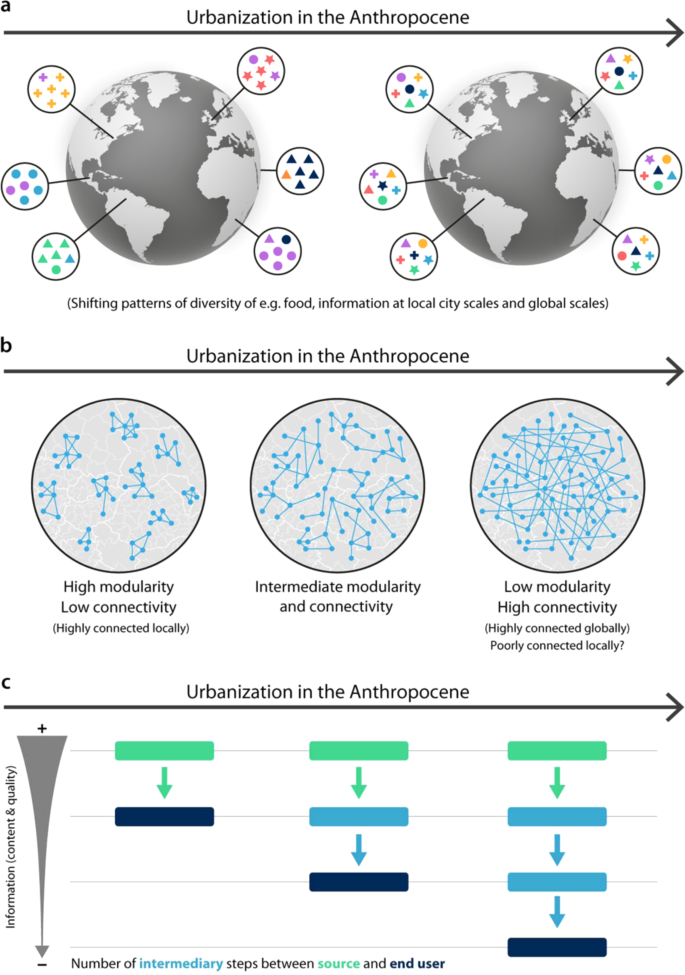

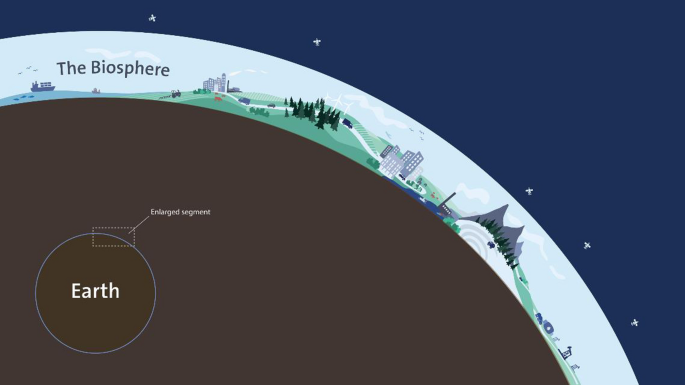
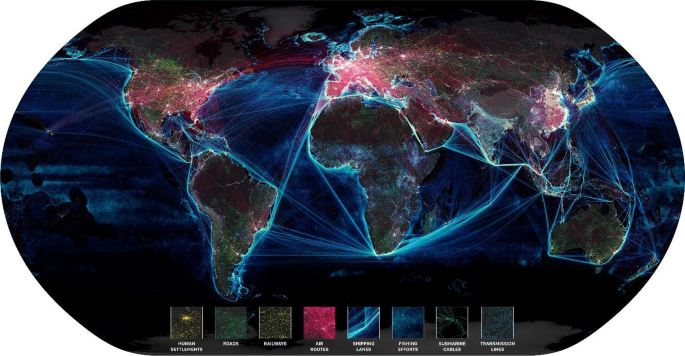
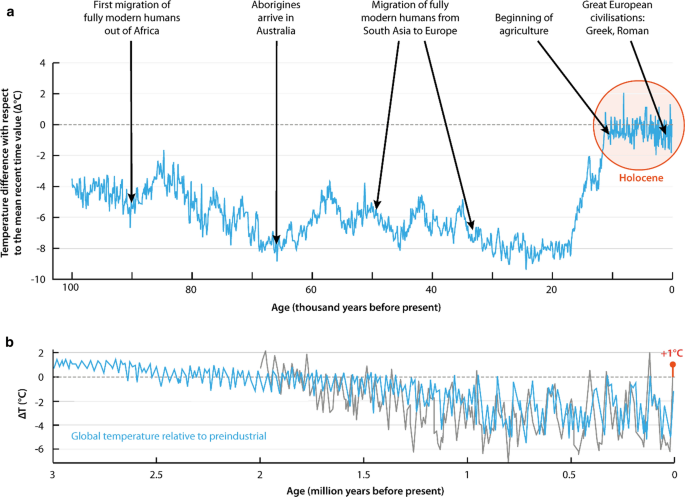
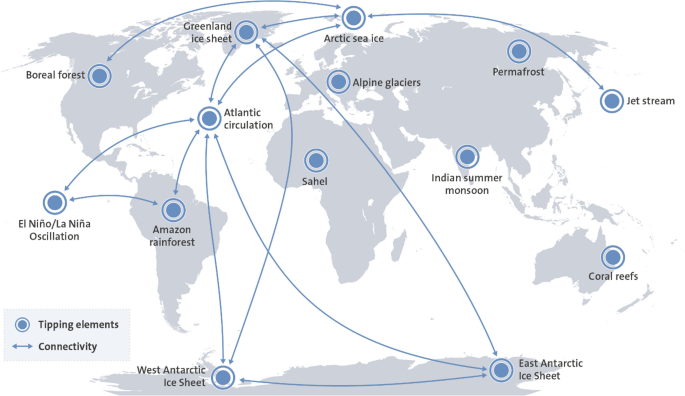

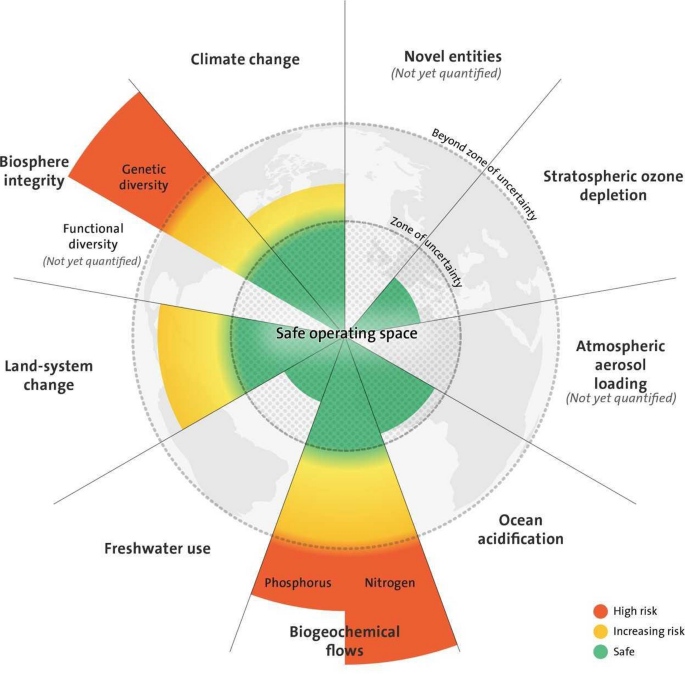
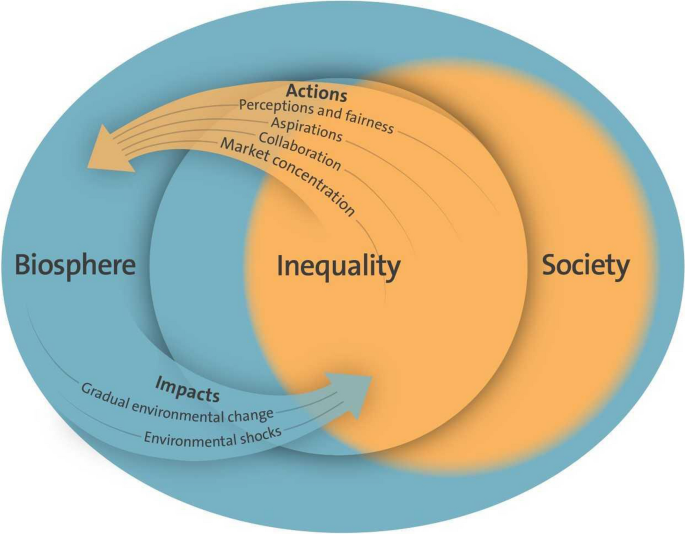
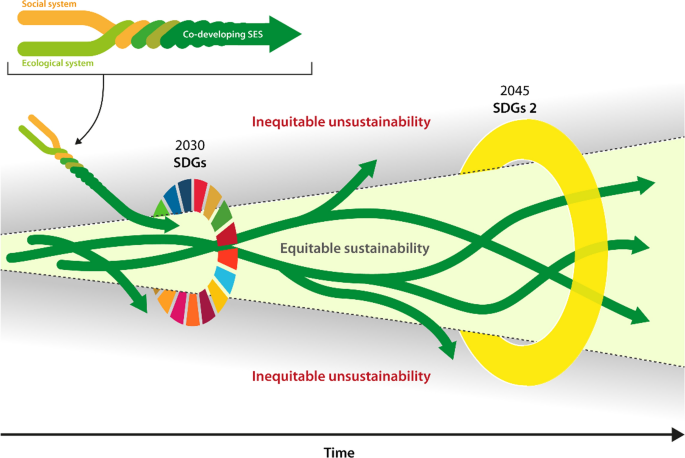
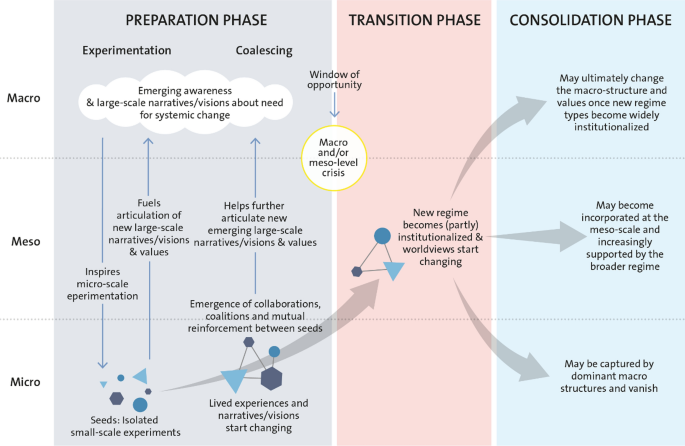
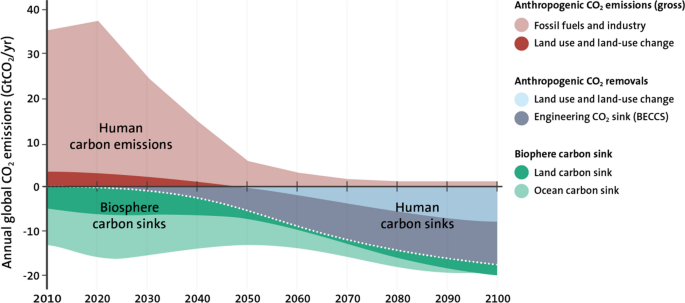
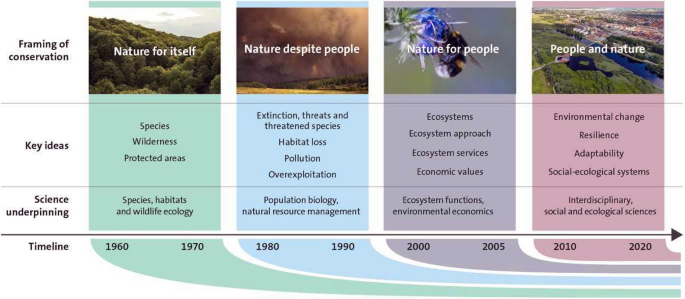
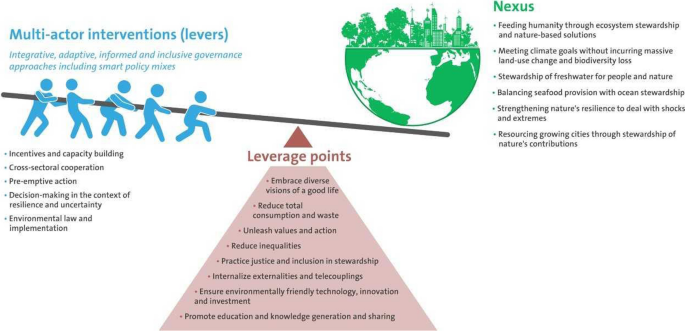
 Institute for Interdisciplinary Research into the Anthropocene