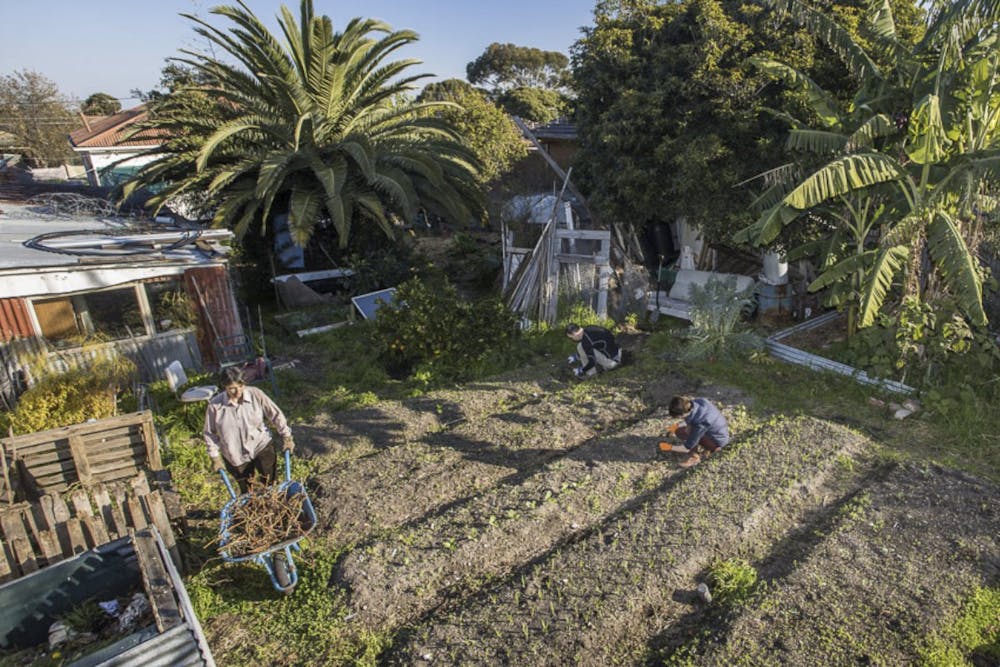
The suburbs are the spiritual home of overconsumption. But they also hold the key to a better future

  1. Samuel Alexander Research fellow, Melbourne Sustainable Society Institute, University of Melbourne
  2. Brendan Gleeson Director, Melbourne Sustainable Society Institute, University of Melbourne

Article republished from the Conversation

Suburban affluence is the defining image of the good life under capitalism, commonly held up as a model to which all humanity should aspire.

More than half of the world’s population now lives in cities. Yet with the global economy already in gross ecological overshoot, and a world population heading for more than 11 billion, this way of living is neither fair nor sustainable.

To live within our environmental means, the richest nations will need to embrace a planned process of economic “degrowth”. This is not an unplanned recession, but a deliberate downscaling of economic activity and the closely correlated consumption of fossil energy. We don’t argue this is likely, only that it is necessary.

You might naturally assume this will involve pain and sacrifice, but we argue that a “prosperous descent” is possible. Our new book, Degrowth in the Suburbs: A Radical Urban Imaginary, envisions how this might unfold in the suburban landscapes that are currently emblematic of overconsumption.

Read more: The ‘simple life’ manifesto and how it could save us

The well-known documentary The End of Suburbia presented a coherent narrative of a post-petroleum future, but got at least one thing wrong. There is not a single end to suburbia; there are many ends of suburbia (as we know it).

Reimagining the suburbs beyond fossil fuels

Suburban catastrophists such as James Kunstler argue that fossil fuel depletion will turn our suburbs into urban wastelands. But we see the suburbs as an ideal place to begin retrofitting our cities.

This won’t involve tearing them down and starting again. Typically, Australia’s built environment is turned over at less than 5% per year. The challenge is to reinhabit, not rebuild, the suburban landscape. Here are some of the key features of this reinvigorated landscape:

  • Suburbanites can and should retrofit their homes and develop new energy practices to prepare for an energy descent future.
  • Households must be encouraged to downshift consumerism, swapping superfluous “stuff” for more free time and other sources of meaning and well-being. An economics of sufficiency involves borrowing and sharing rather than always buying and upscaling.
  • We should reclaim and reimagine areas of the built environment that are misused or underused. The vast areas dedicated to car parking are but one example.
  • Finally, and most importantly, we should realise that change must come via grassroots political organisation, rather than waiting for growth-fixated governments to lead the way. This is not to deny the need for “top-down” structural change. Our argument is simply that the necessary action from governments will not arrive until there is an active culture of sufficiency that demands it.
Sharehouse food production. Retrosuburbia.com (with permission)

What social forces might produce this necessary but elusive urban transformation? We think it can be driven by two broad social groups: the disillusioned middle class and the exploited working class. These two groups, which already blur together along a spectrum, can potentially become a cohesive urban social movement of transformative economic and political significance.

The disillusioned middle class: radical downshifters

Our first groups consists of employed professionals, bureaucrats, and tradespeople who have secure housing, earn decent wages, and can direct significant portions of their income to discretionary spending. This sector of society participates, consciously or unconsciously, in what is often called “consumer culture”.

This consumerism often fails to fulfil its promise of a rich and meaningful life. The consumer class has been sold a lie, and many affluent consumers are now developing what social scientist Ronald Inglehart calls “post-materialist” goals and values. This emerging way of life involves seeking purpose and satisfaction in life through things other than material riches, including deeper community engagement, more time to pursue private passions, or even increased political action.

This is significant, for three reasons. First, history shows that social movements tend to be sparked by dissatisfaction with the status quo – otherwise, why would people resist or seek alternatives? The deep disillusionment with materialistic lifestyles provides an incentive to explore alternative, more satisfying ways to live and self-provide.

Second, by withdrawing their spending from the market economy, this emerging social movement can undermine that economy and fast-track its transformation.

Finally, a “radical downshifting” in consumption could allow people to free up their time by working less. This will provide people with more time to participate in building new forms of economy and engaging in collective action for change. The “voluntary simplicity movement” already numbers as many as 200 million people, although its potential depends on more organised and radical expressions.

The exploited working class: economic builders

Radical downshifters will never transform the economy on their own, and this is where our second group comes in. Working-class urbanites, while also drifting into superfluous consumption, are typically characterised as individuals and households who are “battling” to make ends meet.

Again, a growing dissatisfaction with the status quo provides the incentive to seek and participate in fundamental change. We are often told that Australia’s economy has grown uninterrupted for a quarter-century, yet many people feel their personal circumstances have stagnated.

There has indeed been growth, yet almost all the benefits have been siphoned away by the wealthy. Why would the working class owe any allegiance to a system that only benefits the rich? As the battlers realise they are being oppressed and duped by an unjust system, they threaten to become a dynamite class of explosive potential.

As economic crises threaten to intensify in coming years – including the challenge of automation – we maintain that the exploited working class may be driven to explore alternative ways to self-provide. As incomes become more meagre and jobs less secure, more people will need to seek alternative ways of meeting economic needs “beyond the market”.

A suburban home complete with mini market garden means fewer trips to the shops (for your neighbours too). Retrosuburbia.com (with permission)

Whether through necessity or choice, we foresee a growing number of people beginning to participate in informal, non-monetary, and local economies, including the sharing economy. Just as radical middle-class downshifters will help stifle economic growth by withdrawing their discretionary spending, those who are less affluent could begin to lay alternative economic foundations, and provide a post-capitalist social safety net.

Working together

We contend that these two social groups – the disillusioned middle class and the exploited working class – can conceivably form a cohesive movement with similar goals. The capitalist system isn’t working for many people, even those who are “winning” the rat race. Furthermore, historic growth trajectories seem to be coming to an end, due to both financial and ecological constraints.

Read more: Life in a ‘degrowth’ economy, and why you might actually enjoy it

Already, a diverse range of movements are working towards a new urbanity. These include local farmers’ markets and community and home gardensurban agriculture projects, freecycling groups, sharing communities, and repair cafes. It also includes the growing pool of climate activists,  divestment  organisers,  permaculture groups, transition towns, and progressive unions.

There is the small but vocal “save our suburbs” network, in which we see the seeds of something more progressive. And it includes the energy frugal households quietly moving towards solar, batteries and increased energy self-suffiency. One by one, these households are undermining the fossil fuel industry and subtly disrupting the status quo.

As financial and ecological crises deepen in coming years, the social consciousness needed to develop new systems of production and cultures of consumption will become compelling. Together these social groups (and others not yet imagined) could form an urban social movement that withdraws support for the existing system and begins building new economies on our suburban streets


Climate, Karma, Compassion

Sam Mickey

Climate is not just a statistical average of interlocking dynamics of temperature, wind, air pressure, humidity, and precipitation. A changing climate involves more than a change in a long-term average pattern of atmospheric conditions. As the climate scientist Mike Hulme puts it, climate change as a planetary system of dynamic, interconnected weather patterns is a part of a more complex whole, and not only in the sense that the global climate is connected to all the systems of water, land, air, and life on Earth. More than saying that climate change is about the whole Earth and not just the atmosphere, Hulme’s point is that climate exceeds the limits of definitions articulated in the natural sciences, and that a wider field of inquiry is needed, which includes cultural meanings and understandings of climate along with theories and observations from natural sciences.[1]

In the same way that an atmosphere can refer, on one hand, to a mood, and on the other hand, to a system of gases surrounding a planet, a climate has physical and sociocultural dimensions. As part of a whole, Hulme describes climate change as a synecdoche that stands for 1) a modern social system, 2) an economic ideology, 3) a loss of nature, and 4) a new geological epoch.[2] For Hulme, that social system is best described by Ulrich Beck’s analysis of the “risk society” of modernity, which is based on the management of hazards and uncertainties that society produces through its never-ending pursuit of progress and wealth.[3] Hulme follows Naomi Klein in identifying capitalism as the economic ideology of climate change.[4] It is an ideology for which the accumulation of wealth for the few happens at the expense of the many, thus producing social and ecological disasters, which then become justification for the further deployment of capitalist tactics, producing yet further disasters in an accelerating loop of what Klein calls “disaster capitalism.”[5] Liberalism and conservatism are both complicit in disaster capitalism. The liberal face of this ideology is the identity politics that incorporates people of diverse identities (races, ages, abilities, genders, etc.) to participate in the system, as if bringing more people closer to the wealthy top will eventuate in justice for the myriad beings at the disastrously impoverished bottom.

Along with the risk society and capitalist ideology, Hulme’s definition of climate change also includes the end of nature, which has been a topic of increasingly frequent discussion among environmental thinkers, with notable contributions like Carolyn Merchant’s classic ecofeminist text, The Death of Nature, and Bill McKibben’s book on climate change, The End of Nature, which were first published in 1980 and 1989 respectively. Many recent explorations of this topic refer to Timothy Morton’s theory of ecological criticism in his 2007 book Ecology without Nature. Climate change is part of the loss of the relatively regular, stable, ordered ground of nature, which is also a loss of ideas and fantasies of Nature as a big Other, whether friend or foe, sacred or profane. The regular patterns and ordered systems of nature have gradually become displaced as humans have extended their environmental impacts all around the planet, becoming an Earth-shaping force. The loss of nature is thus entwined with a new geological epoch.

As modern humans began adding high amounts of carbon, plutonium, plastic, Styrofoam, and a wide assortment of artificial chemicals to Earth’s crust, the geological epoch of the last 12,000 years (the Holocene) gave way to a new one that bares the indelible stamp of Homo sapiens, the Anthropocene. It is a controversial name, to be sure. It is not clear if this is indeed a new epoch or merely a boundary event between epochs. Furthermore, humans did not all participate equally in facilitating this geological transformation. Humans in WEIRD social locations (Western, Educated, Industrialized, Rich, and Democratic) seem particularly responsible, yet that specificity is erased by the general humanity of Anthropos. The problem of nomenclature notwithstanding, the loss of nature marks the end of a natural Earth and the beginning of an Earth where the natural and the artificial have imploded. It is an Earth become artifact, “Eaarth,” as McKibben puts it. In sum, along with a change in average atmospheric conditions, climate change also stands for the end of nature, a change in geological epochs, and a society that, for the sake of progress and wealth accumulation, is willing to risk unprecedented scales of destructive change.[6]

With its sociocultural and biophysical dimensions overlapping in cause-effect cycles that extend from humans through the land, life, air, and water of Earth, climate change can be understood as a change in karma—the Sanskrit word for “action,” denoting a cause-effect principle found in Hinduis, Jainism, Indian philosophies (e.g., Vedanta, Yoga, Jainism, and Buddhism). Karma includes all the cause-effect dynamics of all energy (psychological and physical) circulating on Earth and throughout the cosmos. Consider these remarks from the Tibetan Buddhist, Chögyam Trungpa Rinpoche:

All the processes that take place in the universe are dependent on the environmental situation of karma. It is rather like the atmosphere that the planet requires in order to function, in order for things to grow. When we talk about the karmic situation, we are speaking about the sense of individual relationship to the given situation, whatever it is. Any given situation is bounded by cause and effect, dependent on some cause and effect. […] So, altogether when we discuss karma, we are discussing energy.[7]

Karma includes enlightened action, such as the activity of the Buddha, as well as the action of one caught in samsara—the cycle of confusion, suffering, and rebirth. The difference is duality. In the samsaric condition, karma is “energy that moves from here to there and then bounces back,” which is “the definition of duality,” more specifically, it is “duality in the sense of the neurosis of dualistic fixation.”[8] Enlightened energy undoes the dualistic fixation through compassion.

The duality that separates self from other, or human from nonhuman, brings suffering into our karmic atmosphere. That dualistic fixation is driving many of the systems causing the climate crisis, such as processes of globalization, industrialization, capitalism, and technoscience. What if too much carbon in the atmosphere is caused by too much dualism in our karma? Can compassion help us escape this crisis? Not really. The desire to escape is the neurotic dualism that separates me from my situation. Looking for something to do to ensure a safe escape from ecological crisis is the very fixation driving the crisis. However, this does not mean that we should try to escape from our tendency to escape. That is obviously just more of the same problem, more of the same neurotic fixation.

What if efforts to get out of the ecological crisis were preventing us from getting out of ecological crisis? It is like a Chinese finger trap—a puzzle that you play with by putting a finger from one hand in one end of a small, finger-sized tube, and putting a finger from the other hand in the other end. Once your fingers are inside, you cannot pull them out without the trap tightening around your fingers and thus further entrenching you in the trap. To continue struggling against the trap is the dualistic fixation of the self who is opposed to the other, the fixation of humankind struggling against intimacy with nonhumans. The only way out is through—to let go, to release the fixation, to go with the flow. Samsaric energy mutates into compassion. If you let your fingers move further into the trap, the trap relaxes its grip and you can effortlessly free your fingers. Liberation comes from accepting the trap, letting beings be.

            A compassionate response to the climate crisis does not mean that you have to worry yourself with obsessive questioning, “What should I do?” It means letting things be, letting yourself be in unbearably intimate relations with nonhumans, letting samsaric energy mutate. It means trusting the process of letting things be, trusting your solidarity with nonhumans, and accepting imperfection. We all make mistakes. Striving to escape that basic impurity only intensifies samsaric energy but does not let it transform. Rather than micromanaging your life or giving constant attention to every single problem, compassionate action lets things be. The courage to be compassionate constitutes a mutation of the karma driving the climate crisis. Chögyam Trungpa puts it simply: “Part of compassion is trust. If something positive is happening, you don’t have to check up on it all the time. The more you check up, the more possibilities there are of interrupting the growth. It requires fearlessness to let things be.”[9]

Notes


[1] Mike Hulme, Weathered: Cultures of Climate (Thousand Oaks: SAGE Publications, 2017), xiii.

[2] Mike Hulme, “(Still) Disagreeing About Climate Change: Which Way Forward?” Zygon 50.4 (2015), 897-899.

[3] Ulrich Beck, Risk Society: Towards a New Modernity, trans. Mark Ritter (Thousand Oaks: SAGE Publications, 1992).

[4] Naomi Klein, This Changes Everything: Capitalism vs. the Climate (New York: Simon & Schuster, 2014).

[5] Naomi Klein, The Shock Doctrine: The Rise of Disaster Capitalism (London: Picador, 2007).

[6] Bill McKibben, Eaarth: Making a Life on a Tough Planet (New York: Times Books, 2010).

[7] Chögyam Trungpa, The Future Is Open: Good Karma, Bad Karma, and Beyond Karma (Boulder: Shambhala Publications, 2018), 3

[8] Ibid., 3-4.

[9] Chögyam Trungpa, Mindfulness in Action: Making Friends with Yourself through Meditation and Everyday Awareness (Boston: Shambhala Publications, 2015), 56.

The next ten years… — The Anthropocene Dashboard

One would think the latest reports documenting the lack of action regarding climate change, the continued and accelerating changes to the oceans and cryosphere, the deteriorating condition of the Great Barrier Reef, and the astonishing decline in avian populations along with the ongoing extinction of numerous other plant and animal species, should serve to focus […]

The next ten years… — The Anthropocene Dashboard

Towards a Cosmopolitics for the Anthropocene

Heather Alberro

PhD Candidate/Associate Lecturer

Nottingham Trent University

The question of how to live together harmoniously with our earthly co-inhabitants has never been more pressing amid the severe and worsening socio-ecological perturbations of the Anthropocene. Perhaps the most troubling is the systematic annihilation of our co-evolutionary kin that is the planet’s sixth mass extinction. In monopolizing the earth for ourselves- largely through neoliberal-capitalist socioeconomic systems predicated on ceaseless growth and consumption, spurring deforestation and related land-use changes, and the commodification of life itself for profit accumulation as an end-in-itself- a staggering 60% of monitored vertebrate species per 1970 levels have disappeared. Crucially, such loss is no mere epistemological phenomenon, as if these beings were quantifiable resources that could be recuperated, but a protracted event that marks the slow unravelling of cherished and irreplaceable ethico-political relations.

The aforementioned trends further stem from the long-standing tradition of anthropocentrism and its positing of humans as separate from and superior to the natural world and non-human entities, a legacy of the deep-seated Cartesian reduction of non-human animals to things acted upon, as not seeing but merely ‘seen’ by human subjects. If one conceives of politics as the manner by which society or the collective is arranged so as to enable its members to live well, then traditional conceptualizations have been woefully deficient in their arrogant exclusion of non-human others. Aristotle’s conception of the polis was famously logo-centric- a community predicated on its citizens’ abilities to speak, listen, and share a common vision of the good life. Similarly, Kant’s famed cosmopolitan proposal in Toward Perpetual Peace for a global citizenry bound by universal law and solidarity was thoroughly Western-Euro-centric in its exclusion of beings external to the human-world correlate. Kant regarded only rational beings as worthy of being treated as ends in themselves; non-rational beings (i.e., animals) had only “relative worth, as means” and were therefore regarded as mere things.

Such legacies are alive and well in contemporary political thought, which continues to construe the ‘cosmos’ far too narrowly. The non-human world is still posited- often implicitly and sometimes explicitly- as mere inert background to the unfolding human drama. In popular, policy, and even academic discourses, the natural world and other species are still framed matter-of-factly as resources for the satisfaction of human needs and desires. Yet, as Latour poignantly observes, the litany of ecological crises proliferating amid the Anthropocene in the form of super hurricanes, scorching droughts, raging wildfires, and rapidly vanishing flora and fauna constitute a ‘generalized revolt of the means’- protests by recalcitrant entities who no longer consent to being treated as mere inert objects for furthering human ends. Hence the fundamentally ethical imperative of a radical reconstitution of our common world, to be carefully designed by and for the long-excluded multitudes. As with the old schism between ‘Society’ and ‘Nature’, the ‘proliferating associations of nonhumans’ behind every human- and without whom we simply could not be- highlight the profound deficiencies of traditional conceptualisations of the cosmos and polis.

Both Latour and Stengers attempt to extricate themselves from these profoundly humanist traditions through their conception of cosmopolitics- ever-expanding assemblages of multiplicities of actants- human and non-human- that must be continuously negotiated and co-constructed. However, Latourian cosmopolitics perhaps affords a little too much primacy to the existing collective’s right, and indeed capacity, to decide, pending compromise and accommodation, who and on what terms is to be ‘welcomed’. In this case, new arrivals are to be welcomed pending the degree to which they can harmoniously mesh with existing actants by finding their rightful place in the collective, and on condition that they do not fundamentally disrupt the already-existing order. The query, ‘Can we live together?’, is posited as the sacred duty of those in the already-established collective rather than equally posed by external others. Moreover, the collective’s perimeter, however tentative, is still policed by those on the inside. It is here where Latour fails to direct sufficient attention to the violent, undemocratic, and therefore unethical implications of exclusion.

We must always ask ourselves who is left out and, crucially, from an ethical standpoint, what effects this might have on them. When Latour enquires as to what obliges one to “reserve the water of the river Drome for fish as opposed to using it to irrigate corn fields subsidized by Europe”, the answer doesn’t simply lie in whether or not we’ve taken into account all entities affected by such an act or in considering how excluding fish will affect the whole collective. Depriving the fish of water is ethically unacceptable because the fish needs water in order to live and flourish. Thus, a new ethic for the Anthropocene demands that we treat the vast profusion of more-than-human life on earth as singular and irreducible entities who matter in and of themselves, as political subjects worthy of inclusion and active participation in the earth collective, and crucially, as fellow earthlings who are with and not for us.

Humans: the species that changed the world

Erle C. Ellis

Global climate change, widespread extinctions, and pervasive pollution are just a few of the many symptoms of the global environmental changes produced by human activities. There is a growing consensus that human societies have emerged as a “great force of nature” that is shifting Earth into a new epoch of geologic time, the Anthropocene 1, 2.  Why? Biology alone cannot explain this.

While Homo sapiens does have some distinctive biological traits, stone tools and control of fire are not among them; both were common to ancestral hominins long before sapiens emerged among them. The central question of the Anthropocene, why did behaviorally modern humans gain the unprecedented capacity to change an entire planet, cannot be answered by genetic changes in human behavior. To explain why human societies scaled up to become a global force capable of changing the Earth and why there are so many different forms of human societies and ecologies shaped by them, explanations must be sought beyond the theories of biology, chemistry or physics. Here I introduce a new evolutionary theory, sociocultural niche construction, aimed at explaining the origins of human capacity to transform the Earth 3. As will be seen, this theory also explains why behaviorally modern human societies came to transform ecology in so many different ways over the past 50,000 years as they expanded across the Earth.

Like most ecologists whose work involves humans, my research has focused primarily on the ecological consequences of human activities, not the causes.  In 2012, the editor of Ecological Monographs pushed me to go further, to explain why humans have reshaped more than three quarters of the terrestrial biosphere from their “natural” biome patterns shaped by climate, like tropical rainforests, grasslands, and deserts, into the urban, village, cropland, rangeland and seminatural anthropogenic biomes now common across Earth’s land (anthromes4.

My efforts to answer this question required a huge dose of social learning: a deep dive into evolutionary theory and a sustained effort at transdisciplinary synthesis across existing theories of niche construction, the Extended Evolutionary Synthesis, cultural evolution, ultrasociality, and social change. The resulting monograph presents a new theory, sociocultural niche construction, to explain the emergence of humanity as a global force that is reshaping ecology across the biosphere and weighs its implications for ecological science (anthroecology theory3.

In this article, I explain why cultural evolution is at the core of this theory, explaining why humans alone among multicellular species gained the capacity to change a planet and why different societies do this differently, as the result of sociocultural evolution (the social evolution of cultural systems), in which natural selection acts simultaneously on individuals, social groups, and societies causing long-term behavioral changes in them across human generational time (multi-level selection; explored in this blog post).

The first step in understanding why humans change environments is the recognition that all species do this to some degree.  This is known as ecosystem engineering in ecology. More importantly, these alterations can have evolutionary consequences. This is the theory of niche construction, in which organisms alter their environments, for example, by building nests or by producing chemicals that inhibit other species (allelopathy), producing an ecological inheritance– which may be beneficial, detrimental or neutral to their adaptive fitness, and/or to that of other species sharing their environment 5. Niche construction theory makes evolution a two-way street: organisms do not just adapt within environments that they cannot alter, they also alter their environments, producing ecological inheritances and altered environments that may require further adaptations.

In ecology, cultural inheritances are defined as heritable traits transmitted through social learning 6, 7. By bringing cultural inheritances together with ecological inheritances and other forms of genetic and nongenetic inheritances, we arrive at the Extended Evolutionary Synthesis (EES) mentioned above. The EES holds that the phenotypic traits of organisms are produced by a combined suite of inheritances, the “inclusive inheritance”, composed of cultural, ecological, genetic, epigenetic and parental inheritances that evolve together to produce evolutionary changes in phenotypes 7, 8.

The implications of coupling cultural and ecological inheritances together in a single evolutionary theory are profound even for nonhuman species. However, for behaviorally modern humans, in which cultural inheritances determine both the organization of societies and their strategies for utilizing and transforming their environments, the implications of the EES are absolutely transformative. Moreover, the EES also includes multiple modes by which inheritances may be transmitted, from the vertical transmission of genetic traits from parent to progeny to the horizontal transmission of inheritances across unrelated individuals within a single generation – common to both cultural traits and gene transfers across microbes – to the oblique inheritance of traits from older to younger generations, enabling horizontal transmission of inheritances across generations and their accumulation over the long-term.

A key prediction of the EES is that when environments vary rapidly, within the span of a single generation, this tends to favor adaptive traits that are inherited horizontally and obliquely, like cultural traits (or horizontal gene flow among microbes) over traits transmitted vertically (like genetic traits in multicellular organisms passed from parent to offspring), because this produces greater phenotypic plasticity in adapting to environmental changes within a single generation.  As a result, the EES predicts that cultural traits (and other forms of horizontally transmitted traits – like bacterial genes) will tend to be selected for in highly variable environments.

Given that humans, even those living in hunter gatherer societies, are among the most potent of all ecosystem engineers, their environments tend to change rapidly, within a single generation, through use of fire to clear vegetation, by massive hunting and foraging pressures, and the propagation, management and dispersal of species 9. Human ecosystem engineering behaviors also tend to be socially learned and socially enacted (produced by cooperation within and among social groups), highlighting the adaptive importance of cultural traits and their interplay with ecological inheritances in defining the evolutionary processes of behaviorally modern human societies and their socially engineered environments.

While there are many social species, the sociality of behaviorally modern humans is exceptional. Our capacities for social learning and the accumulation and evolution of cultural inheritances are unrivalled, and have produced societies structured largely by socially learned social relationships that include dependence on non-kin individuals for survival, marking our species as the most social of all, Earth’s first ultrasocial animal 10. To survive and reproduce within behaviorally modern human societies, it is necessary to socially learn the requisite behaviors for interacting with both kin and non-kin individuals and within and across social groups and societies, such that human adaptive fitness is a function of culture, not of biology 11. Individual, group and societal behaviors vary profoundly both within and among societies, including strategies for ecosystem engineering, exchange of food and other resources among kin and non-kin, forms of social organization, and even the modes of social transmission of culture (e.g. languages, technologies, ritual practices, artistic expressions, etc.).

In behaviorally modern human societies, direct interactions with the environment to gain sustenance and other necessities by foraging, farming or even shopping at the store, may be optional; sustenance and other necessities may be gained through complex social relationships among unrelated and unknown individuals – like when you go to the grocery store to get food without ever setting foot on a farm. The human niche, the way that humans as a species utilize and transform environments to survive and to reproduce, is thus largely sociocultural, constructed and enacted within, across, and by social groups and societies. Long-term changes in the construction of the behaviorally modern human niche, the structure and functioning of human societies and their transformation of environments, is the product of evolution by natural selection acting on the individual and groups via social modes of sociocultural niche construction.

This perspective is not entirely new either. Charles Darwin noted that human cultural traits appear to evolve much more rapidly than biologically-determined traits 12. This is clearly one of the main reasons why human societies have evolved so many diverse and complex cultural forms and why they have changed so much over the mere 50,000 years since behaviorally modern humans first spread across the Earth. Hunter gatherer societies, some of which successfully sustain themselves today even in the face of pressures from larger scale societies, are generally composed of small bands of mostly related individuals and rely on remarkably complex sociocultural toolkits including social hunting, traps and projectiles, resource sharing, niche broadening (expanding the range of utilized species when preferred species are driven extinct), food processing, the clearing of vegetation using fire to increase success in hunting and foraging and even the propagation of favored species- the first stages of domestication.

Agricultural societies have built on these complex sociocultural strategies to develop even more novel and transformative ecosystem engineering regimes, from domesticated species, tillage, and irrigation to manuring and the marketplace. They have also developed larger and larger social groupings with more and more complex and unequal social organization requiring increasingly diverse and specialized social roles, from urban dwelling craftsmen to traders, taxmen, the utilization of ever more complex tools and technologies enabling even greater modification of environments, and the harnessing of domestic livestock and water power to supplement human energy. Industrial societies have scaled up even more, developing massive and rapidly growing populations, global trade in food and other resources, the use of fossilized biomass and even non-biomass forms of energy to supplement and eliminate human energy in ecosystem engineering, food and resource sharing, and even communications.

Across societies, sociocultural evolution has been accelerated by both the ratchet effect and by runaway processes of sociocultural niche construction. In the ratchet effect, multiple cultural traits may become aggregated into a single complex cultural trait, such as the “recipe” to produce a bow and arrow, and this complex trait may then be transmitted horizontally as a single trait from one society to another. Even greater bursts of sustained evolutionary change – sociocultural regime shifts – can also occur through runaway sociocultural niche construction, in which the social and environmental changes produced by cultural + ecological traits, such as the cultivation of soil leading to long-term fertility loss, must be adapted to by even more transformative cultural and ecological traits, such as the harvesting and utilization of manures to maintain soil fertility, locking societies into a continuous cycle of increasingly transformative change in their sociocultural niche.

Human ultrasociality changed the Earth. While evolution is never linear or progressive, there are some remarkable general long-term trends in human social change (see Table 3 in Ellis, 2015). Over the past 50,000 years, the potential scale of individual human societies has grown from a few dozen individuals to several hundred million. The potential productivity of a single square kilometer of land has been increased through cooperative ecosystem engineering from sustaining less than ten individuals to sustaining more than one thousand. Energy use per individual has expanded by a factor of more than 20 times through use of non-biomass energy, mostly from fossil fuels. The flow of materials, energy, biota and information across human societies has become essentially global. And human individuals now live nearly twice as long on average as they did in the Paleolithic.

A number of theories have been advanced to explain why human societies gained these unprecedented scales and capacities, from the competitive advantages of large scale cooperation in warfare 13, to the increasing economies of scale in dense populations 14. No doubt the many evolutionary patterns of human sociocultural niche construction have emerged in response to many different pressures – and even at random – but multilevel selection acting on human cultural inheritances is the ultimate shaper of both the great diversity and the unprecedented scales of the human sociocultural niche.

Sociocultural niche construction theory is still at an early stage of development.  It is critical to remember that like biological evolution, sociocultural evolution is a process, not a destiny. The future remains fully open to surprise – the large scale societies of today could quickly go the way of the dinosaurs. Given current trends in environmental disruption and growing social inequality, such outcomes seem increasingly plausible. Nevertheless, as contemporary societies advance in their ability to understand the ultimate causes, not just the consequences, of their transformation of the Earth, this knowledge has the potential to enable societies to seek and implement social strategies aimed towards sustaining both themselves and nonhuman species more successfully and to make progress toward more desirable futures.

The call to recognize the Anthropocene as a new epoch of geologic time confronts us with the need to understand and better guide the dynamics of human societies as a global force reshaping the Earth System.  Long-term changes in human social organization, cooperative ecosystem engineering, exchange relationships, and energy systems are now tightly coupled with long-term changes in the Earth System that are altering ecology across our planet in profound and possibly permanent ways. While it is possible that for most people on Earth, times have never been better, the opposite is true for most other species.

In an increasingly anthropogenic biosphere it is essential to shift the paradigm. Humanity has emerged as a global sociocultural force. We and all other species now live on a used planet reshaped by generations of our ancestors. On the one hand, human societies are polluting air, land and sea, changing Earth’s climate and expanding into the habitats of other species, driving them to extinction. But the opposite is also true. Societies have managed to reduce their pollution, restore habitats, conserve species, and may yet implement the massive shift in energy systems that could circumvent catastrophic climate change. It is time to go beyond the idea that somehow a “balance of nature” will pull humanity back towards some safe harbor and move forward to embrace the sociocultural tools and the “cultures of nature” in which human societies become better both for humans and for all the rest of Earth’s species that must now live together with us on a used planet.

Original article here

References 

  1. Steffen, W., P. J. Crutzen, and J. R. McNeill. (2007) The Anthropocene: Are Humans Now Overwhelming the Great Forces of Nature. AMBIO: A Journal of the Human Environment 36: 614-621.
  2. Waters, C. N., J. Zalasiewicz, C. Summerhayes, A. D. Barnosky, C. Poirier, A. Gałuszka, A. Cearreta, M. Edgeworth, E. C. Ellis, M. Ellis, C. Jeandel, R. Leinfelder, J. R. McNeill, D. d. Richter, W. Steffen, J. Syvitski, D. Vidas, M. Wagreich, M. Williams, A. Zhisheng, J. Grinevald, E. Odada, N. Oreskes, and A. P. Wolfe. (2016) The Anthropocene is functionally and stratigraphically distinct from the Holocene. Science 351: aad2622.
  3. Ellis, E. C. 2015. Ecology in an Anthropogenic Biosphere. Ecological Monographs 85: 287–331.
  4. Ellis, E. C., and N. Ramankutty. 2008. Putting people in the map: anthropogenic biomes of the world. Frontiers in Ecology and the Environment 6: 439-447.
  5. Odling-Smee, F. J., K. N. Laland, and M. W. Feldman. (2003) Niche Construction: The Neglected Process in Evolution. Princeton University Press.
  6. Laland, K. N., J. Odling-Smee, and M. W. Feldman. (2000) Niche construction, biological evolution, and cultural change. Behavioral and Brain Sciences 23: 131-146.
  7. Danchin, É., A. Charmantier, F. A. Champagne, A. Mesoudi, B. Pujol, and S. Blanchet. 2011. Beyond DNA: integrating inclusive inheritance into an extended theory of evolution. Nat Rev Genet 12: 475-486.
  8. Danchin, É. 2013. Avatars of information: towards an inclusive evolutionary synthesis. Trends in Ecology & Evolution 28: 351-358.
  9. Smith, B. D. (2007) The ultimate ecosystem engineers. Science 315: 1797-1798.
  10. Hill, K., M. Barton, and A. M. Hurtado. (2009) The emergence of human uniqueness: Characters underlying behavioral modernity. Evolutionary Anthropology: Issues, News, and Reviews 18 :187-200.
  11. Sterelny, K. 2011. From hominins to humans: how sapiens became behaviourally modern. Philosophical Transactions of the Royal Society B: Biological Sciences 366: 809-822.
  12. Mesoudi, A., A. Whiten, and K. N. Laland. 2006. Towards a unified science of cultural evolution. Behavioral and Brain Sciences 29: 329-347.
  13. Turchin, P. 2015. Ultrasociety: How 10,000 Years of War Made Humans the Greatest Cooperators on Earth. Beresta Books.
  14. Bettencourt, L. M. A. 2013. The Origins of Scaling in Cities. Science 340: 1438-1441.

Personal site