What to expect from COP26: climate action, climate justice or greenwashing?

Issue: 172 (initial article link)
Posted on 

Eve Croeser

If Karl Marx and Frederick Engels were writing the Communist Manifesto today, it is not inconceivable that they would begin with the sentence: “A spectre is haunting humanity—the spectre of extinction.” Even before the onset of the coronavirus pandemic in 2019, humanity was facing a complex of interconnected environmental, ecological, socio-economic and political crises caused by the expansion and intensification of capitalist relations of production. The current confluence of these crises suggests that capitalism is experiencing what Italian Marxist Antonio Gramsci referred to as an “organic crisis”—one in which the system’s “incurable structural contradictions” reach maturity and threaten the ruling class’s hegemony.1 In contrast to “conjunctural” crises, which are less historically significant, organic crises arise when “the necessary and sufficient conditions…exist to make possible, and hence imperative, the accomplishment of certain historical tasks. These tasks become imperative because any falling short before an historical duty increases the necessary disorder and prepares more serious catastrophes”.2 Although the environmental, socio-economic and political crises are deeply interrelated and exacerbate one another in complex ways, here we shall analyse capitalism’s organic crisis by focusing on the climate emergency.

This article begins with a brief overview of the severity and urgency of the climate crisis. It goes on to argue that capitalism both causes the climate crisis and is also unlikely to be capable of solving it effectively. This is despite the establishment of an international treaty, the United Nations Framework Convention on Climate Change (UNFCCC), designed for this very purpose. Signatories to this treaty (who are referred to as “parties” of the treaty) send delegates representing their states to formal annual meetings, called a “Conference of the Parties” (COP). There, they negotiate targets for reducing the greenhouse gases causing climate change. The 26th annual Conference of the Parties (COP26) is scheduled to convene in Glasgow, Scotland, from 31 October to 12 November 2021. Distinguishing between climate action and climate justice, this article provides an overview of some of the contentious issues that will be negotiated at COP26. It also looks at the role of the COP26 Coalition, a Britain-based coalition of groups and individuals mobilising in favour of climate justice during the COP26 negotiations. The article concludes with a brief overview of Marxist responses to the climate crisis, offering some suggestions for further consideration and debate.

The severity of the climate crisis

As COP26 delegates prepare to meet for yet another set of negotiations, people’s lives in various parts of the globe are being disrupted and threatened by the effects of extreme droughts, wildfires and floods whose unprecedented severity is a result of anthropogenic climate change.3 These extreme weather events include the severe floods in Western Europe and China in July 2021 that resulted in hundreds of deaths, the displacement of millions of people and the destruction of infrastructure worth billions.4 Over the past few months, several severe, destructive wildfires have also burned across Europe, North America and Russia. Many of these fires were still burning at the time of writing, fed and exacerbated by persistent climate change-induced droughts and extreme temperatures that give rise to “fire weather”.5 Other symptoms of climate change are abundant. The last five years have been the warmest on record, and an unprecedented number of fires have burnt in the Arctic. Some 1 million tonnes of ice per minute were lost from the Greenland ice sheet in 2019, and 28 trillion tonnes of ice have been lost globally since 1994.6

As some Earth system scientists point out, however, the climate crisis is likely to be even more serious than these individual signals suggest due to the possibility of crossing “tipping points”. These could lead to a cascade of other environmental changes, shifting our complex, interconnected “Earth system” into a new state “with which humans have no experience of dealing”.7 There are already worrying signs that some important tipping points, such as the collapse of the Gulf Stream and the Greenland ice sheet, are in danger of being crossed. Meanwhile, the Amazon rainforest now emits more carbon dioxide than it absorbs, becoming a source of, rather than a sink for, greenhouse gas emissions.8

The climate crisis caused by anthropogenic global warming is also exacerbating the extensive anthropogenic damage being done to ecosystems. We have witnessed an “exceptionally rapid loss of biodiversity over the last few centuries, indicating that a sixth mass extinction is already under way”.9 The predicament we face is neatly summarised by Earth scientist and palaeoclimatologist Andrew Glikson in his aptly titled article, “While we fixate on coronavirus, Earth is hurtling towards a catastrophe worse than the dinosaur extinction”.10 Glikson is one of many scientists who draw attention to the severity of the climate emergency—and the wider environmental crisis it is both embedded within and exacerbating—as well as the need for immediate action to stop the practices causing these crises. Such warnings about the climate crisis have acquired a new urgency with the publication of the Intergovernmental Panel on Climate Change (IPCC) Sixth Assessment Report (AR6) on the physical basis of climate change. Though AR6 largely confirms previous reports’ findings regarding the scientific evidence of global warming and the resulting effects, it is notable because this is the first time that an IPCC report states that this warming is unequivocally due to “human influence”.11

Institutional responses to climate crisis: the IPCC and UNFCCC

The IPCC was formally established under the auspices of the World Meteorological Organisation (WMO) and the United Nations Environment Program (UNEP) in 1988.12 Public administration expert Larry Luton describes it as “a designedly political organisation”. Unlike the Advisory Group on Greenhouse Gases, which had been established by a group of scientists in 1986 as an advisory panel to guide climate policy, from its inception the US government played a leading role in shaping the IPCC.13 Indeed, the US delegation to the first IPCC meeting in November 1988 had a team of 24 members, greatly outnumbering the number of delegates attending from other countries.14 In contrast to the WMO and the UNEP, which were increasingly marginalised, US scientists, bureaucrats, and “special interest groups such as the fossil-fuel lobby…wielded considerable influence” in the IPCC’s subsequent development.15

The IPCC is organised into three discrete working groups: Working Group I reports on the science of climate change; Working Group II analyses the expected impacts of climate change on socio-economic and natural systems; and Working Group III reports on possible policy responses to the issues identified by Working Groups I and II.16 The US government’s decision to chair Working Group III—whose work is the “most contentious” since it involves selecting “policy-relevant” information—has also enabled it to work with its allies to control the policy narrative emanating from IPCC reports.17 This ensures that suggested policies favour the interests of US (and global) capital.18

The IPCC’s stated mandate is restricted to producing reports that are “­policy-relevant” but not “policy prescriptive”.19 Determining policies for dealing with climate change falls under the auspices of the UNFCCC, which establishes the legal and institutional framework that underpins the COP conferences.20 Delegates representing nation-states that are parties to the UNFCCC meet annually at these conferences in order to agree on which measures they will take to reduce global greenhouse gas emissions. There have now been more than two decades of negotiations at the COPs, which began in 1995, resulting in several accords, plans of action and declarations. These include the 1997 Kyoto protocol and, most recently, the 2015 Paris agreement. Yet, despite all of this, carbon dioxide levels and emissions of other greenhouse gases continue to rise relentlessly.21

“Civil society” responses to climate crisis: climate movements

Although traditional environmental groups were already alert to the issue of climate change in the 1980s, it was only one of several issues on their agenda. However, according to several analysts, the failure of governments and policymakers to institute measures that effectively deal with the deepening climate crisis over time has led to the formation of a distinct “climate movement”. This movement extends beyond the traditional environmental groups and is made up of a loose network of activists and grassroots movements that focus on climate change.22 The demands of climate movement actors range from moderate calls for “climate action” to somewhat ambiguous (but potentially radical) calls for “system change.”

Many climate movement actors point to the existence of a wide range of existing technologies that could be deployed to shift to a “zero carbon economy”.23 Some of these actors attribute the failure to shift to available renewable technologies on the required scale to a “lack of political will” and call for more “ambitious targets” for reducing greenhouse gas emissions.24 However, arguments that attribute this policy failure to a “lack of political will” fail to acknowledge the power dynamics that present obstacles to such action. Moreover, they demonstrate a failure to understand (or perhaps an inability to acknowledge) that capitalism is incapable of being reformed in the ways required to solve the climate crisis. Other calls for reforms are more nuanced, emanating from activists who seek to use such interim reforms as a platform for more radical and fundamental change.

COP26: climate action, climate justice or greenwashing?

The capitalist class is neither blind nor unresponsive to the dangers that the current moment presents to its wealth, power and privilege. However, different factions of the ruling class favour different tactics for achieving their common overall strategy of ensuring the survival of capitalism as a system. Of course, powerful vested interests continue to lobby against taking any action to address climate change, at least for now. However, proponents of “green capitalism” have embarked on a variety of projects aimed at saving the capitalist system while getting the working class and the poor to pay for these projects.25 The green capitalist agenda often represents different corporate interests to the dominant fossil fuel sector. On the opposing side, powerful factions of the ruling class such as the oil and gas industry and large-scale agricultural corporations are sabotaging attempts to “decarbonise” the global economy and are aided in this by capital’s most powerful financial institutions.26

Both these ruling class responses are dangerous to the working class and threaten the future of humanity and all life on Earth. Fossil capital’s response is dangerous because it is on a collision course with reality. It could ultimately lead to dubious large-scale “geoengineering” experiments that deliberately attempt to “rebalance” the Earth system, such as solar radiation management, carbon sequestration and ocean fertilisation.27 Yet, although the global expansion of capital has inadvertently altered the Earth system—changing the chemical composition of the atmosphere and the operations of its major geochemical cycles—it is foolish to believe that humans can control the Earth system. Geoengineering experiments on a planetary scale are highly likely to have unforeseen, unpredictable and potentially existentially threatening results.28 It is important to be aware of this issue when reviewing the outcomes of COP26 (and future COPs); as some analysts point out, article 4 of the Paris agreement permits states to use technical geoengineering “solutions” to meet their “nationally determined contributions” to reduce greenhouse gas emissions.29

“Green” capital’s response to the climate crisis is dangerous because it too is unlikely to address the climate crisis effectively. Moreover, it is simultaneously implementing what climate justice activists refer to as “false solutions.” This term refers to policies that exacerbate existing inequalities and intensify the challenges faced by most of the population of the Global South—the people who are least responsible for causing this crisis. Some of the important issues that will arise in the COP26 negotiations are discussed in a series of online presentations organised by the COP26 Coalition.30 These points of contention, conceived in “Global North versus Global South” terms, include both efficacy and equity issues. For example, the “net zero” greenhouse gas emission target being promoted by many influential Global North policymakers and corporations, who plan to establish carbon markets, is identified as a form of“greenwashing”: a delaying tactic that is susceptible to fraud and speculation and is deeply unjust. Pointing to the historical failure of previous attempts to establish carbon markets, climate justice activists argue that market solutions are unlikely to reduce greenhouse gas emissions. Carbon markets are also likely to lead to large land grabs in the Global South to serve as carbon sinks, displacing many people and depriving them of their means of subsistence and their livelihoods.

Another important point of contention that will arise at COP26 is the demand by Global North negotiators that Global South countries commit to equal (rather than equitable) reductions of greenhouse gas emissions. This is despite the fact that the advanced capitalist countries are responsible for the vast majority of cumulative emissions up to the present day. According to one of the COP26 Coalition climate justice presenters, COP26 is really about finance. Powerful Global North negotiators are not only demanding equal greenhouse gas emission commitments from the Global South; they also oppose providing the financial and technology transfer assistance needed for the Global South to develop their use of renewable energy and adapt to the effects of climate change. Many of these effects are already taking a toll through prolonged droughts, unprecedented wildfires and floods, and other “extreme” weather events.

In summary, ruling class efforts to address the climate crisis in order to save capitalism focus on false solutions. These include technical targets for reducing greenhouse gas emissions as well as market mechanisms such as carbon trading schemes and “payment for ecosystem services”. Dubious technological solutions are also put forward, including carbon removal, carbon sequestration and other geoengineering schemes. According to Gramsci, during an organic crisis, “the political forces which are struggling to conserve and defend the existing structure itself are making every effort to cure…the ‘incurable structural contradictions’, within certain limits, and to overcome them”.31 In the context of climate change, the phrase “within certain limits” is particularly apt—the reformist path of “green capitalism” has, to date, patently failed to address the climate crisis. It has only managed to use various market instruments and promises of future technologies as smokescreens for delaying decarbonisation.32 As the green capitalist project is implemented, it progresses capital’s inherent drive to privatise everything and incorporate all of life into its spheres of circulation. The more it does this, the more it will exacerbate existing inequalities and sabotage chances of preserving Earth’s habitability.33

Marxist responses to the climate crisis

Many climate justice activists point out that there is no reason to expect COP26 to result in effective climate policies. However, they also emphasise the great importance of joining the school students’ climate movement, Extinction Rebellion and other social movement actors in mobilising for protests during COP26 in order to advocate meaningful interim reform policies and socially just alternatives to the official policy responses. In the short term, Marxists can adopt the tactic of joining with social movement actors mobilising around the conference. In the longer term, it is also important to support community campaigns at the intersection between ecological issues and the existing fault lines of capitalism: exploitation, inter-imperialist conflict and oppression. These struggles include anti-war movements and fights over access to housing, public transport and clean water. Indigenous communities’ resistance to the building of pipelines transporting fossil fuels through their land is also a key site of struggle.

In addition to supporting activist groups, it is important to follow Marx and Engels’s habit of reading about the major scientific discoveries of the day and understanding their socio-economic implications. Like Marx and Engels, we should be updating our knowledge and understanding of emerging issues in both climate and Earth system science and the politics of climate change. We should also be drawing links between the many current crises and how these relate to the climate crisis. This entails reading broadly; indeed, many of these links are often reported in scientific journals. For example, a recently published article in Science of the Total Environment found evidence of a relationship between the coronavirus pandemic and climate change. The authors argue that “climate change has shifted the global distribution of bats” and that this “may have played a key role in the evolution or transmission of SARS-CoV-2”.34

As shown by some Marxists who have been focusing on ecological issues since the 1990s, Marxism is a powerful analytical tool capable of understanding the complexities of the current moment—particularly as it relates to the planetary emergencies we face.35 Writers such as John Bellamy Foster and Brett Clark have also highlighted the substantive contribution that Marx and Engels can make. Our current understanding of climate change and environmental breakdown can be usefully informed by their concept of “metabolic rift”. This is the idea that the capitalist mode of production generates ecological crises that manifest “as a ‘rift’ in the metabolism between society and nature”. This rift deepens as capital’s needs “are imposed on nature, increasing the demands placed on ecological systems”.36

Committed to the long-term project of building a socialism that is based on sound ecological principles, a number of Marxists have revisited Marx and Engels’ work in order to identify its ecological content. These writers have developed a large body of literature to inform our understanding and responses to the ecological crisis. The many books and texts they have been written provide excellent resources for Marxists and labour movement activists. Though far from exhaustive, an introductory reading list of Marxist works that prioritise ecological issues would include Marx’s Ecology: Materialism and Nature by John Bellamy Foster, Marx and Nature: A Red-Green Perspective by Paul Burkett, The Political Economy of Global Warming: Terminal Crisis by Del Weston, Fossil Capital: The Rise of Steam Power and the Roots of Global Warming by Andreas Malm, Land and Labour: Marxism, Ecology and Human History by Martin Empson, Ecology and Socialism: Solutions to Capitalist Ecological Crisis by Chris Williams, Facing the Anthropocene: Fossil Capitalism and the Crisis of the Earth System by Ian Angus, and The Tragedy of the Commodity: Oceans, Fisheries, and Aquaculture by Stefano Longo, Rebecca Clausen and Brett Clark.

However, as Marx famously wrote in “thesis 11” of his Theses on Feuerbach, “Philosophers have hitherto only interpreted the world in various ways; the point is to change it”.37 Though the long-term strategy is a socialist society that collaborates to repair the damage capital has wrought on the Earth’s biosphere, the question of how to achieve this is, as always, concrete and tactical. Our challenge is how to build the foundations of an ecological, cooperative and radically democratic society while simultaneously doing all we can to contribute to socially just ways of mitigating further environmental destruction in the here and now. Marxists who are prioritising the climate crisis in their research and activism have engaged in several important debates regarding tactics, some of which are summarised in my own book, Ecosocialism and Climate Justice: An Ecological Neo-Gramscian Analysis.38 In the immediate future, it is also important to think about how we can help our communities and the wider world adapt to the effects of the anthropogenic climate change. These effects are already unfolding (and will continue to unfold) because of the cumulative nature of greenhouse gas emissions.

Throughout all our discussions and actions, we need to clearly distinguish between the concepts “climate action” and “climate justice.” Everyone, including liberal defenders of the status quo, pays lip service to “climate justice”. Nevertheless, the structural inequalities inherent in capitalist relations of production prevent the adoption of measures that would really support the working class and vulnerable groups as the climate crisis unfolds. This becomes clear when one considers, for instance, the “conundrum” about what to do with “climate refugees”, a term that is itself rejected by the leaders of the advanced capitalist economies.39 This rejection is undoubtedly motivated by the fact that recognising climate refugees might put pressure on governments and policymakers to act. One cannot, therefore, rely on governments and policymakers to provide true climate justice. Instead, Marxists must work with working class communities and vulnerable groups to establish organisations and practices (based, for instance, on mutual aid) to defend against environmental catastrophes. We must also continue to talk about the root causes of these calamities at every opportunity. These tasks are difficult, but we have no choice. We must tackle them head-on. Failure to do so will result in unimaginable consequences as the integrity of our biosphere unravels.


Eve Croeser is the author of Ecosocialism and Climate Justice: An Ecological Neo-Gramscian Analysis (Routledge, 2020), a university associate at the University of Tasmania, and a fellow at the Global Centre for Climate Justice.


Notes

1 Gramsci, 2012, p178.

2 Gramsci, 2012, p178.

3 See www.worldweatherattribution.org/about

4 Kreienkamp and others, 2021; McGrath, 2021.

5 Climate Central, 2021; Melanovski, 2021; Sullivan, 2021.

6 Trewin and Canadell, 2020; Thomas, 2020; Carrington, 2020; Davis, 2020.

7 Marshall, 2020. For analyses of the concept of “tipping points”, see Steffen and others, 2018 and Lenton, 2013. The existence of tipping points within the Earth system is particularly problematic because, according to Joachim Spangenberg and Lia Polotzek, all four policy scenarios presented in the IPCC’s “Special Report on Global Warming of 1.5°C” foresee temporary overshoots of greenhouse gas emissions and temperature increases above the 1.5°C threshold. Yet, “Physics doesn’t negotiate… In dynamically evolving, self-organising systems such as the environment, society and the economy, systems changes emerging during the overshoot period are irreversible and initiate path-dependent developments: you never cross the same river twice, and you never visit the same town twice.”—Spangenberg and Polotzek, 2019, pp202-203.

8 Carrington, 2021.

9 Bradshaw and others, 2021; Ceballos and others, 2015.

10 Glickson, 2020. See also Brimicombe, Sainbury, Powell and Chain, 2020.

11 Many of the scientific findings regarding anthropogenic climate change have been summarised in the six major IPCC reports published so far (in 1990, 1996, 2001, 2007, 2014 and 2021). The IPCC also publishes special reports on specific topics, including the threat to the world’s oceans and cryosphere, and the impact of climate change on land— see IPCC, 2018, 2019a and 2019b. The IPCC’s 2018 “Special Report on Global Warming of 1.5°C” concludes that effects on the Earth system and humans will be less severe if anthropogenic global warming is limited to 1.5°C than the original “target” agreed at official climate negotiations of 2°C.

12 Luton, 2015, p153.

13 See Croeser, 2021, chapter 4, for a detailed discussion of the US’s role in shaping the IPCC and the UNFCCC, which has sought to render them effectively powerless.

14 Boehmer-Christiansen, 1995.

15 Agrawala, 1998, pp622-623.

16 For an overview of critiques of the IPCC, refer to Croeser, 2021, chapter 4.

17 Hecht and Tirpak 1995, p385; Corbera, Calvet-Mir, Hughes and Paterson, 2015.

18 Low and Boettcher, 2020; Spangenberg and Polotzek, 2019.

19 IPCC, 2010.

20 Bodansky, 2001.

21 For an overview of a scientist’s assessment of the Paris agreement, see Anderson, 2016.

22 Croeser, 2021, chapter 5.

23 For example, see Hawken, 2017.

24 Figueres, 2018.

25 Kenis and Lievens, 2016.

26 Oil Change International and others, 2020.

27 Greenfield, 2021; Lawrence and others, 2018.

28 Cziczo and others, 2019; ETC group, 2020; ETC Group and Biofuelwatch, 2017; Kawa 2016; Williamson, 2018.

29 Craik and Burns, 2016.

30 The six-part series, Boiling Point, is available at www.youtube.com/watch?v=8vPMCJ2mm9w

31 Gramsci, 2012, p178.

32 Low and Boettcher, 2020.

33 Kenis and Lievens, 2016.

34 Beyer, Manica and Mora, 2021.

35 Croeser, 2021.

36 Foster and Clark, 2016, p16.

37 Marx, 1845.

38 See Croeser, 2021, particularly chapters 3, 5 and 6.

39 Royle, 2021.


References

Agrawala, Shardul, 1998, “Structural and Process History of the Intergovernmental Panel on Climate Change”, Climatic Change, volume 39, issue 4.

Anderson, Kevin, 2016, “The Hidden Agenda: How Veiled Techno-utopias Shore up the Paris Agreement”, kevinanderson.info (6 January), https://tinyurl.com/3chbf94e

Beyer, Robert M, Andrea Manica and Camila Mora, 2021, “Shifts in Global Bat Diversity Suggest a Possible Role of Climate Change in the Emergence of SARS-CoV-1 and SARS-CoV-2”, Science of the Total Environment, volume 767.

Bodansky, Daniel, 2001, “The History of the Global Climate Change Regime”, in Urs Luterbacher and Detlef F Sprinz (eds), International Relations and Global Climate Change (MIT Press).

Boehmer-Christiansen, Sonja, 1994, “Global Climate Protection Policy: The Limits of Scientific Advice, Part 2”, Global Environmental Change, volume 4, issue 3.

Bradshaw, Corey, Paul Ehrlich, Andrew Beattie, Gerardo Ceballos, Eileen Crist, Joan Diamond, Rodolfo Dirzo, Anne Ehrlich, and others, 2021, “Underestimating the Challenges of Avoiding a Ghastly Future”, Frontiers in Conservation Science, volume 1.

Brimicombe, Chloe, Elliott Sainsbury, Gabrielle Powell and Wilson Chan, 2020, “Overshadowed by COVID: The Deadly Extreme Weather of 2020”, Conversation (31 December), https://theconversation.com/overshadowed-by-covid-the-deadly-extreme-weather-of-2020-151237

Carrington, Damian, 2020, “Greenland Ice Sheet Lost a Record 1m Tonnes of Ice Per Minute in 2019”, Guardian (20 August), www.theguardian.com/environment/2020/aug/20/greenland-ice-sheet-lost-a-record-1m-tonnes-of-ice-per-minute-in-2019

Carrington, Damian, 2021, “Climate Crisis: Scientists Spot Warning Signs of Gulf Stream Collapse”, Guardian (5 August), https://tinyurl.com/xekfxz89

Ceballos, Gerardo, Paul R Ehrlich, Anthony D Barnosky, Andrés García, Robert M Pringle and Todd M Palmer, 2015, “Accelerated Modern Human-induced Species Losses: Entering the Sixth Mass Extinction”, Science Advances, volume 1, number 5.

Climate Central, 2021, “Fire Weather: Heat, Dryness and Wind are Driving Wildfires in the Western US” (25 August), https://medialibrary.climatecentral.org/uploads/general/FireWeatherReport2021.pdf

COP26 Coalition, 2021, “About COP26 Global Climate Talks”, https://cop26coalition.org/about/understanding-cop

Corbera, Esteve, Laura Calvet-Mir, Hannah Hughes and Matthew Paterson, 2015, “Patterns of Authorship in the IPCC Working Group III Report”, Nature Climate Change, volume 6.

Craik, A Neil, and William C G Burns, 2016, Climate Engineering under the Paris Agreement: A Legal and Policy Primer, (Center for International Governance Innovation), www.cigionline.org/publications/climate-engineering-under-paris-agreement-legal-and-policy-primer

Croeser, Eve, 2021, Ecosocialism and Climate Justice: An Ecological Neo-Gramscian Analysis (Routledge).

Cziczo, Daniel, Martin Wolf, Blaž Gasparini, Steffen Münch and Ulrike Lohmann, 2019, “Unanticipated Side Effects of Stratospheric Albedo Modification Proposals Due to Aerosol Composition and Phase”, Scientific Reports, volume 9.

Davis, Nicola, 2020, “Scientists Confirm Dramatic Melting of Greenland Ice Sheet”, Guardian (15 April), www.theguardian.com/science/2020/apr/15/scientists-confirm-dramatic-melting-greenland-ice-sheet

ETC Group, 2020, “Geoengineering Threatens Oceans”, ETC Group (9 June), https://etcgroup.org/content/geoengineering-threatens-oceans

ETC Group and Biofuelwatch, 2017, “The Big Bad Fix: The Case Against Climate Geoengineering”, Heinrich Böll Stiftung, www.boell.de/sites/default/files/bigbadfix.pdf

Figueres, Christiana, 2018, “Limiting Warming to 1.5C is Possible—If There is Political Will”, Guardian (8 October), www.theguardian.com/environment/2018/oct/08/limiting-warming-to-15c-is-possible-if-there-is-political-will-climate-change

Foster, John Bellamy, and Brett Clark, 2016, “Marx’s Ecology and the Left”, Monthly Review, volume 68, number 2, https://monthlyreview.org/2016/06/01/marxs-ecology-and-the-left

Glikson, Andrew, 2020, “While We Fixate on Coronavirus, Earth is Hurtling Towards a Catastrophe Worse Than the Dinosaur Extinction”, Conversation (3 April), https://theconversation.com/while-we-fixate-on-coronavirus-earth-is-hurtling-towards-a-catastrophe-worse-than-the-dinosaur-extinction-130869

Gramsci, Antonio, 2012, Selections from the Prison Notebooks of Antonio Gramsci (International Publishers).

Greenfield, Patrick, 2021, “Balloon Test Flight Plan under Fire over Solar Geoengineering Fears”, Guardian (8 February).

Hawken, Paul, ed., 2017, Drawdown: The Most Comprehensive Plan Ever Proposed to Reverse Global Warming (Penguin).

Hecht, Alan D, and Dennis Tirpak, 1995, “Framework Agreement on Climate Change: A Scientific and Policy History”, Climatic Change, volume 29.

IPCC, 2010, “Understanding Climate Change: 22 years of IPCC Assessment”, https://tinyurl.com/3pahp64c

IPCC, 2018, “Special Report: 1.5°C Warming”, www.ipcc.ch/sr15

IPCC, 2019a, “Climate Change and Land: An IPCC Special Report on Climate Change, Desertification, Land Degradation, Sustainable Land Management, Food Security, and Greenhouse Gas Fluxes in Terrestrial Ecosystems”, www.ipcc.ch/srccl

IPCC, 2019b, “IPCC Special Report on the Ocean and Cryosphere in a Changing Climate”, www.ipcc.ch/srocc

Kawa, Nicholas C, 2016, “The Irony of the Anthropocene: People Dominate a Planet Beyond Our Control”, Conversation (4 October), https://theconversation.com/the-irony-of-the-anthropocene-people-dominate-a-planet-beyond-our-control-64948

Kenis, Anneleen, and Matthias Lievens, 2016, “Greening the Economy or Economizing the Green Project? When Environmental Concerns are Turned into a Means to Save the Market”, Review of Radical Political Economics, volume 48, number 2.

Kreienkamp, Frank, Sjoukje, Y. Philip, Jordis S. Tradowsky, and others, 2021, “Rapid Attribution of Heavy Rainfall Events Leading to the Severe Flooding in Western Europe during July 2021”, World Weather Attribution, www.worldweatherattribution.org/wp-content/uploads/Scientific-report-Western-Europe-floods-2021-attribution.pdf

Lawrence, Mark G, Stefan Schäfer, Helene Muri, Vivian Scott, Andreas Oschlies, Naomi E Vaughan, Olivier Boucher, Hauke Schmidt, Jim Haywood and Jürgen Scheffran, 2018, “Evaluating Climate Geoengineering Proposals in the Context of the Paris Agreement Temperature Goals”, Nature Communicationshttps://www.nature.com/articles/s41467-018-05938-3.pdf

Lenton, Timothy M, 2013, “Environmental Tipping Points”, Annual Review of Environment and Resources, volume 38, www.annualreviews.org/doi/pdf/10.1146/annurev-environ-102511-084654

Low, Sean, and Miranda Boettcher, 2020, “Delaying Decarbonization: Climate Governmentalities and Sociotechnical Strategies from Copenhagen to Paris”, Earth System Governance, volume 5.

Luton, Larry S, 2015, “Climate scientists and the Intergovernmental Panel on Climate Change: Evolving Dynamics of a Belief in Political Neutrality”, Administrative Theory and Praxis, volume 37, number 3.

Marshall, Michael, 2020, “The Tipping Points at the Heart of the Climate Crisis”, Guardian (19 September), www.theguardian.com/science/2020/sep/19/the-tipping-points-at-the-heart-of-the-climate-crisis

Marx, Karl, 1845, “Theses on Feuerbach”, www.marxists.org/archive/marx/works/1845/theses
McGrath, Ben, 2021, “Death Toll Rises Following Torrential Rains and Floods in China”, World Socialist Web Site (26 July), www.wsws.org/en/articles/2021/07/27/chin-j27.html

Melanovski, Jason, 2021, “Record Number of Wildfires Burn Large Swaths of Siberia”, World Socialist Web Site (11 August), www.wsws.org/en/articles/2021/08/12/fire-a12.html

Oil Change International, Rainforest Action Network, BankTrack, Indigenous Environmental Network, Reclaim Finance and Sierra Club, 2020, Banking on Climate Change: Fossil Fuel Finance Report 2020, Oil Change International (18 March), http://priceofoil.org/content/uploads/2020/03/Banking_on_Climate_Change_2020.pdf

Royle, Camilla, 2021, “Migration in an Era of Climate Catastrophe”, International Socialism 169 (winter), https://isj.org.uk/migration-climate-catastrophe
Spangenberg, Joachim H, and Lia Polotzek, 2019, “Like Blending Chalk and Cheese—The Impact of Standard Economics in IPCC Scenarios”, Real-world Economics Review, issue 87.

Steffen, Will, Johan Rockström, Katherine Richardson, Timothy M Lenton, Carl Folke, Diana Liverman, Colin P Summerhayes and others, 2018, “Trajectories of the Earth System in the Anthropocene”, Proceedings of the National Academy of Sciences, volume 115, number 33.

Sullivan, Helen, 2021, “Summer of Fire: Blazes Burn Across Mediterranean with More Extreme Weather Forecast”, Guardian (13 August), https://tinyurl.com/kzkrvemd

Thomas, Tobi, 2020, “Arctic Wildfires Emit 35% More CO2 So Far in 2020 Than for the Whole of 2019”, Guardian (31 August), https://tinyurl.com/heenrws3

Trewin, Blair, and Pep Canadell, 2020, “It’s Official: The Last Five Years Were the Warmest Ever Eecorded”, Conversation (11 March), https://theconversation.com/its-official-the-last-five-years-were-the-warmest-ever-recorded-133056

Williamson, Paul, 2018, “Biodiversity Risks of Climate Control”, Nature Ecology and Evolution, volume 2.

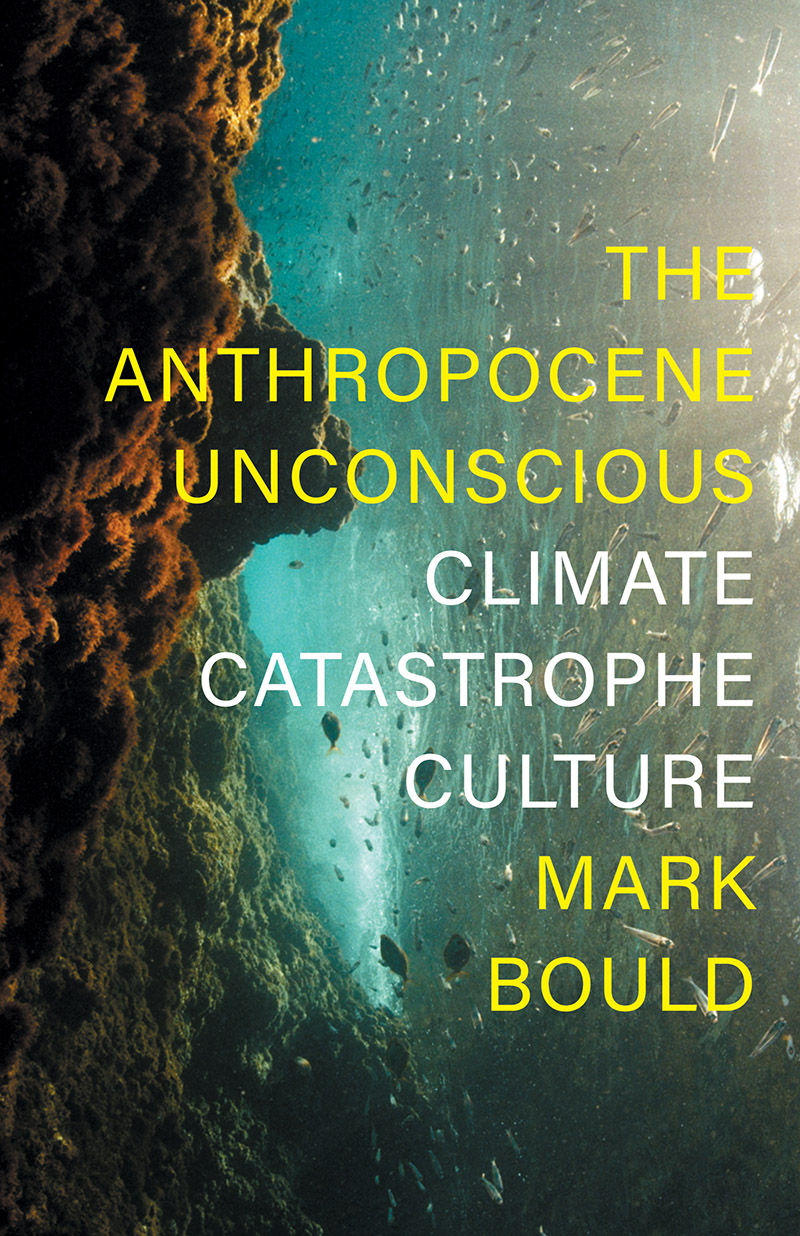
The Anthropocene Unconscious

Mark Bould

While sci-fi novels are replete with references to climate change, sci-fi cinema leave a lot to be desired in their narration of the effects of the climate crisis. But what if we watch them against the grain? Here, Mark Bould rewatches some recent alien invasion movies to uncover the Anthropocene unconscious at work in them.

Screen_shot_2021-11-01_at_10.59.48-

Climate change is not going to happen. It is already happening, and deep down our culture knows it.

Science fiction – including ‘cli-fi’, that odd offshoot that spends so much time denying it’s sf – has for three decades conscientiously and imaginatively reported upon the escalating anthropogenic crises we are living through.

Well, prose sf has. Think of Octavia Butler’s Parables novels, Gwyneth Jones’s Bold as Love cycle, Kim Stanley Robinson’s New York 2140 and The Ministry for the Future…. Sf cinema, however, leaves a lot to be desired. Sure, there are movies set after the catastrophe, from Mad Max: Fury Road (2015) to the little Vietnamese gem, Nuoc 2030 (2014), but for actual treatments of climate change, it’s pretty much a toss-up between The Day After Tomorrow (2004) and Geostorm (2017).

Unless, that is, we look at the less literal – and sometimes unconscious – ways sf films process climate catastrophe. Then, it’s a whole other can of worms.

Take Chris McKay’s recently released The Tomorrow War (2021). It might the dumbest film of the year so far – competition remains stiff – but even so it uses sf’s metaphoric potential to express climate anxieties. The film features extended CGI-heavy action sequences and numerous bits plundered from other movies and cranked all the way up to 11. Dan (Chris Pratt) is an Iraq War special ops veteran turned public high school science teacher who yearns to do science in the private sector instead. He lives with his wife, Emmy (Betty Gilpin), and young daughter, Muri (Ryan Kiera Armstrong), in a large suburban home, but is estranged from his father, James (J.K. Simmons). A traumatised Vietnam vet who decades earlier abandoned his wife and son to protect them from his anger and violence, James is now a government-distrusting, kinda off-grid, possible merc – as heavily bearded as he is armed.

9781839760471

The Anthropocene Unconscious by Mark Bould

In December 2022, soldiers jump back in time from 2051 on a mission to recruit their parents and grandparents for the future war against extra-terrestrial invaders. Called White Spikes, the aliens are more implacable than Terminators: ‘They have no use for prisoners, government, technology, money, nothing. We are food. And they are hungry.’ In just three years, they have reduced the global human population to under 500,000.

So the film is organised around an appeal across time for the present to save the future from what is explicitly described as ‘an existential threat’ and ‘an extinction-level event’.

And there’s more. Dan is conscripted to fight in the future – alongside, to no one’s very great surprise, his grown-up daughter. When he returns to 2023, he works out that the White Spikes did not land in 2048, but much earlier. Beneath a talon ripped from an alien corpse is volcanic ash from the circa 946AD climate-disrupting Millennium eruption, one of the largest in the last 5000 years. And since the White Spikes first appeared in northern Russia, this can mean only one thing: in 2023, their crash-landed spaceship is still buried frozen beneath the ice of the Academy of Sciences Glacier on Komsomolets Island – which global-warming projections predict will melt by 2048, thus unleashing the alien apocalypse.

And still, there’s more.  

The centre of future military operations and the site of humanity’s last stand is Deepswell-9, a fortified oil rig in the Caribbean. In Dan’s classroom, there’s an electronic display about habitat destruction and species die-offs. On the wall of Muri’s bedroom is a massive picture of a butterfly, that emblem of non-linear determinism familiar from chaos theory, time-travel stories and the complex, tipping-point causation of climate change…

So if a movie this dumb knows it’s about climate change, what about a more nuanced one?

Denis Villeneuve’s Arrival (2016) also uses alien visitors to imagine climate change as a single ruptural event that changes everything. But unlike The Tomorrow War, it does not announce that that is what it is doing – possibly because it does not even know that that is what it is doing. Frederic Jameson argues that to unlock the unconscious of a text, we must reimagine it ‘in terms of a particular master code’. Which is easier than it sounds. For example, when Brokeback Mountain (2005), supposedly ‘the first gay western’, was nominated for the Best Picture Oscar, host Jon Stewart introduced a sequence of ostensibly straight moments from earlier westerns that suddenly looked very queer indeed. The montage ditched the master code of unthinking compulsory heteronormativity in favour of one that simply asks what happens if you stop assuming everyone in these films is straight. Admittedly, it reduced queer theory to a parlour trick, but it nonetheless revealed the currents of desire flowing through the genre – in that part of the textual unconscious Pierre Machery describes as the ‘things which must not be said’.

And to unlock the Anthropocene unconscious of Arrival, we must do something similar: stop assuming that, just because it lacks The Tomorrow War’s bluntness, it is not also about climate change.

The nature and design of its extra-terrestrials is key. There is something genuinely alien about the heptapods: they do not possess the bilateral symmetry we take for granted; they experience time differently to us, simultaneously rather than sequentially; and they come not just from the depths of space but also from the abyss of time. That is, they come from the Weird, that realm associated with H.P. Lovecraft that was revived and revised in the twenty-first century, often as a way to think about climate change – as in China Miéville’s ‘Covehithe’ – and to re-entangle us in the often very strange web of life – as in Jeff VanderMeer’s Southern Reach trilogy.

Physically, the heptapods resemble banyan trees, but also squid. Their limbs flex like tentacles but are sometimes jointed like crab legs. The end of one limb opens out into a seven-digited ‘hand’ that looks like the underside of a starfish, and from it sprays cephalopodic ink. These intertidal and aquatic associations – including the darkly clouded skies into which their spaceships seem to dissolve on departure – imply a world and a future submerged. Thus, they foreshadow our rising tides, the coming loss of low-lying islands, major river deltas and coastal cities. Of countless lives, human and otherwise.

The heptapods visit present-day Earth because in 3000 years they will need our help, which requires humankind to unite and thrive. The film displaces the risks of climate change onto more familiar conflicts, presenting China, Russia, Pakistan, Sierra Leone, Sudan and Venezuela as inherently violent hotheads, and the US as fundamentally committed to peace, co-operation, rationality and reasonableness, and only reluctantly turning to military options. Such risible geopolitics capture something of the way in which the long history of imperialism and ongoing international power struggles both drive climate change and distribute its impact on peoples, countries and regions.

When the heptapods arrive, the US military recruits linguistics professor Louise Banks (Amy Adams) to translate the aliens’ language. But as she learns it, it rewires her brain. She starts to experience time simultaneously – and the film gets to play its famous trick on the audience. Banks suffers traumatic flashbacks to her daughter’s childhood, adolescence and slow death from a rare debilitating disease, only for it to then be revealed that they are actually flashforwards to things that will happen. So, the film asks, with such foreknowledge should Banks still have a child?

It is an impossible decision, with no right answer. And it is not unlike the dilemma that faces us all. We know that massive climate disruption is locked in. That it will kill at least millions and condemn billions more to lifelong immiseration. So what is to be done?

Perhaps surprisingly, The Tomorrow War can be of help. Although again, we need to move from what it consciously does – uses aliens as a metaphor for climate change – to what it does without thinking.

After teasing the first major action sequence, the film opens with a vision of suburbia, nestled among trees on a gently sloping hill. Christmas lights edge pristine detached houses, each with a double garage and a car in the driveway. Illuminated inflatable festive ornaments cluster on immaculate lawns. More lights drape over manicured trees and shrubs. Dan parks his shiny black SUV. There is a party in his house, with dozens of guests, but it never seems crowded. A massive TV dominates the wall above the fireplace. Food and drink are in lavish supply. Fairy lights tastefully abound. And, for some reason I cannot fathom, the Christmas tree revolves.

At the end of the movie, after reconciling with his father and leading a plucky ragtag mission to kill the White Spikes before they defrost, Dan returns home. Some upturned garbage bins on the sidewalk are the only trace of the rioting that swept the globe. James parks his sleek old slab of Detroit muscle in the road and Dan, having just saved the world, rights his bin and wheels it up the drive. Emmy and Muri race out to embrace him, and James meet his grand-daughter for the very first time. In voiceover, Dan – sounding just a little like Dorothy fresh from Oz – says of Muri, ‘I never told her about our seven days together nor how, in a future that now will never happen, she changed me. Forever. I’m never going to leave her. I’ll never leave this family. Because my best future it turns out was always right in front of me.’

All of which is unremarkable, unless you stop to remark upon it.

This climactic sentimental platitude is the moment when the terms of the aliens-as-climate-change metaphor are severed. Dan is back in the suburban bubble to stay. And since the White Spikes have been killed, there is no longer any reason to do anything about global warming.

To be fair, The Tomorrow War does disrupt the apparent normalcy of suburban plenitude. In the opening sequence, a lawn Santa rotates to reveal scary Krampus lurking beneath the red hood, and Emmy proudly displays a tuna Santa that is frankly grotesque (later, the hirsute James will be referred to as ‘conspiracy Santa’). In a similar vein, although the film, like pretty much all contemporary Hollywood, slavishly valorises the US military, it does also show glimpses of veterans with shattered minds and bodies. Such queasy images betray a quickly suppressed uneasiness with the way things are. They are harbingers of the things that cannot be said.

Such as the fact that the peculiar nature of American suburbs was largely determined by the automotive and fossil fuel industries. That along with real estate developers, they successfully argued that public transport infrastructure – streetcar and rail lines – was a matter of private investment, but the roads from which they benefitted were a public good and should be paid for through general taxation. That SUVs were the second largest contributor to increased global COemissions in the 2010s. That defence spending – another massive transfer of public money to private profit – likewise drove Sunbelt suburban developments around aerospace and other military industries. That the Pentagon is the world’s largest consumer of fossil fuels. That, as Amitav Ghosh’s The Nutmeg’s Curse explains, a ‘non-nuclear aircraft carrier consumes 5,621 gallons of fuel per hour … as much fuel in one day as a small midwestern town might use in a year’, with ‘a single F-16 consum[ing] a third as much fuel  in one hour of ordinary operations – around 1,700 gallons’ and if its ‘afterburners are engaged … two and a half times as much fuel per hour as an aircraft carrier – 14,400 gallons’. And so on.

If we reimagine The Tomorrow War in terms of this different master code, every house, every lawn, every light and plastic ornament Dan drives past, and the car in which he drives past them – each of these unconscious things that the film, in Macherey’s words, ‘is compelled to say in order to say what it wants to say’ – is revealed as yet another node in the petrocultural web scorching the Earth.

That is the existential threat we face – the tomorrow war that is already being fought today.

And frankly, we are getting our asses handed to us.

By us.

What is Ecosophy?

Manola Antonioli

— École nationale d’architecture Paris La Villette (France), LAA – UMR 7218 LAVUE CNRS — Contact: antonioli.manola@wanadoo.fr

Published: 2018-10-01

Parts of this article were published in Manola Antonioli, “What is Ecosophy?”, in Constantin V. Boundas, Schyzoanalysis and Ecosophy (London: Bloomsbury, 2017).

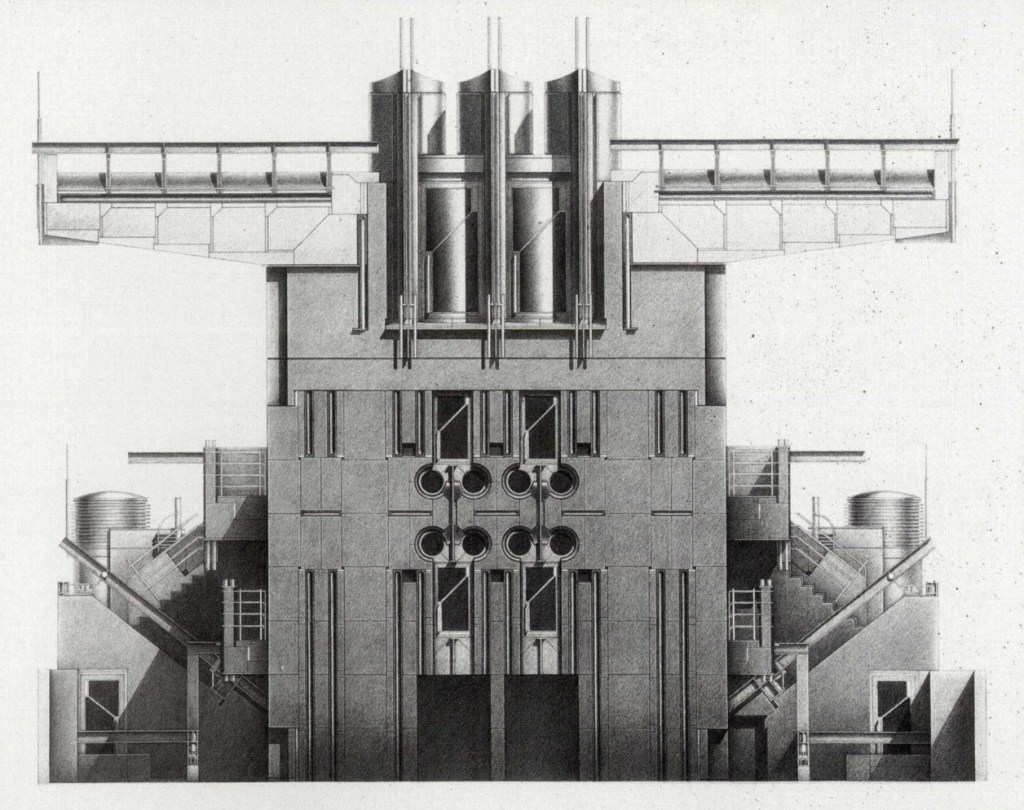
Shin Takamatsu, SYNTAX, 1990

The term “ecosophy” appears almost at the same time (without precise knowledge of the influence between the two schools of thought) in the work of the Norwegian philosopher Arne Naess and Félix Guattari1:

“Ecosophie” est composé du préfixe”éco-” que l’on trouve dans “économie” et dans “écologie”, et du suffixe “-sophie” que l’on trouve dans “philosophie”[…] La sophia n’a aucune prétention scientifique spécifique, contrairement aux mots composés de logos (“biologie”, “anthropologie”, “géologie”, etc.), mais toute vue de l’esprit dite “sophique” doit être directement pertinente pour l’action […] La sophia signifie le savoir intuitif (acquaintance) et la compréhension, plutôt que la connaissance impersonnelle et abstraite2. [“Ecosophy” is composed of the prefix “eco-” that is found in “economy” and “ecology”, and of the suffix “-sophy” that is found in “philosophy”[…] The sophia has no particular scientific claim, unlike logos compound words (“biology”, “anthropology”, “geology”, etc.), but any “sophic” standpoint must be directly relevant to action […] Sophia indicates intuitive knowledge (acquaintance) and understanding, rather than impersonal and abstract knowledge.]

The prefix “eco” also refers to the Greek oïkos, which stands for house, household, habitat and, by extension, our environments. Based on the suffix sophia, Guattari then described ecosophy as a complex ethico-political articulation (one might add, as we will see, aesthetico-philosophical) “between the three ecological registers (the environment, social relations and human subjectivity)3”. In a recent book, entitled Pour une écologie de l’attention, the Swiss intellectual Yves Citton deserves credit for drawing attention to the common fundamental orientation of these two approaches to ecosophy: “the necessary concatenation of several primarily interdependent levels” and the “core understanding that individuals do not pre-exist the relations that shape them4”, which is also a fundamental statement of the Deleuze-Guattari philosophy:

“Relationism has an ecosophical value because it dispels the belief that entities or people can be isolated from their environment. Talking about interaction between entities and their environment leads to misconceptions, because an entity is an interaction5”.

In opposition to the standardized discourse about “sustainable development”, which emphasizes (often in a sanctimonious and guilt inducing manner) the relations between “individuals” and their environment, ecosophy (especially in its Guattarian variant, which I specifically refer to here) draws our attention to the plurality of ecologies, environments, habitats, that do not “surround” us as a container would envelop its contents, but that define us and that we constantly define and reconfigure in a network of relations.

First of all, we need to emphasize the plurality of ecologies. On the one hand, there is a “managerial6” ecology that aims to save our resources and reduce the environmental impact of our modes of production and consumption. Its purpose is to extend (in a supposedly more “durable” and “sustainable” way) the same lifestyles and modes of production adopted by the western world since the successive industrial revolutions, with the goal of spreading them to so-called “emerging” countries. In this “green capitalism” or “eco-business” we can see no questioning of the purpose and need for the market production of material or immaterial goods (such as knowledge and culture), no real environmental wisdom (sophia), but rather a last attempt (that we now know is inevitably doomed to failure) to save the economic system and the values associated with the ideals of “development” (regardless of whether they are sustainable or not), “growth”, “consumption”.

Another ecology, more radical, from which ecosophy stems, considers that “the ecological crisis refers to a more generalized social, political and existential crisis” and that it cannot be solved by ad-hoc measures to safeguard natural environments. According to Guattari, the political, social and economic issues today, elude more and more “party politics” and require the reforming of social practices that are better suited to local based and global planetary problems. This perspective is not only about transforming the context of traditional capitalist economy in a “sustainable” way, but also about developing alternative “life conditions” that allow us to escape the “not only unsustainable, but also unwanted nature of a development system that encourages the ‘fabrique de l’infélicité’ [manufacture of infelicity]7”. This project, on a global scale, implies promoting any new practices (slowing down, short cycles, pooling knowledge and creativity, downsizing, new production and consumption paradigms) that allow us to “enhance the links to each other and to our environment8”.

According to Guattari, environmental awareness does not only concern natural environments, built areas or physical territories, but also the reinvention of individual or collective “existential territories”, in accordance with the intrinsic link between humanity and the biosphere, both depending on the increasingly more complex “technosphere” which surrounds them. This global shift in the purposes of human activities largely depends on the evolution of cities (where a large percentage of the global population is living), as Guattari tries to demonstrate in his essay entitled “Pratiques écosophiques et restauration de la cité subjective [Ecosophic Practices and Restoration of the Subjective City]9”.

Around the world, urban areas look more and more like an “archipelago of cities”, whose components are connected by all kinds of flows and networks, a scattering of deterritorialized world-cities. This global networking of urban areas has, on the one hand, homogenised the equipment, communication and transportation means, lifestyles and mindsets of globalised elites, on the other hand, it has exacerbated differences between habitat areas. The old centre-suburb structure has been deeply transformed and gave rise to a three-way segmentation between over-equipped and over-connected urban areas, lacklustre middle-class residential areas, and increasingly more prevalent poverty belts all over the world (Major European cities suburbs, slums or favelas in South America and Asia, homeless people found in the streets and parks all over cities in so-called “rich” countries). Deterritorialization of advanced capitalism has produced, at the urban level, a generalized reterritorialization based on polarization: rich/poor, integration/disintegration.

According to Guattari, the answer to these problems goes far beyond the fields traditionally assigned to architecture, urban planning, economy, to engage a large number of socio-political, ecological, ethical and aesthetical practices and reflexions. Therefore we cannot separate the problems related to physical infrastructure, communication, transportation and services provided by “existential” functions in urban environments. The urban phenomenon is at the heart of economic, social, ecological and cultural issues, and, as such, cannot be reduced to the matter (though still essential) of new construction techniques and the introduction of new materials that help combat all forms of pollution and nuisances.

Guattari then suggests that future urban renovation programs systematically involve, for the purposes of research contracts and social experimentation, not only architects, urban planners, politicians, but also social sciences researchers and more importantly future inhabitants and site users. The goal is then to anticipate, by a collective approach, the evolution of the built framework, but also new lifestyles (neighbourhood practices, education, culture, sports activities, transportation, children or elderly care, etc.):

“Ce n’est que dans un climat de liberté et d’émulation que pourront être expérimentées les voies nouvelles de l’habitat, et pas à coups de lois et de circulaires technocratiques10 [Only in a climate of freedom and emulation can new habitat approaches be experimented, and not through laws and technocratic bulletins].”

Architects and urban planners are thus asked to become “polysemic and polyphonic artists”, not working in universal contexts, intended to be reconfigured in response to so-called basic needs that are defined once and for all (as in urbanism and modernist architecture), even if these needs are now expanded to integrate the requirements for environment preservation, “comfort”, “well-being” or inhabitants’ health. Projects that wish to initiate an ecosophical reconversion will have to push for the development of new aesthetical, ecological and social living paradigms, based on singularities defined by collective procedures of analysis and dialogue.

Still within the framework of French political and philosophical ecology, André Gorz repeatedly uses the adjective “ecosophical”, in his book Misère du présent. Richesse du possible11, referring explicitly to Félix Guattari in a chapter devoted to the necessary mutations of the city of the future and by mentioning the Guattarian proposal of “Cité subjective [subjective City]”. According to Gorz12 a new urban policy is also necessary for an alternative society project to take hold: through the organization of social space and activities, landscaping, equipment, sites that can be made available to the inhabitants, “la politique de la ville appelle les auto-activités à se développer, leur en donne les moyens, les reflète à elles-mêmes comme étant non pas des improvisations éphémères ni des palliatifs subalternes adoptés faute de mieux, mais bien ce qu’une société qui demande à naître attend de tous et de chacun : projet commun proposé à tous, porteur de liens sociaux nouveaux13. [city policy calls for auto-activities to grow, gives them the means to do so, reflects them back not as ephemeral improvisations or sub-par palliatives used for lack of a better solution, but as what an emerging society expects from each and everyone: a common project for all, ready to create new social connections.]”

Strangely enough, most current urban conversion projects seem to ignore or underestimate the importance of the collective demand for a new “urban nature” which is expressed in practices as diverse as the proliferation of public parks and shared vegetable gardens, guerilla gardening, permaculture or urban culture, the function of landscape, artistry, research on urban biodiversity14 . The introduction of living organisms is generally limited to plants, more for their aesthetical function than for their ethical, social and political importance, whereas the presence of animals in the city15 is rarely taken into account.

In many works, the geographer Nathalie Blanc emphasized on several occasions the need to rethink urban and rural, city and nature categories in regards to their role in the built and non-built environment, in our social and political performances and to renounce the ingrained environmental notion of “rural”, “virgin” or “untamed” nature, when our lives are ever more rooted in cities:

“C’est là qu’il y a besoin d’un réaménagement des catégories. [this is where categories need to be redesigned]. Ce qui ne veut pas dire faire l’impasse sur la “nature rurale” ou la “nature sauvage”, bien sûr, mais repenser leur place en l’articulant avec celle de “nature urbaine”[…] Et c’est là un vrai enjeu intellectuel. Il faut l’affirmer avec force16. [Which, of course, does not mean overlooking “rural nature” or “untamed nature”, but to rethink their place together with “urban nature”[…] That is the true intellectual issue. It needs to be strongly stated].

Calls for “urban nature” and real “landscaping projects”, a search for new common spaces, participatory approaches, based on dialogue and appropriation (not reducible to the concept of “property”) now emerge as some of many leads to an “ecosophical” city and the assertion of the need for a sharing of the sensitive, where environmental criteria are taken into account as part of a political and wider aesthetical project.

Topics

The section Écosophies of the European Journal of Creative Practices in cities and Landscapes, looks for contributions that challenge the speculative and practical dichotomy, approaching the issue of the city, its environment and the mental life of its inhabitant as a “nomad science”. A nomad science does not proceed through universal assumptions, nor through practical bureaucratic or policy-oriented prescriptions. Rather, Ecosophy follows an ethico-aesthetic paradigm, based on a sensitive dimension, operating by affects and singularities.

The section calls for contributions in the following topics:

Non-managerial practices and alternative life conditions. Beyond the paradigm of the “sustainable development” that wishes to salvage the existing model of production and consumption, what are the practices that truly challenge it? Beyond the universally valid concepts of “innovative”, “sustainable” or “participative”, can we think of practices that produce alternative forms of organisation and territorialisation?

Culture and the aesthetic paradigm. Ecosophy calls for what Félix Guattari has defined an ‘aesthetic paradigm’. In this case, ‘aesthetic’ should not be understood as the specific field of art, reserved to a select few, but more generally in the etymological sense of aesthesis, sensitivity, sensitive dimension, operating by affects and singularities, a basis for any ‘minor’ science. In a broader sense, is it possible to understand culture as a set of aesthetic practices through which we express individual and collective subjectivities?

Technologies for the subjective city. Félix Guattari opposed the utopia of the “Celestial Jerusalem” with the possibilities of the “subjective City”, in which the sad deterritorialisation of life under capitalism, and its false antidotes in nationalism and religious fundamentalism are challenged by an existential nomadism in which we reapproriate different lines of “machinic, communicational and aesthetic deterritorialisations.” What are the tools to activate these processes of subjectivation? How does the role of professional figures—architects, urbanists, psychologists, sociologists, etc.—change vis-à-vis the challenges posed by the subjective city?

Écosophies, power and knowledge. Guattari’s Three ecologies was published posthumous in 1995. Today, some of the radical ideas contained in it such as participation, urban nature, common space, gender inclusiveness, etc., have become —at least formally—integral part of many cities’ policy guidelines, and incorporated in research project and university courses. What is the relation between Ecosophy and the other “royal sciences”? What are the power relations involved in the capture of Ecosophy by the apparatuses of city government?

References

Antonioli, Manola (ed.). Machines de guerre urbaines. Paris: Editions Loco, 2015.

Berardi, Franco. “La fabrique de l’infelicité.” Multitudes, 8 (March-April 2002).

Blanc, Nathalie. Les animaux et la ville. Paris: Odile Jacob, 2000.

— — —, “Environnements naturels et construits : une liaison durable”, in Afeissa, H.S. (ed.), Ecosophies, la philosophie à l’épreuve de l’écologie. Bellevaux: Editions MF Dehors, 2009.

Citton, Yves. Pour une écologie de l’attention. Paris: Seuil, 2014.

Gorz, André. Misères du présent. Richesse du possible. Paris: Galilée, 1996.

Guattari, Félix. Les Trois écologies. Paris: Galilée, 1989.

— — —. The Three Ecologies. London and New Brunswick, NJ: The Athlone Press, 2000.

— — —. Qu’est-ce que l’écosophie? Textes agencés et présentés par Stéphane Nadaud. Paris: Lignes/IMEC, 2013.

Naess, Arne. Écologie, communauté et style de vie. Paris: Dehors, 1989.

— — —. Ecology, Community and Lifestyle. Cambridge: Cambridge University Press, 2009.

  1. Arne Naess, Écologie, communauté et style de vie (Paris: Dehors, 1989); Félix Guattari, Les Trois écologies (Paris: Galilée, 1989) and Qu’est-ce que l’écosophie? Textes agencés et présentés par Stéphane Nadaud (Paris: Lignes/IMEC, 2013). [Available in English: Arne Naess, Ecology, Community and Lifestyle (Cambridge: Cambridge University Press, 2009) and Félix Guattari, The Three Ecologies (London and New Brunswick, NJ: The Athlone Press, 2000).

2. Arne Naess, Écologie, communauté et style de vie, p. 72. (quotes translated from the French edition).

3. Félix Guattari, Les Trois écologies, p. 12-13. / Félix Guattari, The Three Ecologies, p. 28.

4. Yves Citton, Pour une écologie de l’attention (Paris: Seuil, 2014), p. 45. (quotes translated from the French edition).

5. Félix Guattari, Qu’est-ce que l’écosophie ?, p. 33 and p. 66. (quotes translated from the French edition).

6. Yves Citton, Pour une écologie de l’attention, p. 156. (quotes translated from the French edition).

7. Ibid. , p. 157. Yves Citton borrows the expression “fabrique de l’infélicité” from an article bearing this title by Franco Berardi (Bifo) published in issue 8 of the Multitudes periodical (March-April 2002).

8. Ibid. , p. 156.

9. Ibid. , p. 31-58.

10. Ibid. , p. 52.

11. André Gorz, Misères du présent. Richesse du possible (Paris: Galilée, 1996).

12. Ibid. , p. 161-165.

13. Ibid. , p. 162.

14. Cf. Manola Antonioli (ed.), Machines de guerre urbaines (Paris: Editions Loco, 2015).

15. Cf. Nathalie Blanc, Les animaux et la ville (Paris: Odile Jacob, 2000). (quotes translated from the French edition)

16. Nathalie Blanc, “Environnements naturels et construits : une liaison durable”, in Afeissa, H.S. (ed.), Ecosophies, la philosophie à l’épreuve de l’écologie (Bellevaux: Editions MF Dehors, 2009), p. 229. (quotes translated from the French edition).

Copyright © 2018 Manola Antonioli

This work is licensed under the Creative Commons BY License.

https://creativecommons.org/licenses/by/4.0/

Teaching climate change in the Anthropocene: An integrative approach

Robin Leichenko and Karen O’Brien

Department of Geography, Rutgers University, USA, and, Department of Sociology and Human Geography, University of Oslo, Norway

Original article: Anthropocene 30 (2020) 100241, http://dx.doi.org/10.1016/j.ancene.2020.100241

A B S T R A C T

Why are we still educating college and university students through a Holocene lens? How can we expect young people to engage with the transformative challenges required to meet the targets of the Paris Agreement when climate change education is organized in a narrow and linear fashion? Climate change courses and teaching modules largely emphasize scientific literacy through a focus on physical processes, documentation of rising emissions, and empirical evidence of a changing climate. Classroom explorations of responses to climate change are often limited to “business-as-usual” policy options, new technologies, and behavioral interventions to reduce emissions or promote adaptation. Such approaches make it difficult for students to recognize the social dimensions of climate change and to identify openings and entry points for sustainability transformations. This article argues that it is time to rethink climate change curricula within higher education and adapt it to the Anthropocene. We present an integrative approach to climate change education that focuses on humans as active and reflexive agents of large-scale systems change, incorporates economic, political, cultural, psychological, and emotional dimensions of the issue, and fosters active engagement with transformations to sustainability.

1. Climate change education for the anthropocene

Public awareness of humanity’s impact on the global environment has increased dramatically over the past several years. Growing recognition of the gravity and urgency of the threat has led to a surge of concern and environmental activism among young people, as evident in the Fridays for Future climate strikes, climate marches, and expanding participation in organizations such as the Extinction Rebellion and the Sunrise Movement (Stuart and Gunderson, 2019). More and more young people recognize that they will experience the greatest impacts and bear the costs of adapting and implementing effective climate solutions. They are describing climate change as a “climate crisis” or “climate emergency” that requires immediate action.

Are colleges and universities adequately responding to this urgent challenge and preparing students to engage with the scope, scale, speed, and depth of the transformations that are called for? In particular, are they preparing students to meet the targets of the Paris Agreement and to reach the United Nations Sustainable Development Goals? Despite increasing recognition of the complexity of the problem and the need for transformative solutions, climate change education at the college and university level is largely organized in a narrow and linear fashion (Hindley and Wall, 2018). That is, climate change courses and curricular interventions primarily emphasize scientific literacy through a focus on physical processes, documentation of rising emissions, and empirical evidence of a changing climate. Classroom explorations of responses to climate change are often limited to “businessas-usual” policy options, new technologies, and behavioural interventions to reduce emissions or promote adaptation. As a result, students have difficulty recognizing social, psychological, and emotional dimensions of the issue, and often fail to see openings, possibilities, and entry points for active engagement with sustainability transformations.

In this contribution, we argue that it is time to recalibrate how we are teaching climate change within higher education and adapt it to the new proposed epoch, the Anthropocene. The Anthropocene denotes a period of pervasive human influences on global environmental systems (Steffen et al., 2015). Recognizing the Anthropocene means fundamentally rethinking our understanding of connections between humans and nature. It means seeing humans as active and reflexive agents of large-scale systems change, capable of responding with wisdom and foresight to reduce risk and vulnerability (Bai et al., 2016). It also means recognizing the political, economic, and cultural dimensions of climate change and drawing attention to the powerful actors, interests, and practices that shape uneven development policies and practices (Leichenko and O’Brien, 2019).

By adapting climate change education to the Anthropocene, we can engage students with positive and empowering frameworks that motivate critical reflection and action on the types of transformative responses needed to adapt and thrive.

2. Teaching climate change: an integrative approach

The Holocene epoch, which began 11,700 years ago, is often described as the time when environmental conditions enabled human civilization to develop and flourish (Steffen et al., 2004). During this epoch, humans began to transform the land, exploit minerals and other resources, and harness the energy of fossil fuels, releasing stores of carbon and other greenhouse gases into the atmosphere. The impacts of these environmental changes over the past centuries have been profound, leading many scientists to suggest that we are living in a new epoch, the Anthropocene (Chin et al., 2017). In this new proposed geological epoch, and particularly over the post-1945 period that Steffen et al. (2011) suggested as the Great Acceleration, humans have been under- mining the very conditions that have allowed them to thrive. The enabling conditions for human and non-human life are being transformed at a rate and scale unprecedented since the dawn of civilization, creating a multitude of challenges with respect to sustainability (Chin et al., 2017).

A shift from a Holocene to an Anthropocene perspective places society at the center of analyses of climate change, revealing how particular human-environment relationships and forms of societal organization are dramatically transforming the global environment (Lövbrand et al., 2015). Yet, most courses on climate change in higher education still approach the problem through a Holocene lens. This approach focuses on the ways that human activities are affecting different components of the Earth system (e.g., the biosphere, atmosphere, hydrosphere, and cryosphere). It recognizes that humans are experiencing and adapting to the impacts of climate and environmental change, but human activities are nonetheless framed as “external” stressors that are undermining “natural” systems. In other words, many climate change courses have not fully integrated the human and social dimensions of environmental change.

Below, we describe three axioms of an integrative approach to teaching climate change that can help prepare students for the challenges of the Anthropocene. We draw upon our own experiences teaching aspects of climate change for more than two decades within universities in the United States and Europe, as well as our recently published textbook, Climate and Society: Transforming the Future (Leichenko and O’Brien, 2019). Each axiom emphasizes a need for new ways of seeing and engaging with climate change in order to motivate transformative thinking and action.

Axiom 1. Worldviews, values, and emotions shape how we relate to climate change

An Anthropocene lens highlights interconnections between environmental and social facets of climate change and calls for an integrative approach to climate change education. Such an approach links climate change to underlying worldviews and beliefs about how humans relate to each other, to non-human species, to the natural world, and to the future. Recognition of these linkages is already occurring in some fields, for example in the acknowledgement of hybrid “socio-natures” in critical physical geography (Lave et al., 2018). Drawing attention to the ways that norms and values both reflect and influence social systems and human–environment relationships, an integrative approach requires awareness of assumptions and biases within different climate change discourses. Making norms and values explicit within classroom discussions can help students recognize those that are taken for granted, whether related to energy use, transport, food, or fashion. Why are meals with meat the norm in most cultures, rather than meals that are plant-based? Why are single-occupancy automobiles the dominant mode of transport in many places, rather than bicycles or public transportation? How are growing preferences for “fast-fashion” contributing to rising energy usage and climate change? Recognizing the influence of worldviews and values not only allows questioning of the perceived norms and “necessities” that contribute to high-energy lifestyles, but also opens opportunities for discussion of alternative ways of living and being.

Approaching climate change education from the perspective of the Anthropocene also means recognizing that emotions shape understandings of and engagement with the issue (Head, 2016; Ryan, 2016). Climate change has become an emotional issue for many students, and learning about observed environmental changes, scenarios for the future, and the implications for biodiversity, livelihoods, coastal communities, urban settlements, and health and well-being can lead to feelings of powerlessness, anger, fear, sadness, and grief. Students who have been directly affected by extreme events such as hurricanes or wildfires may experience both short and longer-term psychological and emotional impacts. Teaching about the emotional dimensions of climate change can help students relate to a wide range of feelings, and to explore how possibility, a sense of purpose, and constructive hope can motivate action (Ojala, 2012).

Recognizing the subjective dimensions of climate change is also vital for effective communication about the issue (Moser and Dilling, 2011). While presentation of evidence-based observations and datasets are useful for identifying causal relationships, patterns, and trends, research from the social sciences and humanities increasingly highlights the importance of narratives for engaging diverse audiences (Veland et al., 2018). Acknowledging the limits of traditional science communication can also open space in the classroom for exploring the role of art, film, literature, and music as effective means of connecting both intellectually and emotionally with the issue (Bostic and Howey, 2017). These forms of communication, which may entail use of art, video, or design, move climate change education beyond the realm of equations, graphs, and data, requiring a capacity to integrate different ways of knowing and relating to different viewpoints. By incorporating climate change in the context of the Anthropocene into the broader curriculum, educators can present fresh perspectives that help students see a wider range of solutions and entry points for critical engagement (Galafassi et al., 2018; Wodak, 2018).

Axiom 2. How we frame the issue of climate change influences the types of solution identified

Climate change is often perceived as an environmental issue best addressed through technical, managerial, and behavioural solutions implemented through climate policies and international agreements. Yet, other discourses and framings of the issue are also important to introduce into the classroom, as they draw attention to the many dimensions of climate change, as well as the diversity of solutions that are currently discussed and debated. A critical social framing, for example, highlights the role of power, politics, vested interests, and unequal economic and trade policies in driving greenhouse gas emissions. It also recognizes the legacy of colonialism, development policies, and inequalities based on factors such as gender, race, class, and indigeneity, which have marginalized groups of people and influenced their vulnerability and capacity to adapt to climate change. Such an approach questions assumptions about ever-increasing rates of economic growth, ever-expanding consumption, and rising levels of social inequality. It also considers how globalization and urbanization processes drive climate change and influence responses. By situating climate change within its dynamic social context, the critical social discourse draws attention to a wider range of responses that extend beyond environmental policies (Leichenko and O’Brien, 2019).

An examination of different discourses and framings of climate change can also help students make sense of climate change skepticism. Many students have family members, friends, or neighbors who hold different views on climate change. An awareness of the dismissive discourse helps students understand why actors who are heavily invested in fossil fuel industries or industrial agriculture may not take climate change seriously, and in some cases work against climate and energy policies. The dismissive discourse is not only about the denial of the science of climate change. It also includes those who accept the science but dismiss or minimize the importance of climate change relative to other pressing social and economic issues. The dismissive discourse likewise relates to those who express concern about climate change but fail to take action, underestimating their own capacity to influence change (Norgaard, 2011).

Recognizing multiple discourses and perspectives on climate change also brings out the many significant dimensions that need attention within climate change curricula. These dimensions include the political, economic, cultural, emotional, and ethical, which draw upon research and knowledge from the social sciences and the environmental humanities (Bostic and Howey, 2017). Incorporating history, language, literature, philosophy, economics, politics, and geography into climate change education can provide students with broader and deeper understandings that enable them to integrate and contextualize the problem, while at the same time highlighting the many ways of engaging with climate change activism (O’Brien et al., 2018).

Axiom 3. Transformations to sustainability are possible and already underway

Recent reports of the IPCC (2018, 2019) identified multiple pathways to achieve sustained emissions reductions. These reports also documented a variety of strategies for adaptation intended to decrease vulnerability to climate change impacts and build resilience. Yet, neither mitigation nor adaptation will be sufficient for thriving in the Anthropocene. The notion that successful responses to climate change will require transformative action is increasingly recognized (IPCC, 2018; TWI2050, 2018TWI2050, 2018). Many questions remain, however, about what transformation processes entail and which factors may activate or accelerate transformative change. Recognition is also growing that not all transformations will have equitable or desirable effects, and there is concern that the potential for resistance and conflict are often overlooked (Blythe et al., 2018).

Teaching about transformations is vital to climate change education, as more and more students are eager to engage with transformative solutions. Education for transformation requires critical thinking, the capacity to take perspectives, and actionable frameworks that help students make connections between the practical, political, and personal spheres of transformation (O’Brien, 2018). Within the practical sphere, a wide range of technical and behavioral changes are being proposed to achieve measurable results. Yet, the success or failure of these efforts is closely link to systems and structures associated with the political sphere. Strategies and interventions that challenge social and cultural norms, rules, regulations, and institutions can lead to resistance from vested interests, which often gives rise to social movements, political activism, and support for political candidates who advocate climate action. The personal sphere of transformation is where students can explore how beliefs, values and worldviews – including their own – influence how they relate to climate change and how they engage with solutions and actions in political and practical spheres.

Activating a sense of individual and collective agency within the classroom is also critical for initiating larger-scale changes (Petersen and Barnes, 2020). Through experiential learning, such as 30-day experiments with personal change, students gain a stronger sense of agency and a better understanding of how they can contribute to societal shifts, not just at the individual level but also at the cultural and systemic levels. By experimenting and engaging with change, students become aware of the relationships between individual change, collective change, and systems change, as well as the “ripple” effects created by their actions (O’Brien et al., 2019).

3. Transforming climate change education

Courses and modules on climate change are increasingly becoming part of the regular curriculum in colleges and universities (Molthan-Hill et al., 2019). As these courses and programs are developed, providing integrative, “Anthropocene”-ready learning tools and conceptual frameworks will be critical for our students. Addressing climate change through an integrative approach involves questioning accepted norms, rules, institutions, policies, and practices that perpetuate unsustainable resource use. Such approaches also allow students to see climate change as both an environmental and social problem that is rooted in particular understandings of human-environment relationships and humanity’s place in the world. By drawing attention to worldviews and values, the power of framings and discourses, and possibilities for transformative action, integrative approaches can help students identify responses that appeal to diverse understandings of climate change and its solutions.

The proposed geologic epoch of the Anthropocene introduces a powerful meta-narrative about human-environment relationships and their implications for Earth system processes. Beyond changes to individual courses, incorporating an Anthropocene lens may also require broader changes to the structure and content of some science and social science programs, and may necessitate the formation of new interdisciplinary programs and courses of study. Through our roles as researchers, teachers, and higher education leaders, we can play a key part in promoting transformative changes at the scales necessary both to limit warming to 1.5 C (IPCC, 2018) and to promote an equitable and sustainable world. Rethinking how we teach climate change in the Anthropocene is a necessary step for reimagining how society can thrive in this new epoch.

Declaration of Competing Interest

The authors declare that they have no known competing financial interests or personal relationships that could have appeared to influence the work reported in this paper.

References

Bai, X., van der Leeuw, S., O’Brien, K., Berkhout, F., Biermann, F., Brondizio, E.S., Cudennec, C., Dearing, J., Duraiappah, A., Glaser, M., Revkin, A., Steffen, W., Syvitski, J., 2016. Plausible and desirable futures in the Anthropocene: a new research agenda. Glob. Environ. Chang. Part A 39, 351–362. doi: http://dx.doi. org/10.1016/j.gloenvcha.2015.09.017.

Blythe, J., Silver, J., Evans, L., Armitage, D., Bennett, N.J., Moore, M.-L., Morrison, T.H., Brown, K., 2018. The dark side of Transformation: latent risks in contemporary sustainability discourse. Antipode 50,1206–1223. doi: http://dx.doi.org/10.1111/anti.12405.

Bostic, H., Howey, M., 2017. To address the Anthropocene, engage the liberal arts. Anthropocene 18, 105–110. doi: http://dx.doi.org/10.1016/j.ancene.2017.06.002.

Chin, A., Beach, T., Luzzadder-Beach, S., Solecki, W.D., 2017. Challenges of the “Anthropocene. Anthropocene 20, 1–3. doi: http://dx.doi.org/10.1016/j.ancene.2017.12.001.

Galafassi, D., Kagan, S., Milkoreit, M., Heras, M., Bilodeau, C., Bourke, S.J., Merrie, A., Guerrero, L., Pétursdóttir, G., Tàbara, J.D., 2018. ‘Raising the temperature’: the arts on a warming planet. Curr. Opin. Environ. Sustain. 31, 71–79. doi: http://dx.doi.org/10.1016/j.cosust.2017.12.010.

Head, L., 2016. Hope and Grief in the Anthropocene: Re-Conceptualising Human–nature Relations. Routledge, New York, NY.

Hindley, A., Wall, T., 2018. A unifying, boundary-crossing approach to developing climate literacy. In: Leal Filho, W. (Ed.), Implementing Sustainability in the Curriculum of Universities. Springer International Publishing, Cham, pp. 263–278. doi: http://dx.doi.org/10.1007/978-3-319-70281-0_16.

IPCC, 2018. Global Warming of 1.5C. An IPCC Special Report on the Impacts of Global Warming of 1.5C Above Pre-industrial Levels and Related Global Greenhouse Gas Emission Pathways, in the Context of Strengthening the Global Response to the Threat of Climate Change, Sustainable Development, and Efforts to Eradicate Poverty. Intergovernmental Panel on Climate Change.: http://www.ipcc.ch/report/sr15/.

IPCC, 2019. Climate Change and Land: an IPCC Special Report on Climate Change, Desertification, Land Degradation, Sustainable Land Management, Food Security, and Greenhouse Gas Fluxes in Terrestrial Ecosystems. Intergovernmental Panel on Climate Change. https://www.ipcc.ch/srccl/.

Lave, R., Biermann, C., Lane, S.N., 2018. Introducing critical physical geography. In: Lave, R., Biermann, C., Lane, S. (Eds.), The Palgrave Handbook of Critical Physical Geography. Palgrave Macmillan, Cham, pp. 3–21.

Leichenko, R., O’Brien, K., 2019. Climate and Society: Transforming the Future. Polity Press, Cambridge, UK; Medford, M.A., USA.

Lövbrand, E., Beck, S., Chilvers, J., Forsyth, T., Hedrén, J., Hulme, M., Lidskog, R, Vasileiadou, E., 2015. Who speaks for the future of earth? How critical social science can extend the conversation on the Anthropocene. Glob. Environ. Chang. Part A 32, 211–218. doi: http://dx.doi.org/10.1016/j.gloenvcha.2015.03.012.

Molthan-Hill, P., Worsfold, N., Nagy, G.J., Leal Filho, W., Mifsud, M., 2019. Climate change education for universities: a conceptual framework from an international study. J. Clean. Prod. 226, 1092–1101. doi:http://dx.doi.org/10.1016/j.jclepro.2019.04.053.

Moser, S.C., Dilling, L., 2011. Communicating climate change: closing the science action gap. In: Dryzek, J.S., Norgaard, R.B., Schlosberg, D. (Eds.), The Oxford Handbook of Climate Change and Society. Oxford University Press, New York, pp. 161–174.

Norgaard, K.M., 2011. Living in Denial: Climate Change, Emotions, and Everyday Life. MIT Press, Cambridge, Mass.

O’Brien, K., 2018. Is the 1.5C target possible? Exploring the three spheres of transformation. Curr. Opin. Environ. Sustain. 31, 153–160. doi:http://dx.doi.org/10.1016/j.cosust.2018.04.010.

O’Brien, K., Selboe, E., Hayward, B., 2018. Exploring youth activism on climate change: dutiful, disruptive and dangerous dissent. Ecol. Soc. 23, 42. doi: http://dx.doi.org/10.5751/ES-10287-230342.

O’Brien, K., Hochachka, G., Gram-Hanssen, I., 2019. Creating a culture for transformation. In: Giuseppe, F., Geoghegan, H., Arnall, A. (Eds.), Climate and Culture: Multidisciplinary Perspectives of Knowing, Being and Doing in a Climate Change World. Cambridge University Press, Cambridge, UK, pp. 266–290.

Ojala, M., 2012. Hope and climate change: the importance of hope for environmental engagement among young people. Environ. Educ. Res. 18, 625–642. doi: http://dx.doi.org/10.1080/13504622.2011.637157.

Petersen, B., Barnes, J.R., 2020. From hopelessness to transformation in geography classrooms. J. Geog. 119, 3–11. doi:http://dx.doi.org/10.1080/00221341.2019.1566395.

Ryan, K., 2016. Incorporating emotional geography into climate change research: a case study in Londonderry, Vermont. USA. Emotion, Space and Society 19, 5–12. doi: http://dx.doi.org/10.1016/j.emospa.2016.02.006.

Steffen, W., Sanderson, A., Tyson, P.D., Jäger, J., Matson, P.A., Moore III., B., Oldfield, F., Richardson, K., Schellnhuber, H.J., Turner II., B.L., Wasson, R.J., 2004. Global Change and the Earth System: A Planet Under Pressure. Springer, Berlin.

Steffen, W., Persson, Å., Deutsch, L., Zalasiewicz, J., Williams, M., Richardson, K., Crumley, C., Crutzen, P., Folke, C., Gordon, L., Molina, M., Ramanathan, V., Rockström, J., Scheffer, M., Schellnhuber, H.J., Svedin, U., 2011. The Anthropocene: from global change to planetary stewardship. Ambio 40, 739–761. doi: http://dx.doi.org/10.1007/s13280-011-0185-x.

Steffen, W., Broadgate, W., Deutsch, L., Gaffney, O., Ludwig, C., 2015. The trajectory of the anthropocene: the great acceleration. Anthr. Rev. 2, 81–98. doi: http://dx. doi.org/10.1177/2053019614564785.

Stuart, D., Gunderson, R., 2019. Toward climate-catalyzed social transformation? Roar Magazine . May 3, 2019 https://roarmag.org/essays/toward-climate-catalyzed-social-transformation/.

TWI2050, 2018. Transformations to Achieve the Sustainable Development Goals (Report Prepared by E World in 2050 Initiative). – The World in 2050. International Institute for Applied Systems Analysis (IIASA), Laxenburg, Austria.

Veland, S., Scoville-Simonds, M., Gram-Hanssen, I., Schorre, A., El Khoury, A., Nordbø, M., Lynch, A., Hochachka, G., Bjørkan, M., 2018. Narrative matters for sustainability: the transformative role of storytelling in realizing 1.5C futures. Curr. Opin. Environ. Sustain. 31, 41–47. doi:http://dx.doi.org/10.1016/j.cosust.2017.12.005.

Wodak, J., 2018. The anthropocene as a transformative pedagogical platform. In: Sierra, M., Wise, K. (Eds.), Transformative Pedagogies and the Environment: Creative Agency Through Contemporary Art and Design. Common Ground, Champaign, IL, pp. 185–211.

MIND SNATCHERS OF THE ANTHROPOCENE

Can Aspects Dawn within the Gulag Architectonic?

Académie d’été d’Épineuil-le-Fleuriel, 25 July 2017

Daniel Ross

‘I believe that he is suffering.’—Do I also believe that he isn’t an automaton? Ludwig Wittgenstein

If the aesthetic point of view implies its universalization, and if this universalizing goal implies in turn a cosmopolitics determined by the philosofiction of the wholly other, then these implications are also folded back into the gaze, to complicate it by marking within it the fold of an internal difference that only becomes visible at the limit. Peter Szendy

To be clear, what is at stake with the Neganthropocene is the problem of revolution: of the unavoidable necessity of imagining some kind of turn and transformation – but a revolution of a new kind, which must be realized in another way, however improbably[i]. No doubt this sounds obscure, a little foggy, perhaps, and, indeed, this revolutionary problem today involves two kinds of difficulties of vision, one of which is an easy difficulty, and the other of which is a difficult difficulty, so to speak.

The easy difficulty, which is still a difficulty, consists in imagining the unworld, or the end of world, the ultimate cataclysm towards which the Anthropocene may be hurtling: we can certainly understand, as Husserl pointed out, that it ‘is possible that entropy will put an end to all life on earth’[ii] and that this possibility is currently being hastened in an extreme way. What’s more, there is undoubtedly a will to conceive this possibility, just as our unconscious imagination must at some level want the nightmares that present to our sleeping selves the negative prospects that must be conjured so as to find within them a means of avoidance, a way out, a buried wish functioning as a spur. A significant portion of the culture industry is dedicated to the generation of such apocalyptic nightmares, but, of course, the motive is less prophylaxis than profit. Yet the difficulty remains of really imagining that such nightmares must concern us right now, when they are occurring at the microscopic level of gas molecule accumulations and the beyond macroscopic level of planetary systems.

The difficult difficulty, however, consists in really imagining the exit from this nightmare, in envisioning it, and so in finding the will to ‘protain’ a reasonable belief in such a revolution. This difficulty seems so difficult, and the belief to support it so unsustainable, that very often it seems almost impossible to avoid the temptation to simply luxuriate in the nightmares that have already been prefabricated on one’s behalf, or else to flee into denial, or to tend one’s own garden, or to fall into despair and, indeed, dread.

What is at stake with the Neganthropocene is, then, as Bernard Stiegler has said, the possibility of a ‘conversion of the gaze’ through which our very collective dread can function as just such a spur, through which it could effect a shift from the plane of the ordinary to that of the extraordinary, where it becomes possible, like a seer, to ‘see what is invisible’[iii]. If such a capability is not superhuman, it is at least ‘sur-human’ in the way Stiegler has also evoked, and that he relates to a vision of the cosmos that is ‘sur-realist’, in the sense of being a locality capable of harbouring highly improbable possibilities in which one can still manage to believe, the possibility of realizing such noetic improbabilities being the very definition of neganthropy[iv].

What makes the Neganthropocenic revolution so difficult to envisage is the unprecedented character of its spatial and temporal coordinates: on the one hand, it is absolutely urgent, while, on the other hand, it must be perpetual and undoubtedly requires vast amounts of time and patience to be addressed; on the one hand it involves, and must involve, a technical system that is planetary in its extent, while on the other hand it involves, and must involve, the vast plurality of local (sub planetary) social and cultural systems whose destruction is a major entropic factor. Any new neganthropic leap must address these dimensions, which are ‘telescopic’ both temporally and spatially: as Kant says in ‘The Conflict of the Faculties’, it must have ‘regard to the whole scope of all the peoples on earth’, where what such a regard reveals is ‘the prospect of an immeasurable time’[v]. Such is the planetary scope and immeasurable time of the Neganthropocene.

It is, then, a question of the conditions of possibility of such a conversion of the gaze, through which entropes could be converted to negentropes[vi] capable of releasing a revolutionary will of immeasurable spatiotemporal extent. The question of these conditions is raised – obscurely, perhaps – in Husserl’s reflections on the earth ark: if the world exists ‘in the ideality of infinity’[vii], beyond ‘what is experienced of the world from this or that side’[viii], and if, in the ‘primordial shape of its representation [that is, initially, in the beginning], the earth itself does not move’[ix], and if the earth, as our irreducible macrocosmic, terrestrial locality, is always where we are even if we are travelling to her moon, nevertheless, Husserl argues, after Copernicus and the telescope, it does in a certain way begin to move, in a sense that we would argue comes to involve not just its cosmic displacement but its Anthropocenic mutation. But this alteration in the shape of the earth’s representation, according to Husserl, does not follow automatically from the telescopic gaze, but only from a second moment, from the extra-terrestrial conversion that the gaze permitted by such an invention makes possible:

Only when we think of our stars as secondary arks with their eventual humanities, etc., only when we figure ourselves as transplanted there among these humanities, perhaps flying there, is it otherwise[x].

If this opens up a spatial infinity, what is remarkable about this Husserlian text is the way it concludes by opening the question of a temporal infinity, in a manner that extends Heidegger’s conception of being-towards-death outwards, beyond the I and, through world-historiality, towards the arche protention of an infinitely-temporally-extended we. More specifically, Husserl does so precisely on the basis of an understanding of memory as iterability and reiterability, that is, as the reproducibility of the copy and the capabilities enabled by this reproducibility. Husserl writes:

In the present, I as something present am progressively dying […]. But a unity by recollection permeates my life – I still live, although in being other, and continue to live the life that lies behind me and where its sense of being behind me lies in reiteration and the ability to reiterate. Thus the We lives in the reiterability and continually lives in the form of reiterability of history while the individual ‘dies’, that is, the individual can no longer be ‘remembered’ empathically by others, but only by the historical memory in which the subjects of the memory can be represented themselves[xi].

Here Husserl enacts a telescopic extension of spatiality reminiscent of the temporal extension of the ‘now’ he will describe in the account of internal time-consciousness, in order to found historicity on a ‘reiterability’ that gives the sense of a ‘unity’ permeating my life. The problem of the Anthropocene, however, is not that I am dying but that my and our actions threaten to lead to the dying of the biosphere, at least insofar as it is the necessary terrestrial support for the existence of the beings that we ourselves are. If this is so, then this movement in Husserl may contain the seeds of a spatiotemporal enlargement of spatial vision effective not just for an I, or even just for a we, but, step by step, for a technobiospherical system whose ‘unity’ must be thought not just in terms of the past, but of the future. The question becomes that of knowing what ‘reiteration’ this could be, and what view it opens up. Could it somehow be a question of Husserl’s ‘secondary arks’?

The extra-terrestrial and the philosofictive

Peter Szendy, too, approaches the question of the conversion of the gaze in Kant in the Land of the Extraterrestrials: Cosmopolitical Philosofictions. He notices, for example, that this is how the French Revolution functions for Kant in The Conflict of the Faculties: as an act of publicity capable of fostering ‘a wishful participation that borders closely on enthusiasm’, or, in other words, an ‘aesthetic point of view’ through which ‘a revolution’s movement of worldwide expansion can be envisaged or seen in advance’[xii]. Kant argues that, for those who did not actually participate in the French revolution, he himself for example, apprehending the revolution via the aesthetic conditions of publicity may open up an even broader participation, one capable of extending the localized possibility of perpetual progress exposed by the French revolution to the macro-locality consisting of all the peoples of the earth.

That for Kant this worldwide extension of progress implies a cosmopolitanism resides in mankind’s unsocial sociability, in the fact that, as he says in Anthropology from a Pragmatic Point of View, people ‘cannot do without being together peacefully and yet cannot avoid constantly being objectionable to one another’: living together requires a cosmopolitanism ‘that is constantly threatened by disunion but generally progresses toward a coalition’[xiii]. What would necessitate a cosmopolitics would thus be the perpetual problem of managing the tendencies and counter tendencies involved in the relationships of care between the microcosms that we are and the macrocosms that we produce.

The problem is how to get from this ‘intra-terrestrial’ standpoint, which gropes in darkness, if not blindness, for progress towards coalition and coalescence towards progress amidst the clash of micro- and macrocosms, to an extra-ordinary standpoint, an ideality of infinity that would make possible a truly cosmic cosmopolitics. Szendy shows how the extension of this perpetual problem to all the peoples of the earth seems to imply the need for a cosmic gaze capable of encompassing this proliferation of standpoints within its purview, and, indeed, he goes on to find, in numerous key points in Kant’s work, an explicit evocation of this extra-terrestrial gaze, precisely in order to insist on the necessity and impossibility of picturing to oneself the character of the rational terrestrial beings that we hope to be. We require a wholly other gaze, we must imagine the telescopic gaze of the extra-terrestrial, intimately haunted by this infinitely faraway regard, if we earthlings hope to achieve a conversion through which to escape the local limits of our microcosmic preoccupations[xiv].

Kant says, for example, that human beings are incomparable, because we lack experience of any non-human rational beings to whom we might compare ourselves: ‘we have no knowledge of the non-terrestrial beings that would enable us to indicate their characteristic property and so to characterize this terrestrial being [that we are] among rational beings in general’[xv]. Szendy shows why this impossible necessity therefore means that the question of cosmopolitan revolution requires the aesthetic judgment of the beautiful, as a standpoint that can arise only from a process that is at once purely individual and yet inherently social: in short, it requires a process of psychic and collective individuation aiming, through a process of ‘universalization’, at consistences. But it also requires the sublime, because, as what exceeds the limits of the capacities of our imagination, the sublime is what causes every standpoint to tremble: only through this unsettling of every perspective, effected by the experience of the unimaginable, would it become possible to operate a ‘pure reason’ speculating in the direction of an immeasurable cosmology capable of authorizing an infinite cosmopolitanism[xvi].

What Szendy tries to do, then, is to sketch out a pathway ‘from the aesthetic to the political by way of a speculative cosmology’, finding that it is ‘as if the each-and-every-one on the basis of which the judgment of taste is oriented could include humanity as such only when taking a cosmotheoretical detour through the wholly other that inhabits extraterrestrial globes’[xvii]. And, insofar as this detour through the extra-terrestrial is necessary in order to imagine a cosmic cosmopolitanism capable of staving off the threat of disunion, of embracing the whole earth, and of doing so even beyond imagination and in the very failure of the imagination, Szendy refers to the imperative of cosmopolitical philosofiction. It will be a question, then, of asking how this cosmopolitical philosofiction, as the materialization of the pathway to a speculative cosmology, might marry or fail to marry with Stiegler’s surrealist cosmology composing microcosmic and and macrocosmic scales from the quantum to the astrophysical. What Szendy and Stiegler undoubtedly share is the thought that this irreducible fictive element means that such a cosmopolitics must be essentially aesthetic – cosmetic – and this is why Szendy concludes that, today, any revolution must be enacted on a ‘terrain where a war is being waged whose stakes are a veritable geopolitics of the sensible’[xviii].

The gaze of the clone

The terrain on which this cosmogeopolitics of the sensible is being conducted is the mnemotechnical milieu that, today, amounts to the sphere of what Heidegger called Gestell. But it is also each of the individual microcosms that are the psychic apparatuses of the processes of psychic individuation that each of us are in our inextricable entanglement with the complex exorganisms that we produce. But these exorganisms also produce us, and the possibility that our globalized technical systems might anticipate and post-produce our very psychic microcosm to such an extent as to automate the will itself is what threatens to make this geopolitical war of the sensible unwinnable.

Such an automation of the will may begin with a dream of permanent innovation and creative destruction, perpetually conquering new terrestrial markets and new psychic markets, but it has led, as Sloterdijk has pointed out, as if inevitably to a consumerism in which ‘what spirals out of control’ is ‘an end us devoid of ulterior motives’[xix]. Or descent into this vortex created by the automation of will and elimination of motive has now crossed a threshold after which we can indeed speak of an age of ‘post-truth’ – where the latter is nothing but the nihilistic symptom of a loss of the will to care for the difference that knowledge or truth makes.

The primordial possibility of such an age, however, ultimately derives from the fictive element involved in the way that the neganthropotechnical microcosms that we ourselves are apprehend the world, from the fact that every cosmopolitics involves a cosmetics – as Szendy says, a ‘touch-up of the sensible’[xx]. It is this fictive, cosmetic element that makes ‘post-truth’ possible, because it is both the condition that makes truth possible in the first place and what makes possible the conditioning of the apprehension of the world. The automation of the will destroys the capacity to engage in processes whose ‘ulterior motives’ include the production of veridiction: instead, we are left with the synchronization of experience in a way that tends to eliminate difference, leading to a combination of in-difference to the difference such truth-oriented motives make and the corresponding violent assertion of the hyper-difference of each-and-every-one’s own unquestionable ‘truth’.

For Szendy, all this is what dawns on the viewer of the movie, Invasion of the Body Snatchers: what one beholds, in that classic science fiction film from 1956, is a biopower of mechanical reproducibility, a hyper-synchronized process of ‘metamorphosis without change’[xxi], a biotechnological, pheromonal anthill effected through a dual movement that snatches bodies and creates a ‘sort of copy’. But what this strange form of mimetic contagion really concerns is the snatching of minds: it eliminates difference and establishes the reign of the ‘they’, of a transformed and reticulated race of an each-and-every-one about whom we could reverse Wittgenstein’s formulation: ‘we believe that they are automatons, but do we also believe that they are without suffering?’ For Szendy, for whom film is ‘above all an affair of point of view’, and ‘telescopic’ in the sense of being ‘stretched toward’ a distance ‘beyond points of view’, ‘however close it may be’[xxii], the virtue of Invasion of the Body Snatchers lies in having revealed the invaders who do not just come from outside, but inhabit and so condition our own point of view: the film allows our ‘indifference to be seen’ via the indifferent gaze of the clone, ‘as if the director’s lens were desperately trying to grasp the ungraspable difference between difference and indifference, the indistinct distinction that cannot be seen but that instead looks out at us, concerns us [nous regarde]’[xxiii].

The two-movie reality

I doubt there’s anyone in this room who isn’t familiar with the way that Stiegler uses Husserl’s account of the melodic temporal object to describe this fictive element in our apprehension of the world – the fact that secondary retention forms the selection criteria for the anticipation and post-production involved in primary retention and protention, which implies that ‘immediate’ perception involves an irreducible element of imagination – or the way he extends this analysis in order to demonstrate that tertiary retention introduces an element of controllability into the composition of primary and secondary retention and protention, opening up, through the exactitude of mnemotechnics, the processes of adoption and interpretation that lie at the root of politics, law and rational knowledge as the material transcendence (so to speak) of the mere aspects provided by individual viewpoints, but where the very same potentials for control also make possible the dissolution of such processes. The analysis of the temporal object, in other words, shows how tertiary retention is what, pharmacologically, opens up the prospect of an immeasurable time, precisely through the measurability it makes possible, and what always contains the threat of closing off that possibility, through the conditioning and control of apprehension in a way that reduces it to calculability.

What makes the melody such an exemplary case is not just that it is a temporal object in the sense that, like consciousness, it exists only in the time of its flowing through consciousness. This exemplarity further lies in the way that the experience of the aural temporal object also, in a sense, negates the question of standpoint. In principle, it does not matter where one is or where one is standing or how one is ‘physically oriented’ or how one may be ‘directional’[xxiv] in relation to the data being received through the aural physiological apparatus. The example of the melody works, and in fact works best, if one imagines oneself listening with closed eyes. Paradoxically, bracketing off the question of viewpoint is the very way of seeing that what determines the singularity of bearing aural witness is different horizons of expectation, rather than varying spatial coordinates, and that these different expectations derive from having had a singular past[xxv].

Stiegler addresses this, for example, in Aimer, s’aimer, nous aimer: if different witnesses provide different testimonies about the events of an accident, such as for example a traffic accident, it is, despite being first and foremost something they have witnessed in the sense of being something they have seen, less to do with their locations on ‘this or that side’ (as Husserl puts it) of the incident in question, and more to do with their different ‘performances’ of the act of witnessing[xxvi]. Or, when we watch a film, this account of what counts in the experience of the industrial temporal object has to assume that it is reasonable to discount the possibility that experiential differences are due in any fundamental way to where one is seated, or to differences in where we direct our ocular physiological apparatus in relation to the screen.

This assumption that we can bracket the question of viewpoint is, I believe, largely reasonable. And, in terms of the question of the ‘conversion of the gaze’, it may indeed be that the question of the conversion is more important than the question of the gaze. Nevertheless, given that the subject of these conversions are all those psychic individuals who are always localized microcosms, there may be more left to say about what difference it makes to this account if we choose not to take aural perception as paradigmatic. Is what counts in the extra-terrestrial gaze simply the fact that it observes from a viewpoint sufficiently broad as to be capable of taking in the multiplicity of terrestrial viewpoints in their multitudinous aspects? Or does such a gaze in fact see something else, something other, a genuine shift in the character of insight (or, rather, ex-sight) brought about by training its telescopes onto the terrestrial here but as if from the extra-terrestrial ‘over there’? And, in that case, would such a potential for extra-terrestrial ex-sight derive its potentiality from the fact that, as Heidegger claimed, ‘Da-sein is initially never here, but over there’[xxvii].

For Kant, as we have seen, the threat of disunion contained in unsocial sociability is itself the condition of possibility and necessity of cosmopolitanism. In the age of post-truth, however, the fictioning that surrounds every political narrative means that this threat of disunion functions more as a condition of impossibility: two utterly divergent audiences (where the condition of being an audience is what tends to eliminate the condition of being a citizen) perceive the very same mediatized political narratives, but they do so from what seem diametrically and rigidly opposed viewpoints. The fading away of every process of veridiction would then lead less to the fog of truth[xxviii], which is supposedly its ambiguous and impenetrable character in the state of war, than to a hardening, where this side and that side prove absolutely irreconcilable, a state of affairs that has been referred to by one commentator as the advent of a ‘two-movie reality’, a situation in which two movies play on one screen.

In light of this new two-movie reality, which should be understood firstly as a reduction to only two movies, a crystallized state of the union where the same givens lead to indissolubly hardened perceptual oppositions, and so to the materialization of the threat of absolute disunion, that is, uncivil war, in the rest of what follows I would like to make a case for thinking about specifically visual temporal objects, by referring not to Husserl but to Wittgenstein, and specifically to his notion of ‘aspects’. If, as has been suggested, the cosmopolitical question of the geopolitics of the sensible today concerns the conditions of possibility of a ‘new perspectivism’, then the question to be approached in the remainder of this paper is whether a perspective is or is not the same thing as a point of view.

The duck-rabbit

The duck-rabbit, which Wittgenstein calls a ‘picture-object’[xxix], is an example of a so-called ‘bistable percept’. Hence it is not, strictly speaking, a temporal object: it does not exist as a flow in time in the way as a melody. Nevertheless, one can argue that there is something essentially temporal about the way this image is apprehended, at least by ‘us’, in the sense that the mutual exclusivity of the duck and the rabbit is necessarily experienced across the span of more than one moment: hence Wittgenstein distinguishes the ‘continuous seeing’ of an aspect from the ‘dawning’ of an aspect[xxx]. To notice an aspect is to notice the dawning of a change, but the issue, of course, is to understand the character of this change, to know what it is that changes, what kind of movement this involves, and where this change is located.

What the bistable percept picture-object makes plain is the possibility that, as Wittgenstein puts it, the irreversible dawning of a second aspect (the duck or the rabbit) may be ‘the expression of a new perception and at the same time of the perception’s being unchanged’[xxxi]. But if it is not the external stimulus that has changed, since, as in the case of a gramophone recording, the perceptual data remains identical across the time of a change in perception, nevertheless Wittgenstein insists that this does not mean that perception is merely something subjective:

And above all do not say “After all my visual impression isn’t the drawing; it is this—which I can’t shew anyone.”—Of course it is not the drawing, but neither is it anything of the same category, which I carry within myself. The concept of the ‘inner picture’ is misleading, for this concept uses the ‘outer picture’ as a model[xxxii].

There is no ‘inner picture’ that we might hope to divorce from the tertiary retention: the picture-object exists, or rather consists, in some place that we can locate neither internally nor externally. As Stiegler insists:

The image in general does not exist. What is called the mental image and what I shall call the image-object (which is always inscribed in a history, and in a technical history) are two faces of a single phenomenon. They can no more be separated than the signified and the signifier which defined, in the past, the two faces of the linguistic sign[xxxiii].

The secondary question raised here, of the relationship between the imagistic and the linguistic, is something to which we will return.

Wittgenstein thus describes the dawning of an aspect – somewhat imprecisely, it must be said – as ‘half visual experience, half thought’. To the extent that it is something produced in me, he says, it must be ‘a sort of copy, something that in its turn can be looked at […]; almost something like a materialization’[xxxiv]. And because we produce this copy of a tertiary retention, and because we can look at it, that is, reiterate it, are we not, he wonders, already involved in an interpretation of the picture-object?

But, Wittgenstein then asks, ‘how is it possible to see an object according to an interpretation?’[xxxv] What more is involved in the ability to carry out such an interpretation, for Wittgenstein does indeed think that there is something more involved? If the dawning of the duck or the rabbit can happen in a flash, the immediacy of the occurrence of this aspect should not mislead us: as he then notes, there are styles of painting that immediately convey meaning to some people, but not to others (not to him). And so he concludes:

I think custom and upbringing have a hand in this[xxxvi].

The dawning of the duck or the rabbit depends on acquired knowledge of the form of these animals, but, more generally, it is inscribed in a process and practice of familiarization with a way of gazing. It is, in other words, overdetermined by the circuits of transindividuation through which we learn the capability that, alone, allows aspects to dawn.

What Wittgenstein is describing here, in his ‘description of what is seen’[xxxvii], is phenomenological intentionality, however far, in other respects, Wittgenstein’s philosophy may be from Husserl’s, starting with the technics of writing, which for Wittgenstein involved an elaborate, if not interminable procedure that began by handwriting into notebooks, followed by making selections from their contents, dictating the best of them to a typist, cutting up the typewritten paper, and rearranging the fragments into a new order, thereby treating them as quasi-picture-objects, and doing all this precisely in order to make it possible for new aspects to dawn[xxxviii]. Wittgenstein describes the intentionality involved in the dawning of aspects as ‘seeing as’: we can see this picture-object as a duck or as a rabbit; we can see it as ‘like this’ or ‘like that’. The relationship of such an account to the melodic temporal object is made even clearer when Wittgenstein himself raises the example of a musical theme, which, on different occasions, as he says, we can hear as ‘a march’ or as ‘a dance’[xxxix].

It is notable that the duck-rabbit image has also been used by the psychologist Jeffrey Alan Gray to indicate the ‘unconscious intentionality’ involved in the production of perceptual experience: that the duck or the rabbit ‘spring into consciousness fully formed’ shows that this production involves an intentional mechanism operating behind the back of consciousness[xl]. For Gray, this notion of unconscious intentionality, which is nothing other than an account of the intentionality of primary retention, is intended to bridge the gap between the neurobiological level and the conscious level, but without Gray recognizing that the selection criteria must be supplied by secondary retention, nor that what opens this gap in the first place is the third memory constituted by the process of exosomatization, that is, tertiary retention. Gray’s account does not convey the sense, in other words, that this apprehension of the image is necessarily inscribed in a history, and in a technical history. If we find ourselves tempted to make the same criticism of Wittgenstein, it is nevertheless also true that the latter’s account of the intentionality involved in seeing a duck or a rabbit, or in hearing a melody as a march or a dance, is an ability that

would only be said of someone capable of making certain applications […]. The substratum of this experience is a mastery of a technique[xli].

From this it follows that the aspect which dawns, the duck or the rabbit, is not just something that is in the bistable picture-object: it is ‘not a property of the object, but an internal relation between it and other objects’[xlii], or, as Szendy puts it, ‘the fold of an internal difference that only becomes visible at the limit’[xliii], which we must learn to apprehend. And Wittgenstein goes so far as to say:

And I can see it in various aspects according to the fiction I surround it with[xliv].

Here, however, we encounter a paradox. Wittgenstein had claimed, as we saw, that we see according to an interpretation, but, surrounding the object as we do with fictive elements, through which we seem to immediately see the object as this or that, Wittgenstein wonders if this is really to interpret what we see differently, or whether it is not, on the contrary, to ‘really see something different each time’[xlv]? He is inclined to conclude the latter: the dawning of an aspect really is seeing something different; it is, therefore, not quite a matter of seeing it according to a different interpretation.

Wittgenstein is reluctant to call this an interpretation, in other words, because the internal difference that becomes visible here does not, in fact, reach the limit of actual noesis. It is merely ‘having an image’, whereas to interpret is already to think. To see an aspect, Wittgenstein thinks, only involves the power of the imagination, even if, as he also thinks, it is, indeed, ‘subject to the will’[xlvi]. And, finally, even if this dawning does indeed involve an image whose aspect we can change at will, so to speak, it is also, in its initial occurrence, a change that, a dawning that, as Wittgenstein says, ‘produces a surprise’[xlvii], but for Wittgenstein this sur-prehension is not of a kind capable of causing the trembling of every comprehension, even if this is precisely how the duck-rabbit drawing – which is a picture-object, a quasi- or pseudo-temporal object, an image-object and (therefore) a technical object – functions for his own comprehension.

Aspect-blindness

Wittgenstein’s account of ‘noticing aspects’ is undoubtedly pertinent to the Stieglerian appropriation of the Husserlian analysis of the temporal object. By taking the duck-rabbit as a paradigmatic picture-object, just as Husserl took the melody as a paradigmatic temporal object, Wittgenstein succeeds in finding a case of identical repetition, as occurs in repeated listening to sound recordings. Wittgenstein’s example is a case of the post-production of primary retention applied to visual perception, but one that is, or at least seems to be, independent of the question of viewpoint, while nevertheless being dependent on the localized conditions of learned capabilities.

But of what use is his account of aspects for any theory or practice involved in the question of the prospects of the immeasurable time of the Neganthropocene? To answer this question, we need to pursue Wittgenstein’s account just a little further.

Having noted that seeing an aspect is more like an act of imaginative will than interpretative will, even if it remains dependent on the learned capability of seeing something as something, Wittgenstein wonders if there ‘could be human beings lacking in the capacity to see something as something’, a potential problem he identifies with the name, ‘aspect blindness’[xlviii]. One might think that, with this notion of aspect-blindness, Wittgenstein is referring to the kind of visual agnosia that can occur as a result of brain injury, but, on the basis of his account of aspectival perception as inherently involving learned if unconscious intentionality, what is at stake here is, in fact, the loss of the transindividuated knowledge that enables someone to see something as something, or, in other words, the possibility of a kind of perceptual proletarianization.

Furthermore, Wittgenstein’s concern with aspect-blindness is not, in fact, limited to sense perception. He immediately extends the scope of the question of aspects, and hence of aspect-blindness, when he makes a direct connection between ‘seeing an aspect’ and ‘experiencing the meaning of a word’[xlix]. And this, in turn, is then framed in terms of a difference (even a différance) between the knowledge involved in the capacity to read and the ‘information’ contained in the words written on the page:

“When I read a poem or narrative with feeling, surely something goes on in me which does not go on when I merely skim the lines for information.”—What processes am I alluding to?—The sentences have a different ring[l].

Wittgenstein thus extends his account from a kind of visual blindness to a kind of linguistic blindness, itself capable of being generalized to logos as the symbolic, the logical, the sensational and the exclamatory character of noetic différance in general. Wittgenstein himself, in the passage where he describes the fiction with which the viewer surrounds the picture-object, points out that these perceptual questions are not simply questions for physiology, for, here, ‘the physiological is a symbol for the logical’[li]. Even if it is completely outside Wittgenstein’s intention to use the concept of aspect-blindness to diagnose an epoch or a tendency (and who can finally judge whether this is the case?), this concept nevertheless pertains (and protains), for example, to Frédéric Kaplan’s account of ‘linguistic capitalism’, that is, linguistic proletarianization[lii].

The virtue of this ‘concept of an aspect’ that is ‘akin to the concept of an image’[liii] (that does not exist), then, lies in the way it telescopes its way beyond the visual and the linguistic, to a kind of noetic generality. The dawning of another aspect is the capacity for surprise, for a perceptual act that sees the image with a wholly other gaze that makes every standpoint tremble, a telescopic, extra-terrestrial gaze with the potential to expose the philosofictive conditions of the two-movie reality. Is what Wittgenstein is describing by way of the duck-rabbit picture-object not, in this sense, a kind of not-necessarily-visual stereoscopy, a multidimensionality of apprehension, a relief, which alone makes possible, for example, the experience of the meaning of a word? This would be to bring Wittgenstein’s ‘description of what is seen’ into the orbit of Simondon’s account of ‘disparation’, for which:

To bring about a coherence that incorporates [the separate images of the left eye and the right eye], it is necessary that they become the foundation of a world perceived within an axiomatic in which disparation […] becomes, precisely, the index of a new dimension[liv].

As Stiegler shows in Automatic Society, Volume One, what Berns and Rouvroy call ‘algorithmic governmentality’[lv] is, above all, the ‘automatic and computational liquidation of disparation’[lvi], which means: the dissolution of all those forms of what Wittgenstein calls ‘custom and upbringing’, or, more precisely, the localized circuits and processes of transindividuation enabling disparation, that is, that make it possible to notice, as if from an infinitely faraway location, the stereoscopic depth and thickness of aspects, beyond ‘this or that side’, and where there can be no ‘horizons of expectation’ without this ‘index of a new dimension’. The telescopic, in Szendy’s sense, in this sense implicitly raises the question of the stereoscopic.

The ‘coherence’ of Simondon’s stereoscopic disparation, of course, is a matter of how the left and right retinal images compose, whereas Wittgenstein intends to show, through the mutual exclusivity of the bistable percept, the impossibility of conjoining, in a single ‘moment’ of vision, the two dimensions or aspects of the picture-object’s meaning. Yet this impossibility of overcoming the disunion of the duck and the rabbit does not mean that the two do not co-exist at some point, even if they do so in an ideality occurring only at infinity, which is, precisely, neither interior nor exterior – just as the conjunction of the image perceived by the left eye and the right eye should be, geometrically speaking, strictly impossible, meaning that, if linear perspective is undeniably ‘correcter’ than earlier forms of painting, nevertheless even ‘natural’ disparation itself is irreducibly fictive, and just as for Kant the sublime involves an experience of what exceeds the limits of the imagination. Sur-prehending the bistable percept as both-duck-and-rabbit, retaining both aspects, is, precisely, a question of striving to see, extraterrestrially, caught halfway between knowledge and non-knowledge, what is invisible, even if we may feel sure it is right there, like the figure in the carpet.

Furthermore, as Wittgenstein asserts, in a kind of reversal of Simondon that ends up making the same point, what is ‘natural to us’ is three dimensional representation, whereas ‘special practice and training are needed for two-dimensional representation’[lvii]: in terms of the representational gaze, then, the reduction to two dimensions is, in a strange way, also the index of a new dimensionality, one that has a long history. Perhaps in this way, too, the reduction to a two-movie reality might, in making plain the absolute failure of vision and imagination effected by the performative automation of the will, contain the potential to be transformed into a cure for our present-day overwhelming aspect-blindness. In any case, at stake in both Simondon’s account of disparation and Wittgenstein’s account of aspect-blindness is a strange kind of step beyond the ‘technically possible’, but what Wittgenstein makes clearer, perhaps, is that this irreducibly involves practice, training and technique, that is, circuits of transindividuation.

As we saw, Wittgenstein describes the step beyond information in rather vague terms as a matter of the ‘feeling’ with which we read a poem, and which gives it its ‘ring’. In addressing the question of the relationship of aspect-blindness to meaning, he asks whether there can really be any kind of ‘expert judgment’ through which the ‘genuineness of expressions of feeling’ can be adjudicated, and he answers, again rather imprecisely, that ‘correcter prognoses will generally issue from the judgments of those with better knowledge’[lviii]. But he immediately gives the kind of knowledge that this involves it’s properly Epimethean character:

Can one learn this knowledge? Yes; some can. Not, however, by taking a course in it, but through ‘experience’[lix].

What Wittgenstein describes is precisely the singularity and infinity of the localized transindividual inasmuch as it is irreducible to the algorithmic. This is, he says, no longer a matter of technique, but what he means by this demands careful reading:

What one acquires here is not a technique; one learns correct judgments. There are also rules, but they do not form a system and only experienced people can apply them right. Unlike calculating-rules[lx].

The question of aspect-blindness is that of the elimination of knowledge as the index of a dimensionality that opens the horizons of expectation which, in turn, grant the possibility of a judgment, with rules, but beyond facts, not without calculation, but exceeding every calculation. At stake is the possibility of being surprised by noticing another meaning in one and the same object, without changing anything in the object, which, in turn, opens the possibility of changing the rules, even if it is for a game we can never master, and so of materializing a new world, neganthropically.

How does Wittgenstein express this possibility? For him, of course, itis a question of language games, of why, in the game of experiencing a word, we speak not only of meaning, but of meaning it, that is, of the difference such meaning makes. For Wittgenstein, this is a question of adoption, of ‘taking over’ a meaning from one language-game into another. He writes:

Call it a dream. It does not change anything[lxi].

In this dream of learning and adopting a way of judging the ‘genuineness of expressions of feeling’, a dream that does not change anything, just as for Heidegger the extraordinariness of authentic existence is nothing other than a ‘modified grasp’ of the ordinariness of everydayness[lxii], an almost nothing that nevertheless changes everything, we can locate the whole problem of repotentializing disparation[lxiii], that is, of transforming the aspect-blindness of our ‘two-movie reality’ into a new cosmopolitics of relief, by surrounding it with a fiction capable of fostering the will required for any possible, improbable, Neganthropocenic revolution.

Conclusion

We now have a sense, then, of how to marry Wittgenstein’s account of the ability to notice the dawning of an aspect with Szendy’s account, drawn from Kant, of the need for a telescopic gaze opening a speculative cosmology on the terrain of a war conducted for a geopolitics of the sensible. For Stiegler, Husserl’s mistake was trying to exclude tertiary retention from the account of the intertwining of primary and secondary retention, a mistake Husserl went some way towards rectifying with his account of the origin of geometry in the techniques of polishing and writing. The import of this Husserlian revision, for Stiegler, is that the ‘large now’ of time-consciousness, by which there is no primary perception of the ‘present moment’ without an extension from the preceding moment and towards the succeeding moment, becomes the ‘very large now’ of geometry itself, which exists and can exist only in a transmission of the knowledge of geometry in an intergenerational we, a transmission that is itself possible only on the basis of a technical history. What Wittgenstein’s account of the bistable percept suggests, we are proposing, is that there is a kind of ‘large there’, an irreducible spatial enlargement that is not a matter of measurable quantities but of openings onto other dimensions of ex-sight, themselves technically conditioned and transmitted through what Wittgenstein refers to as custom and upbringing. Is not what Szendy is gesturing towards via Kant a kind of ‘very large there’, or, perhaps, a ‘very large over there’, whose condition of possibility would be the impossibility of limiting this character of ex-sight to noticing just this or that aspect of this or that image, given that the process of such a stereoscopic gaze telescopes its way in just the same way as the transcendental we of geometry?

If, today, the starting point of thinking is not awe or astonishment but dread, then among its most recent manifestations, in a vicious circle of symptom and cause, is undoubtedly the constellation of phenomena summarized by the ‘surprise’ election of Donald Trump and the sense of having definitively entered an age of so-called ‘post-truth’. In this constellation we see, feel and dread the depths of that war identified by Peter Szendy as being conducted on the terrain of a geopolitics of the sensible and requiring a speculative cosmology: it is a question of sensibility firstly because Trump’s election was the expression of a feeling, a feeling that can be understood only as a kind of suffering, and a suffering whose source can be understood only as an extreme form of proletarianization – the hyperproletarianization characteristic of the digital age.

Some might object that, therefore, this is no longer a matter of the ‘geopolitics of the sensible’, as Szendy claims, but rather, as Benjamin Bratton claims, the ‘geopolitics of the cloud’, and that the crucial cosmological fact is that ‘the stack’ is the ‘mechanism of a disruptive cosmopolitics’ leading to the ‘catastrophic homogenization’ of a ‘Megamachine’[lxiv]. No doubt this is a false alternative. What we are witnessing today is undoubtedly the takeover of many functions by very high-powered, data-intensive computation, whose unfettered character leads Bratton to invoke Schmitt for his own cosmopolitics, in the name of a ‘nomos of the cloud’ that, as Stiegler has pointed out, neglects the fact that for Schmitt nomos is firstly and above all a matter of the division of land, and so tied to locality and to the earth, an earth that, if it moves, always moves along with the neganthropotechnical beings that we ourselves are[lxv].

But even if this question of the geopolitics of the cloud is entirely legitimate, even if it means we find ourselves subsisting in a gulag architectonic (of data), imprisoning each ‘user’ within the segmented, particularized cell of their own prefabricated will, it bears remembering that this computational overtaking of functions continues to operate through ‘terminals’ that will for a long time continue to be screens. If these screens within the gulag architectonic can at times function as windows, if they frequently convey text, and if they always operate with data, they nevertheless also continue to make use of the synthetic power of the visual image. And, if anything, this is now more the case than ever, leading Hossein Derakhshan to argue that with Facebook, for example, we are witnessing a shift from a ‘books-internet toward a television-internet’[lxvi]. In the becoming-television of the internet, the network or the digital does not replace the audiovisual: as the platform overtakes functions, it absorbs the audiovisual. The ‘fuel’ powering the algorithmic governmentality of the platform capitalism presently materializing itself may be the data provided by users in the form of digital traces, but the means of solicitation and the products of this pheromonal system are, more than ever, ‘picture-objects’.

Does this ubiquity and indeed domination of the visual image legitimate the notion that we require a cosmopolitanism focused on the multiplicity of standpoints? The risk entailed by such a cosmopolitanism is of producing a kind of static perspective founded on a geometry that consists in simply measuring the distances between one point of view and another, and which threatens to end with a bad perspectivism of calculable (hence algorithmicizable) differences of interest. Hence it is against the false choice between the geometry of nationalisms and a homogenous internationalism that Szendy draws attention to the horizon of another dimension invoked by Marcel Mauss when he referred to the ‘inter-nation’[lxvii]. The twenty-first century translation of this bad perspectivism, as the geopolitics of the macrocosms of the nation-state becomes that of the macrocosms of platform capitalism, is the rise of macrocosmological ‘filter bubbles’ that harden into a two-movie reality progressively eliminating the dawning of aspects – until these bubbles explode.

If we can indeed diagnose those who voted for Trump as afflicted with a kind of suffering, and so as expressing a genuine feeling, however ungenuine the details of this expression, correcter prognoses (insofar as we remain capable of believing in the possibility of such judgments) depend on seeing that this was not just, not only, a matter of the expression of economic immiseration or the corresponding rise of an anti-systemic, anticosmopolitan, insular, nativist point of view, protesting  economic poverty is combined with and compounded by processes of immiseration both symbolic and noetic. What was expressed by this literally dreadful election was, in this sense, and more than anything, a desperate absence of point of view, a becoming-automaton that is also a suffering in which point of view is suspended, because to have a point of view implies an orientation, a reason, a motive or a rationality. In the two-movie reality, however, the real itself becomes irrational, without reason, if not without qualities, leading to a quiet or not-so-quiet desperation that begins to want the apocalypse, to want to see it – and to see it screened. Did the election of Donald Trump explode this two movie reality, or will the bubbles produced by its algorithmic filters continue to expand to a planetary scale that crowds out all stereoscopy and can ultimately only hasten the apocalypse of global aspect-blindness? Whatever may be the case, in the age of ‘post-truth’, when the real becomes absolutely irrational, that is, a very bad fiction, then, as Stiegler has argued, we must transform the very notion of truth, so that it can no longer be based on a relation to being, or even to becoming [devenir], but only to the future [avenir], which is to say, a new, rational (neganthropic) macro-economy[lxviii].

If the possibility of the Neganthropocene is the question of a revolution, what infinitely complicates the question is how to motivate a turn, a catastrophe, in a world without culture and so without cosmos, and how to foster this revolution before, during and after the catastrophe(s), and after the deluge (of data). If in the age of platforms this is still a question of images, it is not just a question of the geometry of spatial standpoints: somehow the visual image must move, must exist in time. And, again, if it is indeed a question of entropy and negentropy, then this can only be the question of a temporal process, a temporal struggle. And, finally, if no apprehension of space occurs in any way other than as an apprehension of space in time, opening through the temporal dimension an ex-sight of the possibility of experiencing a surprise capable of causing every comprehension to tremble, then, again, this can only be a question of the image in time, the image that moves, that is, that changes, even if it does not change. Only in this way can the question of Wittgenstein’s aspect-blindness be articulated with Szendy’s extra-terrestrial gaze, which is not the same as Kant’s, precisely because the question of the point of view of points of view is no longer, for Szendy, either universal or transcendental or theological, and because it remains within the localized sur-reality of the neganthropic struggle of microcosmological and macrocosmological points of view operating not just from different positions but on different scales of a ‘very large over there’ with a technical history. Hence we argue that the question of a conversion to and of an extra-terrestrial gaze, the question of a new revolutionary perspectivism becoming visible only at the limit, neces

Original text here


[i] Lecture delivered on 25 July at the 2017 Épineuil-le-Fleuriel summer academy. This is an extended version of the text, with thanks due to Bernard Stiegler for providing the author with his unpublished text, ‘Étre-là-bas: Phénoménologie et orientation’, which enabled some of the arguments presented here to be clarified. The lecture as delivered was entitled ‘Invasion of the Mind Snatchers’, but, in light of the author’s discovery of a forthcoming article with the same title by his friend Dominic Pettman, this title has been changed to respect this precedence.

[ii] Edmund Husserl, ‘Foundational Investigations of the Phenomenological Origin of the Spatiality of Nature: The Originary Ark, the Earth, Does Not Move’, in Maurice Merleau-Ponty, Husserl at the Limits of Phenomenology (Chicago: Northwestern University Press, 2001), p. 131.

[iii] Jean-Pierre Vernant, Myth and Thought Among the Greeks (New York: Zone, 2006), p. 117.

[iv] Bernard Stiegler, ‘The New Conflict of the Faculties: Quasi-Causality and Serendipity in the Anthropocene’, Qui Parle 26 (2017), p. 79.

[v] Immanuel Kant, The Conflict of the Faculties (New York: Abaris, 1979), p. 161.

[vi] On the concepts of ‘entrope’ and ‘negentrope’, which are perhaps fictive names for what Stiegler refers to as ‘stereotypes’ and ‘traumatypes’, see Daniel Ross, ‘Moving Images of the Anthropocene: Rethinking Cinema Beyond Anthropology’, delivered July 2015, available at: <https://www.academia.edu/29677705/Moving_Images_of_the_Anthropocene_Rethin king_Cinema_Beyond_Anthropology_2016_>.

[vii] Husserl, ‘Foundational Investigations of the Phenomenological Origin of the Spatiality of Nature’, p. 117.

[viii] Ibid., p. 119

[ix] Ibid., p. 118

[x] Ibid., p. 127

[xi] Ibid., p. 131

[xii] Peter Szendy, Kant in the Land of Extraterrestrials: Cosmopolitical Philosofictions (New York: Fordham University Press, 2013), p. 96.

[xiii] Immanuel Kant, Anthropology from a Pragmatic Point of View (Cambridge: Cambridge University Press, 2006), p. 236, quoted in Szendy, Kant in the Land of Extraterrestrials, pp. 47–48.

[xiv] Also crucial to Szendy’s account is his reading of Carl Schmitt, for whom the possibility of this overarching, extra-terrestrial gaze is the fantasy that must be rejected, in favour of a more mundane account of nomos as rooted (though this choice of word may not be fair) in the question of the earth (of its land and of its sea). There is not space here for consideration of this aspect of Szendy’s work, which forms a kind of mechanism for a ‘course correction’ in his reading of Kant, but it is worth noting that, in 2004, in his apocalyptic reflections on the ‘Straussian moment’, a youthful Peter Thiel summarized Carl Schmitt’s anti-Kantian anti-universalism in the following terms: ‘Absent an invasion by aliens from outer space, there never can be a world state that politically unites all of humanity. It is a logical impossibility.’ Peter Thiel, ‘The Straussian Moment’, in Robert Hamerton-Kelly (ed.), Politics and Apocalypse (East Lansin: Michigan State University Press, 2007), p. 199.

[xv] Kant, Anthropology from a Pragmatic Point of View, p. 225, quoted in Szendy, Kant in the Land of Extraterrestrials, p. 47.

[xvi] This is also a question of the relation between man and nature in Kant, which draws the question into the orbit of the concerns of the Anthropocene in a way that is more direct than can be found in Szendy. Without being able to discuss this here, in ‘Moving Images of the Anthropocene’, I described this in terms of the Kantian account of aesthetic ideas, in the following way:

The first of these questions, that of the socialisation and collectivisation of aesthetic ideas, is not, in this classical period, thought in terms of process. The question of what process mediates between the individual and the collective does not arise, and there is instead a resort to the assumption of shared pre-existing cognitive capacities. The second of these questions could be spelled otherwise as referring to something like the cosmological significance of sublimity. But without an understanding that this generation of the infinite is a question not just of the aesthetic play of imagination and the understanding but instead has techno-aesthetic or phenomeno-techno-aesthetic conditions, the answer to this question gets caught in aporias of nature: the human being, in its transcendent appreciation of nature, becomes a kind of nature of nature, the nature of the human being being to seek nature’s purposiveness beyond nature itself. And because this ultimate purposiveness is understood as that of rational human being grasped as the nature of nature, it is inconceivable to such a way of thinking that this purposiveness could ultimately become a source of misery, let alone that this immiseration might prove to be not just that of humankind but of ‘nature’ ‘itself’. Despite the degree to which Kantian aesthetics thus opens up these two questions of the indeterminate and the infinite, in the end they fail to lead to a consideration of the temporality of aesthetic processes. And this failure is ultimately due to the repression of any consideration of the aesthetic artefact as such.

[xvii] Szendy, Kant in the Land of Extraterrestrials, p. 79.

[xviii] Ibid.

[xix] Peter Sloterdijk, In the Interior World of Capital (Cambridge: Polity, 2013), p. 209.

[xx] Szendy, Kant in the Land of Extraterrestrials, p. 150.

[xxi] Ibid., p. 83.

[xxii] Ibid., p. 129.

[xxiii] Ibid., 84.

[xxiv] In the sense referred to by Heidegger in Being and Time when he states that ‘Da-sein has […] the character of directionality. Every bringing near has always taken a direction in a region beforehand from which what is de-distanced approaches so that it can be discovered with regard to its place.’ Martin Heidegger, Being and Time (Albany: State University of New York Press), §23.

[xxv] The formulation ‘horizons of expectation’, it should be noted, is essentially spatiotemporal

[xxvi] Bernard Stiegler, Acting Out (Stanford: Stanford University Press, 2009), pp. 61–62.

[xxvii] See Heidegger, Being and Time, §23. And see Bernard Stiegler, ‘Étre-là-bas: Phénoménologie et orientation’, unpublished.

[xxviii] Thinking here of the fact that Husserl wonders what difference it would have made to our cosmological conceptions had the earth’s atmosphere been foggy rather than transparent and the stars therefore invisible. Husserl, ‘Foundational Investigations of the Phenomenological Origin of the Spatiality of Nature’, p. 129: ‘Indeed, in fog they are invisible. Thus it could have been through all historical periods – we would have lived therefore in a generational historicity and could have had our earthly world, our earth and earth-spaces, flying and floating bodies there, etc., everything as before, only without visible starts that could be experienced by us. Perhaps we would have had an atomic physics or a microphysics, but not an astrophysics or a macrophysics. But we would have to consider to what extent the former would have been changed.’

[xxix] Ludwig Wittgenstein, Philosophical Investigations (Oxford: Basil Blackwell, 1968), p. 194.

[xxx] Ibid., p. 194.

[xxxi] Ibid., p. 196.

[xxxii] Ibid.

[xxxiii] Bernard Stiegler, ‘The Discrete Image’, in Jacques Derrida and Bernard Stiegler, Echographies of Television: Filmed Interviews (Cambridge: Polity, 2002), p. 147.

[xxxiv] Wittgenstein, Philosophical Investigations, p. 199.

[xxxv] Ibid., p. 200.

[xxxvi] Ibid.

[xxxvii] Ibid.

[xxxviii] See Ray Monk, Ludwig Wittgenstein: The Duty of Genius (London: Vintage, 1990) p. 319.

[xxxix] Wittgenstein, Philosophical Investigations, p. 206.

[xl] See Jeffrey Alan Gray, Consciousness: Creeping Up on the Hard Problem (Oxford and New York: Oxford University Press, 2004), pp. 40–46.

[xli] Wittgenstein, Philosophical Investigations, p. 208.

[xlii] Ibid., p. 212.

[xliii] Szendy, Kant in the Land of Extraterrestrials, p. 88.

[xliv] Wittgenstein, Philosophical Investigations, p. 210.

[xlv] Ibid., p. 212.

[xlvi] Ibid., p. 213.

[xlvii] Ibid., p. 199.

[xlviii] Ibid., p. 213.

[xlix] Ibid., p. 214.

[l] Ibid., p. 214. On the relationship between information and knowledge, see Bernard Stiegler, ‘The New Conflict of the Faculties and Functions: Quasi-Causality and Serendipity in the Anthropocene’, Qui Parle 26 (2017), pp. 79–99.

[li] Wittgenstein, Philosophical Investigations, p. 210.

[lii] Frédéric Kaplan, ‘Vers le capitalisme linguistique. Quand les mots valent de l’or’, Le Monde diplomatique (November 2011), available at: http://www.mondediplomatique. fr/2011/11/KAPLAN/46925. See also Kaplan, ‘Linguistic Capitalism and Algorithmic Mediation’, Representations 27 (2014), pp. 57–63.

[liii] Wittgenstein, Philosophical Investigations, p. 213.

[liv] Gilbert Simondon, L’Individu et sa genèse physico-biologique (Grenoble: Jérôme Millon, 1995), p. 206, quoted in Bernard Stiegler, Automatic Society, Volume 1: The Future of Work (Cambridge: Polity, 2016), p. 128.

[lv] Antoinette Rouvroy and Thomas Berns, ‘Gouvernementalité algorithmique et perspectives d’émancipation’, Réseaux 177 (2013), pp. 163–96.

[lvi] Stiegler, Automatic Society, Volume 1, p. 130.

[lvii] Wittgenstein, Philosophical Investigations, p. 198.

[lviii] Ibid., p. 227.

[lix] Ibid.

[lx] Ibid.

[lxi] Ibid., p. 216.

[lxii] Martin Heidegger, Being and Time (Albany: State University of New York Press, 2010), §38, p. 179 of the German pagination.

[lxiii] Stiegler, Automatic Society, Volume 1, p. 134.

[lxiv] Benjamin Bratton, ‘The Black Stack’, e-flux 53 (March 2014), available at: <http://www.e-flux.com/journal/53/59883/the-black-stack/&gt;.

[lxv] Bernard Stiegler, ‘Five Theses after Schmitt and Bratton’, The Neganthropocene, forthcoming.

[lxvi] Hossein Derakhshan, ‘The Web We Have to Save’, Matter, available at: <https://medium.com/matter/the web-we-have-to-save-2eb1fe15a426>. And see Ross, ‘Moving Images of the Anthropocene’.

[lxvii] Szendy, Kant in the Land of the Extraterrestrials, pp. 139–40.

[lxviii] Bernard Stiegler, ‘Au delà de l’effroi’, text for Académie d’été d’Épineuil-le-Fleuriel, delivered 24 July 2017, unpublished.