Education in the Anthropocene

Annette Gough

Summary

 The term ‘Anthropocene’ was coined in 2000 by Paul Crutzen and Eugene Stoermer to denote the present time interval as a new epoch of geological time dominated by human impact on the Earth. The starting date for the epoch is contentious – around the beginning of the Industrial Revolution (c1800 CE), at the start of the nuclear age, or some other time, both earlier or later than these dates. The term itself is also contentious because of its humanist and human supremacy focus, and the way it hides troublesome differences between humans (including gender and cultural differences), and the intimate relationships between technology, humans, and other animals. Endeavours such as the United Nations Sustainable Development Goals aim to achieve gender equality by empowering women to participate in society. However, within this goal is the assumption that women and ‘other marginalised Others’ can be assimilated within the dominant social paradigm rather than questioning the assumptions that maintain the subordination of these social groups. The goals also overlook the divergent impacts on women around the globe.

Education in an Anthropocene context necessitates a different pedagogy that provides opportunities for learning to live in and engage with the world and which acknowledges that we live in a more-than-human world. It also requires learners to critique the Anthropocene as a concept, and its associated themes, in order to counter the humanist perspective that fails to consider how the nonhuman and material worlds co-shape our mutual worlds. In particular, education in the Anthropocene will need to be interdisciplinary/transdisciplinary/ cross-disciplinary, intersectional, ecofeminist/posthumanist, indigenous, and participatory.

Keywords

Educational Politics and Policy; Anthropocene; Sustainable Development Goals; Education and Society; Ecologising Education; Education, Gender, and Sexualities

Introduction

Up until the early 2000s geologists classified the current geological period as the Holocene epoch (Lewis & Maslin, 2015). However, in 2000, Paul Crutzen and Eugene Stoermer proposed that the epoch should be called the Anthropocene because humans are now exerting so much influence over planetary processes. This caused much discussion in the scientific community (Monastersky, 2015a, 2015b). Nevertheless, the Anthropocene Working Group (AWG) of the International Commission on Stratigraphy (ICS) was formed in 2008, and in 2019 the panel moved to finalise this re-naming by submitting a formal proposal for the new name to the International Commission on Stratigraphy in 2021 (AWG, 2019; Subramanian, 2019). Nevertheless, there is still much indecision about when the Anthropocene started, if it exists, and whether it is an appropriate name. The Anthropocene is also contentious because of its humanist and human supremacy focus, and the way it hides troublesome differences between humans (including gender and cultural differences), and the intimate relationships between technology, humans, and other animals. Does the Anthropoceneend “the concept nature: a stable, nonhuman background to (human) history” (Morton, 2014, p. 258), or “is nature no longer separable from culture in this age of the Anthropocene” (Åsberg , 2017, p. 198)? And what does this mean for education?

These aspects are discussed in the context of the role of education in the Anthropocene, or whatever the present and future period is called.

Tensions around the “Anthropocene”

Before formally proposing the Anthropocene as a new geological epoch the AWG needs to identify a definitive geological marker or Global boundary Stratotype Section and Point (GSSP).  Ideally this is a single site with physical evidence in the sedimentary records that represents the start of the epoch (Lewis & Maslin, 2015). However, even this is contentious, as some members of the AWG argued that the Anthropocene is time-transgressive, with multiple beginnings due to the progressive impacts of humans in the world since prehistoric agriculture, rather than having a single origin (Subramanian, 2019). Simon Lewis and Mark Maslin (2015), for example, discuss suggestions for the beginning of the Anthropocene, including the impact of fire, pre-industrial farming, sociometabolism, the meeting of Old and New World human populations, industrial technologies, and the atomic age. They conclude that there is currently not enough evidence to formally ratify a new Anthropocene epoch, but that “More widespread recognition that human actions are driving far-reaching changes to the life-supporting infrastructure of Earth may well have increasing philosophical, social, economic and political implications over the coming decades” (p.178).

Some scientists see the Anthropocene as a reassertion of human dominion over the Earth: “If the Anthropocene is the epoch in which ‘the human’ itself has become a force of nature, then it only marks the full realization of what it has always implicitly been…. The practical consequence of these theories is the model of stewardship: their power nominates humans as guardians of the earth” (Bajohr, 2019, n.p.). In this vein, Crutzen and Schwägerl (2011) write of “steer[ing] nature’s course symbiotically instead of enslaving the formerly natural world” in a form of technological fix. Similarly,  Bruno Latour (2014) believes that the Anthropocene is an era of negotiation where humans must engage with in a different kind of relationship with the rest of the members of our planet and acknowledge the need to leave behind ideas of human privilege.

While geologists and other scientists are still debating about the existence of the Anthropocene, the concept has been taken up enthusiastically in the humanities.  As Hannes Bajohr notes, (2019, n.p.), “its attraction lies in its omnicompetent radiance: not only a geochronological coinage, it implies an ontology, a theory of history, and an anthropology” perhaps exploding “the classic separation between the history of nature and that of mankind [sic]”. However, this enthusiasm is not necessarily supportive of the term. Indeed, the rise of the Anthropocene “has arisen at a most inconvenient moment” (Morton, 2014, p. 258) from a posthumanist position, such that Colebrook (2017, p. 6) writes, “the notion that there is no such thing as the human (either by way of our difference from animals or because of intrahuman differences in culture and history) must give way to a sense of the human as defined by destructive impact”. She then concludes,

One effect of the Anthropocene has been a new form of difference: it now makes sense to talk of humans as such, both because of the damage “we” cause and because of the myopia that allowed us to think of the world as so much matter or “standing reserve.” Humans are, now, different; and whatever the injustices and differences of history and colonization, “we” are now united in being threatened with nonexistence (pp. 7-8).

These notions of Anthropocene are stimulating discussions about what it is to be human and our relationships with non-humans. For example, Timothy Morton (2017) argues that our relationship with nonhumans decides the fate of our humanity, and humans need to develop a network of kindness and solidarity with nonhuman beings. Rosi Braidotti (2013, pp. 87-88) is troubled by the reassertion of humanism and what it hides

I am, however, seriously worried about the limitations of an uncritical reassertion of Humanism as the binding factor of this reactively assumed notion of a pan-human bond. I want to stress that the awareness of a new (negatively indexed) reconstruction of something we call humanity must not be allowed to flatten out or dismiss all the power differentials that are still enacted and operationalized through the axes of sexualization/racialization/naturalization, just as they are being reshuffled by the spinning machine of advanced, bio-genetic capitalism.

While most agree that we do need new ways of thinking our collective existence, the “Anthropocene” is seen by many as the wrong descriptor because it surreptitiously purveys a human supremacy complex and the assertion of anthropocentrism (as distinct from an ecocentric worldview).

Women troubling the Anthropocene

Some scientists argue that adopting the Anthropocene makes “man” the centre of the universe again, to the extent that “Man the taxonomic type” becomes “Man the brand” (Haraway, 1997, p. 74). And this “Universal ‘Man’ is implicitly assumed to be masculine, white, urbanized, speaking a standard language, heterosexually inscribed in a reproductive unit and a full citizen of a recognized polity” (Braidotti, 2013, p. 65). This anthropocentrism ignores the global and gendered, classed and national disparities in human impacts on the planet that actually exist. As Lara Stevens et al (2017, p. 2) argue, while Anthropocene “neatly evokes the contradiction between the human causes of environmental destruction and the human capacity to protect… the inherent social inequity of such drastic and rapid environmental change is not illuminated”. They are also concerned that “the idea of the Anthropocene might even imply that all humanity is equally responsible” (p. 2). This is echoed by Jill Schneiderman (2017, p. 184) who, among others, argues, “The Anthropocene does not acknowledge that some groups of human beings have had greater effects on the planet than others”.

Women have been trying to get recognition of the impact of environmental degradation on their lives and livelihood for decades. As Bella Abzug (1991, p.2) so clearly articulated in the lead up to the 1992 Rio Earth Summit, “Women are half the world’s population, yet we have almost no say in the environment and development policies that affect us, the lives of our families and the survival of this planet”. Advocacy from groups such as WEDO (Women’s Environment and Development Organisation) resulted in women having their own chapter in Agenda 21, the outcomes document of the 1992 Earth Summit (United Nations, 1993). Gender equality has remained on the UN sustainability agenda ever since, including as Sustainable Development Goal 5 (United Nations, 2016). However, the UN Framework Convention on Climate Change (which came into force in 1994), did not include any gender aspects. This led to the strategic actions to draw attention to the impact of climate change on women around the 2012 COP18 meeting which produced the Gender Decision – “Promoting gender balance and improving the participation of women in UNFCCC negotiations and in the representation of Parties in bodies established pursuant to the Convention or the Kyoto Protocol” (UNFCCC, 2012) – and subsequently.  The impact of climate change on women is summarised by the Global Gender and Climate Alliance (2013):

  • Women in developing countries are particularly vulnerable to climate change because they are highly dependent on natural resources for their livelihood.
  • Women experience unequal access to resources and decision-making processes, with limited mobility in rural areas.
  • Women make between 30 and 80 per cent of what men earn annually.
  • 103 out of 140 countries surveyed by the World Bank impose legal differences on the basis of gender that may hinder women’s economic opportunities.
  • Women make up half of the agricultural workforce in the least developed countries.
  • In developing countries, they own between 10 and 20 per cent of the land.
  • Two thirds of the world’s illiterate adults are women.
  • Socio-economic norms can limit women from acquiring the information and skills necessary to escape or avoid hazards (e.g. swimming or climbing trees to escape rising water levels).
  • Dress codes imposed on women can restrict their mobility in times of disaster, as can their responsibility for small children who cannot swim or run.
  • A lack of sex disaggregated data in all sectors often leads to an underestimation of women’s roles and contributions, thus increasing gender-based vulnerability.

Women from the third world, such as Vandana Shiva (1989, 1991, 2005), have been particularly strong in the environment movement, and there are many other individuals and organisations (such as UN WomenWatch) that are trying to get women’s voices heard. Importantly, as Greta Gaard (2015, p.21) argues, the gendered environmental discourses which constructed them as individual “victims of environmental degradation in need of rescue” have shifted to now focus on “gender as a system structuring power relations” (p.22). This has been an important development in feminist responses to climate change.

While acknowledging that the term “Anthropocene” is contentious, here it is used for its capacity to do useful work as the term has been taken up within the humanities and by artists, social scientists and scientists (Bajohr, 2019; Grusin, 2017). It is also increasingly being referenced in the education field including arts education (e.g., jagodzinski, 2013; Wallin, 2017), environmental education (e.g., Greenwood, 2014; Malone, 2017; Malone & Trong, 2017; Taylor, 2017; The Crex Crex Collective, 2018; Thorne & Whitehouse, 2018), science education (de Freitas & Truman, 2020; Gilbert, 2015; Wagler, 2011), early childhood education (e.g., Nxumalo, 2018; Somerville & Powell, 2019), educational research (e.g., Charteris et al., 2018; Lloro-Bidart, 2015; Somerville, 2017), teacher education (e.g., Brennan, 2017),  and higher education (e.g., Carstens, 2016; Decuypere et al, 2019).

So what does the Anthropocene mean for education?

Changing roles for education

Education has a role to socialise people to live in societies, and educational institutions (as well as families, peers, the media, employers etc.) socialise individuals by passing on the social and cultural values and knowledge of the group, as a form of social reproduction. In many ways, society “wants to keep and continue itself by reproducing as it is” (Kurt, 2015, p. 224). From the time of the industrial revolution and the introduction of free, compulsory and non-religious education for all children, through acts of parliament in the 1870s in many countries (including England, Canada, Germany and Australia – but 1841 in France, and not until the early 1920s in the United States of America and 1986 in China), education has had a function of social reproduction. As Michael Apple (2004, p. vii) argues: “Educational institutions provide one of the major mechanisms through which power is maintained and challenged”. While education gives people access to jobs and a “better” life (and access to universal education remains as one of the Sustainable Development Goals for 2030 (United Nations, 2016)), the knowledge and values implicit in the current  dominant education process remain contentious, and many critique the social reproduction role of education and how they go about achieving this. For example, bell hooks (1989) discusses the ways in which racism, sexism, and class exploitation work in the lives of black females and how they are dehumanised; Sandy Grande (2004) explores the intersection between dominant modes of critical educational theory and the socio-political landscape of American Indian education, and Antonia Darder and Rodolfo Torres (2013) discuss the link between educational practice and the larger socioeconomic and structural dimensions that shape Latinos’ lives.  Shirley Steinberg (2012), draws on cultural studies and extends our notions of cultural pedagogy to focus attention on the complex interactions of power, knowledge, identity, and politics and “the methods by which  cultural differences along the lines of race, class, gender, national origin, religion, and geographical place are  encoded in  consciousness and processed  by  individuals” (p. 233).

Educational institutions achieve social reproduction through controlling the ways people access economic and cultural resources and power: deciding “whose knowledge is ‘official’ and about who has the right to decide both what is to be taught and how teaching and learning are to be evaluated” (Apple, 2004, p. vii), and in the twentieth century this role was questioned by social reconstruction educators (Schiro, 2007) who saw society as unhealthy and that education can provide the means to reconstruct society. Some of the roots of social reconstructionism can be traced to John Dewey in Democracy and Education where he described education as “that reconstruction or reorganization of experience which adds to the meaning of experience, and which increases ability to direct the course of subsequent experience” (1916, p. 76). However, it was in the mid twentieth century with the growth of critical theory that social reconstructionism really connected with educators  and acknowledged the oppression of women in the dominant forms of education:

These forms of critical theory revolted against traditional ways of viewing and conceptualizing our world; against powerful (oppressive, exploitative, and/or dominant) social groups who made economic, cultural, and educational decisions affecting the lives of those less powerful; and against rationalist, Eurocentric cultural traditions that privileged those who were white, educated, rich, and male in comparison to those who were nonwhite, uneducated, poor, or female. They focused on the subjective and social construction of knowledge rather than on objective knowledge. (Schiro, 2007, p. 156)

Stephen Kemmis et al (1983) developed the notion of the “socially critical school” as a way of opening up possibilities for social change and reconstruction, along with improved or enhanced curriculum and schooling. This was very much consistent with critical theory and the views of Michael Apple (Ideology and Curriculum was first published in 1979). Within the socially critical school model knowledge is viewed as “constructed through social interaction and thus as historically, culturally, politically and economically located” (p. 11), and is linked to action and to emancipation, and social critique.

As discussed in the section on “Changing priorities in concern for the environment and society”, the field of environmental education, and subsequently (environmental) education for sustainability and education for sustainable development, was seen as being based around these concerns by several scholars (eg. Greenall Gough and Robottom, 1993; Huckle, 1991; UNESCO, 1980), arguing that it “should adopt a critical approach to encourage careful awareness of the various factors involved in the situation” (UNESCO, 1980, p. 27). As an example, Greenall Gough and Robottom (1993) provide a case study of how a school was adopting a socially critical curriculum and students were taking action for the environment.

Sadly, the flourishing of socially critical approaches to education were short lived, and with the rise of neo-conservative and neo-liberal agenda the revolution went backwards. In the almost two decades since Apple (2004, p. xii) wrote of some people’s desire to return to a supposed  Eden that was also “a politics of cultural control that marginalized the lives, dreams, and experiences of identifiable people”, society has continued to “return to shallow understandings of science [witness the climate change deniers], the search for technical solutions based on this (mis)understanding of science, a new managerialism that relies on the massiveness of the resurgent regime of “measuring anything that moves in classrooms,” the reduction of education to workplace skills and the culture of the powerful” (p. xii). This is, of course, the exact opposite of what is needed for education in the Anthropocene: “we now live on a bio-physically different planet than the one in which modern civilization developed and in which our common assumptions about education were formed” (Greenwood, 2014, p.281).

There are some exceptions to this desire for the maintenance of cultural capital and a return to Eden, and people who see education as having a role in preparing critical thinkers and agents of change. One example comes from David de Carvalho (2019, n.p.), the CEO of the Australian Curriculum, Assessment and Reporting Authority (ACARA), who you would almost expect to be a neo-conservative because of what his agency does, but who writes, of education serving “in ascending order, social, cultural and personal needs and values… [thus] paradoxically serv[ing] simultaneously the purposes of social and cultural continuity, and social and cultural change”.

More significantly, there have been some moves, particularly at an international political level, that recognise and advocate for a very different role for education – one that is directed at social reconstruction and transformation. This view is encapsulated in the Sustainable Development Goals (United Nations, 2016) but the origins, in an environmental context, can be traced to the 1972 United Nations Conference on the Human Environment (United Nations, 1972) and the subsequent United Nations Conference on Environment and Development (United Nations, 1993), World Summit on Sustainable Development (United Nations, 2002), and the Rio+20 United Nations Conference on Sustainable Development (United Nations, 2012). These origins are important, as they mark the longstanding international concern about the impact of human activity on the state of the environment, and the increasing concern for gender, race, and class issues as the decades progressed.

Changing priorities in concern for the environment and society

The Declaration from the 1972 United Nations Conference on the Human Environment held in Stockholm provides a vision and set of common principles focused on preserving and enhancing the human environment. The second paragraph of the Declaration highlights the importance of protecting and improving the human environment: “The protection and improvement of the human environment is a major issue which affects the well-being of peoples and economic development throughout the world. It is the urgent desire of the peoples of the whole world and the duty of all governments” (United Nations, 1972, p. 3).

The Common Vision in the outcomes document from the Rio+20 conference, The Future We Want (United Nations 2012), is grounded in a very different orientation. It opens with a commitment to ensuring “the promotion of an economically, socially and environmentally sustainable future for our planet and for present and future generations” (Paragraph 1, p. 1), and continues with a focus on mainstreaming sustainable development, “integrating economic, social and environmental aspects and recognizing their interlinkages, so as to achieve sustainable development in all its dimensions” (Paragraph 3, p. 2). which is a very different focus from the Stockholm Declaration’s concern for the protection and improvement of the human environment. Here, economic development is much more foregrounded.

Another change is in the prioritising of the human condition above that of the environment. The second paragraph of the Future We Want states, “Eradicating poverty is the greatest global challenge facing the world today and an indispensible requirement for sustainable development” (United Nations, 2012, p. 1). This is also the first Sustainable Development Goal (United Nations, 2016). Like the concerns of the Anthropocene, these Goals are very human-centred with the focus of the first five being human issues: eradicating poverty, removing hunger, human health and well-being, education for all, and achieving gender equality. It is not really until Goals 9, 11, 12, 14 and 15 that there are concerns about the state of the environment and reducing human impact on it through reducing resource consumption and protecting and conserving life in the water and on land. What these goals add to considerations of the Anthropocene is recognition of gender, age, sex, disability, race, ethnicity, origin, religion or economic or other status as human factors related to achieving sustainable development. However, these goals are not perfect. For example, UN Women (2012) called for a “new gender responsive global development framework”, explicitly positioning women as “agents of change, innovators and decision makers” (p. 11). Kate Wilkinson (2016, p. 558) reviews the Rio+20 outcomes document, The Future We Want (United Nations, 2012) and the Sustainable Development Goals, and concludes that they reaffirm a liberal understanding to gender equality because “there are still many barriers to full and equal participation by women in environmental issues” which are related to “those ideological and structural assumptions that inform the dominant social paradigm within the concept of sustainable development”. Wilkinson also points out that the analysis of green economy introduced in the outcomes document “maintains separation and distance between humanity and nonhuman nature” (p.16).

One response to this agenda being so human centred has been the development of concerns for the more-than-human (and posthumanism which recognises that there is no one unified cohesive “human”(Seaman, 2007)), as well as animal studies and “the green plant-human relationships that undergird human cultures as well as the darkly petroleum-fueled industrialization, mass species extinctions, and strange new ecosystems in the Anthropocene” (Sullivan, 2019, p. 152). To this Morton (2017) adds, that there is a need to negotiate the politics of humanity in order to reclaim the upper scales of ecological coexistence and resisting corporations who would rob humans of kinship with nonhuman beings. Donna Haraway (2018, p. 102) in many ways sums up these positions when she argues “There can be no environmental justice or ecological reworlding without multispecies environmental justice and that means nurturing and inventing enduring multispecies—human and nonhuman—kindreds”.

Others are not so hopeful. For Roy Scranton (2015) humanity’s task is “learning to die in the Anthropocene”, so “We need a new vision of who “we” are. We need a new humanism—a newly philosophical humanism, undergirded by renewed attention to the humanities.” (p. 19)

So, what are the implications of this for education in the Anthropocene?

Re-thinking education in/for the Anthropocene

Many educators have enthusiastically embraced the notion of the Anthropocene. For example, Jane Gilbert (2016, p. 188) sees the Anthropocene as possibly “the ‘crisis to end all crises’, the catalyst to provoke real change” in science education, and Reinhold Leinfelder (2013, p. 26) asserts, “The Anthropocene concept appears particularly useful also for educational purposes, since it uses metaphors, integrates disciplinary knowledge, promotes integrative thinking, and focuses on the long-term perspective and with it our responsibility for the future.” Others, however, argue that we need to interrogate the contested nature of the term itself and its political and cultural implications, “rather than unwaveringly accepting the ‘age of humans’” (Lloro-Bidart, 2015, p.132).

Background

The concerns about human impact on the planet that underlie the naming of the Anthropocene have been around for some time – hence the convening of the 1972 United Nations Conference on the Human Environment in Stockholm, and subsequent conferences. And there has been an environmental education movement since the late 1960s, albeit mainly on the fringes of formal education in many places, even though it has been seen as serving “as a catalyst or common denominator in the renewal of contemporary education” (UNESCO, 1978, p. 20). Thus, perhaps the time for environmental education has finally arrived as the most suitable form of education for the Anthropocene.

One of the earliest international agreements on environmental education was the Belgrade Charter Framework for Environmental Education (UNESCO, 1975, pp. 1-2) where it states:

Millions of individuals will themselves need to adjust their own priorities and assume a ‘personal and individualised global ethic’ – and reflect in all of their behaviour a commitment to the improvement of the quality of the environment and of life for all the world’s people…

The reform of educational processes and systems is central to the building of this new development ethic and world economic order…

This new environmental education must be broad based and strongly related to the basic principles outlined in the United Nations Declaration on the New Economic Order.

A similar statement could be written about the needs for education in the Anthropocene. Indeed, Target 4.7 of Sustainable Development Goal 4 on Education calls on countries to

ensure that all learners are provided with the knowledge and skills to promote sustainable development, including, among others, through education for sustainable development and sustainable lifestyles, human rights, gender equality, promotion of a culture of peace and non-violence, global citizenship and appreciation of cultural diversity and of culture’s contribution to sustainable development (United Nations, 2016, np).

Addressing the Anthropocene through education

Teresa Lloro-Bidart (2015, p. 133) identifies three overarching conceptual and/or practical shifts that need to be engaged in education in/for the Anthropocene:

  • interdisciplinarity, transdisciplinarity and cross disciplinarity;
  • community- and/or participatory-based approaches in the natural sciences; and
  • alternative modes of thought, including “mobile lives”, “post-carbon social theory”, Indigenous, ecofeminist/posthumanist and connectivity to oikos perspectives.

Many of these are part of (environmental) education for sustainability discussions, and have been for some time. Environmental education has always been thought of as being interdisciplinary: the word interdisciplinary is mentioned multiple times in the report from the 1977 UNESCO-UNEP Intergovernmental Conference on Environmental Education, for example, one of the guiding principles for environmental education is that it should “be interdisciplinary in its approach, drawing on the specific content of each discipline in making possible a holistic and balanced perspective” (UNESCO, 1978, p.27). Indeed, it is its interdisciplinary character that has made it difficult for environmental education to find a place in the school curriculum – is it a separate subject or a cross-disciplinary theme? (Gough, 1997).

Environmental education also has a participatory orientation: one of the five categories of objectives included in the Tbilisi Declaration was “Participation: to provide social groups and individuals with an opportunity to be actively involved at all levels in working toward resolution of environmental problems.” (UNESCO, 1978, p.27). For some this was a contentious aspect – while it is fine to be educated about and in the environment, acting for the environment, as in a socially reconstructionist or transformative approach to education, was not acceptable (Gough, 1997). Such concerns led David Greenwood (2014, p. 279) to question: “are schools relevant to the complex realities of a changing planet? Or, do they mainly serve an outdated vision of an industrial society that is turning rapidly into a complex mix of decline and transformation?” Education in the Anthropocene requires participatory approaches as people need to be learning to work together and live with climate change and the other environmental crises, as well as working across cultures and genders in addressing environmental issues.

Including alternative modes of thought is probably where the traditional conceptions of environmental education are extended. Although there has been encouragement for valuing Indigenous knowledge in environmental education for some time (e.g. Lowan-Trudeau, 2015; Shava, 2013; Simpson, 2002; Tuck et al, 2014), it is still not a common consideration. Similarly, the need for connections with non-human nature and the more-than-human that have been part of ecofeminist and posthumanist discourses for some time have not been widely taken up in environmental education (Bell & Russell, 2000; Fawcett, 2013; Gough and Whitehouse, 2003, 2018; Lloro-Bidart, 2017; Russell & Bell, 1996; Snaza et al, 2014). Rather, the emphasis in environmental education was more humanist – people know what is good for the environment and how to protect it. Such an approach can still be found in the UNESCO (2019) Framework for the Implementation of Education for Sustainable Development (ESD) Beyond 2019 which, although recognising that “Climate change is a real and rapidly-evolving threat for humanity” (p.2) does not provide a great deal of guidance for dealing with this threat beyond “encourage learners to undertake transformative actions for sustainability” (Annex II, p. 4), but there are silences around connecting with non-human nature and the more-than-human.

An additional consideration for education in the Anthropocene is in addressing social and environmental justice. For example, Huey-li Li (2017) argues that “schooling should embrace and engage ecological and human vulnerability. In this way, education might better assume ethical responsibility for mitigating the ongoing ecological decline” (p. 435). She sees the vulnerability of communities as growing because of human activities. These vulnerabilities include increased poverty, increased violence (due to firearms and drugs as well as family violence), greater urban density, environmental degradation and climate change, all of which are included in the Sustainable Development Goals. Li argues that people need to be resilient to minimize or overcome their vulnerabilities. She then questions why schools ignores the “irrefutable glocal ecological devastation that renders students vulnerable” (p.442) and proposes ecologizing education as a solution. This dismisses the arbitrary distinction between natural and human-induced ecological disasters (because both render people vulnerable) and commences with an inclusive recognition of human embodiment in the biophysical environment and the coterminal coexistence of human and ecological vulnerability “in order to cultivate an active and responsive citizenry that is capable of and committed to promoting and implementing ecologically congenial cultural and social transformation” (p.450) and address the interrelated social and environmental issues.

Li is not alone in making these arguments. Richard Kahn (2008) has argued for ecopedagogy to bring about liberation for animals, nature, and the oppressed people of the earth. Rebecca Martusewicz et al (2014) envisage ecojustice education as working towards diverse, democratic and sustainable communities. Randy Haluza-DeLay (2013) also argues for educating for environmental justice and recognition that poor, racialized communities are disproportionately impacted by environmental degradation. More recently these concerns have been encompassed within intersectionality (see, for example, Lloro-Bidart & Finewood, 2018; Maina-Okori et al, 2018). An intersectional approach to education in/for the Anthropocene would enable consideration of social and environmental justice issues.

Such an approach has been elaborated by the authors in Lloro-Bidart and Banschbach  (2019). Constance Russell (2019), for example, how she implements “an intersectional approach to learning and teaching about humans and other animals in educational contexts”, which includes a social justice dimension. Joshua Russell (2019) argues for critical pedagogies that espouse feminist, posthumanist, queer, and Indigenous methodologies, decentre the traditional human/adult/Western perspective and emphasise the materiality and knowledges that emerge from careful attunement to place, nonhuman animals as agents, decolonizing Indigenous perspectives, and the perceptual worlds of children.

Thus, Education in the Anthropocene needs to be socially reconstructive and transformative – business as usual and social reproduction in a neo-liberal and neo-conservative agenda will not work as society and our environment has changed so much. Many of the elements of that education have surfaced previously – in interventions such as socially critical schools and environmental education – but we need these and more as we confront the future.

Gendered and global dimensions of educating in the Anthropocene

While an intersectional approach to education – that takes into account gender, age, sex, disability, race, ethnicity, origin, religion or economic status is important in the Anthropocene, a gender based approach is particularly important because women are so impacted by the events that comprise much of what constitutes the Anthropocene (as discussed in the section on “Women troubling the Anthropocene”). The Global Gender Gap Report 2017 (World Economic Forum, 2017) benchmarked gender parity in 144 countries and came to the conclusion that, at present rates of social change, global gender equality was still over two hundred years away.  The United Nations Girls’ Education Initiative’s (2019) Situational Analysis of SDG 4 with a Gender Lens similarly found huge deficiencies in girls’ engagement with education and that gender equality is often underrepresented in ESD curricula. This is not a good sign for a humankind facing a planetary accounting in the next decade when the absence of gender parity is analysed as being largely responsible for the climate crisis. Sandra Harding (2015, p. 79) admonishes that:

The failure to address women’s issues directly in development contexts not only damages women’s chances for flourishing and for equality; it also renders it impossible to achieve the eradication of poverty and advance of other, noneconomic kinds of flourishing that supposedly have been the goals of development projects for more than six decades.

The concept of climate justice is gaining international traction through NGOs such as The Climate Reality Project and through the United Nations Framework Convention on Climate Change (UNFCCC). At COP 23 in Bonn, Germany, November 2017, a Gender and Climate Change Gender Action Plan (GAP) was proposed noting that “a gender-responsive climate policy continues to require further strengthening in all activities concerning adaptation, mitigation and related means of implementation … as well as decision making on the implementation of climate policies” (UNFCCC 2017, p. 1). The GAP aims to increase the number of women who are active in climate decision-making, and train up policymakers on bringing gender equality into climate funding programs, and engage grassroots women’s organisations for local and global climate action. These actions are consistent with the targets and indicators of the Sustainable Development Goals (United Nations, 2016) and the associated education for sustainable development. Indeed, the Framework for the Implementation of Education for Sustainable Development (ESD) Beyond 2019 specifically mentions the vulnerability of women to hazards induced by climate change and their need for access to ESD:

ESD is an instrument to achieve all the SDGs, and each of the SDGs comes with specific gendered challenges. ESD takes on a cross-disciplinary and systemic approach that enables the question of gender equality to be linked to the various issues of sustainable development. There is, for example, a gendered facet of vulnerability to hazards induced by climate change. When disasters occur, more women die than men because social rules of conduct mean that, for example in the case of flooding, women often have not learned to swim, and have behavioural restrictions that limit their mobility in the face of risk. It should therefore become a priority to provide women with access to ESD. In this regard, ESD actively promotes gender equality, and creates conditions and strategies that empower women.  (Annex II, p. 3)

The marginalisation of women in environmental education research and practice has been noted for some time (e.g. Di Chiro, 1987; Gough 1999a, 1999b, 2013; Gough and Whitehouse 2003, 2018; Gray, 2018; Mitten et al., 2018; Piersol & Timmerman, 2018; Russell & Fawcett, 2013), but this is slowly changing, as it needs to if we are to address the crises confronting humanity in the Anthropocene. Bringing feminist perspectives into education in/for the Anthropocene is to recognise the complexity of human roles and relationships with respect to environments, and that there are multiple subjectivities and multiple ways of knowing and interacting with environments which cannot be encapsulated within the notion of universalised subjects.  Different feminist approaches each have something unique to offer which could be particularly potent when taken together. The anticolonial methodologies that comes from Black, Chicana and Indigenous researchers, such as Dolores Calderon (2014) and Fikile Nxumalo and Stacia Cedillo (2017), provide interdisciplinary frameworks that can be used to examine the way multiple colonialisms (post, settler, internal, etc.) operate insidiously in educational contexts across the globe. Ecofeminist, posthumanist and intersectional researchers, such as Sutapa Chattopadhyay (2019), Gough and Whitehouse (2018, 2020), Lloro-Bidart (2018), Lloro-Bidart and Michael Finewood (2018), and Maina-Okori et al (2018), argue for the dismantling of nature-culture binaries, the disruption of anthropocentric views, new ways of encountering more-than-human worlds, and assertion of more political standpoints. These different perspectives and methodologies are concerned with the development of pedagogies that are sensitive to relationships between humans, non-human nature and the more-than-human which can help transform education in the Anthropocene for the better.

Conclusion

This article has focused on understandings of, and contestations around, the Anthropocene, the changing role of education in society and what education in the Anthropocene could include, particularly from multiple feminist approaches and perspectives because women are so affected by climate change and other environmental crises. Education in the Anthropocene needs to be very different from the education currently being practiced in schools – it necessitates a different pedagogy and a different curriculum. Are we ready?

References

Abzug, B. (1991). Women want an equal say in UNCED. The Network ’92, 9, 2.

Anthropocene Working Group (AWG). (2019). Working Group on the ‘Anthropocene’. Retrieved from http://quaternary.stratigraphy.org/working-groups/anthropocene/

Apple, M. W. (2004). Ideology and curriculum (Vol. 3rd ed). New York, NY: Routledge.

Åsberg, C. (2017). Feminist Posthumanities in the Anthropocene: Forays into the postnatural. Journal of Posthuman Studies, 1(2), 185-204. DOI: 10.5325/jpoststud.1.2.0185

Bajohr, H. (2019). Anthropocene and negative anthropology: Return of man. Retrieved from https://publicseminar.org/essays/anthropocene-and-negative-anthropology/

Bell, A., & Russell, C. (2000). Beyond human, beyond words: Anthropocentrism, critical pedagogy, and the poststructuralist turn. Canadian Journal of Education, 25(3), 188-203.

Braidotti, R. (2013). The posthuman. Cambridge, UK: Polity.

Brennan, M. (2017). Struggles for teacher education in the age of the Anthropocene. Journal of Education, 69. Retrieved from http://joe.ukzn.ac.za

Calderon, D. (2014). Anticolonial methodologies in education: Embodying land and Indigeneity in Chicana feminisms. Journal of Latino/Latin American Studies, 6(2), 81-96.

Carstens, D. (2016). The Anthropocene crisis and higher education: A fundamental shift. South African Journal of Higher Education, 30(3), 255-273. http://dx.doi.org/10.20853/30-3-650

Charteris, J., Nye, A., Mavropoulou, S. & Reyes, V. (2018). Preface: Positioning educational research in the age of the Anthropocene: A ‘wicked’ epoch. In V.C. Reyes, J. Charteris, A. Nye & S. Mavropoulou (Eds.), Educational research in the age of the Anthropocene (pp. xv-xxx). Hershey, PA: IGI Global.

Chattopadhyay, S. (2019). Infiltrating the academy through (anarcha-)ecofeminist pedagogies. Capitalism Nature Socialism, 30(1), 31-49.

Colebrook, C. (2017). We have always been post-Anthropocene: The Anthropocentric counterfactual. In R. Grusin (Ed.), Anthropocene feminism (pp. 1-20). Minneapolis, MN: University of Minnesota Press.

Crutzen, P.J., & Schwägerl, C. (2011, 24 January). Living in the Anthropocene: Toward a New Global Ethos. Yale Environment 360. Retrieved from https://e360.yale.edu/features/living_in_the_anthropocene_toward_a_new_global_ethos.

Crutzen, P.J. & Stoermer, E.F. (2000). The “Anthropocene”. Global Change Newsletter, 41, 17-18.

Darder, A., & Torres, R.D.  (Eds.). (2013). Latinos and education: A critical reader. New York, NY: Routledge.

de Carvalho, D. (2019). ACARA: The role of education. Education Matters Primary. https://www.educationmattersmag.com.au/acara-the-role-of-education/

Decuypere, M., Hoet, H., & Vandenabeele, J. (2019). Learning to navigate (in) the Anthropocene. Sustainability, 11, 547. DOI: 10:3390/su11020547

de Freitas, E., & Truman, S.E. (2020). New empiricisms in the Anthropocene: Thinking with speculative fiction about science and social inquiry. Qualitative Inquiry. DOI: 10.1177/1077800420943643

Dewey, J. (1916). Democracy and education: An introduction to the philosophy of education. New York, NY: MacMillan.

Di Chiro, G. (1987). Applying a feminist critique to environmental education. Australian Journal of Environmental Education, 3(1), 10–17.

Fawcett, L. (2013). Three degrees of separation: Accounting for naturecultures in environmental education research. In R.B. Stevenson, M. Brody, J. Dillon, & A. Wals (Eds.), International handbook of research on environmental education (pp. 409-417). New York, NY: Routledge.

Gaard, G. (2015) Ecofeminism and climate change. Women’s Studies International Forum, 49, 20-33.

Gilbert, J. (2015). Transforming science education for the Anthropocene–Is it possible? Research in Science Education, 46, 187-201. DOI: 10.1007/s11165-015-9498-2

Global Gender and Climate Alliance (GGCA). (2013). Overview of linkages between gender and climate change. https://issuu.com/undp/docs/pb1_asiapacific_capacity_final

Gough, A. (1997). Education and the environment: Policy, trends and the problems of marginalisation. Melbourne: Australian Council for Educational Research.

Gough, A. (1999a). Recognising women in environmental education pedagogy and research: Toward an ecofeminist poststructuralist perspective. Environmental Education Research, 5(2), 143–161. DOI:10.1080/1350462990050202.

Gough, A. (1999b). The power and promise of feminist research in environmental education. Southern African Journal of Environmental Education, 19, 28–39.

Gough, A. (2013). Researching differently: Generating a gender agenda for research in environmental education. In R.B. Stevenson, M. Brody, J. Dillon, & A. Wals (Eds.), International handbook of research on environmental education (pp. 375–383). New York, NY: Routledge. DOI:10.4324/9780203813331.ch35

Gough, A., & Whitehouse, H. (2003). The “nature” of environmental education from a feminist poststructuralist viewpoint. Canadian Journal of Environmental Education, 8, 31–43.

Gough, A., & Whitehouse, H. (2018). New vintages and new bottles: The “Nature” of environmental education from new material feminist and ecofeminist viewpoints. The Journal of Environmental Education, 49(4), 336-349.  DOI: 10.1080/00958964.2017.1409186

Gough, A., & Whitehouse, H. (2020). Challenging amnesias: recollecting feminist new materialism/ecofeminism/climate/education. Environmental Education Research. DOI: 10.1080/13504622.2020.1727858

Grande, S. (2004). Red pedagogy: Native American social and political thought. Lanham, MD: Rowman & Littlefield.

Gray, T. (2018).  Thirty years on, and has the gendered landscape changed in outdoor learning? In T. Gray & D. Mitten (Eds.), The Palgrave international handbook of women and outdoor learning (pp. 35-54). Palgrave Macmillan.

Greenall Gough, A., & Robottom, I. (1993). Towards a socially critical environmental education: Water Quality Studies in a Coastal School. Journal of Curriculum Studies, 25(4), 301-316. DOI: 10.1080/0022027930250401

Greenwood, D. (2014). Culture, environment, and education in the Anthropocene. In M. P. Mueller et al (Eds.), Assessing schools for Generation R (Responsibility) (pp.279-292). Springer. DOI: 10.1007/978-94-007-2748-9_20.

Grusin, R. (Ed.), Anthropocene Feminism. Minneapolis, MN: University of Minnesota Press.

Haraway, D. (1997). Modest_Witness@Second_Millennium.FemaleMan_Meets_ OncoMouse: Feminism and Technoscience. London: Routledge.

Haraway, D. (2018). Staying with the trouble for multispecies environmental justice. Dialogues in Human Geography, 8(1), 102-105.

Harding, S. (2015). Objectivity & Diversity: Another Logic of Scientific Research. Chicago, IL: The University of Chicago Press.

Haluza-DeLay, R. (2013). Educating for environmental justice. In R.B. Stevenson, M. Brody, J. Dillon, & A. Wals (Eds.), International handbook of research on environmental education (pp. 394–403). New York, NY: Routledge.

hooks, b. (1989). Talking back: Thinking feminist, Thinking black. Cambridge, MA: South End Press.

Huckle, J. (1991). Education for sustainability: Assessing pathways to the future. Australian Journal of Environmental Education, 7, 43-62.

jagodzinski, j. (2013). Art and its education in the anthropocene: the need for an avant-garde without authority. Journal of Curriculum and Pedagogy, 10(1), 31-34. DOI: 10.1080/15505170.2013.790000

Kahn, R. (2008). Towards ecopedagogy: Weaving a broad-based pedagogy of liberation for animals, nature, and the oppressed people of the earth. In A. Darder, R. Torres & M. Baltodano (Eds.), The critical pedagogy reader (pp. 522-540). 2nd edition. New York: Routledge.

Kemmis, S., Cole, P., & Suggett, D. (1983). Orientations to curriculum and transition: Towardsthe socially-critical school. Melbourne: Victorian Institute of Secondary Education.

Kurt, I. (2015). Education and social reproduction in schools. European Journal of Social Sciences Education and Research, 2(4), 223-226. DOI: 10.26417/ejser.v5i1.p223-226

Latour, B.  (2014). Agency at the time of the Anthropocene. New Literary History, 45(1), 1-18.

Leinfelder, R. (2013). Assuming responsibility for the Anthropocene: Challenges and opportunities in education. RCC Perspectives, No. 2, WHOSE ANTHROPOCENE? Revisiting Dipesh Chakrabarty’s “Four Theses”, 9-28.

Lewis, S.L., & Maslin, M.A. (2015, 12 March). Defining the Anthropocene. Nature, 519, 171-180. DOI: 10.1038/nature14258

Li, H-L. (2017). Rethinking vulnerability in the age of the Anthropocene: Toward ecologizing education. Educational Theory, 67(4), 435-451. DOI: 10.1111/edth.12264

Lloro-Bidart, T. (2015). A political ecology of education in/for the Anthropocene. Environment and Society: Advances in Research, 6, 128-148. DOI:10.3167/ares.2015.060108

Lloro-Bidart, T. (2017). A feminist posthumanist political ecology of education for theorizing human-animal relations/relationships. Environmental Education Research, 23(1), 111-130.

Lloro-Bidart, T., & Banschbach, V.S. (Eds.). (2019). Animals in environmental education: Interdisciplinary approaches to curriculum and pedagogy. Cham: Palgrave Macmillan.

Lloro-Bidart, T., & Finewood, M.H. (2018). Intersectional feminism for the environmental studies and sciences: Looking inward and outward. Journal of Environmental Studies and Sciences, 8, 142-151. DOI:10.1007/s13412-018-0468-7

Lowan-Trudeau, G. (2015). From bricolage to metissage: Rethinking intercultural approaches to Indigenous environmental education and research. Peter Lang.

Maina-Okori, N.M., Koushik, J.R., & Wilson, A. (2018). Reimagining intersectionality in environmental and sustainability education: A critical literature review. The Journal of Environmental Education, 49(4), 286-296.  DOI:10.1080/00958964.2017.1364215   

Malone, K. (2017). Ecological posthumanist theorizing: Grappling with child-dog-bodies. In K. Malone, S. Truong & T. Gray (Eds.), Reimagining sustainability in precarious times (pp. 161-172). Springer. DOI: 10.1007/978-981-10-2550-1_11

Malone, K. & Truong, S. (2017). Sustainability, education, and Anthropocentric precarity. In K. Malone, S. Truong & T. Gray (Eds.), Reimagining sustainability in precarious times (pp. 13-16). Springer. DOI: 10.1007/978-981-10-2550-1_1

Martusewicz, R. A., Edmundson, J., & Lupinacci, J. (2014). Ecojustice education: Toward diverse, democratic, and sustainable communities. Routledge.

Mitten, D., Gray, T., Allen-Craig, S., Loeffler, T. A., & Carpenter, C. (2018). The invisibility cloak: Women’s contributions to outdoor and environmental education. The Journal of Environmental Education, 49(4), 318-327.

Monastersky, R. (2015a, 16 January). First atomic blast proposed as start of Anthropocene. Nature. DOI:10.1038/nature.2015.16739. Retrieved from http://www.nature.com/news/first-atomic-blast-proposed-as-start-of-anthropocene-1.16739

Monastersky, R. (2015b, 12 March). Anthropocene: The human age. Nature, 519, 144–147. doi:10.1038/519144a

Morton, T. (2014). How I learned to stop worrying and love the term Anthropocene. Cambridge Journal of Postcolonial Literary Inquiry, 1(2), 257-264. DOI:10.1017/pli.2014.15

Morton, T. (2017). Humankind: solidarity with nonhuman people. London: Verso.

Norgaard, R.B. (2013). The Econocene and the Delta. San Francisco Estuary and Watershed Science, 11(3), 1-5. http://escholarship.org/uc/item/4h98t2m0

Nxumalo, F. (2018). Situating Indigenous and Black childhoods in the Anthropocene. In A. Cutter-Mackenzie, K. Malone, & E. Barratt Hacking (Eds.), Research handbook on childhoodnature: Assemblages of childhood and nature (pp. 535-556). Springer.

Nxumalo, F., & Cedillo, S. (2017). Decolonizing “place” in early childhood studies: Thinking with Indigenous onto-epistemologies and Black feminist geographies. Global Studies of Childhood, 7(2), 99-112.

Piersol, L., & Timmerman, N. (2017). Reimagining environmental education within academia: Storytelling and dialogue as lived ecofeminist politics. The Journal of Environmental Education, 48(1), 10-17.


Russell, C. (2019). An intersectional approach to learning and teaching about humans and other animals in educational contexts. In T. Lloro-Bidart & V.S. Banschbach (Eds.), Animals in environmental education: Interdisciplinary approaches to curriculum and pedagogy (pp.35-52). Cham: Palgrave Macmillan.

Russell, C., & Bell, A. (1996). A politicized ethic of care: Environmental education from an ecofeminist perspective. In K. Warren (Ed.), Women’s voices in experiential education (pp. 172-181). Kendall Hunt.

Russell, C., & Fawcett, L. (2013). Moving margins in environmental education. In R.B. Stevenson, M. Brody, J. Dillon, & A. Wals (Eds.), International handbook of research on environmental education (pp. 365-374). Routledge.

Russell, J. (2019). Attending to nonhuman animals in pedagogical relationships and encounters. In T. Lloro-Bidart & V.S. Banschbach (Eds.), Animals in environmental education: Interdisciplinary approaches to curriculum and pedagogy (pp.117-137). Cham: Palgrave Macmillan.

Schiro, M.S. (2007). Curriculum Theory: Conflicting Visions and Enduring Concerns. Sage.

Schneiderman, J.S. (2017). The Anthropocene controversy. In R. Grusin (Ed.), Anthropocene Feminism (pp. 169-195). Minneapolis, MN: University of Minnesota Press.

Scranton, R. (2015). Learning to die in the Anthropocene: Reflections on the end of a civilization. San Francisco, CA: City Light Publishers.

Seaman, M.J. (2007). Becoming More (than) Human: Affective Posthumanisms, Past and Future. Journal of Narrative Theory, 37(2), 246-275.

Shava, S. (2013). The representation of Indigenous knowledges. In R.B. Stevenson, M. Brody, J. Dillon, & A. Wals (Eds.), International handbook of research on environmental education (pp. 384-393). Routledge.

Shiva, V. (1989). Staying alive: Women, ecology and development. London: Zed Books.

Shiva, V. (1991). Biodiversity, biotechnology and profits. In V. Shiva (Ed.), Biodiversity: Social & ecological perspectives (pp.43-58). London: Zed Books/World Rainforest Movement.

Shiva, V. (2005). Earth democracy: Justice, sustainability, and peace. Boston,  MA: South End Press.

Simpson, L. (2002). Indigenous Environmental Education for Cultural Survival. Canadian Journal of Environmental Education, 7(1), 13-25.

Snaza, N., Appelbaum, P., Bayne, S., Carlson, D., Morris, M., Rotas, N., Sandlin,  J., Wallin,  J., & Weaver, J. A. (2014). Toward a posthuman education. Journal of Curriculum Theorizing, 30(2), 39-55.

Somerville, M. (2017). The Anthropocene’s call to educational research. In K. Malone, S. Truong & T. Gray (Eds.), Reimagining sustainability in precarious times (pp.17-27). Springer. DOI: 10.1007/978-981-10-2550-1_2

Somerville, M., & Powell, S.J. (2019). Thinking posthuman with mud: and children of the Anthropocene. Educational Philosophy and Theory, 51(8), 829-840. DOI: 10.1080/00131857.2018.1516138

Steinberg, S. (2012). Critical Pedagogy and Cultural Studies Research: Bricolage in Action. Counterpoints, 422, 230-254. Retrieved September 7, 2020, from http://www.jstor.org/stable/42981761

Stevens, L., Tait, P., & Varney, D. (2018). Introduction: ‘Street-Fighters and Philosophers’: Traversing ecofeminisms. In L. Stevens, P. Tait & D. Varney (Eds.), Feminist ecologies: Changing environments in the Anthropocene (pp. 1-22). Palgrave Macmillan. DOI: 10.1007/978-3-319-64385-4_1

Subramanian, M. (2019, 21 May). Anthropocene now: influential panel votes to recognize Earth’s new epoch. Nature. DOI: 10.1038/d41586-019-01641-5. Retrieved from http://www.nature.com/articles/d41586-019-01641-5

Sullivan, H.I. (2019). “Petro-texts, plants, and people in the Anthropocene: the dark green”, Green Letters: Studies in Ecocriticism, 23(2), 152-167. DOI: 10.1080/14688417.2019.1650663

Taylor, A. (2017). Beyond stewardship: Common world pedagogies for the Anthropocene. Environmental Education Research, 23(10), 1448-1461.

The Crex Crex Collective. (2018). On the Anthropocene. In B. Jickling, S. Blenkinsop, N. Timmerman & M. D. D. Sitka-Sage (Eds.), Wild pedagogies: Touchstones for renegotiating education and the environment in the Anthropocene (pp.51-61). Palgrave Macmillan. DOI:10.1007/978-3-319-90176-3_3

Thorne, M., & Whitehouse, H. (2018). Environmental stewardship education in the Anthropocene (Part Two): A learning for environmental citizenship conceptual framework. The Social Educator, 36(1), 17-28.

Tuck, E., McKenzie, M., & McCoy, K. (2014). Land education: Indigenous, post-colonial, and decolonizing perspectives on place and environmental education research. Environmental Education Research, 20(1), 1-23.

UNESCO. (1975). The Belgrade charter: A global framework for environmental education. https://unesdoc.unesco.org/ark:/48223/pf0000017772

UNESCO. (1978). Intergovernmental conference on environmental education: Tbilisi (USSR), 14-26 October 1977 (Final Report). Paris: UNESCO.

UNESCO. (1980). Environmental education in the light of the Tbilisi conference. Paris: UNESCO.

UNESCO. (2019). Framework for the implementation of education for sustainable development beyond 2030. https://unesdoc.unesco.org/ark:/48223/pf0000370215.page=7

United Nations Framework Convention on Climate Change. (UNFCCC ) (2012). Doha climate change conference – November 2012. http://unfccc.int/meetings/doha_nov_2012/meeting/6815/php/view/decisions.php

United Nations Framework Convention on Climate Change (UNFCCC). (2017). Gender and climate change – Establishment of a gender action plan.    https://unfccc.int/resource/docs/2017/sbi/eng/l29.pdf

United Nations. (1972). Report of the United Nations conference on the human environment, Stockholm, 5-16 June 1972. http://www.imo.org/en/KnowledgeCentre/ReferencesAndArchives/HistoryofMARPOL/Documents/A%20CONF.48%2014%20Rev.1.pdf

United Nations. (1993). Agenda 21: Earth summit: The United Nations programme of action from Rio. New York: United Nations.  DOI:10.18356/a9d63da6-en 

United Nations. (2002). Report of the world summit on sustainable development: Johannesburg, South Africa, 26 August – 4 September 2002. http://www.un.org/jsummit/html/documents/summit_docs/131302_wssd_report_reissued.pdf

United Nations. (2012). The future we want: Outcomes document adopted at Rio + 20. https://sustainabledevelopment.un.org/content/documents/733FutureWeWant.pdf

United Nations. (2016). Sustainable development goals: 17 goals to transform our world. https://www.un.org/sustainabledevelopment/sustainable-development-goals/

United Nations Girls Education Initiative (UNGEI). (2019). Situation analysis of SDG 4 with a gender lens. https://bangkok.unesco.org/content/situation-analysis-sdg4-gender-lens

UN Women. (2012). The future women want: A vision of a sustainable development for all. New York, NY: United Nations Entity for Gender Equality and the Empowerment of Women. http://www.unwomen.org.

Wagler, R. (2011). The anthropocene mass extinction: an emerging curriculum theme for science educators. The American Biology Teacher, 73(2), 78-83.

Wallin, J. J. (2017). Pedagogy at the brink of the post-anthropocene. Educational Philosophy and Theory, 49(11), 1099-1111. DOI:10.1080/00131857.2016.1163246

Wilkinson, K. (2016). Is This the Future We Want? An Ecofeminist Comment on the UN Conference on Sustainable Development Outcome Document. In K. Rubenstein & K.G. Young (Eds.), The public law of gender: From the local to the global (pp 538-560). Cambridge University Press. DOI:10.1017/CBO9781316481493.024

World Economic Forum. 2017. The global gender gap report 2017. https://www.weforum.org/reports/the-global-gender-gap-report-2017

This is an earlier version of Gough, Annette. (forthcoming). “Education in the Anthropocene.” In Cris Mayo (Ed.), Oxford Encyclopedia of Gender and Sexuality in Education. New York: Oxford University Press. doi:10.1093/acrefore/9780190264093.013.ORE_EDU-01391.R1 
General cleavage: The US Presidential election in the Anthropocene

David R. Cole

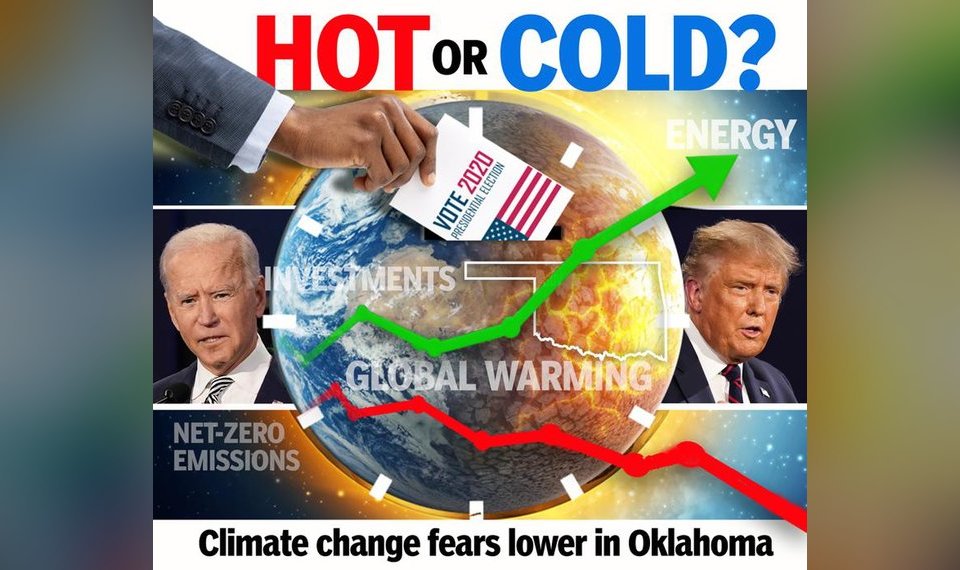
The 2020 US elections mark a breaking point in universal history, with two sides, and two paths defining different future realities for humans and their inhabitation on planet Earth, here called the Anthropocene. I argue that never before has this breaking apart been so clearly defined and presented. In this article, I would like to prise out the factors, influences, and themes associated with this breaking apart, not to reduce the event to an easily dismissed and ignored micro historical occasion, that will pass and be automatically overridden by normalised and continuous forces in time, but to unearth the real power that is at work here, as a mode of occultation, and that I am calling: a general cleavage.

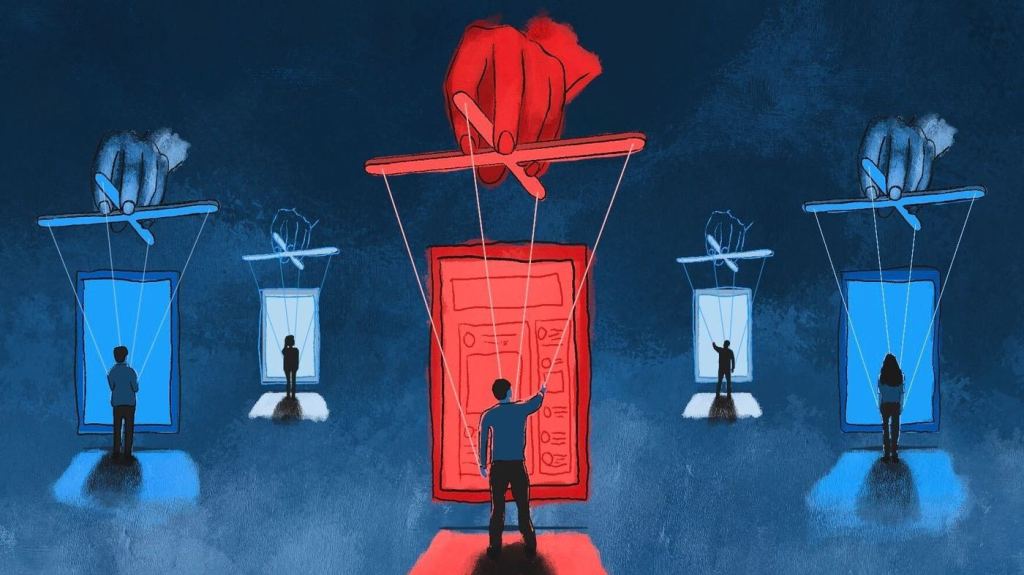
  • The media. On one side of the general cleavage we have a call to return to the Obama years (2008-2016), wherein the media were routed and pummelled along neo-liberal lines, to reproduce and augment calls and images to live harmoniously, multi-culturally, and at peace, and hence not to question the general ruler and designator of what these terms mean: the market and superstructure that the market enables. On the other side of the ongoing equations established due to and as the media, are the forgotten and left behind, silent media users, observers, and those unable to project the necessary values and image that could be taken up and promulgated through the media in a market-driven situation. This specific US population were ruthlessly targeted and made to feel like heroes by the Trump campaign, and who were famously named as a ‘basket of deplorables’ by Hillary Clinton. Trump has spent years working the media, and, supported by likeminded, attack oriented media sharks, came up with a successful media strategy that mobilised discontented voters, who felt as if they had been scrubbed out of the years of Obama-media-domination. In 2020, the Trump camp is seeking out and is deploying similar strategies that gave it victory in 2016, yet to an extent, events have over-taken this strategy, and the media landscape has changed since 2016, especially with the traction and role that negative identity politics is able to play.
Since Russia’s expansive influence operation during the 2016 election, Americans’ usage of social media has only increased — and drastically so, as a result of the pandemic.
  • The pandemic. This fundamental reorientation of the media and the way it is able to project and mediate negative identity politics, as it was able to do pre-2020, has largely come about due to the pandemic. The pandemic has been extremely bad for the Trump re-election campaign, as ‘business-as-normal’ has been suspended, and many of the underlying assumptions that were built into the 2016 campaign have been necessarily undone. For example: large, noisy, raucous political rallies are now deemed to be unsafe to attend by the majority of the population, due to the danger of catching the virus. The words and facts of science, that have been ignored, exaggerated, or systematically incorporated into a political frame if they were useful (by either side), have now come to resound like a decree from God, as your very life could depend on them; e.g., maintaining social distancing, wearing a mask in public, not going out if you are sick, washing your hands. Now, the democratic side of this election battle will abide by and enforce the directives of science, to eradicate and diminish the spread of the virus, and will therefore simultaneously, denigrate the economic cost, such as been successful in other places, for example, by putting the country into lockdown. Contrarily, Trump advocates the continuing strategy of largely ignoring scientific advice for viral diminution, keeping the economy running as per normal, and of talking up the prospects of a successful vaccine.
The pandemic is a major factor in the 2020 election
  • Climate change: Joe Biden and his team have worked out an extensive policy platform to tackle climate change: https://joebiden.com/climate-plan/. In the Anthropocene, wherein human inhabitation of the planet Earth has been recognised as an existential threat, that will haunt many generations to come, these policies and stances may be seen to be very sensible, and could be effective in at least mitigating against many of the predicted horrors of future climate change, such as the increased occurrence of wildfires, drought, floods, hurricanes, and subsequent crop failures and food shortages. On the other side of the cleavage, we have a Trump campaign that has systematically avoided mention of climate change, and, for example, has addressed the recent catastrophic fires in California as a matter of ‘forest management’. Again, what is being displayed here is a wilful ignorance of science, that might play well to audiences not versed in research, but as has been suggested, anyone with a modicum of education would be able to appreciate the connections between the continued domination and economic power of the fossil fuels industries, and augmenting climate change. The danger for the democratic side here is that their plan for radical climate policy and change, deemed as the Green New Deal (GND), will not eventuate, but will fall back into greenwashing, or market-driven solutions to climate change, that do not deliver the desired reductions in CO2 emissions over the long term, but act as fronts and counterfeits for corporations and businesses looking to survive in a changed federal (tax) situation.
Climate change is a radical difference between the 2 candidates
  • Desire: Finally, it may be stated that this election presents a question of desire in the present situation, and, as ‘the general cleavage’. In the recently released Amazon Prime film, ‘Borat Subsequent Moviefilm’, the desire in and as the situation is cleverly subverted and held up for inspection against the backdrop of Borat’s adventures in the US. A Mike Pence rally is interrupted as Borat, who is dressed in a rubber Trump outfit, tries to present Pence with his daughter as a gift from his President. Later, Borat’s daughter, posing as a blonde, patriotic news reporter, ends up in a sexually compromising situation with Rudy Guiliani in a hotel bedroom. Trump’s recent COVID-19 infection (and subsequent miraculous recovery) has been portrayed by him as an attempt to weaken his masculinity, and his emergence from the diseased state has presented him as a strongman able to defeat the ‘China virus’ (i.e., as virile/not viral). Hence, on one side of the equation of the general cleavage, we have a horny, sexual election, largely dominated by the exaggerated libidos of old men (the Viagra generation). On the other side, it is a lot more boring. Even though Obama has been introduced into the equation at the last moment, and Kamala Harris introduces a different take on the sexuality emanating from the Trump side, it is clear that the democratic perspective is not driven by libido and sex to the extent that we encounter from the Trump camp.     
WASHINGTON, DC – MAY 07: U.S. first lady Melania Trump arrives in the Rose Garden to speak at the White House May 7, 2018 in Washington, DC. Trump outlined her new initiatives, known as the Be Best program, as first lady during the event. (Photo by Win McNamee/Getty Images)

In sum, it may be surmised that the factors of the media, pandemic, climate change and desire are active influences and forces prevalent in the 2020 US presidential election, and as productive and part of ‘the general cleavage’. On one side, we have a call to return to the general rules and functioning of the market, a neoliberal rendering of capitalism as a force for prosperity and good in the world, but threatened by a rise in viral death (COVID-19) and civil chaos (Black Lives Matter) as has been seen in 2020; on the other, we have the mechanics of runaway, unfettered, individualised capitalism, looking to break free of regulations, and to unify flows of capital as power. Both sides work to extend the differences in space/time between them.                          


education in the anthropocene: a pragmatic approach

Randall Curren and Ellen Metzger

Original article published by on_education: Journal for Research and Debate

Human beings have made a mess of things, both for themselves and for countless multitudes of other life forms that inhabit this planet. There are so many of us, inflicting so much damage on the planetary systems on which we depend, doing so ever more rapidly, on an ever larger scale, with increasingly powerful built systems, that the survival of civilization as we know it can no longer be taken for granted.1 Ecosystems are being disrupted, water scarcity is growing more acute, food production in many regions is at risk or already collapsing, and climate refugees are on the move as their lands become uninhabitable (Hammer, 2013; U.S. Department of Defense, 2015).2 Meanwhile, populations of mammals, reptiles, amphibians, fish, and birds have declined by sixty percent in just four decades, and human activities are causing the extinction of tens of thousands of species every year, making this era the sixth mass extinction event discernible in the 4 billion year history of life on this 4.5 billion year old planet (Leakey & Lewin, 1995; Kolbert, 2015; WWF, 2018).

The prospects for a desirable future will depend on the intelligence and goodwill with which humanity comes to terms with the harsh new reality it is creating. A “deep time” view from the perspective of billions of years of Earth history reveals that we are in uncharted territory, facing a complex, interacting array of systemic action problems that can only be managed through an unprecedented level and duration of well-informed cooperation.3 It is essential that such cooperation be global but also highly distributed, that attempts to manage the interactions of human, built, and natural systems be adaptive, and that scientists, system managers, and representatives of the public interest collaborate in addressing urgent and fundamental problems. There has been some progress along these dimensions, but climate science is still adjusting to the unexpectedly rapid pace of observed changes, earth system scientists are only beginning to model the interactions between a changing climate system and other systems that are being altered by human activity, and failures of domestic and global civic-mindedness and collective wisdom are inhibiting progress.

The idea that human activities have launched Earth into a new geologic epoch, the Anthropocene, is an attempt to encourage a long view of the coevolution of life and the planet, as well as a long and deeply systemic view going forward.4 It calls for a fundamental rethinking of human-environment relationships (Bauer & Ellis, 2018) and announces the importance of a long-term, systemic, and collective perspective and standard of judgment for the governance of human affairs – a standard that could scarcely be realized without a profound reorientation of education. The long geologic view reveals that the world is not a fixed stage on which we act. Rather, it is a set of densely interacting systems, in which our role has grown so large that it is disrupting the system equilibria on which our existence depends. A near-term example of such disruption is the human assaults on ocean conditions that have allowed fish to flourish and held jellyfish in check for eons. Human activities have not only brought ocean fish populations to the brink of collapse, they have altered ocean temperature, toxicity, and habitat in ways favorable to massive jellyfish blooms – ways favorable to a radical devolution or shift of marine ecology (Gershwin, 2013).

A long geologic view of climate, lifeforms, and the composition of Earth’s atmosphere could begin 3.5 billion years ago (3.5 Ga), with the advent of photosynthetic cellular life and ATP-generating bacteria, which provide essential bases for countless subsequent lifeforms. Oxygenating photosynthetic cyanobacteria followed by 3 Ga, making possible the Great Oxygenation Event that transformed Earth’s atmosphere from one rich in carbon to one rich in oxygen. This caused the extinction of most anaerobic lifeforms and made oxygen-metabolizing lifeforms, such as our own, possible. It also cooled the planet, by removing massive quantities of carbon from the atmosphere in forms laid down as fossil hydrocarbons. The advent of land plants 850 to 630 million years ago (Ma) may have triggered the first glaciation, the first vertebrate lifeforms with bones followed around 485 Ma, and mammals appeared around 160 Ma. Five mass extinction events are discernible in the fossil record, the first around 400 Ma and the fifth at 66 Ma, which enabled mammals to flourish by wiping out large carnivorous reptiles. It then took about 41 million years for deer to evolve from the small mammals that survived that mass extinction event, and another 23 million years for the first mammals of the genus Homo to appear (2 Ma). Anatomically modern deer-hunting humans followed about 250,000 years ago, and began leaving Africa and colonizing other continents about 50,000 years ago. They subsequently began unearthing and burning fossil hydrocarbons as fuel, and in the blink of a geologic eye have returned to the atmosphere a quantity of carbon that it took photosynthetic lifeforms a billion or so years to remove from the atmosphere. Human beings’ adaptability, ingenuity, and cooperative capacities have enabled them to inhabit, but also disrupt, every corner of the Earth. If we survive, it will be through a repurposing of these same attributes.

An understanding of deep time supplies a crucial framework for understanding human interactions with planetary systems. Yet few college students at even the best universities in the U.S. know this history. If our own experience is any indication, few college students have even a rough conception of the orders of magnitude of the time periods involved or the scale of planetary impact that living things have had. Few have learned much earth science or evolutionary biology in school, in part because the former is neglected in favor of sciences that are more important to college admission, and in part because of widespread cultural resistance to accepting mechanisms of evolution as the explanatory heart of biological science. Little evolutionary science is taught in U.S. schools, and public opinion polling continues to find that about half of all Americans reject evolution and believe human beings were divinely created in their present form about 10,000 years ago. Growing numbers also believe that Earth too was divinely created in essentially its present form at that time.5 There is similarly pushback against instruction in climate science in some school districts (Hickman, 2011), though public trust of science is generally very high in the U.S. (Jackson, 2018), and a majority of voters in both major parties now agree that government should do more to combat climate change, including through education in “the causes and consequences of global warming, and potential solutions” (Hochschild & Hochschild, 2018).

There is thus, even in the highly polarized U.S. context, growing agreement that schools should provide science-based instruction in at least some aspects of the realities of living in the Anthropocene. The basis of this agreement is clearly pragmatic, in the sense that it acknowledges there is a problem that needs to be collectively addressed. The achievement of this much agreement offers some hope of progress in managing problems of sustainability, but it leaves some fundamental questions unresolved. Is environmental education essential to a successful transition to sustainable living? If so, what kind of environmental education? Can the kind of environmental education essential to sustainability be justified to members of the society whose legitimately divergent conceptions of a good life should be protected by ideals of free and equal citizenship and government neutrality?

Is environmental education necessary? We suggested at the outset that the prospects for humanity in the Anthropocene will depend on the intelligence and goodwill with which it comes to terms with complex systemic action problems that can only be managed through well-informed cooperation that is both global and highly distributed. We have defended aspects of this multi-faceted claim at length elsewhere (Curren & Metzger, 2017), and will limit ourselves to a few summary remarks. The most basic point is that if markets are left to themselves, managing assets in ways expected to be profitable and treating everything else as expendable, there is no reason to think that they will generate and scale up technical innovations of the kind and at the rate needed to avert catastrophic harm to billions of people and other living things. The system may prove to be self-regulating in the sense that the global human population will collapse and its environmental footprint will be forced into alignment with the planet’s collapsing ecosystem capacity, but this is no one’s idea of how to live sustainably. We argue that an ethically defensible conception of sustainable living would focus on the preservation of biocapacity and opportunity to live well. The evidence suggests that sustainability in this sense will require policy interventions and voluntary limitations of fertility that yield a humanely declining human population.

In the sphere of policy, opportunity-preserving sustainability will require a carbon tax or system of tradeable permits in carbon emissions, to efficiently guide choices away from ones inconsistent with sustainability and to stimulate the right kinds of innovation. Climate stability is only one of nine Planetary Boundaries that must be protected, however, so similar policy instruments will need to be developed and implemented with respect to the others as well.6 In the absence of such price signals, it is simply not possible for individuals to know what changes in their behavior are necessary aspects (the coordination problem) of a collectively sufficient response (the assurance problem).

The pivotal question, then, is whether regulatory interventions and research and education to facilitate innovation would be enough. Must education lead the change in how we live, such as by promoting ‘green citizenship’? We think it must, for three reasons.

First, we regard the need for truth and understanding as a fundamental human interest, and epistemic cooperation to secure these goods for everyone as a fundamental matter of justice. Understanding the state of the world as it bears on the significance of one’s actions is foundational to living well, and the promotion of such understanding requires institutions of public knowledge and educational institutions that promote the development of intellectual virtues. The point of membership in  a cooperative society is to be able to live well, or live better than one could outside of such a society, and the focus of just institutions would accordingly be to provide the developmental (internal) and circumstantial (external) necessities for living well (Curren & Metzger, 2017, pp.  72-86, pp. 89-123). The developmental foundations of living well include understanding, capabilities, intellectual and moral virtues, and associated valuing of things of value. These are arguably the forms of personal attributes that are essential to directing one’s life effectively and engaging in the activities of a good life. Relying on this conception of the kind of education children are entitled to as a matter of justice, we argue that children have a right to an education in sustainability that prepares them with the understanding, capabilities, and virtues foundational to living well and participating in environmental governance both globally and in every other civic sphere to which they belong.

Second, an education of this kind is not only every child’s right, but also a prerequisite for legitimate environmental governance (Curren & Metzger, 2017, pp. 46-50; Curren & Dorn, 2018, pp. 121-132). Imposing such governance primarily by force is neither effective nor just, and an exclusive reliance on top-down centralized governance is much less effective and just than widely distributed cooperation based on common understandings, virtues, and sufficient opportunities (Ostrom, 2010; Ignatieff, 2017). “Government regulation, collective action guided by common norms and understandings, and market mechanisms are less distinct than imagined and must be harmonized to protect opportunity both now and in the future,” we argue (Curren & Metzger, 2017, p.  182). It follows that education in the relevant understanding, norms of cooperation, and related virtues must play a leading role in changing how we live. We have not used the term ‘green citizenship’, but it’s a fair description of the form of education for global environmental cooperation that we propose.

Third, environmental education appears to be instrumentally useful to shifting the political and corporate playing field with respect to sustainability. Public understanding of what is at stake and willingness to take voluntary steps toward living more sustainably may be essential to signaling political leaders that providing leadership on climate and sustainability issues will not end their careers.

What kind of environmental education is necessary? We asserted above that sustainability requires a long-term, systemic, and collective perspective and standard of judgment that is only possible through a profound reorientation of education, but we have so far identified only some basic aspects of the education we think is needed. Here too, we can only touch on the most relevant aspects of the vision of education in sustainability we have detailed and defended elsewhere (Curren & Metzger, 2017; Metzger & Curren, 2017: Curren, 2018a, 2018b; Curren & Metzger, 2018). There are four key ideas in our approach that come together in a form of environmental education that would require a ‘profound reorientation’.

The first key idea is that the cultivation of good practical judgement plays a central role in education that equips students to live well (Curren, 2014). Given what we have already said above about the pervasive significance of unsustainability in the conduct of our lives and the prospects for humanity, education in sustainability would be essential and it should be geared to providing an essential basis of understanding and intellectual, ethical, and civic virtues foundational to forming and acting from good judgment. A second key idea is that the systemic nature of sustainability challenges demands an integrated, multi-disciplinary, systems-focused approach (Curren & Metzger, 2017, pp. 171-176). We noted the significance of a deep geologic perspective in our introductory remarks, and the approach we envision would both include, and go far beyond, systematic instruction in environmental science. A third key idea is that instruction in the ethics of sustainability is essential (Curren & Metzger, 2017, pp. 53-69, pp. 176-179). We identify principles of sustainability ethics that are entailed by basic ethical requirements of mutual respect and taking care to avoid harming others, and we identify related virtues of sustainability. These entail a valuing of nature that can be encouraged by environmental educators through understanding and experience of nature (Ferkany, 2018; Curren & Metzger, 2018), as well as through education focused on the instrumental value of nature for human well-being. A fourth key idea is that all of these elements should come together in collaborative, civic, project and problem-focused learning (Curren & Metzger, 2017, p. 175; Curren & Dorn, 2018, pp. 121-132). All told, this would arguably amount to a profound reorientation of education.7

Can the needed form of environmental education be justified within the constraints of liberal neutrality? Yes. Liberal neutrality, as it is understood within a Rawlsian framework, is intended to protect an aspect of free and equal citizenship, namely the powers to have, revise, and live in accordance with a reasonable conception of a good life. The reasonableness of a conception of a good life is essentially a matter of its compatibility with free and equal citizenship for all members of the society and related fair terms of cooperation. The protections take the form of equal rights and liberties and fair access to the other ‘primary goods’ that Rawls regards as providing ‘all purpose’ means to the pursuit of any reasonable conception of a good life. In addition to the fundamental constitutional principles of justice that define fair access, the fair terms of cooperation that Rawls identifies include principles of public reason – the principles that regulate the kinds of values and evidence for factual claims that can legitimately enter into the determination of public policy, especially matters of fundamental constitutional importance. With respect to factual matters within the purview of sciences, the norms of public reason require deference to authoritative scientific judgment, and matters of scientific consensus can be considered in determining what the fundamental principles of justice will be.

Predicating public policy and educational content on sustainability science is quite defensible from this standpoint, even if the empirical claims associated with some ‘comprehensive’ conceptions of a good life are incompatible with science. There is simply no other feasible basis on which to collectively address the problems we face than to invest in public knowledge and rely on the best evidence regarding empirical matters that we have. To insist that education in science is important to sustainability and that requiring science education is not a violation of liberal neutrality is not, however, to insist that the proper goal of science education is to inculcate belief. The goal we have identified, and others have defended in more detail, is understanding (Laats & Siegel, 2016). Societies owe children a scientifically sound understanding of the world they must navigate, but they cannot legitimately compel anyone to accept and act on that understanding.

We reject some aspects of the orthodox Rawlsian view, especially with regard to environmental and intergenerational justice, the functions of institutions, and the science of well-being, but we accept its strictures regarding neutrality. The essential point regarding our conception of sustainability ethics is that the principles we identify are entailed by an ethic of respect for persons that is closely associated with Rawls’s conception of free and equal citizenship and basic to any freedom-respecting system of law. In other words, these principles of sustainability ethics should be accepted as part of what defines equal opportunity to pursue legitimately diverse conceptions of a good life. The same applies to our associated virtues of sustainability and well-informed instrumental valuing of nature, because the valuing at stake is not prejudicial with respect to any legitimate conception of a good life. It is a valuing of universal external necessities for living well, or something akin to a class of Rawlsian primary goods. With respect to the non-instrumental valuing of nature that understanding and experience of nature may inspire when students receive environmental education, it is no more a violation of liberal neutrality than an education in logic that inspires appreciation of and devotion to careful reasoning, an education in cooking that elevates the tastes and inspires a devotion to culinary artistry, or physical education that provides students with a variety of opportunities to fulfill their athletic potential in devotion to gratifying pursuits.

Providing opportunities to experience nature and to engage in ethical inquiry about the value of nature are legitimate means to enabling students to grasp the value of what is in any case conducive to their own future opportunities. Any conception of a good life this may undermine is almost certainly one that unreasonably impairs the opportunities of others. Here we face the fundamental problem with living unsustainably: That the conceptions of a good life we live by cannot all be reasonable as enacted, because the ways we live are collectively violating fundamental requirements of justice with respect to the opportunities of future generations.8

References

Bauer, A. M., & Ellis, E. C. (2018). The Anthropocene divide: Obscuring understanding of social-environmental change. Current Anthropology59(2), 209–227. https://doi.org/10.1086/697198
Berkman, M. B., & Plutzer, E. (2010). Evolution, creationism, and the battle to control America’s classrooms. New York, NY: Cambridge University Press.
Curren, R. (2014). Judgment and the aims of education. Social Philosophy and Policy31(1), 36–59. https://doi.org/10.1017/S0265052514000107
Curren, R. (2018a, January 21). Living well now: What does it take? [Blog post]. Retrieved from https://www.npr.org/sections/13.7/2018/01/21/562805068/living-well-now-what-does-it-take
Curren, R. (2018b). Sustainability ethics across the curriculum. In E. E. Englehardt & M. S. Pritchard (Eds.), Ethics across the curriculum—pedagogical perspectives (pp. 273–287). Cham: Springer. https://doi.org/10.1007/978-3-319-78939-2_17
Curren, R., & Dorn, C. (2018). Patriotic education in a global age. Chicago, IL: University of Chicago Press.
Curren, R. R., & Metzger, E. (2017). Living well now and in the future: Why sustainability matters. Cambridge, MA: MIT Press.
Curren, R., & Metzger, E. (2018). The art of preserving opportunity: A response to Ferkany, Ahlberg, Macleod and Ruitenberg. Theory and Research in Education16(1), 113–117. https://doi.org/10.1177/1477878517727933e
Davenport, C. (2018, October 7). Major climate report describes a strong risk of crisis as early as 2040. New York Times. Retrieved from https://www.nytimes.com/2018/10/07/climate/ipcc-climate-report-2040.html
Ferkany, M. (2018). Legitimizing education in sustainability. Theory and Research in Education16(1), 99–103. https://doi.org/10.1177/1477878517727933a
Gershwin, L.-A. (2013). Stung! On jellyfish blooms and the future of the ocean. Chicago, IL: University of Chicago Press.
Hammer, J. (2013, June). Is a lack of water to blame for the conflict in Syria? Retrieved from https://www.smithsonianmag.com/innovation/is-a-lack-of-water-to-blame-for-the-conflict-in-syria-72513729/
Hickman, L. (2011, May 17). US school board teaches ‘the controversy’ on global warming. The Guardian. Retrieved from https://www.theguardian.com/environment/blog/2011/may/17/global-warming-school-teaching-controversy
Hochschild, A., & Hochschild, D. (2018, December 29). More republicans than you think support action on climate change. New York Times. Retrieved from https://www.nytimes.com/2018/12/29/opinion/sunday/republicans-climate-change-polls.html
Ignatieff, M. (2017). The ordinary virtues: Moral order in a divided world. Cambridge, MA: Harvard University Press.
IPCC. (2018). Global warming of 1.5 oC. An IPCC Special Report on the impacts of global warming of 1.5°C above pre-industrial levels and related global greenhouse gas emission pathways, in the context of strengthening the global response to the threat of climate change, sustainable development, and efforts to eradicate poverty. Geneva: Intergovernmental Panel on Climate Change (IPCC). Retrieved from https://www.ipcc.ch/sr15/
Jackson, C. (2018, February 18). The public mostly trusts science. So why are scientists worried? Science. https://doi.org/10.1126/science.aat3580
Kolbert, E. (2014). The sixth extinction: An unnatural history. New York, NY: Holt.
Laats, A., & Siegel, H. (2016). Teaching evolution in a creation nation. Chicago, IL: University of Chicago Press. Retrieved from https://www.press.uchicago.edu/ucp/books/book/chicago/T/bo22541379.html
Leakey, R. E., & Lewin, R. (1995). The sixth extinction: Patterns of life and the future of humankind. New York, NY: Doubleday.
Lewis, S. L., & Maslin, M. A. (2018). The human planet: How we created the Anthropocene. London: Penguin.
Metzger, E. P., & Curren, R. R. (2017). Sustainability: Why the language and ethics of sustainability matter in the geoscience classroom. Journal of Geoscience Education65(2), 93–100.
Numbers, R. L. (2006). The creationists: From scientific creationism to intelligent design. Cambridge, MA: Harvard University Press.
Ostrom, E. (2010). Polycentric systems for coping with collective action and global environmental change. Global Environmental Change20(4), 550–557. https://doi.org/10.1016/j.gloenvcha.2010.07.004
UN. (2015). Transforming our world: The 2030 agenda for sustainable development (No. A/RES/70/1). Geneva: United Nations (UN).
UNEP. (2016). Summary of the sixth global environment outlook GEO-6 regional assessments: Key findings and policy messages (No. UNEP/EA.2/INF/17). Nairobi: United Nations Environment Programme (UNEP). Retrieved from http://hdl.handle.net/20.500.11822/7644
U.S. Department of Defense. (2015, July 29). DoD releases report on security implications of climate change. Retrieved from https://dod.defense.gov/News/Article/Article/612710/dod-releases-report-on-security-implications-of-climate-change/
WWF. (2018). Living planet report – 2018: aiming higher. Gland: World Wide Fund for Nature (WWF). Retrieved from https://s3.amazonaws.com/wwfassets/downloads/lpr2018_full_report_spreads.pdf

Recommended Citation

Curren, R. & Metzger, E. (2019). Education in the Anthropocene: A Pragmatic Approach. On Education. Journal for Research and Debate, 2(1). https://doi.org/10.17899/on_ed.2019.4.1

randall curren & ellen metzger

Randall Curren is Professor and Chair of Philosophy and Professor of Education at the University of Rochester (New York), and Honorary Senior Research Fellow in Education at the University of Birmingham (UK). He works primarily in philosophy of education, ethics, and moral psychology. Ellen Metzger is Professor of Geology and Science Education at San José State University, where she has co-directed the Bay Area Environmental STEM Institute since 1990. She is co-editor of a 2017 issue (vol. 65, no. 2) of the Journal of Geoscience Education on interdisciplinary teaching and sustainability.

The Left Should Embrace Degrowth

Giorgos Kallis

Orginal chapter from The New Internationalist, chapter 3 in In defense of degrowth

Origins

Intellectually, the origins of degrowth are found in the Continental écologie politique of the 1970s. André Gorz spoke of décroissance in 1972, questioning the compatibility of capitalism with earth’s balance “for which … degrowth of material production is a necessary condition”. Unless we consider “equality without growth”, Gorz argued, we reduce socialism to nothing but “the continuation of capitalism by other means—an extension of middle-class values, lifestyles and social patterns”.

“Demain la décroissance” (tomorrow, degrowth) was the title of a 1979 translated collection of essays of Nicholas Georgescu-Roegen, a Romanian émigré teaching in the US and a proto ecological economist who argued that economic growth accelerates entropy. These were the times of the oil crisis and the Club of Rome. For continental “red-green” thinkers, however, the question of limits to growth was first and foremost a political one. Unlike Malthusian concerns with resource depletion, overpopulation and collapse of the system, theirs was a desire for pulling the emergency brake on the train of capitalism, or, to quote Ursula LeGuin, “put a pig on the tracks of a one-way future consisting only of growth”. The slogan décroissance was revived in the early 2000s by activists in the city of Lyon in direct actions against mega-infrastructures and advertising. Serge Latouche, a professor of economic anthropology and vocal critic of development programmes in Africa, popularized it with his books, calling for an “end to sustainable development”. For French intellectual Paul Ariès, degrowth was a “missile word”, a subversive term that questioned the taken-for-granted desirability of growth-based development. A small but dedicated network of degrowthers sprang around the monthly La Decroissance magazine. The word registered in French political debates, with even a failed attempt for a degrowth political party.

Degrowth today

From France, the new meme spread to Italy, Spain and Greece. In 2008, just before the Spanish crisis, Catalan degrowth activist Enric Duran “expropriated” 492,000 euros via loans from 39 banks. He gave the money to social movements, denouncing Spain’s speculative credit system and the fictitious growth it propelled.

Starting in Paris in 2008, a series of international gatherings—a mix of scientific conference with social forum—introduced degrowth to the English-speaking world. In September 2014, 3,500 researchers, students and activists met in Leipzig for the 4th International Conference on Degrowth. Activities spanned from panels on growth and climate change, Gramscian critiques of capitalism, or the 20-hour workweek, to civil disobedience outside a coal power plant and courses on how to make your own bread. Proliferating academic literature in peer-reviewed journals has buttressed key degrowth claims: the impossibility to avoid disastrous climate change with growth as usual; fundamental limits in decoupling resource use from growth; the disconnection between growth and improved wellbeing in advanced economies; the rising social and psychological costs of growth. Recent works highlight the imperative of compound growth for capitalism (what David Harvey called the most lethal of its contradictions), and explore how employment or equality could be sustained in post-capitalist economies without growth.

Policy proposals range from carbon caps and extraction moratoria to a basic citizens’ income, a reduced working week, a reclaim of resource commons and a debt jubilee, as well as a radical restructuring of the tax system with carbon instead of income taxes, salary caps, and capital taxes. By demanding the impossible, such “non-reformist reforms”, as Andre Gorz called them, call for systemic transformation (as Slavoj Žižek noted, social-democratic reforms are revolutionary in an era that capitalism can no longer accommodate them).

Politically, there is a clear understanding that system change is necessary, and that this requires a movement of movements, or an alliance of the dispossessed, including a coalition of the global social and environmental justice movements. Whereas degrowth is incompatible with capitalism, degrowth rejects also the illusion of a so-called “socialist growth”, whereby a rationally, centrally planned economy somehow magically will bring technological developments that will allow a reasonable growth without impinging upon the ecological conditions. In the spirit of Gorz, degrowthers take issue with fellow socialists who find it easier to imagine the end of the world or the end of capitalism, but for some inexplicable reason, not the end of growth.

Another way

For others “degrowth” signifies mostly an everyday (politicized) living practices. Our three-day degrowth forum in Athens in 2015 was attended by hundreds of participants: not only academics, environmental and human rights activists or members of Syriza, the Greens, and the “anti-authoritarian” Left, but also back-to-landers and organic farmers from rural Greece, and many of the “ground troopers” of the solidarity economy of peoples’ clinics and urban agriculture. In Barcelona, degrowth is symbolized in projects such as Can Masdeu, an occupied squat with a network of food gardens in the working-class neighbourhood of Nou Barris and a history of “right to housing” activism; or the Cooperativa Integral Catalana, a co-operative consisting of 600 members and 2,000 participants, which also functions as an umbrella for independent producers and consumers of organic food and artisanal products, houses eco-commune residents, and runs co-operative enterprises and regional networks of exchange that issue their own currencies.

Francois Schneider, instigator of the international conferences and founder of the Research & Degrowth think-tank in Paris (now in Barcelona), embodies degrowth’s hybridity: a PhD graduate in industrial ecology, he walked for a year with a donkey around France explaining degrowth to passers-by who stopped him bewildered. He lives now in Can Decreix, a bare-basics house on the French-Catalan border, a center of experimentation and education in frugal living.

Some speak of a grassroots degrowth “movement”, but the attendants of the conferences are not a cohesive group of people with a shared agenda or unified purpose, nor do we still reach the numbers of a movement. Unlike the “anti-globalization” movement, there is no WTO building to be stormed or free-trade treaty to be stopped. Degrowth offers a slogan that mobilizes, brings together, and gives meaning to a diverse range of people and movements without being their only, or even principal, horizon. It is a network of ideas, a vocabulary as we called it in our recent book, that more and more people feel speaks to their concerns.

Redistribution, not growth

A new Left has to be an ecological Left, or it won’t be left at all. Environmental change “changes everything” for the Left too, as Naomi Klein argued. Capitalism requires constant expansion, an expansion predicated on exploitation of humans and non-humans, that irreversibly damages the climate. A non-capitalist economy will have to sustain itself while contracting. But how can we redistribute or secure meaningful work without growth? There is not yet a concrete “economics of degrowth”. Lamentably, Keynesianism is the most powerful tool the Left, even the Marxist Left, has for dealing with issues of policy. But this is an economics of the 1930s when unlimited expansion was still possible and desirable.

Without a tide to raise all boats, it is the time to rethink which boat gets what. The Left’s response to Piketty’s r>g conundrum should not be “we will increase g”. After all, we always wanted to degrow r, i.e. reduce capital accumulation! Piketty himself, hardly an ecologist, does not believe in the possibility of higher growth. Redistribution is the central question for a 21st century without growth.

The Left has to liberate itself from the imaginary of growth. The growth of anything at a compound rate quickly turns towards infinity, an absurd and dangerous idea. Growth is an idea that is part and parcel of capitalism. It is the name the system gave to the dream it was producing, the dream of material plenty. GDP was invented to count war production, and evolved into an indicator “objectively” measuring and confirming the “success” of the US in the Cold war. Growth is what capitalism needs, knows, and does. As Gareth Dale notes, socialist politics were never about quantitative increases in abstract exchange value. They were about specifics, about concrete use values: employment, a decent wage, dignified conditions of living, a healthy environment, education, public health or clean water for all. All these need resources; but there is no reason why they would need a perpetual expansion of resources, 3% each year.

And here is a stronger claim: the things we in the Left would like to see “grow” would not bring aggregate growth (unless we totally redefined what we measure as economic activity, but this is then a play of words). Spreading wealth evenly, using more hands and minds than otherwise necessary, leaving environments and people idle, spending time to care for one another: all these are “taxes” on productivity and growth. We may as well be better off being less productive. But industrialization took off by concentrating surpluses in the hands of a few (capitalists or states), reinvesting profits for more growth; not by spreading the wealth to everyone or leaving the pastures and the fossils idle.

Changing the dreams

This may be too hard to swallow. After all, many of us often advocate for equality, democracy, full employment, a minimum wage, education, or renewables (you name it) in the name of growth. The belief is that an alternative to the capitalist system that has eyes only for profits will be more “rational” and do better what capitalism does, and even more. This is wrong politically: as Slavoj Žižek claims, the Left cannot exhaust itself to new ways of realizing the same dreams; it has to change the dreams themselves. It is also wrong factually. The “glorious” (sic) post-War era of reconstruction and catch-up is over. There are few indications that debt-fuelled Keynsianism, brown or green, capitalist or socialist, can revive it. This is independent of the fact that neoliberal austerity is disastrous. Redistribution, democracy and equality, yes; but not in the name of growth.

Degrowth revives the spirit of Enrico Berlinguer’s “revolutionary austerity”, an austerity born out of solidarity. The petrol that fuels our cars, heats our homes or even powers our hospitals and schools is the same that destroys livelihoods and forests in the Peruvian Amazon or Nigeria. We do not need the Pope to remind us that. The reason for a ‘sober’ life, as Berlinguer before or the Pope now calls it, is because our actions ‘here’ affect people and ecosystems ‘there’. Not because the capitalist machine is running out of things (Malthusians’ worry), or because, as the neoliberals want it, ‘we live beyond our means’ (by which they mean ‘we the 99%’ who use the services of the welfare state, not they the 1% who live by their capital). From a degrowth perspective, the issue is not that the Global North consumes more than it produces (or produces more than it consumes, à la Keynesians). The issue is that it produces and consumes more than what is necessary, at the expense of the Global and inner ‘South’, other beings, and future generations. Producing and consuming less will reduce the damage done to others. This is a question of social and environmental justice: a ‘shrink and redistribute’ from the global 1% (and to a lesser extent the 10%, which includes the middle classes of the EuroAmericas) to the rest. Such invocations of sober simplicity may resonate with dormant common senses about the ‘good life’ present in many cultures, East and West. It can recover the commonsensical critique of ‘excess’ from the grip of austerians, who hypocritically use it to justify their regressive policies.

Political possibilities

Degrowth is a keyword circulating mostly among activists. In Greece and Spain, it resonates with anarcho-cooperativists and eco-communalists, including many in the youth bases of parties like Syriza or Podemos. It was a word present, though not dominant, in the occupied squares and the solidarity economies that spun off from them. Among Greens it has woken up old, pre-‘sustainable development’ divisions between radical ‘fundis’ and pragmatist ‘realos’. A sign of the re-radicalization of Europe’s Greens, Spain’s Equo, represented in the European Parliament, has endorsed explicitly a ‘post-growth’ agenda (its MEP writing in favor of degrowth). The national campaign of the UK Greens was also ‘post’ or ‘de’-growth in spirit, though not in name.

Calling for degrowth explicitly is electoral suicide in an environment dominated by corporate media. More groundwork is necessary to make degrowth a widespread common sense. For now, the closer a radical party gets to power, the more likely it is to disassociate itself from degrowth. Pablo Iglesias signed the degrowthist ‘last call’ manifesto. But as The Economist noted approvingly, as Podemos matured it left behind more ‘nutty’ ideas like ‘degrowth’ and ‘anti-capitalism’. The parallels with the New Left in Latin America are obvious. Correa or Morales were elected with the support of indigenous and ecological movements with philosophies similar to degrowth. Once in power, real-politik and growth-based redistributive politics dictated that capital be accomodated and the economy be fuelled by extractivism.

One would hope that at least New Left parties in Europe refrain from making growth their central objective. No doubt, crises reassert the imaginary of growth, this time as a progressive goal. A Podemos activist in Catalonia commented to me that “in the current crisis, we can only talk about growth”. And yet this is not totally true. It takes courage and imagination, but is not impossible. Barcelona en Comú won the elections of the city without mentioning growth once in its programme. This might have to do with the organic rooting of degrowth and associated ideas in Barcelona’s civil society and the flourishing, alternative solidarity economy of the city. Many of my friends and colleagues worked for the party’s programme, which commits to a citizens’ income, green taxes, reclaiming of green spaces, a municipal energy co-operative, less resource use and waste, or social housing. Among the first decisions of the new mayor, Ada Colau, were a moratorium on new hotels and an end to the bid for the 2026 Winter Olympics. Santi Villa, Catalonia’s minister for the environment until 2015 and an aspiring young conservative, accused her for leading “a party of degrowth” (omitting though that a few months back, and trying to stay on top of the latest international ideas in debates around climate change, he too had talked favorably of degrowth in Parliament).

Keynesianism without growth?

Podemos’ economic programme was drafted by two socialist-Keynesian economists (Vicenc Navarro and Juan Torres), who had frequently written opinion pieces against degrowth. Fortunately, it avoids clear references to growth. Might this signal room for a “Keynesianism without growth”? I have argued that it does. One can imagine fiscal and tax policies that shift resources in favor of the working classes and toward green, caring or alternative activities stimulating a low-intensity consumption by those in need, within an overall pattern of economic contraction. Hardly Keynes’ vision, but perhaps one apt for secularly stagnant economies.

Unlike a municipality, of course, whose fiscal responsibilities are limited, a nation without growth may have problems to finance its welfare services. At least in principle, however, I see no good reason why health or education costs have to grow at 2 or 3% per year (the rate of the supposed necessary growth). There is immense scope for saving by reversing outsourcing and expensive procurements, banning mega-projects, or decentralizing services, like preventative health or child care, sharing them with solidarity networks. Poorer countries such as Cuba and Costa Rica have world-class public health and education. Higher capital taxes can also offset revenue lost from degrowth. Welfare without growth is theoretically possible, but no Left party has dared to think what it would take to put it into practice. A major sticking point is debt. Without growth, debt as a percentage of GDP increases. Borrowing rates sky-rocket, as the likelihood of repayment declines. This is what makes a degrowth Keynesianism less plausible. Without growth, public debt has, sooner or later, to be restructured or eliminated either by decree or by inflation. There are historical precedents for this. But once done, it cannot be repeated. Without new debt, the room for fiscal expansion is limited.

The urgency of the public-debt question may explain differences between Spain and Greece. The rise of Syriza initially fuelled hopes for ‘another world’ becoming possible: the base, especially the youth, of the party consisted of greener ‘co-operativists’ who, akin to a degrowth spirit, bet on—an arguably not fully defined—‘solidarity economy’. All high cadres of the party, however, talked unreservedly in favor of growth, framing it as the alternative to austerity. In the negotiations with the Eurogroup there was a short-lived attempt to advance Joseph Stiglitz’s proposal for a ‘growth clause’: Greece would link debt repayments to growth. Such demands were deemed as ‘ultra-radical’; speaking of a solidarity economy without growth would be nuttier than nutty.

A solidarity economy

Some foreign commentators dreamed that a ‘No’ to the Troika and an exit from the euro would open the road for a degrowth transition and a solidarity economy. There was no political force, however, in Greece advocating this. The pro-drachma Left of Syriza, now a separate party called “Popular Unity” is ardently productivist, its leader having a dismal environmental record as Minister of Energy, including plans for new domestic coal production and fuel subsidies to industries. Despite the phenomenal expansion and the important achievements of the solidarity economy in Greece, this is still a marginal social movement (much smaller than in Spain), and its networks are insufficient for satisfying the population’s needs in case of a transitional period. A smooth economic contraction out of the euro is unlikely: it was precisely the fear of imported food or drug shortages and economic chaos in the interim period that scared Alexis Tsipras into signing a new memorandum. Countries like Japan, with fiscal and monetary independence, and an ability to issue and finance debt in their own currency, are better positioned to sustain employment and welfare without growth (Japan has not seen growth for more than 10 years, a decade “lost” only in the eyes of economists). But, of course, a capitalism without growth is inconceivable, and Japan tries as hard as possible to relaunch growth (with little success to date).

The impossibility of imaging political forces rising to power with a degrowth agenda makes some degrowthers argue that change can only come from the grassroots and not the state, through an “involuntary” path, whereby citizens will self-organize as the economy stagnates and lack of growth brings crisis. I agree that a degrowth transition is unlikely to be voluntary and take place in the name of “degrowth”; it will be a process of adaptation to the actual stagnation of the economy. I can’t see, however, how this can happen without also occupying the state, with a mutual reinforcement of civil and political society, grassroots practices, and new institutions.

No political party of the Left might dare to openly question growth, but I find it hard to see how in the long-term, willingly or not, the European Left (which, unlike its Latin American counterpart, cannot bank on a commodities bubble) can avoid thinking about how to manage without growth. Growth is not only ecologically unsustainable but, as economists openly admit (from Piketty to Lawrence Summers and the “secular stagnationists”), increasingly unlikely for advanced economies.

Capitalism without growth is savage. Degrowth is not a clear theory, plan, or political movement. Yet it is a hypothesis whose time has come; and one that the Left can no longer afford to avoid.

Don’t Worry, Be Scrappy: On Stephanie Wakefield’s “Anthropocene Back Loop”

Don’t Worry, Be Scrappy: On Stephanie Wakefield’s "Anthropocene Back Loop"

Jeremy Bendik-Keymer & Katherine Cassese

Cleveland Review of Books article here

Stephanie Wakefield | Anthropocene Back Loop: Experimentation in Unsafe Operating Space|London: Open Humanities Press | May 2020 | 212 Pages

JBK: “The back loop presents an opportunity to reclaim and redefine human agency” (p. 134).  This is the premise of Stephanie Wakefield’s imaginative book, the richer development of an idea she presented in a memorable article in the Brooklyn Rail, a course on invented lifestyles with students at Eugene Lang College, and a concept article for scholars and designers concerned with environmental, climate and other forms of resilience.

By the “back loop,” Wakefield is repurposing an idea from Canadian ecologist C.S. “Buzz” Holling.  Holling discovered and then theorized that ecologies go through a process of “colonization,” stability, dissolution, and then reorganization.  He came to this view first by observing succession processes in the woods after a forest fire.  The sudden interruption of the fire led the stable state of the woods to dissolve, throwing open biological and ecological possibilities that led to a reorganization of the ecosystem after the fire.  The back loop is the period of dissolution and creativity: ““Now suddenly,” wr[ote] Holling, “[is] the time where unexpected events happen. The accumulated resources are disassembled, broken down, left uncontrolled”” (p. 23).

Imagine a figure “8” on its side as a mobius strip.  The lower left front facing curve is the period of “colonization.”  The upper right front facing curve is the period of stability.  The lower right back turning curve is the onset of the back loop – the period of dissolution.  The upper left back facing curve is the period of reorganization.  The back loop is thus a continuum of dissolution and reorganization.

What Wakefield proposes is that we view the “Anthropocene” through the figure of the back loop.  The “Anthropocene” is the proposed name for the geological period wherein human activity becomes a main driver of planetary geology.  Things like global warming and the likely onset of a the sixth mass extinction suggest that human beings are now a geological force, to echo the words of Dipesh Chakrabarty.  Wakefield thinks that the concept of the back loop can be repurposed to help us understand the situation we are in.  The build-up that has led humankind to be able to change the planet’s biochemistry and biological order was the period of planetary “colonization” and then stability.  The onset of global warming and the beginning of what appear to be mass extinction cascades are the disruptive events of dissolution, the first half of the back loop.  These disruptive events have implications for how we live:

“Practices of power and truth, dreaming and living, governing and shaping: such practices are as old as humans themselves. They are how we create our worlds, take them in hand and shape them. But what is happening to these practices of life as they enter the back loop?” (p. 12)

What is happening, Wakefield thinks, is that the powerful are trying to manage the disintegration of the ecological stability of our planet to preserve their power and its order.  But as a moralist for our time who emerged out of anarcho-socialist Occupy, Wakefield urges us to break with the world the powerful seek to preserve and to transcend the dread of viewing the future as a period of ecological ruin:  “It seems to me that the future belongs not to those who seek to govern or suffer the back loop, but to those who know what they love, and take that love as a starting point and new definition of security” (p. 78).  Against a dying and conflicted world, she wants us to reinvent our lives.

Wakefield’s book is a call to view our lives as opening onto the second half of the back loop – the process of reorganization – while living through the dissolution of our world:

“My suggestion that we are in the back loop means that we have already crossed various tipping points …. [E]verything from social practices, technologies, and [conceptions of] truth to plants, animals, and places have become shaken out of their normal frameworks. We are free to move on new planes. And this should compel us to shift our perspective a bit” (p. 18).

I’m curious, Katherine, what you thought of all this.    

KC:  Wakefield draws on academic theory, film and even some posts on social media to suggest an approach for people working to carve out meaningful lives.

She divides her book into two parts with an interlude between them. In part one, she sets up the big picture frame of her view. She explains the back loop, how resilience theory is about managing life in a “safe operating space” that more or less preserves contemporary class-stratified consumer life, and then she lays out the challenge of moving beyond the safe operating space to embrace “post-apocalyptic” life through autonomous experimentation – taking up basic questions of life oneself and trying out novel ways of being as they feel right  The second part of the book then looks at several in-depth examples of how people are already embracing dissolution and enacting affirmative change using experimentation instead of a single blueprint:

“Rather than offering imperative statements or laws to which life must constrain itself in order to survive, [the examples I’ve chosen to study] instead communicate to us that life in and beyond the back loop is something to be explored on one’s own terms” (p. 84). 

Experimentation is personal, which is why all the examples – living and building on the water in Louisiana, CrossFit as a global phenomenon, and the singer Chronixx – are specific instantiations of experimentation that Wakefield has “lived or been close to” (p. 132). Whatever doesn’t work for us personally, we should abandon. It’s here that Wakefield goes big. She seems to think that “front loop” politics and philosophy might not work for us at allanymore: 

“[T]he quest of philosophy and politics in the front loop overall was to determine being by giving it a name, a ground, or telos. In place of trust in one’s own intuitions, actions, or definitions of truth, codes of sovereign grounds are created, to which being and action will be required to refer themselves” (p. 59). 

JBK:  That is an allusion to the work of the late New School for Social Research philosopher Reiner Schürmann, whose work is still being discovered.  Schürmann was a Heideggerian thinker who took Heidegger’s critique of metaphysics in the direction of politics.  Wakefield seems to be saying that the politics and philosophy of the front loop has been a “metaphysics of presence,” which means both that it has been hierarchical and heteronomous – we find what makes sense by learning it from an authority outside ourselves – and that it has been static, resistant to becoming, trying to fix being in an eternal now.

KC:  Interesting.  If philosophy and politics do impose an order on us, then (Wakefield thinks) beginning from ourselves will help ordinary people find meaning. But I wonder if she neglects those things that are meaningful precisely because the individual is just one part of them: truth, planetary responsibility and universal principles. To live a good life, I can’t thoughtlessly believe, say, or do whatever I want.  Far from inhibiting life, that makes it more meaningful.

Is there a way to begin from ourselves using autonomous experimentation, while also embracing what is bigger than ourselves? 

JBK:  That’s a good question.  It pushes back a bit on Wakefield’s down-low Heideggerianism.  And there’s a lot there to resist.  Wakefield makes a number of unstudied or sloppy claims.  She often grandstands and can be contradictory in the details.  One of the main contradictions is to mix her anarcho-libertarianism with Schürmann’s Heideggerianism.  For Schürmann, “an-archy” – life without a metaphysical ground – points  toward what Rob Nichols called a “politics of historical ontology,” the historical study of our ways of being while working on them from within.  But Wakefield’s book is at risk of repressing history by thinking that sheer willpower and ingenuity can tear us free of it.  This is actually, for thinkers like Schürmann or Nichols, to remain entangled in a dualist metaphysics of will set over against reason.  It’s to privilege “immediacy” when the way we approach everything is deeply mediated by what we’ve inherited historically.

Still, what Wakefield is doing with will – or as I will say, attitude – is interesting.  It comes out in her freshest intuition:  how to approach climate panic.  She rallies us tokeep our spirits upabout global warming and to be defiant.  Someone might think that this seems both wrong and absurd.  How can we “be positive” about hundreds of millions of climate refugees, failed states, civil war, millions dead from viral vectors, crashing ecosystems, drought, and mass starvation?  But Wakefield argues that some badass attitudeis spirited, beautiful, and sensible.

Take mellifluous Chronixx from Jamaica.  She thinks he shows us human potential by always going farther and higher than our current or past selves.  Going higher here means being more affirmative, more loving, more creative with whatever cards one has been dealt.

“Faced with a rifted reality where the old transcendents no longer work, … Chronixx actually disentangles himself, becomes his own ground. Whether it’s beer bottles as mics, palm trees as audience, ProTools or YouTube, colonial histories, fashion shoots, British football casual culture, the ocean’s waves or the sun’s heat—what Chronixx offers is a view of the possibilities present when we take up the world around us, without justification, moral or otherwise, to go beyond our given conditions. This is equally possible on an individual or shared basis. And it is something you can’t always see, touch, or read” (p. 121; note that she says “shared basis,” for it suggests something non-individualistic).

Granted, it’s not obvious what the “old transcendents” are in this passage, nor what is meant by “old” except that one isn’t creative enough to make some dogmas work now.  Yet Khalik Allah seems to reinvigorate “old transcendents” in Black Mother (2018) when he returns to Jamaica and goes “most high,” mixing and repeating the “old transcendents” with a difference that passes beyond the visible.  Nor does it seem likely that Wakefield wants to make way for someone who, say, goes on a killing spree “without justification, moral or otherwise” so as to “go beyond [their] given conditions” and affirm everything in a cosmic bloodbath.  

After all, Chronixx does have a moral justification in his music and in his videos, implicit in the voice, tone, and framing of his song and step. He signalsthat he is a “good guy,” not dangerous, and is in touch with others.  That is, he clearly manifests what Philippa Foot called “thick” moral sense.  He sings and steps good soulfulness.  Wakefield may not like the word “good,” because she has an allergy to the connotations it has in some people’s bad mouths, but that doesn’t mean the logic of goodness is not present all over Chronixx’s going higher and higher.

Also, Chronixx is working within a tradition of music, showing carefor it as he moves into its possibilities and expands them into something that can change.  This is a micro-version, a “practice of freedom,” of what Nichols calls “historical ontology.”  Wakefield’s use of Foucault’s “practices of freedom” is ahistorical, but someone like Chronixx is actually historical by way of his living tradition in song.

All this is confusing in Wakefield’s book.  How historical should a “practice of freedom” be?  Wakefield here seems modernist, even what Ariella Aïsha Azoulay calls “imperial.”  Check out Wakefield’s emphasis on the “new”:

“To transform the world does not only entail material infrastructures but also calls desperately for new kinds of human beings” (p. 119)  

What kind?  The kind of human beings who are here and now, pointed toward the new with an excess of creative and loving energy.  It’s contagious right?  Stop being stuckDon’t wait to be validated!  Get out there and reshape your body, home, and soul.  But in its lack of attention to history, this feels weirdly imperialist!  Here comes extreme global warming, and it is going to wreck everything.  Affirm it and leap into the void with your can-do attitude.  Laugh not with hellfire with but with joy!  How far can an attitude go?

KC:  Wakefield draws on a fitness practice to demonstrate the importance of attitude. Athletes use “imagination, visualization, and mental rehearsal of both… as powerful tools for transforming performance” (p. 75). To complete a long run, for example, I might imagine every detail of crossing the finish line – and that’ll help me achieve it! In the same way, Wakefield thinks our attitude toward the end of civilization as we know it determines how we experience it. 

This extension of visualization from athletic goals to defining realities verges on the unscientific, and the only supporting information for this jump comes from “experts on visualization and self-mastery” (p. 75, who these experts are isn’t explained, nor is there an endnote).  But I think Wakefield, skeptical of truth and universal science, would rather urge us to consider the usefulness of visualization on a more personal level. From there, visualization seems useful because it allows normal people to enact themselves  ourselves – a phrase that I think captures Wakefield’s version of human agency that values our dreams as epistemic sources. 

If our attitudes define reality, positive visualization seems a very sensible tool.  Who would willingly define a horrible world to live in?  But the negative, hateful messaging we consume about our changing planet does define it that way!  Even Anthropocene thinkers spew negativity when they proclaim the end of progress, the end of people making their own destinies, the end of everything:  

“[A]uthors like [Bruno] Latour [tell] us that no more dreams are possible, other than of managing disasters; that no other worlds are possible, other than this ruinous one in which we are enmeshed beyond our control” (p. 70).

Traditional Anthropocene discourse sucks the potential out of our futures.  It also mimics “old transcendents” like Christianity.  Negative messaging convinces people to hate themselves and their world, rather than seeing in themselves the ability to call forth the world to come. 

But what Wakefield wants is this:  instead of considering ourselves victims or a “hubristic cancer on the Earth” (p. 74) let’s visualize the possibilities of life by asking questions like “how… to live with nuclear contamination,” and “[h]ow to live with water” (p. 97, 83).

Faced with frequent flooding, Old River Landing – a small Louisiana town along an “old bend” (p. 93) of the Mississippi – chose to ask the latter question instead of evacuating.  Wakefield writes about how their ad hoc answer included floating homes and boats to get around.  These ended up being so common and successful that a local commented, “Everyone says, ‘I don’t know why the professors think [how we live] is such a big deal’” (p. 94). 

Wakefield explains that this work and the attitudeunderneath it are much more valuable (and ordinary) than another neoliberal platitude about the poor being resilient enough for mere survival: 

“[T]he water transforms [the] lives [of Old River Landing], affects and radically alters them. But [the people there] also assert a place for themselves within its ebbs and flows.  In doing so, they make themselves less vulnerable….  The problem in this case is not … how to get by amidst negative conditions.  Rather, it is how to continue what for the fishermen is their definition of the good life, the lifeway they have chosen, on their own terms” (pp. 95-96, emphasis added). 

The issue is autonomy, not resignation!  In response to your question, how far an attitude can go?  The attitudes we choose can take us very far.  We have the power to enact ourselves by visualizing the back loop as teeming with potential and by affirming whatever happens to us. 

I still wonder, though: how should we view the very real suffering and vulnerability of others?

JBK:  I think Wakefield’s implied answer is that we should approach the suffering of others with solidarity that empowers others to become as autonomous as they can be.  We should do this with an attitude of defiant amor fati – acceptance of fate, facing toward the next moment and what good we can do in it.  “Don’t cry – act.”  Don’t worry – be scrappy.

Here is where I begin to feel Wakefield’s repression of history.  The lament is a historical emotion, dreams are our histories bubbling up as they come into contact with the void, and bricolage – the makeshift making-do of anything – always draws on histories of making, repertoires of know-how and practice.  Language itself innovates only in the spaces between its historical remembering, reaching into possibilities thrown ahead by its ingrained history of sense.  It was Heidegger who made many of these points, among others!  I do not see how we can work through the present without drawing in the past, carefully.

What I see you pointing to is the missing soulfulness and practicality in Wakefield’s work.  Lost in the grief of our hearts, rituals, words well-worn, practices and histories of commiseration and healing all help us do justice to the lost.  In the chaos of a community coming apart, inherited symbols and meanings, tried and true and trusted means of making collective decisions, sensible orders of authority based on experience help us find the way through.Without turning to traditions, we are doomed in a different way.

KC: I found Wakefield’s belief in the potential of everyday people convincing.  Some sort of democratization seems necessary as trust in the cultural and political elite disintegrates today through the fissures in the Antarctic’s ice sheets: 

“The claims to governmental mastery of the world and human life are being washed away by rising seas and unprecedentedly powerful storms—as much as by Twitter feeds” (p. 30). 

Blueprints from political and cultural institutions are less authoritative, just one option among many. We are now freed to find our own ways in the unknown. But we are not starting from scratch:

“[A]s we explore our own paths, the back and front loop offer a wealth of resources from which we can draw as suits us. This includes [the] Styrofoam [used for Old River Landing’s amphibious architecture] and includes philosophy. Maybe Foucault, great thinker of the 20th century, still helps us comprehend our now. Maybe not. In other cases, perhaps it is our own experience that leads to the best insights. There is no one way, no tools that are pure and clean. Nor others that are off-limits” (p. 129). 

Wakefield thinks we should draw on tools from the back and front loop – our context and our history, respectively – as though we are selecting goods from a shelf. But the relationship is not so one-sided: the tools that are available allow us to make sense of one way of things, but not others, and in so doing they constitute us. We can become more autonomous in our own constitutions through critical reflection about what makes sense to us and why, but this cannot achieve a complete severance from our circumstances, not least because we can only engage in critical reflection using more tools we gather or create from context and history.

Think about when Wakefield discusses infrastructures. Infrastructures define the most basic facts of our life; they constitute us too. But now that infrastructures are unable to shield us from threats – or becomes a threat itself! – we see how contingent and socially constructed our infrastructure is.  We realize that we can organize living differently.  For instance, when Wakefield discusses Open Source Ecology (OSE), which provides public information about machines that anyone can use to create their own civilization, OSE neither distances us from our circumstances nor holds us in the past; rather, it gives the power of infrastructure to ordinary people who, freed from corporate profiteering, can then choose their own ways of being and justify their choices to themselves.  At experimentation’s best, the process of justification is at least personally accountable, and it makes way for critical reflection on our ways of being.  Each experimenter is seen as having the capacity – and the right – for self-determination.