Psychologist Sigmund Freud described phenomena that are familiar and foreign at the same time as uncanny. Unheimlich – the German word for uncanny – literally means “unhomely” and captures the paradoxical mix of the homely and the strange that goes into the feeling of the uncanny (Freud 2013 [1919]). Ghosts, gods, spirits, and specters are classical icons of the uncanny. These entities are uncanny because they disturb the proper and familiar separation of things: the separation between the living and the dead, between the imaginary and the real, between the virtual and the actual. Ghosts, gods, specters and spirits are invisible apparitions, a paradoxical NO THING, a “between that is tainted with strangeness” (Cixous 1976: 543). But in 1970, the Japanese robotics engineer, Masahiro Mori, suggested that robots, too, become uncanny when they increasingly approach but still fail to achieve full human likeness. A prosthetic hand that has the fleshy look but not the proper fleshy feel of a human hand is, Mori suggested, as uncanny as a ghost. Mori called the experiential space of such phenomena “the uncanny valley”: the space where the function of increased likeness intersects with the function of decreased familiarity (Mori 2012)
Masahi Mori’s Uncanny Valley (photo credit: Wikipedia)
In Mori’s chart of the uncanny valley, corpses and zombies share quarters with only one human invention: the prosthetic hand. But since 1970, it is fair to say, Mori’s uncanny valley has become radically crowded with new beings far beyond robotics. Advances in genetic technology and bioengineering have added cloned animals, gene-modified crops and a host of other familiar-yet-strange denizens to the uncanny valleys of our time. The overpopulation of these uncanny valleys has also arguably grown exponentially after anthropogenic environmental disturbance has begun denaturalizing nature itself: jelly fish blooms, freak storms, and factory chicken are examples of this kind of environmental uncanniness. What are we, for instance, to make of the fact that the total biomass of the 20 billion chickens in the world’s industrial mega-farms is three times that of all wild birds combined (Bar-On et al. 2018)? A chicken is a very familiar bird for sure. But when the chicken is well on the way to becoming the signature, and one day soon perhaps the only, bird in the world, its very familiarity takes on a distinctly uncanny hue. Ecological uncanniness, one might call this.
SCIENCE AND THE REAL: NATURAL-SUPERNATURAL-UNNATURAL
If the uncanny represents a “crisis of the natural” (Royle 2003: 1), the Anthropocene is a truly an uncanny time, a time when the proper separation between things – between culture and nature, subject and object, human and nonhuman, life and non-life – is collapsing. The concept “Anthropocene” was born when geologists and climate chemists had to acknowledge that their natural objects of study was infused by human agency, but in ways that produced their own forms of more-than-human unpredictability. In the J-curves of the Great Acceleration (Steffen et al. 2015) an uncanny valley opened up when scientists had to acknowledge that the familiar promise of endless growth had led to environmental decline and climatic chaos. Climate change is the perhaps most evident example of a human caused but also uncannily run-away process. Consider, for instance, the uncanny rift between familiar experiences of weather and the statistics of climate. Many people across an ordinarily sun-starved northern Europe welcomed the exceptionally warm May of 2018 as an early start to a great summer. But by the end of the month, May turned out to also be the hottest month of May on record in the northern parts of Europe and the contiguous US (NOAA 6.6.2018). And the heat just continued. The hottest temperature ever in Africa was recorded in Algeria in the summer of 2018, and temperature records were broken in Taiwan, Central Asia, Europe, Canada, and the Western US. What was initially experienced as a pleasantly warm weather streak by heat-starving northern Europeans was by July revealed as the hottest El Niña year on record. The hemispheric scale of the heat meant that it began, eerily, to point to more than itself. In early July, a group of leading climate scientists hypothesized that positive feedback loops between changing climate, ocean currents, and other Earth systems could cause cascading effects that would catapult Earth into a “hothouse” state well before current predictions. This, they suggested, would have massive effects on global environment, societies and economies (Steffen et al. 2018). Hoping against all hope that they were wrong, one of the authors said that it was urgent to pose this possibility in the context of the unexpected nature of the ongoing summer heatwave of 2018. It was, in fact, “one of the most urgent existential questions in science” (Watts 2018b). In the course of a few months in 2018, weather had become uncanny, at once familiar and strange, urgent and unknowable. This meant something: namely a shift in how we will be able to experience weather in the future. After 2018, it has arguably become impossible to enjoy a sunny day without a certain frisson – an emotional shiver that is at once existential and epistemological. For while it is “difficult”, as researchers from the World Meteorological Organization put it, to ascribe any individual hot weather streak to climate change, when taken together, all the hot days across the northern hemisphere in 2018 became strong indications of global warming (Watts 2018a). On its own, each freak event is nothing. Together however, the freak events point to a new freaky climate reality, made all the more uncanny by being both perceptible and imperceptible (Hulme 2009). Climate, like ghosts and witches, teeters on the border between being-there and not-being-there (Bubandt 2014). In a time of global warming, weather is no longer innocent and given: from now on, weather is by necessity always-already haunted by the specter of anthropogenic climate change.
But weather is not alone in having become eerie in the Anthropocene. Nature has, too. What may once have been “natural” (but then who knows?) increasingly evades experience and language because “nature” itself has lost its proper place. Natural events have increasingly become “unnatural” by default, uncannily monstrous rather than homey and seemingly maternal (Stengers 2015). Take, the 2011 tsunami and nuclear power disaster in Japan, a disaster both natural and thoroughly unnatural (Bestor 2013). As a result, “nature” takes on the uncanny characteristics of those forms of the supernatural that never had a proper place of their own in the modern West: spirits, monsters, ghosts (Bubandt and van Beek 2011). This uncanny monstrosity gels poorly with hegemonic accounts of the Anthropocene where humans are said to be forceful agents acting upon a passive world. But far from being an epoch when humans have become “a force of nature” (Steffen et al. 2007), the Anthropocene names a time when human industry has conjured into existence nonhuman life forces that the modern prophets of industry – those who announced humans to be the only true agents in the world – had declared to be dead. The Anthropocene is a time when ghostly forces come to life in ways that are tainted through and through with strangeness. Take, for instance, the unpredictable agency of anthropogenic earthquakes in the fracked landscapes of Oklahoma (Hand 2014), the explosive but still contested methane flammability of a thawing Siberian tundra (The Siberian Times 2017), or the rapid but poorly understood decline of flyinginsects from the landscapes across Europe in the last 25 years (Carrington 2017). Or, take the global spread of the chytrid fungus by that favored medical animal, the African clawed frog, which is exacerbating the extinction crisis of the world’s amphibians. Or take the vanishing of the bees, or the collapse of fish stocks following the uncontrolled blooms of the planktonic ctenophore Mnemiopsis in the Black Sea and other central Asian bodies of water (Measey et al. 2012; Shiganova and Bulgakova 2000): all ghostly events marked by eerie disappearance or proliferation; all events that straggle the borders between life and death.
BIOLOGICAL HAUNTINGS
In the midst of such disastrous versions of ghostliness out there in the world, ghosts well up in enigmatic forms within science labs and science literature as well. Biology, for instance, is haunted by new insights that challenge conventional ideas about its research object: life. Take tardigrades, a phylum of over 1200 species of microanimals found on both land and in water. Some land-based tardigrades have an ability called cryptobiosis that allows them to lay dormant for decades, entirely desiccated, only to come back to life, when conditions change. Other species of tardigrades are hardy enough to survive almost any imaginable astronomical (or human-caused) disaster. They can, for instance, withstand radiation energy blasts that would be enough to evaporate the planet’s oceans (Temming 2017). The indestructibility of tardigrades, beings also known as “water bears”, has made them prime candidates for optomechanical experiments that seek to establish where the mind-bending laws of quantum mechanics end and the physical laws of “classical reality” begin. Dutch scientists plan to place a tardigrade on a millimeter-size silicon nitride membrane. Using a laser beam, the researchers hope to bring the membrane into an oscillation pattern that is so fast that it, and the tardigrade on it, will be pushed into a quantum superposition – a condition of being where the tardigrade would be nowhere and everywhere on the oscillation curve at the same time (Folger 2018). The tardigrade in a quantum superposition would cease to “be there” in any classical physical or common-sensical way. It would be the first biological entity to be scientifically induced into a ghostly state of pure potentiality. “Any sufficiently advanced technology is indistinguishable from magic,” as the so-called third law of science-fiction writer, Arthur C. Clarke, has it (1962: 21). The possibility of a scientifically produced ghost tardigrade begs the question: what are we, in turn, to make of the reality of magic in the face of such technology?
Tardigrade (photo credit: io9.gizmodo.com and Sciencephotolibrary)
If the charismatic-looking tardigrades are the ghosts of biology – uncanny specters at the beginning and the end of the world as we know it – then Symbions are its category-breaking queer spirits. Symbions are microscopic symbiotic animal that live on the mouthparts of some Atlantic shellfish, where they feed on food leftovers. Legless and with a nervous system that is entirely unique in the biological world, Symbions belong to their own phylum called Cycliophora, named by AURA collaborator and biologist, Peter Funch, along with colleague Reinhardt Kristensen in 1995. Symbions have a strange and complex reproduction system: they reproduce sexually as well as asexually. Every adult Symbion has a female inside its body. This female is fertilized, inside the adult body, by males that have been produced and grown inside a different larval form also produced by the adult. The fertilized female leaves the adult body and settles elsewhere on the lobster mouth part, where – inside its body – a new larvae destined to become a new adult, is produced. A Pandora’s box of beings within beings, multiply sexed and cryptically reproducing, Symbions have what some have called “the most bizarre life story on Earth” (Marshall 2010). The evolutionary origin and phylogenetic position of the Symbion are still debated, failing as they do to properly fit the morphological and ontogenetic criteria of animal life.
Symbions (photo credit: Peter Funch)
TOWARDS A NONSECULAR ANALYTIC OF THE ANTHROPOCENE
There is, so it seems to us, an absence of sustained, empirical exploration of the ephemeral, spiritual, magical qualities of the nonhuman agency that has come to take center stage in the Anthropocene. We mean empirical in a critical not a naïvely empiricist sense. Wealso think of being empirical in a non-normative sense, an empirical attention to the world that seeks to study the ephemeral in ways that move beyond the sterile choice between secular or religious sympathies. The lack of a critical, non-normative and empirical approach to the ephemeral and uncommon sensical in Anthropocene scholarship is all the more jarring given what one might call the latent promise of the Anthropocene debate: namely, its claim that in Anthropocene scholarship the “common-sensical” divide between the human and the nonhuman, the living and the non-living is no longer operable. In the wake of this claim, studies of the nonhuman remain strikingly and one-dimensionally secular. Inspired by the epistemological instability between the human and the nonhuman, between life and non-life, that the Anthropocene portends, we ask: Does not the nonhuman entail more than flora, fauna, and geology? How do we include spirits, specters and ghosts in the study of the nonhuman or more-than-human? Might the break-down of the human-nonhuman divide, which destabilizes the distinction between humans and nature and the distinction between humans and technology, not also destabilize the distinction between the material and the spiritual, the natural and the supernatural, the skeptical and the superstitious? Might the Anthropocene, in other words, not also be a nonsecular Anthropocene?
The concept “Anthropocene” is the buzzword, the mot de jour, of the current moment. Like other buzzwords before it which sought to describe something essential about “the current moment” – modernity, globalization, capitalism, democracy – the word Anthropocene means different things to different people (Swanson et al. 2015; see also Howe and Pandian 2016). The conventional Anthropocene story, the story of the Anthropocene that most often makes it into the public news, is however an “all-to human” story: “we humans”, so this story goes, have through our carbon-driven industry caused massive changes to the ecological and bio-chemical systems of the globe (Crutzen 2002: 23). This all-too-human story is one of tragic irony, a story of harvesting the sour grapes of our own progress. It is a Zivilizationskritik as told through the human destruction of the fragile environment around us. It is an apt and useful story, but also a very specific story: one that insists, yet again, on putting Man (capital M) and Western Man (capital W and capital M) at its center. It is a story which has one of two endings: either apocalypse of one kind or another or salvation through some technological fix (embodied in dreams of machines to sequester carbon, of gene banks to store the DNA of extinct species, or of an exodus to Mars) (Haraway 2016).
We want to tell other and more-Earthbound stories of the Anthropocene that challenge this anthropocentric and euro-centric story. We want to tell multi-species stories about the more-than-human socialities that we humans cultivate, in many different ways, with the bacteria, the fungi, the protists, the animals and the plants around us. This interest in more-than-human-socialities have drawn us into collaboration with biologists, through whom we have come to learn hugely interesting stories about the magic of symbiotic evolution, about the alien and space-defying life-cycles of the tardigrade, and about the uncanny reproduction of the Symbion. And it is here that the conversation about “lack” and “latent promise” comes in: for what kind of conversation might be possible, we wonder, between these biological insights into the magic, the alien, the uncanniness of the lives of animals, plants and fungi on the one hand, and the anthropological engagement with the magic, the alien and the uncanny in fieldwork, on the other? Might we learn to take both kinds of magic – the magic of the natural world and the magic of what is erroneously called “the supernatural world” – equally seriously? To think critically and curiously across the realities opened up by each of them? To think of magical ecologies as both biological AND full of the unknown, the magical, the unusual? To engage empirically with the unnatural in order to better understand a natural world gone awry (Bubandt 2017)? More-than-human sociality might in this light, for anthropologists, be more than a foray into new terrains of biology, technology, and geology but also a rediscovery of some old terrain: the anthropological study of that which our secular language does not allow us to say without secretly snickering: the spiritual, the cosmological, the magical, the ancestral. Secularist reason, ironically, obliges us to dismiss and distance ourselves from these dimensions in spite of the fact that the magic, the alien, the spiritual is found not only in exotic settings far away but may also be found in our global financial markets, in “natural” disasters, in voting booths, and on an optomechanical membrane. Far more than that, magic – so we suggest – is woven into the very fabric of co-species relations of a ruined world.
So could not, and should not, Anthropocene scholarship also be an engagement with and a critique of the secular language and secular common-sense that shore it up? For this language and the common-sense view of the world that it affords prevent us from properly – that is, critical and empirically – exploring the uncommon and uncanny forms of agency and enchantment that are called into being in the Anthropocene (Szerszynski 2017; Buck 2015; Latour 2014). The idea of a nonsecular Anthropocene, for us, does not point to a place, a domain outside of the secular. Rather a nonsecular Anthropocene seeks to name an analytical perspective, a different kind of language and a different way of seeing. In fashioning the vocabularies and spectacles for this perspective, we are helped a great deal by existing research. Elisabeth Povinelli’s study of geo-ontologies seeks to probe the distinction between animate and inanimate the structures modern, neo-liberal and secular power – a distinction that is fundamentally challenged on its own terms in a time when both rivers and companies have become legal persons (Povinelli 2016). Marisol de la Cadena’s notion of cosmo-politics and her argument that the Anthropocene is haunted by the Anthropo-unseen also points to what we call a nonsecular Anthropocene (de la Cadena 2015), as does Timothy Morton’s call to magical re alismas a necessary perspective for the study of hyper-objects such as global warming and species extinction (Morton 2013).
And like the recent publication Arts of Living on a Damaged Planet (Tsing et al. 2017), we ask what kinds of ghosts and monsters, ancestors and gods inhabit the ruined landscapes of the Anthropocene. How, in other words, might the study of biological landscapes be brought into a conversation with the study of the uncanny valleys of the Anthropocene? By bringing the empirical study of landscape ecology into conversation with the critical study of the multiple ontologies of the uncanny valleys of the new reality named the Anthropocene we hope to build a nonsecular approach to the more-than-human ecologies of contemporary environmental crisis. Such an approach might, we propose, begin with an empirical study of the eco-theologies of co-species life to then ask questions about the links between political ecology and political theology. If political ecology seeks to describe the relationship between politics and the environment, and political theology that between politics and the realm of gods and spirits, the study of an Anthropocene uncanny would seek to explore what happens in the links between these. For how do the politics of nature and the politics of religion relate in the Anthropocene? Bruno Latour began an answer to this question in his 2013 Gifford lectures on Gaia which he subtitled Six Lectures on the political theology of nature (2013; see also Latour 2017). In these lectures, he started by dismissing “religion” and “nature” as useful categories in the Anthropocene, partly because, as he put it, “they share too many attributes”, and partly because they fail to adequately name “the agencies that populate the Earth”: those humans and nonhumans that are called into being and into action by the changing world they inhabit together. So, the Anthropocene seems to be a critical moment in which to reinquire into how we might best study those beings that used to be contained either in “nature” or in “religion”. Beings that used to be neatly separated into each their proper domain – ghosts, spirits, gods and specters within the domain of “belief” and “religion” and tardigrades, carbon particles, methanogenic bacteria within the domain of “fact” and “nature” – now roam the same uncanny valleys of the Anthropocene. The contributions to A Nonsecular Anthropocene make a common call to study these uncommon beings and their reality effects on all of us. There is no easy way to study the afterlives of nature and religion in these uncanny valleys, but they are too omnipresent and important to be ignored.
When US President Donald Trump in 2017 announced the withdrawal of the US from the Paris Agreement on climate change, following pre-election tweets that he believed global warming to be a Chinese hoax perpetrated to financially trick America (White House Briefing 2017; Pierre-Louis 2017), he was roundly criticized for withdrawing from the global accounting system for a nation-based reduction to carbon-emission (itself not an ideal system) – not only by other political leaders, but also by Pope Francis. In his 2015 Encyclical letter, Pope Francis had already declared the climate to be a common good and the earth the “common home” of humankind. Following earlier Papal calls for a “global ecological conversion”, Pope Francis announced the need for a dialogue between science and religion to address an ecological crisis that was caused by humans and through which “humanity has disappointed God” (Pope Francis 2015: 44). The entanglements of belief and skepticism, of the homely and the uncanny, are thick and spectacularly ambiguous in this melting pot of political doubt, scientific truth and religious morality. In an Anthropocene twist of modernity, belief and skepticism have themselves become unrecognizable, uncanny: doubt today aligns easily with populism and corporate-financed conspiracy theory (Oreskes and Conway 2010), while science today finds new alliances with theology. If it is true that nature has no proper place in the Anthropocene, it is equally true that “politics”, “religion”, and “science” longer look the same either. A nonsecular approach to the Anthropocene begins by taking this twist seriously by studying how – in contrast to conventional accounts of secular modernity – environmental and climatic crisis appears to give center stage to new alignments of truth and belief, politics and doubt in multiple ways and how in the wake of these realignments the possibility of gods and ghosts irrupts from within the politics and sciences that not so long ago insisted on banishing ghosts and gods to a putative elsewhere – to the exotic other, to the naïve and uneducated or to our own pre-Enlightenment ancestors. This banishment from the realm of the real is no longer so easy to maintain. Unexpectedly, and unwantedly, ghosts and monsters have now come to occupy the place of the real, of the deadly serious, in novel and unexpected ways. Nature-as-we-knew-it may be have ceased to be, but what has taken its place? What is the reality of nature after its death? Nature as ghost? As imagination? As calculation? As conspiracy? As hyper-object? As monster?
Bestor, Theodore. 2013. “Disasters, Natural and Unnatural: Reflections on March 11, 2011, and Its Aftermath.” The Journal of Asian Studies 72 (4): pp. 763-782.
Bubandt, Nils. 2014. The Empty Seashell. Witchcraft and Doubt on an Indonesian Island. Ithaca: Cornell University Press —. 2017. Haunted Geologies: Spirits, Stones, and the Necropolitics of the Anthropocene. In Arts of Living on a Damaged Planet. Edited by A. Tsing, H. Swanson, E. Gan and N. Bubandt. Minneapolis: University of Minnesota Press. Pages G1-G14.
Bubandt, Nils, Martijn van Beek, eds. 2011. Varieties of Secularism in Asia. Anthropological Explorations of Politics, Religion, and the Spiritual. London: Routledge.
Buck, Holly Jean. 2015. “On the Possibilities of a Charming Anthropocene.” Annals of the Association of American Geographers 105 (2): pp. 369-377
Carrington, Damian. 2017. “Warning of ‘Ecological Armageddon’ After Dramatic Plunge in Insect Numbers”. The Guardian, 18 October 2017. https://www.theguardian.com/environment/2017/oct/18/warning-of ecologicalarmageddon-after-dramatic-plunge-in-insect-numbers.
Cixous, Hélène. “Fiction and Its Phantoms: A Reading of Freud’s Das Unheimliche (the ‘Uncanny’).” New Literary History 7, no. 3 (1976): p. 543.
Clarke, Arthur C. 1962. Profiles of the Future: An Inquiry into the Limits of the Possible. New York: Popular Library. Page 21.
Crutzen, Paul. 2002. “The Geology of Mankind.” Nature 415 (6867): p. 23
de la Cadena, Marisol. 2015. Earth Beings: Ecologies of Practice across Andean Worlds. Durham: Duke University Press.
Folger, Tim. 2018. “Crossing the Quantum Divide.” Scientific American (July 2018)319(1): pp. 20-27.
Freud, Sigmund. 2013. The Uncanny. [Original: Das Unheimliche published in 1919 in Imago, Band V]. Amazon Kindle Edition.
Hand, Eric. 2014. “Injection Wells Blamed in Oklahoma Earthquakes” Science 345 (6192): pp. 13-14.
Haraway, Donna. 2016. Staying with the Trouble. Making Kin in the Chthulucene. Durham: Duke University Press.
Heelas, Paul, and Linda Woodhead, eds. 2005. The Spiritual Revolution. Why Religion is Giving Way to Spirituality. Oxford: Blackwell.
Howe, Cymene and Pandian, Anand. 2016. “Lexicon for an Anthropocene Yet Unseen.” Theorizing the Contemporary, Cultural Anthropology website, January 21https://culanth.org/fieldsights/803-lexicon-for-an-anthropocene-yetunseen.
Hulme, Mike. 2009. Why We Disagree About Climate Change: Understanding Controversy, Inaction and Opportunity. Cambridge: Cambridge University Press.
Latour, Bruno. 2013. “Facing Gaia. Six Lectures on the Political Theology of Nature.” The Gifford Lectures on Natural Religion, Edinburgh 18th-28th of February 2013. Available at http://www.bruno-latour.fr/. —. 2014. “Agency at the Time of the Anthropocene.” New Literary History 45 (1): pp. 1-18. —. 2017. Facing Gaia: Eight Lectures on the New Climatic Regime. London: Polity Press.
Measey, G. J., D. Rödder, S. L. Green, R. Kobayashi, F. Lillo, G. Lobos, R. Rebelo, and J.-M. Thirion. 2012. “Ongoing Invasions of the African Clawed Frog, Xenopus laevis: A Global Review.” Biological Invasions 14: pp. 2255–2270
Mori, Masahiro. 2012. “The Uncanny Valley” [Original 1970. Translated by K. F. MacDorman and N. Kageki]. IEEE Robotics & Automation Magazine 19 (2): pp. 98-100
Morton, Timothy. 2013. Hyperobjects. Philosophy and Ecology after the End of the World. Minneapolis: University of Minnesota Press.
Oreskes, Naomi, and Erik Conway. 2010. Merchants of Doubt. How a Handful of Scientists Obscured the Truth on Issues from Tobacco Smoke to Global Warming. New York: Bloomsbury Press.
Pope Francis. 2015. Encyclical Letter Laudato Si’ of the Holy Father Francis on Care for Our Common Home. Rome: The Vatican. Page 44.
Povinelli, Elizabeth. 2016. Geontologies. A Requiem to Late Liberalism. Durham: Duke University Press.
Royle, Nicholas. 2003. The Uncanny. An Introduction. New York: Manchester University Press: p. 1
Shiganova,T. A., and Y. V. Bulgakova. 2000. “Effects of Gelatinous Plankton on Black Sea and Sea of Azov Fish and Their Food Resources.” ICES J. Mar. Sci. 57: pp. 641- 648.
Steffen, Will, Wendy Broadgate, Lisa Deutsch, Owen Gaffney, and Cornelia Ludwig. “The Trajectory of the Anthropocene: The Great Acceleration” The Anthropocene Review 2 (1): pp. 81-98.
Steffen, Will, Johan Rockström, Katherine Richardson, Timothy M. Lenton, Carl Folke, Diana Liverman, Colin P. Summerhayes, Anthony D. Barnosky, Sarah E. Cornell, Michel Crucifix, Jonathan F. Donges, Ingo Fetzer, Steven J. Lade, Marten Scheffer, Ricarda Winkelmann, and Hans Joachim Schellnhuber. 2018. “Trajectories of the Earth System in the Anthropocene”. Proceedings of the National Academy of Sciences of the United States of America 115 (33): pp. 8252-8259.
Steffen, Will, Paul Crutzen, John McNeill. 2007. “The Anthropocene: Are Humans Now Overwhelming the Great Forces of Nature?” Ambio 36 (8): pp. 614-621.
Stengers, Isabelle. 2015. In Catastrophic Times. Resisting the Coming Barbarism. Lüneburg: Meson Press and Open Humanities Press.
Swanson, Heather, Nils Bubandt, and Anna Tsing. 2015. “Less than One but More than Many: Anthropocene as Science Fiction and Scholarship-in-the-making” Environment and Society: Advances in Research 6: pp. 149–166.
Szerszynski, Bronislaw. 2017. “Gods of the Anthropocene: Geo-Spiritual Formations in the Earth’s New Epoch.” Theory, Culture & Society 34 (2-3): pp. 253-275;
Temming, Maria. 2017. “Water bears will survive the end of the world as we know it.” ScienceNews, 24 July 2017. https://www.sciencenews.org/article/water-bears willsurvive- end-world-we-know-it.
Tsing, Anna, Heather Anne Swanson, Elaine Gan, and Nils Bubandt, eds. 2017. Arts of Living on a Damaged Planet. Ghosts and Monsters of the Anthropocene. Minnesota: University of Minnesota Press.
White House Briefing. 2017. Statement by President Trump on the Paris Climate Accord. 1 June 2017. https://www.whitehouse.gov/briefings statements/statementpresident-trump-paris-climate-accord/
Abstract This paper evaluates the implications of global emissions budget distribution between three large geographical areas (China, OECD countries, and the rest of the world) in the context of Anthropocene and the structural crisis of the capitalist world system. Two plausible emissions distribution principles are considered. Under neither the inertia principle nor the equity principle, can continuing economic growth be made compatible with requirements of climate stabilization in all three regions. This conclusion does not change significantly when plausible acceleration of emissions intensity reduction in the future is taken into account. To limit global warming to not more than 2 degrees Celsius by the end of this century, at least two of the three large regions need to reorganize their economies to operate with zero or negative growth. Such a reorganization cannot be achieved under a capitalist economic system given the inherent tendency of capitalism towards endless accumulation. Neither is it likely to be achieved under any conceivable economic system dominated by market relations.
ISSN: 1076-156X | Vol. 26 Issue 2 | DOI 10.5195/JWSR.2020.977 | jwsr.pitt.edu Journal of World-System Research | Vol. 26 Issue 2 | Li 289
The Anthropocene refers to the Earth’s most recent geologic period in which geochemical, biological, atmospheric, and other earth system processes have been transformed by significant human impact (Waters et al. 2016). Although significant human impact began about eight thousand years ago when agricultural civilizations emerged, massive and fundamentally unsustainable human impact has taken place only during the modern capitalist era. The capitalist world system is based on the pursuit of endless accumulation of capital. Statistically, this is reflected by economic growth at exponential rates. Modern economic growth has been based on the massive consumption of fossil fuels, which lead to the emissions of greenhouse gases as well as anthropogenic climate change which is threatening the human civilization with existential risks.
To prevent catastrophic consequences, it is necessary to limit global warming to not more than 2 degrees Celsius relative to the pre-industrial time. A global emissions budget (allowance for future carbon dioxide emissions) can be defined based on the historical relationship between cumulative carbon dioxide emissions and observed global average surface temperatures. However, the required decline of emissions may not be compatible with continuing growth of the global economy during the rest of the 21st century, which is a necessary condition for the stability of the capitalist world system.
Moreover, interstate competition is a necessary political condition for the operation of the capitalist world system. For global emissions reduction to take place, it is necessary to divide up the global emissions budget between the competing national states. This paper considers two plausible emissions distribution principles: inertia and equity. Under the inertia principle, each country is entitled to a share of the global emissions budget that equals its current share in global emissions. Under the equity principle, each county is entitled to a share of the global emissions budget that equals its current share in global population. The entire world is divided into three large geographic areas: China, OECD (countries in the Organisation for Economic Co-operation and Development), and the rest of the world. This paper will demonstrate that neither the inertia principle nor the equity principle can be made compatible with continuing economic growth in all three regions.
The next section briefly summarizes the arguments that Anthropocene has arrived as a new geological era and discusses the potentially catastrophic consequences of the anthropogenic climate change. The third section discusses the capitalist world system and the geographical pattern of carbon dioxide emissions. The fourth section argues that it is no longer possible to limit global warming to not more than 1.5 degrees Celsius by the end of this century and it would be a reasonably ambitious objective to limit global warming to not more than 2 degrees Celsius. The section then establishes a global emissions budget associated with the two-degree objective. The fifth section considers three large regions of the world (China, OECD, and the rest of the world) and evaluates the implications of emissions budgets under the inertia principle and the equity principle for the three regions. Neither the inertia principle nor the equity principle can be made compatible with continuing economic growth in all three regions. The sixth section considers the possibility for accelerated technological progress to achieve climate stabilization without sacrificing economic growth. Despite optimistic assumptions about future potentials of emissions intensity decline, emissions budgets consistent with less than two-degree global warming remain incompatible with continuing economic growth in some regions. The seventh section discusses strategies for climate stabilization in the context of the structural crisis of the capitalist world system. It argues that “de-growth” is a necessary condition for both climate stabilization and ecological sustainability. Neither capitalism nor market socialism is likely to deliver zero or negative economic growth required for climate stabilization.
Anthropocene and the Impending Climate Catastrophe
A growing number of geologists are currently proposing that the earth system has entered into a new geological epoch that should be named as “Anthropocene” in which the humans are altering the long-term global geologic processes at increasing rate. While some propose an “early Anthropocene” that began with the spread of agriculture and deforestation, others recognize that the most dramatic change has taken place since the beginning of the Industrial Revolution around 1800. Modern industry has created and disseminated globally novel materials such as aluminum, concrete, and plastics. Residues from various chemical products have changed the geochemical signatures in sediments and ice. Soil nitrogen and phosphorus inventories have doubled in the past century. About 50 percent of the earth’s land\ surface has been transformed for human use. Biological extinction rates since 1500 have been far above the background per-million-year extinction rates. Global sea level is now rising at a rate of about 3 millimeters per year and is already higher than at any point during the past 115,000 years. The combination of these developments suggests that humans have already changed the earth system sufficiently to produce a stratigraphic signature that is distinct from the Holocene epoch (the last geological epoch that began about 11,700 years ago) (Waters et al. 2016). In May 2019, the Anthropocene Working Group of the International Commission on Stratigraphy under the International Union of Geological Sciences voted to make a formal proposal to the International Commission on Stratigraphy that Anthropocene should be treated as a formal chrono-stratigraphic unit (SQS 2019).
Among the various anthropogenic changes (environmental changes caused by human activity) that have taken place over the past two hundred years, anthropogenic climate change is one of the most important in the sense that uncontrolled climate change poses existential risks to human civilization. While this paper focuses on climate change and its implications for global emissions budget and the capitalist world system, I fully recognize that anthropogenic climate change is only one aspect of various interacting physical, chemical, biological, and human processes currently taking place in our planet. Climate change is only one dimension of the multi dimensional challenges brought about by the Anthropocene and success in climate stabilization by itself does not automatically lead to successful management of other environmental damages caused by anthropogenic geochemical changes (Thomas 2019).
Modern economic growth has been based on the massive consumption of fossil fuels (coal, oil, natural gas). The combustion of fossil fuels and other industrial processes result in emissions of greenhouse gases (such as carbon dioxide, methane, nitrous oxide, and various minor gases). Carbon dioxide is the most important greenhouse gas, currently accounting for about 66 percent of the global radiative forcing from all greenhouse gases (NOAA 2019a).
Figure 1 shows the global economic output (gross world product in constant 2011 international dollars) in comparison with global carbon dioxide emissions from fossil fuels combustion from 1820 to 2018.
Sources: Gross world product from 1990 to 2018 in constant 2011 international dollars is from World Bank (2019), linked to world GDP in constant 1990 international dollars from 1820 to 1990 from Maddison (2010). World carbon dioxide emissions from fossil fuels combustion from 1820 to 1964 is from Boden, Marland, and Andres (2017). World carbon dioxide emissions from fossil fuels combustion from 1965 to 2018 is from BP (2019).
Historically, world economic growth has been closely correlated with carbon dioxide \ emissions. From 1870 to 2018, gross world product grew from 1.9 trillion dollars to 121 trillion dollars or by 62.4 times; during the same period, world carbon dioxide emissions grew from about 540 million metric tons to 33.9 billion metric tons or by 62.9 times. Although emissions growth has slowed in recent years, the emission levels are now far above what are absorbed by oceans and terrestrial ecological systems and about one-half of the annual emissions ends up in the atmosphere (Hansen 2019, Figure 16).
Figure 2 shows the atmospheric concentration of carbon dioxide over the past one thousand years in comparison with global average surface temperature based on the modern record (1880-2018). Global average surface temperature is shown as the difference between the annual average temperature and the average temperature from 1880 to 1920 (known as “global average temperature anomaly”). The average temperature from 1880 to 1920 is used as a proxy for the pre-industrial global temperature (Hansen and Sato 2016).
Sources: Atmospheric concentration of carbon dioxide from AD 1000 to 1958 is from EPI (2015). Atmospheric concentration of carbon dioxide from 1959 to 2018 is from NOAA (2019b). Global average temperature anomaly from 1880 to 2018 is from NASA (2019).
In the late Holocene period, atmospheric concentration of carbon dioxide was very stable. It stayed around 280 parts per million (ppm) until the early 19th century. Since then, atmospheric carbon dioxide has grown at accelerating rates. In recent years, atmospheric carbon dioxide has grown at an average annual rate of 2.3 ppm. It reached 409 ppm in 2018. If this growth rate is continued, atmospheric concentration of carbon dioxide will exceed 450 ppm in 18 years and exceed 550 ppm in 61 years. In the modern period, global average temperature has followed closely the growth of atmospheric concentration of carbon dioxide. In 2016, global average temperature reached 1.28 degrees Celsius higher than the 1880-1920 average. This is the highest global average temperature in the modern record. For the period 2009-2018, ten-year average global temperature was 1.04 degrees Celsius higher than the 1880-1920 average.
If global warming rises to more than 2 degrees Celsius relative to the pre-industrial time, West Antarctica ice sheets may disintegrate causing sea level to rise by 5-9 meters over the next 50-200 years. Bangladesh, European lowlands, the U.S. eastern coast, North China plains, and many coastal cities will be submerged (Hansen et al. 2016). If global warming rises to more than 3 degrees Celsius relative to the pre-industrial time, global sea level may rise by 25 meters and world food supplies would be critically endangered; rising sea level, famine, and drought could turn billions into environmental refugees. Moreover, global warming by more than three degrees may lead to uncontrolled climate feedbacks leading to runaway global warming. For example, Amazon rainforest may degenerate into savanna releasing massive amounts of carbon dioxide which alone could generate 1.5 degrees Celsius of additional warming (Spratt and Sutton 2008: 29-31). Hansen (2007: 140-171) argued that, through various long-term climate feedbacks, a doubling of atmospheric carbon dioxide (a doubling of atmospheric concentration of carbon dioxide from the pre-industrial level would approximately be 550 ppm) would eventually lead to global warming by 6 degrees Celsius and a world nearly free of ice sheets with sea level 75 meters higher than today.
A human body cannot survive in an environment with “wet-bulb temperature” (the temperature with 100 percent humidity) at 35 degrees Celsius or above for more than a few hours without suffering from metabolic failure (Sherwood and Huber 2010). For people who have to do outside work exposed to the sun, the practical tolerance limit is likely to be significantly lower. Currently about 60 percent of the world population lives in areas where the annual maximum wet-bulb temperature is 26 degrees Celsius or above and the highest instantaneous wet-bulb temperature anywhere on earth is about 30 degrees Celsius. Global warming by more than 6 degrees Celsius would turn a part of the earth surface literally unsuitable for human inhabitation and impose hitherto unknown heat stress to more than one half of the world population. To understand how the world has arrived at such a turning point where the very survival of human civilization is at stake, it is necessary to examine the socio-economic system in which we live – the system of capitalism.
The Capitalist World System and Carbon Dioxide Emissions
Sustained and exponential economic growth is a distinct feature of the modern capitalist system. While all class societies have been based on the appropriation of the surplus product by a ruling class that accounts for a small fraction of the total population, capitalism is unique in its tendency to use a relatively large portion of the surplus product for accumulation of capital or the expansion of the society’s material production capacity. The regular reinvestment of a large portion of the surplus product for accumulation has led to exponential growth of material production and consumption, statistically reflected by economic growth.
Immanuel Wallerstein defined capitalism as the historical system driven by the pursuit of “endless accumulation of capital” (Wallerstein 2007: 24). The necessary political condition for “endless accumulation of capital” is a world system that consists of multiple political structures (rather than dominated by a single political structure). Interstate competition forces the “national states” to compete for the mobile capital controlled by the capitalists and provides motivation for the states to undertake and promote capitalist accumulation (Arrighi, Hui, Hung, and Selden 2003: 266-268; 276-281).
Moreover, within each capitalist state, allocation of productive resources is dominated by market relations. Market competition forces each capitalist to use a large portion of the surplus value to accumulate capital and pursue “expanded reproduction.” Those capitalists that fail to accumulate capital and expand production successfully may become bankrupt and cease to function as capitalists (Marx [1867] 1967: 554-561). According to the world system theoretical framework, states within the capitalist world system are divided into three structural layers: the core, the semi-periphery, and the periphery. While the core states specialize in monopolistic, high-profit activities; the peripheral states specialize in highly competitive, low-profit activities. Semi-periphery plays an indispensable role in the system by serving as the politically stabilizing “middle stratum” and the preferred location to receive obsolete industries relocated from the core during times of crisis (Wallerstein 1979: 18-23; 69-71). However, there has not been a set of uniformly accepted empirical definitions of the three structural layers. The various country groups defined by mainstream international organizations (such as the World Bank) either fail to match the three structural layers conceptualized by the world system approach or, at best, can provide no more than an imperfect proxy.
Empirical studies on geographical patterns of environmental impact often use various measures that divide the capitalist world system into different groups of “developed” and “less developed” countries. For example, in their study on whether there has been “decoupling” between economic growth and environmental impact, Jorgensen and Clark (2012) defined “developed countries” as those in the upper quartile of the World Bank’s income classification of nations. In a study on the relationship between renewable energy consumption and economic growth, Thombs (2017) divided the countries in the world into four groups: high income, upper-middle income, lower-middle income, and low income.
This paper is mainly concerned with the relationship between the capitalist world system and carbon dioxide emissions. What is clear is that the more “developed” capitalist countries have been responsible for most of the historical carbon dioxide emissions. From 1751 to 2018, the United States, Germany, the United Kingdom, and Japan accounted for 24.8 percent, 5.6 percent, 4.8 percent, and 3.9 percent of the world’s total cumulative emissions respectively. In addition, “Rest of Europe” (excluding Russia) accounted for 16.2 percent, and Canada and Australia accounted for 3 percent. Therefore, total historical emissions by the developed capitalist countries accounted for about 58 percent of the cumulative carbon dioxide emissions that have taken place since the Industrial Revolution (Hansen 2019, Figure 27). In mainstream economic studies, developed capitalist countries are often represented by the OECD (Organisation for Economic Co-operation and Development) described as a “club of rich countries” (Buttonwood 2017; Davis 2016; Noble 2019). OECD includes all “high-income economies” defined by the World Bank except high-income small islands, a few city states, and high-income oil exporters (OECD 2020; World Bank 2020). Using OECD countries in empirical studies has the benefit that the definition of this country group is consistent across different economic and energy statistical reports. In recent years, carbon dioxide emissions from the OECD countries have declined but continue to account for a large part of the world’s total emissions. In 2018, OECD countries accounted for 36.6 percent of the world’s total carbon dioxide emissions from fossil fuels consumption (BP 2019).
On the other hand, in recent years, China has emerged as the world’s largest carbon dioxide emitter. In 2018, China alone accounted for 27.8 percent of the world’s total carbon dioxide emissions from fossil fuels consumption (BP 2019). Thus, China and the OECD countries together now account for about 64 percent of the world’s total emissions. It is obvious that any global effort towards climate stabilization cannot succeed without active and serious participation by both China and the OECD countries.
Global Emissions Budget
According to the Fifth Assessment Report by the United Nations’ Intergovernmental Panel on Climate Change, cumulative total emissions of carbon dioxide and global mean surface temperature have been approximately linearly related and future global warming will be largely determined by the range of cumulative carbon dioxide emissions (IPCC 2013: 27).
Figure 3 shows the relationship between global cumulative carbon dioxide emissions from fossil fuels combustion since 1750 and the ten-year trailing average global surface temperature from 1880-89 to 2009-18. Global average surface temperature is shown as the difference between the annual average temperature and the average temperature from 1880 to 1920. The average temperature from 1880 to 1920 is used as a proxy for the pre-industrial global temperature (Hanse and Sato 2016). Ten-year trailing averages are used to smooth out short-term fluctuations
Sources: World carbon dioxide emissions from fossil fuels combustion from 1750 to 1964 is from Boden, Marland, and Andres (2017). World carbon dioxide emissions from fossil fuels combustion from 1965 to 2018 is from BP (2019). Global average temperature anomaly from 1880 to 2018 is from NASA (2019). In Figure 3, the linear trend fits the historical observations very well (regression R-square is 0.94). The linear trend implies that for each increase in cumulative carbon dioxide emissions by one trillion metric tons, global average temperature tends to rise by 0.68 degrees Celsius.
Global average temperature over the period 2009-2018 is 1.04 degrees Celsius higher than the pre-industrial time. If the global objective is to limit global warming by the end of the 21st century to not more than 3 degrees Celsius, the additional warming that can be allowed for between 2018 and 2100 would be 1.96 degrees Celsius and the implied global emissions budget (allowance for future carbon dioxide emissions) during 2019-2100 would be 2.88 trillion metric tons (based on the statistical relationship shown in Figure 3, 1.96/0.68 = 2.88). However, global warming by more than 3 degrees Celsius will lead to global sea level rise by 25 meters over the coming centuries and it carries the substantial risk of runaway global warming which will probably bring the civilization as we know it to an end.
According to the Paris Climate Agreement signed by 195 United Nations member countries in December 2015, the signatory countries officially undertook to keep “a global temperature rise this century well below 2 degrees Celsius above pre-industrial levels and to pursue efforts to limit the temperature increase even further to 1.5 degrees Celsius” (UNFCCC 2019). If the world would actually be committed to the objective to limit global warming by the end of this century to not more than 1.5 degrees Celsius, the additional warming that can be allowed for between 2018 and 2100 would be only 0.46 degrees Celsius and the remaining global emissions budget during 2019-2100 would be about 680 billion metric tons. The global carbon dioxide emissions in 2018 were about 34 billion metric tons. Therefore, the remaining global emissions budget required for 1.5 degrees warming would be completely used up in twenty years if the world were to keep generating emissions at the same rate as in 2018. For all practical purposes, it is no longer realistic to expect global warming to be limited to not more than 1.5 degrees Celsius. In fact, despite the grand objective announced by the Paris Climate Agreement, the combination of the national “pledges and targets” regarding their intended emissions reduction is currently consistent with global warming by 2.9 degrees Celsius by the end of this century (Climate Action Tracker 2019).
This paper assumes that a reasonably ambitious objective is to limit global warming by the end of this century to not more than 2 degrees Celsius relative to the pre-industrial time. Such an objective will not be able to prevent all aspects of dangerous climate change (for example, global sea level will rise by at least several meters if global warming reaches two degrees). Moreover, such an objective does not rule out the possibility of further global warming in the 22nd century and beyond. Global warming by two degrees by the end of this century roughly corresponds to the upper range of the scenario of RCP 2.6 (RCP stands for “representative concentrated pathways”) (IPCC 2014: 13). Such a scenario implies atmospheric concentration of carbon dioxide equivalent (including carbon dioxide and other greenhouse gases) rising to 550 ppm by 2100. This would represent a doubling of atmospheric greenhouse gases compared to the pre-industrial level and if this level is sustained, the long-term global warming over the course of coming centuries and millennia will be at least 3 degrees Celsius and could rise to 6 degrees or more when various long-term climate feedbacks are taken into account (Hansen 2007: 140-171).
Nevertheless, the two-degree objective is “reasonable” in the sense that it will at least substantially reduce the risk of runaway global warming in the next one or two centuries and, as a result, buy the humanity the necessary time to adapt and develop new technologies to reverse global warming in the coming centuries (perhaps through a global effort to extract and store carbon dioxide from the atmosphere on a massive scale). On the other hand, the objective would still be “ambitious” in the sense that, most likely, it cannot be accomplished under the existing capitalist world system. If the global objective is to limit global warming by the end of this century to not more than 2 degrees Celsius, the additional warming that can be allowed for between 2018 and 2100 would be 0.96 degrees Celsius. Based on the statistical relationship shown in Figure 3 and described above (for each increase in cumulative carbon dioxide emissions by one trillion metric tons, global average temperature tends to rise by 0.68 degrees Celsius), the remaining global emissions budget during 2019-2100 would be about 1.41 trillion metric tons (0.96/0.68 = 1.41). This is the global emissions budget I will use for the rest of the paper. As is explained above, global warming by two degrees roughly corresponds to the upper range of the IPCC scenario of RCP 2.6 (IPCC 2014: 13). According to IPCC (2013: 27), the cumulative carbon dioxide emissions from 2012 to 2100 consistent with the various pathways under RCP 2.6 range from 510 billion metric tons to 1.5 trillion metric tons. Therefore, the global emissions budget used in this paper is consistent with the upper end of the cumulative emissions allowed for under the IPCC scenario of RCP 2.6. Compared to the IPCC scenario, the global emissions budget used in this paper is based on updated data and is calculated using carbon dioxide emissions from fossil fuels consumption only. Data for carbon dioxide emissions from fossil fuels consumption are considered to be the most reliable among all types of greenhouse gas emissions data (Hansen 2007: 118-120).
The future global carbon dioxide emissions pathway can be derived from the global emissions budget. If the global carbon dioxide emissions were to begin declining in 2019 and decline at a uniform annual rate between 2019 and 2100, global emissions need to decline by 1.85 percent each year in order to stay within the global emissions budget of 1.41 trillion metric tons. Any delay in the beginning of emissions decline would make the required decline rates higher for later years. The emissions intensity of GDP is defined as the ratio of carbon dioxide emissions over real gross domestic product (GDP in constant prices or corrected for inflation). Therefore, real GDP equals carbon dioxide emissions divided by emissions intensity of GDP:
Real GDP = Carbon Dioxide Emissions / Emissions Intensity of GDP (1) The above formula, in growth rate format, can be approximated as: Economic Growth Rate (real GDP growth rate) ≈ Emissions Growth Rate – Emissions Intensity of GDP Growth Rate (2)
Since the decline rate of emissions intensity of GDP is negative growth rate of emissions intensity of GDP, therefore approximate equation (2) can be re-written as: Economic Growth Rate ≈ Emissions Growth Rate + Emissions Intensity of GDP Decline Rate (3)
Similarly, as the decline rate of carbon dioxide emissions is negative growth rate of emissions, approximate equation (3) can also be written as: Economic Growth Rate ≈ Emissions Intensity of GDP Decline Rate – Emissions Decline Rate (4)
From 1990 to 2018, world GDP grew at an average annual rate of 3.4 percent and world carbon dioxide emissions grew at an average annual rate of 1.67 percent. The global economy’s average emissions intensity of GDP thus fell at an average annual rate of 1.67 percent from 1990 to 2018 (note that, mathematically, the sum of the growth rate of carbon dioxide emissions and the decline rate of emissions intensity of GDP is only approximately equal to the economic growth rate; the precise mathematical calculation is not elaborated here for simplicity). Data for world GDP and carbon dioxide emissions are from World Bank (2019) and BP (2019) respectively (world GDP is measured by constant 2011 international dollars).
Therefore, if the global economy’s average emissions intensity continues to decline according to its historical trend (with a decline rate of 1.67 percent) and the world carbon dioxide emissions were to decline by 1.85 percent each year (required by the global emissions budget consistent with global warming by less than two degrees), world economy will have to contract by 0.18 percent each year (see the approximate equation 4 above). As the world population is still growing at about 1.1 percent a year, a decline of world economy by near 0.2 percent a year would translate into a decline of world average per capita GDP by near 1.3 percent each year. Historically, global capitalist economy has needed a certain level of economic growth rate to remain economically and politically stable. During 1913-1950, a historical period that included two world wars and the Great Depression, the world economy as a whole actually managed to grow at an average annual rate of 1.8 percent (Maddison 2010). Since 1950, global economic growth rate has rarely fallen below 2 percent. It is difficult to imagine that the capitalist world system can remain stable if the world average per capita GDP is in constant decline. Moreover, in a world system based on interstate competition, there is not a world government to implement and enforce the global emissions budget. Instead, the global emissions budget has to be divided between and implemented by individual national states.
China, OECD, and the Rest of the World
The capitalist world system includes about two hundred independent national states. In principle, it is possible to conduct a detailed study to evaluate the implications of different emissions budgets for each individual country. However, this paper is mainly interested in demonstrating the political difficulties for reasonable climate stabilization to be achieved within the capitalist world system. For this purpose, it is sufficient to divide the entire world into several large geographical areas and consider the implications of different emissions budgets for economic growth in each of the large regions. In this section, three large geographical areas are considered: China, OECD countries, and the rest of the world. Data for population and GDP for the three large regions are from World Bank (2019). Data for carbon dioxide emissions for the three large regions are from BP (2019). Both the World Bank data and the BP data cover the entire world. China refers to mainland China. OECD countries include all member countries of the Organisation for Economic Co-operation and Development. The rest of the world’s population is derived by subtracting China’s and the OECD’s population from the world population. Similarly, the rest of the world’s GDP is derived by subtracting China’s and the OECD’s GDP from the world GDP and the rest of the world’s carbon dioxide emissions are derived by subtracting China’s and OECD’s emissions from the world total emissions.
China is currently the world’s largest economy (measured by purchasing power parity) and the largest carbon dioxide emitter, deserving to be considered by itself. In 2018, China alone accounted for 18.3 percent of the world population and 27.8 percent of the world carbon dioxide emissions. The OECD countries includes all “high-income economies” defined by the World Bank except high-income small islands, a few city states, and high-income oil exporters. In 2018, the OECD countries together accounted for 17.2 percent of the world population and 36.6 percent of the world carbon dioxide emissions. The United States alone accounted for 41.5 percent of the total emissions by OECD countries or 15.2 percent of the world total emissions.
This leaves the rest of the world that accounted for 64.5 percent of the world population and 35.6 percent of the world carbon dioxide emissions in 2018. Note the interesting fact that the rest of the world’s share of world emissions is almost exactly the same as the combined share of China and OECD countries in the world population and the rest of the world’s share of world population is almost exactly the same as the combined share of China and OECD countries in the world carbon dioxide emissions. In an earlier study on emissions budget, Peters, Andrew, Solomon, and Friedlingstein (2015) proposed two politically plausible principles to divide up the global emissions budget between countries: the inertia principle and the equity principle. Under the inertia principle, each country is entitled to a share of the global emissions budget that equals its current share in global emissions.
Under the equity principle, each county is entitled to a share of the global emissions budget that equals its current share in global population. The inertia principle favors the “developed” capitalist countries as well as some large carbon dioxide emitters (such as China). By comparison, the equity principle is more favorable for the “developing” countries. In this paper, “developed” capitalist countries can be represented by the OECD countries and “developing” countries can be represented by “the rest of the world.” While other proposals to divide up the global emissions budget are conceivable, any politically plausible scheme for global emissions distribution is likely to fall within the range defined by the inertia principle and the equity principle. As is to be explained below, it is highly unlikely for the rest of the world to find the inertia principle acceptable. Thus, any proposal that divides the global emissions budget in a way that is more favorable for the developed capitalist countries than is proposed by the inertia principle will almost certainly be rejected by the rest of the world. Similarly, it is highly unlikely for the OECD countries to find the equity principle acceptable. Thus, any proposal that divides the global emissions budget in a way that is more favorable for the developing countries than is proposed by the equity principle will almost certainly be rejected by the developed capitalist countries.
As is explained in the previous section, the global emissions budget consistent with global warming by less than 2 degrees Celsius by the end of this century is calculated to be 1.41 trillion metric tons of cumulative carbon dioxide emissions during 2019-2100. Under the inertia principle, China, OECD, and the rest of the world would receive 27.8 percent, 36.6 percent, and 35.6 percent of this budget respectively (based on their share in world carbon dioxide emissions in 2018). China would be entitled to a total emissions budget of 392 billion metric tons, the OECD countries would be entitled to a total emissions budget of 516 billion metric tons, and the rest of the world would be entitled to a total emissions budget of 502 billion metric tons. Each of the three regions would be assigned a budget that is about 42 time of its emissions in 2018.
Under the equity principle, China, OECD, and the rest of the world would receive 18.3 percent, 17.2 percent, and 64.5 percent of the global emissions budget respectively (based on their share in world population in 2018). China would be entitled to a total emissions budget of 258 billion metric tons (about 27 times of China’s emissions in 2018), the OECD countries would be entitled to a total emissions budget of 243 billion metric tons (about 20 times of the OECD countries’ emissions in 2018), and the rest of the world would be entitled to a total emissions budget of 909 billion metric tons (about 75 times of the rest of the world’s emissions in 2018).
Figure 4 compares China’s historical carbon dioxide emissions from 1990 to 2018 and China’s future emission pathways under the inertia principle and the equity principle.
Sources: China’s historical carbon dioxide emissions are from BP (2019).
From 1990 to 2018, China’s GDP grew at an average annual rate of 9.61 percent and China’s carbon dioxide emissions grew at an average annual rate of 5.12 percent. It follows that China’s emissions intensity of GDP declined at an average annual rate of 4.1 percent (on the relationship between economic growth rate, emissions growth rate, and emissions intensity of GDP decline rate, see approximate equation 3 in the previous section).
Under the inertia principle, China’s carbon dioxide emissions should begin to decline in 2019 and decline at a uniform annual rate of 1.85 percent in order to stay within China’s emissions budget of 392 billion metric tons; by 2050, China’s emissions should fall by 45 percent from the 2018 level and by 2100, China’s emissions should fall by 78 percent. Under the equity principle, China’s carbon dioxide emissions should begin to decline in 2019 and decline at a uniform annual rate of 3.31 percent in order to stay within China’s emissions budget of 258 billion metric tons; by 2050, China’s emissions should fall by 66 percent from the 2018 level and by 2100, China’s emissions should fall by 94 percent.
If China were to maintain its historical decline rate of emissions intensity of GDP (4.1 percent), then the economic growth rate consistent with the inertia principle would be 2.17 percent and the economic growth rate consistent with the equity principle would be 0.65 percent (on the relationship between economic growth rate, emissions intensity of GDP decline rate, and emissions decline rate, see approximate equation 4 in the previous section). If China delays emissions reduction for a few more years, it is highly likely that the economic growth rate consistent with China’s emissions budget under the equity principle would be turned into negative.
Figure 5 compares the OECD countries’ historical carbon dioxide emissions from 1990 to 2018 and OECD’s future emission pathways under the inertia principle and the equity principle.
Sources: OECD countries’ historical carbon dioxide emissions are from BP (2019).
OECD’s total emissions peaked at 13.63 billion metric tons in 2007 and declined to 12.31 billion metric tons in 2016. In 2018, OECD’s total emissions recovered to 12.41 billion metric tons. From 1990 to 2018, OECD’s total GDP grew at an average annual rate of 2.16 percent and OECD’s total carbon dioxide emissions grew at an average annual rate of 0.24 percent. It follows that OECD’s emissions intensity of GDP declined at an average annual rate of 1.88 percent.
Under the inertia principle, OECD’s carbon dioxide emissions should begin to decline in 2019 and decline at a uniform annual rate of 1.85 percent in order to stay within OECD’s emissions budget of 516 billion metric tons; by 2050, OECD’s total emissions should fall by 45 percent from the 2018 level and by 2100, total emissions should fall by 78 percent. Under the equity principle, OECD’s carbon dioxide emissions should begin to decline in 2019 and decline at a uniform annual rate of 4.78 percent in order to stay within OECD’s emissions budget of 243 billion metric tons; by 2050, OECD’s total emissions should fall by 79 percent from the 2018 level and by 2100, total emissions should fall by 98 percent.
If the OECD countries were to maintain their historical decline rate of emissions intensity of GDP (1.88 percent), then the economic growth rate consistent with the inertia principle would be 0.03 percent. To be consistent with the equity principle, the OECD economies need to decline by 2.96 percent each year. As no capitalist country can survive permanent absolute economic decline, the equity principle would be absolutely unacceptable for the OECD countries. As the OECD countries currently have an average population growth rate of 0.56 percent, even the economic growth rate under the inertia principle would imply that the OECD’s average per capita GDP needs to decline by about 0.5 percent each year.
Figure 6 compares the rest of the world’ historical carbon dioxide emissions from 1990 to 2018 and the rest of the world’s future emission pathways under the inertia principle and the equity principle.
Sources: Rest of the world’s historical carbon dioxide emissions are from BP (2019).
From 1990 to 2018, the rest of the world’s total GDP grew at an average annual rate of 3.65 percent and the rest of the world’s total carbon dioxide emissions grew at an average annual rate of 1.78 percent. It follows that the rest of the world’s emissions intensity of GDP declined at an average annual rate of 1.8 percent.
Under the inertia principle, the rest of the world’s carbon dioxide emissions should begin to decline in 2019 and decline at a uniform annual rate of 1.85 percent in order to stay within the rest of the world’s emissions budget of 502 billion metric tons; by 2050, the rest of the world’s total emissions should fall by 45 percent from the 2018 level and by 2100, total emissions should fall by 78 percent. If the rest of the world were to maintain its historical decline rate of emissions intensity of GDP (1.8 percent), then the rest of the world’s total economic output needs to decline by 0.05 percent each year to be consistent with the inertia principle. As the rest of the world’s population continues to grow by 1.4 percent a year and many countries have population growth rates greater than 2 percent, the inertia principle would be absolutely unacceptable by the rest of the world.
There are a variety of conceivable emission pathways that can be made compatible with the rest of the world’s emissions budget under the equity principle. I assume that the rest of the world’s future emission pathway under the equity principle will follow a logistic curve, rising in the next two decades before declining at accelerating rates during the second half of the century. This approach allows the rest of the world to maintain economic growth rates similar to their recent growth rates in the next decade or so. Although the rest of the world’s total emissions still need to peak in 2040 and the emissions decline rate needs to gradually accelerate from 0.45 percent per year in 2041-2050 to 3.61 percent per year in 2091-2100. The above analysis makes it clear that neither the inertia principle nor the equity principle can be made compatible with continuing economic growth in all three regions. Only China can have positive economic growth under both the inertia principle and the equity principle (although the economic growth rate consistent with the equity principle is less than 1 percent). While the equity principle is absolutely unacceptable for the OECD countries, the inertia principle is absolutely unacceptable for the rest of the world. This analysis, of course, has not yet taken into account the difficulties that will arise when the emissions budget needs to be further distributed between individual countries of OECD and the rest of the world.
Technology Comes to the Rescue?
The last section assumes that, in the future, emissions intensity of GDP in China, OECD countries, and the rest of the world will decline at the same rates as their historical average rates. If the world is committed to rapid decarbonization and spend more resources on energy efficiency improvement and growth of renewable energies, it is conceivable that emissions intensity of GDP will decline at a more rapid pace. But by how much? Emissions intensity of GDP (the ratio of carbon dioxide emissions over GDP) can be decomposed into emissions intensity of energy (the ratio of carbon dioxide emissions to energy consumption) and energy intensity of GDP (the ratio of energy consumption to GDP): Emissions Intensity GDP = Emissions Intensity of Energy * Energy Intensity of GDP (5)
The above formula, in growth rate format, can be approximated as: Emissions Intensity of GDP Growth Rate≈ Emissions Intensity of Energy Growth Rate + Energy Intensity of GDP Growth Rate (6)
Since the decline rate of a variable is the variable’s negative growth rate, therefore approximate equation (6) can be re-written as: Emissions Intensity of GDP Decline Rate≈ Emissions Intensity of Energy Decline Rate + Energy Intensity of GDP Decline Rate (7)
Let us first consider the future potential of decline of energy intensity of GDP. Lightfoot and Green (2001) and Baski and Green (2007) calculated the long-term potential of world-wide energy efficiency improvement by estimating the physical limits to energy intensity decline within each economic sector and evaluating the impact of a range of plausible economic structural change. Under the most optimistic scenario they calculated, world average energy intensity of GDP is projected to fall by 77 percent from 1990 to 2100, implying an average annual decline rate of 1.34 percent.
From 1990 to 2018, world GDP (measured by purchasing power parity) grew at an average annual rate of 3.4 percent and world primary energy consumption grew at an average annual rate of 1.93 percent (BP 2019). It follows that the world average energy intensity of GDP declined at an average annual rate of 1.42 percent, slightly higher than the long-term decline rate estimated by Baski and Green (2007). However, if world GDP is measured by market exchange rate, the world’ average annual economic growth rate from 1990 to 2018 would be 2.81 percent (World Bank 2019) and the average annual decline rate of energy intensity of GDP would be 0.86 percent, significantly below the long-term decline rate estimated by Baski and Green (2007). Using the estimate made by Baski and Green, I assume that from 2018 to 2100, world average energy intensity of GDP will decline at an annual rate of 1.34 percent. By 2100, world average energy intensity will fall by 67 percent from the 2018 level. Now let us consider the future potential of decline of emissions intensity of energy. From 1990 to 2018, world average emissions intensity of energy declined at an average annual rate of 0.26 percent. By how much can the pace of decarbonization be accelerated in the future? The answer to this question depends, on the one hand, on how rapidly the share of fossil fuels (oil, natural gas, coal) in world energy consumption can be reduced in the future, and on the other hand, on what type of fossil fuels the world will use for the part of energy consumption that cannot be provided by nuclear or renewable energies.
In 1990, fossil fuels accounted for 88 percent of the world primary energy consumption. In 2018, fossil fuels still accounted for 84.7 percent of the world primary energy consumption, nuclear electricity accounted for 4.4 percent, hydro electricity accounted for 6.8 percent, wind and solar electricity accounted for 3 percent, and other renewable electricity accounted for 1 percent (BP 2019). With the exception of biofuels, all commercial nuclear and renewable energies are consumed in the form of electricity. Thus, the share of electricity in the world’s energy consumption will largely set the upper limit to the future expansion of nuclear and renewable energies. To compare electricity with primary energy consumption, electricity needs to be converted into primary energy using a formula known as “thermal equivalent” (that is, how much primary thermal energy it takes to produce a unit of electricity). The BP’s Statistical Review of World Energy assumes that one unit of electrical energy is equivalent to 2.632 units of thermal energy (equivalent to the assumption of 38 percent efficiency of a modern conventional thermal power plant) (BP 2019). Using this assumption, the world electricity generation’s thermal equivalent was 33.3 percent of world primary energy consumption in 1990 and 43.4 percent in 2018. In the past, electrification of world energy has taken place in sectors that can be relatively easily electrified. In the future, further electrification may face serious economic and technical difficulties. In the transportation sector, although passenger transportation on roads may be electrified in the near future, there are major challenges that could prevent electrification of heavy trucks, airplanes, and ships. High-temperature industrial processes and the production of chemical inputs can be electrified in principle. But it has not yet been demonstrated that electrification in these areas can be made economically feasible (Heinberg 2015).
While world-wide electrification has proceeded steadily, electrification appears to have stalled in advanced capitalist countries in recent years. In the United States, the electricity share of primary energy consumption was 44.7 percent in 2010 and declined to 43.9 percent in 2018. In the European Union, the electricity share was 42.8 percent in 2010 and rose slowly to 44.0 percent in 2018. In Japan, the electricity share was 51.8 percent in 2010 and increased slightly to 52.4 percent in 2018 (calculated using data from BP 2019). Despite potential difficulties that may prevent steady progress of electrification in the future, I assume that world-wide electrification will continue to proceed according to its historical pace. From 1990 to 2018, the electricity share of world energy consumption increased at an average annual rate of 0.36 percentage points. If this rate is continued from 2018 to 2100, then by the end of this century, the electricity share of world energy consumption will rise to 72.9 percent.
How much of the future electricity generation will come from nuclear and renewable energies? In recent years, nuclear electricity has stagnated and the growth of renewable electricity is mainly led by wind and solar electricity. But wind and solar are intermittent sources of electric power. They cannot be effectively connected to electric grid without the backup of large-scale storage or fossil fuels. The current large-scale storage technology remains prohibitively expensive (Andrews 2018). In addition, wind and solar electricity has very large land requirements. According to Capellan-Perez, Castro, and Arto (2017), a transition to 100 percent solar energy may be physically unfeasible for most European countries and Japan as the land requirement of solar electricity exceeds all the available land in these countries.
In 2017, an intense debate took place among the world’s top energy experts. Jacobson et al. (2017) proposed a plan to transform the world’s energy infrastructure and build a new electric grid based on 100 percent renewable electricity. Clark et al. (2017) criticized the proposal by Jacobson et al. and argued that while an electricity system that is approximately 80 percent decarbonized may be built with reasonable cost, an electricity system with 100 percent renewable electricity faces formidable and perhaps insurmountable economic and technical difficulties. Goldman School of Public Policy of the University of California Berkeley recently proposed a plan to achieve 90 percent “clean” (carbon-free) electricity by 2035 in the United States (Goldman School of Public Policy 2020). Notwithstanding the controversies concerning the future potential of decarbonization in the electricity sector, it is obvious that 100 percent sets the maximum limit to the extent of decarbonization. I assume that, by 2100, all the world electricity generation will be provided by nuclear or renewable energies. Therefore, about 73 percent of the world energy consumption will be completely decarbonized (because electricity will account for about 73 percent of the world energy consumption by 2100). I further assume that the remaining 27 percent of the world energy consumption will be provided by natural gas, the cleanest type of fossil fuels. That is, oil and coal consumption will be completely eliminated.
In 2018, the world average emissions intensity of energy is 2.44 metric tons of carbon dioxide for each metric ton of oil equivalent (“oil equivalent” is a measure of energy consumption). Each metric ton of oil equivalent of natural gas emits 2.35 metric tons of carbon dioxide (BP 2018). Therefore, if 73 percent of the world’s energy consumption is completely decarbonized and the remaining 27 percent is provided by natural gas, the world’s expected emissions intensity of energy in 2100 can be calculated as: 73% * 0 + 27% * 2.35 = 0.63 metric tons of carbon dioxide for each metric ton of oil equivalent. Therefore, by 2100, the world average emissions intensity of energy is projected to fall by 74 percent from the 2018 level, implying an average annual decline rate of 1.63 percent.
Combining the projected decline rate of energy intensity of GDP (1.34 percent) and the decline rate of emissions intensity of energy (1.63 percent), the world average emissions intensity of GDP will decline at an average annual rate of 2.95 percent from 2018 to 2100 (see approximate equation 7 above). In 2018, the world average emissions intensity of GDP is 0.28 kilograms of emissions per dollar of GDP (world GDP is measured in constant 2011 international dollars). Based on the above assumptions, by 2100 the world average emissions intensity of GDP will fall to 0.024 kilograms of emissions per dollar of GDP or decline by 91.4 percent from the 2018 level. What will happen to the regional emissions intensity of GDP? In 2018, China’s emissions intensity of GDP was 0.418 kilograms per dollar of GDP, the OECD average emissions intensity of GDP was 0.241 kilograms per dollar of GDP, and the rest of the world’s average emissions intensity of GDP was 0.264 kilograms per dollar of GDP. It seems reasonable to assume that the region currently having higher emissions intensity will have more opportunities of technological catch-up and will experience more rapid decline of emissions intensity in the future.
Assuming that the three regions’ emissions intensity of GDP will gradually converge in the future and all regions will have the same emissions intensity of GDP as the world average by 2100, it can be calculated that China’s emissions intensity of GDP will fall by 94.3 percent from 2018 to 2100 (implying an average annual decline rate of 3.43 percent), the OECD average emissions intensity of GDP will fall by 90 percent (implying an average annual decline rate of 2.77 percent), and the rest of the world’s average emissions intensity of GDP will fall by 90.9 percent (implying an average annual decline rate of 2.88 percent). Under the inertia principle, the three regions’ total carbon dioxide emissions should decline by 1.85 percent each year from 2018 to 2100. Using the new decline rates of emissions intensity of GDP calculated above, China’s economic growth rate consistent with the inertia principle would be 1.64 percent, OECD’s economic growth rate consistent with the inertia principle would be 0.95 percent, and the rest of the world’s economic growth rate consistent with the inertia principle would be 1.06 percent (for the relationship between economic growth rate, emissions intensity of GDP decline rate, and emissions decline rate, see the approximate equation 4 in the section on “Global Emissions Budget”). With its population growth rate being 1.4 percent, the rest of the world would still suffer from absolute decline of per capita GDP. The OECD countries’ per capita GDP growth rate would be barely positive.
Under the equity principle, China’s carbon dioxide emissions should decline by 3.31 percent each year and the OECD total emissions should decline by 4.78 percent each year from 2018 to 2100. Using the new decline rates of emissions intensity of GDP, the Chinese economic growth rate consistent with the equity principle would be only 0.12 percent (virtually zero growth) and the OECD economies would have to decline by 2.07 percent each year to be consistent with the equity principle.
Structural Crisis of Capitalism and The Imperative for De-Growth
According to Immanuel Wallerstein, all historical systems have “lives” and capitalism is not an exception (Wallerstein 2007: 76). A historical system operates through various cyclical rhythms that help the system to self-adjust and restore equilibrium. In the capitalist world system, the cyclical rhythms have taken the form of short-term business cycles, half-a-century-long Kondratieff long waves, and multi-century hegemonic cycles. Giovanni Arrighi referred to the last type of cycles as “systemic cycles of accumulation” (Arrighi 1994).
However, each cyclical adjustment results in certain change in the system’s underlying parameters that have generated secular trends. As these secular trends approach their respective asymptotes, the system encounters problems it can no longer resolve within its own framework and the system enters into its structural crisis. The system then bifurcates, opening up the historical space for alternative solutions to the crisis. Wallerstein argued that, because of the secular trends of rising labor cost, environmental cost, and taxation cost, the capitalist world system had entered into its own structural crisis (Wallerstein 2003: 45-68; 2007: 76-90). Using Wallerstein’s concept of “structural crisis of the capitalist world system,” the current trend towards rising greenhouse gas emissions and global warming can be understood as one of the secular trends generated by the underlying laws of motion of the capitalist world system. As a system driven by the pursuit of “endless accumulation of capital,” it produces exponential growth of material production and consumption which in turn requires rising levels of energy consumption. The growth of energy consumption has historically taken the form of rising consumption of fossil fuels with its environmental impact overwhelming the absorptive capacity of the earth’s ecological systems. The previous sections of this paper have argued that the secular trend of global warming has created a crisis of human civilization that can no longer be resolved within the existing framework of the current world system.
According to Wallerstein, during the time of structural crisis, the future of the world is inherently uncertain. We are currently in a global struggle that could lead to either a highly unequal, hierarchical, post-capitalist system or a relatively egalitarian and democratic system (Wallerstein 2007: 89). Assuming that the global struggle in the coming decades can create the necessary political conditions for a global collective effort to achieve reasonable climate stabilization (that is, to limit global warming by the end of this century to not more than 2 degrees Celsius), what strategies should be taken for climate stabilization to be achieved? Obviously, society should mobilize its available resources to achieve decarbonization as rapidly as practically possible and reduce the emissions intensity of GDP at the maximum possible pace. However, unless the economic logic of capitalism is fundamentally transformed, any reduction of emissions intensity of GDP could be largely or even more than offset by economic growth.
The previous sections have established that both the OECD countries and the rest of the world have to accept near zero growth under the inertia principle of global emissions budget distribution and both China and the OECD countries have to accept near zero or negative growth under the equity principle of global emissions budget distribution. Therefore, a necessary condition for global climate stabilization is for a large part of the world (especially China and the OECD countries that have been responsible for most of the carbon dioxide emissions) to accept either zero growth or negative growth. While this paper focuses on climate stabilization, there has been a growing literature on “de-growth” arguing that zero or negative economic growth is a necessary condition not only for climate stabilization but also for ecological sustainability in general (Alier 2009; Hein and Rudelle 2020; Hickle and Kallis 2019; Kallis 2019; Kallis and March 2015; Schor and Jorgensen 2019; Van den Bergh and Kallis 2012). But how can the economic system be restructured to accommodate the demand for zero or negative growth?
To begin with, can the existing capitalist economic system be reformed to be made compatible with the requirements of climate stabilization? The previous sections have already argued that it is highly unlikely that a purely technical solution in the form of rapid reduction of emissions intensity of GDP would be sufficient so long as the capitalist economies continue to pursue positive economic growth. Capitalism is a historical system which distinguishes itself through its tendency towards “endless accumulation of capital.” This tendency derives, on the one hand, from the competition between multiple states in the world system, and on the other hand, from the dominance of market relations within each capitalist economy. While markets have existed through the entire history of human civilization, only capitalism has been characterized by the dominance of “production of commodities” (Marx [1893] 1967: 33). So long as an economy is based on the dominance of market relations, the pressure of market competition would constantly force capitalists to use a large portion of the surplus value at their disposal to accumulate capital and capital accumulation in turn leads to economic growth. Moreover, according to the world system approach, interstate competition forces each state within the capitalist world system to promote capitalist accumulation, reinforcing the system’s overall tendency towards endless accumulation.
In the unlikely event, even if the capitalist state somehow decides to be committed to de-growth and succeeds in limiting economic growth to zero or negative in the capitalist context, it would generate other undesirable consequences. The capitalists may respond to the disappearing of growth opportunities by capital flight or “investment strike” (cessation of not only new investment but also replacement investment needed to maintain existing capital), creating a massive economic crisis. Moreover, if labor productivity continues to rise in a zero-growth capitalist economy, unemployment will keep rising relentlessly creating a socially unsustainable situation (Magdoff and Foster 2011). If capitalism cannot be made compatible with climate stabilization to the extent this requires zero or negative economic growth, can some form of market socialism help to succeed where capitalism has failed?
Historical examples of “market socialism” such as the experiment of “workers’ self-management” in Yugoslavia or the Chinese “socialist market economy” have not provided encouraging evidence. These historical precedents demonstrate that “market socialism” is likely to be inherently unstable. Whatever is the initial structure in a market socialist economy, market competition inevitably generates tendencies towards inequality and concentration of wealth in the hands of a new capitalist class. For the purpose of this paper, it is sufficient to point out that so long as the market is the dominant mechanism of exchange and distribution, it will impose constant pressure on business enterprises (whether these are privately owned, publicly owned, or collectively owned) to accumulate capital and to expand as rapidly as possible. The market works because it rewards the commodity owners that produce more or better at lower cost with higher money income. Therefore, in an economy dominated by market relations, commodity owners are inevitably motivated to use the difference between their revenue and cost (whether you call it “profit” or “surplus value” or not) to either expand production or develop better technologies (that will lead to more production for a given level of inputs). If some commodity owners successfully expand their production and lower their costs (lower costs often help commodity owners to capture a bigger share of market and stimulate more expansion), those who fail to do so will be threatened by lower money income, bankruptcy, or complete elimination by competition. Therefore, eventually, most (if not all) commodity owners will be under constant and intense pressure to pursue capital accumulation and production expansion. This is perhaps one area where neoclassical economists, Marxist political economists, and world system theorists can all agree. Therefore, even if in the unlikely event, we can discover an economic system that is dominated by market relations but does not degenerate into capitalism, as far as capital accumulation and economic growth are concerned, it would still generate essentially the same dynamics as in capitalism.
The human beings have known only two types of institutional arrangement for the purpose of allocation of productive resources in an economy with large-scale division of labor. Society- wide allocation of productive resources can be done either through the market (based on trade or exchange between independent commodity owners) or “planning.” Here, planning refers to any institutional arrangement that allocates productive resources according to decisions made by a “political” institution and the term “political” is defined in its broad sense. To the extent that society-wide planning gives the society as a whole the power to allocate most (if not all) of the productive resources, it presupposes social ownership of the means of production. If an economic system based on the dominance of market relations is unlikely to deliver de-growth required for climate stabilization and ecological sustainability, this leaves the economic system based on society-wide planning as the only conceivable alternative. The conventional critique of the 20th century “socialist economies” based on centralized economic planning was that these economies were hopelessly inefficient because they could not rationally process the massive amount of information required for the operation of a modern economy and could not provide sufficient motivation to individuals without private property. The traditional critique of socialist inefficiency is probably exaggerated as the Soviet economy had outperformed most of the capitalist economies in economic growth for about half a century and the causes of economic stagnation in the 1970s and 1980s were complicated (Allen 2003).
But here the question is no longer about which economic system can most efficiently achieve economic growth. Instead, the question is about which economic system has the best chance to achieve climate stabilization under conditions of zero or negative growth. In this regard, an economic system based on social ownership of the means of production and society-wide planning has the unique advantage in that it allows the society as a whole to have overall control over the society’s surplus product. Therefore, if the necessary political conditions are created and the population is genuinely committed to the objective of climate stabilization (this is of course a big “if”), the society as a whole can use society-wide planning as the economic tool to allocate the surplus product for purposes other than capital accumulation (for example, the surplus product may be used for decarbonization, environmental cleaning, or projects that help to advance the general mental and physical potential of the population). An economic system based on social ownership of the means of production and society-wide planning does not have to mean the complete elimination of market. But it does require the market play a secondary or non-dominant role in the allocation of productive resources.
Conclusion
This paper evaluates the implications of global emissions budget distribution between three large geographical areas (China, OECD countries, and the rest of the world) in the context of Anthropocene and the structural crisis of the capitalist world system. Under neither the inertia principle nor the equity principle, can continuing economic growth be made compatible with requirements of climate stabilization in all three regions. This conclusion does not change significantly when plausible acceleration of emissions intensity reduction in the future is taken into account. To limit global warming to not more than 2 degrees Celsius by the end of this century, at least two of the three large regions need to reorganize their economies to operate with zero or negative growth. Such a reorganization cannot be achieved under a capitalist economic system given the inherent tendency of capitalism towards endless accumulation. Neither is it likely to be achieved under any conceivable economic system dominated by market relations. By comparison, an economic system based on social ownership of the means of production and society-wide planning, may provide the society with the necessary economic tool to achieve de-growth and climate stabilization.
Society-wide planning, by itself, does not guarantee the success of climate stabilization. There are unresolved issues such as what type of world system may replace the capitalist world system. Capitalism has brought about a world system with multiple national states. This raises the question whether interstate competition may force the national states to pursue growth-oriented policy even in a post-capitalist world and how such competition may be eliminated or brought under control through alternative world-system arrangements. In his early works, Wallerstein (1979: 1-36) considered our current historical epoch to be in the transition from the capitalist world system to a future “socialist world-government.” Less promisingly, Arrighi (1994: 355-356) worried that the existing world system could be replaced by a “world-empire.” Although Arrighi also contemplated the possibility of a more egalitarian world “market economy,” de-growth was not a central theme in Arrighi’s writings. It is beyond the task of this paper to resolve these great questions that neither Wallerstein nor Arrighi resolved during their life time. I hope that the paper has at least demonstrated what cannot work for the purpose of climate stabilization and de-growth. Knowing what cannot work should help to limit the range of social experiment with which we want to engage in the future. It is in this sense that a system based on social ownership of the means of production and society-wide planning probably offers the best hope for the humanity.
About the Author: Minqi Li is a professor of economics at the University of Utah. He is the author of The Rise of China and the Demise of the Capitalist World Economy (Pluto 2009), China and the Twenty-first Century Crisis (Pluto 2015), and Profit, Accumulation and Crisis in Capitalism (Routledge 2020).
References
Alier, Joan Martinez. 2009. “Social Sustainable Economic De-growth.” Development and Change 40(6): 1099-1119.
Allen, Robert C. 2003. Farm to Factory: A Reinterpretation of the Soviet Industrial Revolution. Princeton and Oxford: Princeton University Press.
Arrighi, Giovanni. 1994. The Long Twentieth Century: Money, Power, and the Origins of Our Times. London; New York: Verso.
Arrighi, Giovanni, Po-keung Hui, Ho-fung Hung, and Mark Selden. 2003. “Historical Capitalism, East and West.” Pp .259-333 in The Resurgence of East Asia: 50, 150 and 500 Year Perspectives, edited by Giovanni Arrighi, Takeshi Hamashita and Mark Selden. London and New York: Routledge.
Boden, Thomas A., Gregg Marland, and Robert J. Andres. 2017. “Global CO2 Emissions from Fossil-Fuel Burning, Cement Manufacture, and Gas Flaring, 1751-2014,” March 3, 2017. Carbon Dioxide Information Analysis Center, Oak Ridge National Laboratory, U.S. Department of Energy, Oak Ridge, Tennessee, USA. https://doi.org/10.3334/CDIAC/00001_V2017
Capellan-Perez, Inigo, Carlos de Castro, and Inaki Arto. 2017. “Assessing Vulnerabilities and Limits in the Transition to Renewable Energies: Land Requirements under 100% Solar Scenarios.” Renewable and Sustainable Energy Reviews 77(2017): 760-782. http://dx.doi.org/10.1016/j.rser.2017.03.137
Clark, Christopher T. M., Staffan A. Qvist, Jay Apt, Morgan Bazilian, Adam R. Brandt, Ken Caldeira, Steven J. Davis, Victor Diakov, Mark A. Handschy, Paul D. H. Hines, Paulina Jaramillo, Daniel M. Kammen, Jane C. S. Long, M. Granger Morgan, Adam Reed, Varun Sivaram, James Sweeney, George R. Tynan, David G. Victor, John P. Weyant, and Jay F. Whitacre. 2017. “Evaluation of a Proposal for Reliable Low-Cost Grid Power with 100% Wind, Water, and Solar.” Proceedings of the National Academy of Sciences of the United States of America. https://www.pnas.org/content/114/26/6722
Hansen, James. 2007. Storms of My Grandchildren: The Truth about the Coming Climate Catastrophe and Our Last Chance to Save Humanity. New York; Berlin; London: Bloomsbury. 2019. “Updated Figures.” http://www.columbia.edu/~mhs119/UpdatedFigures/
Hansen, James, Makiko Sato, Paul Hearty, Reto Ruedy, Maxwell Kelly, Valerie Masson-Delmotte, Garry Russel, George Tselioudis, Junji Cao, Eric Rignot, Isabella Velicogna, Evgeniya Kandiano, Karina von Schuckmann, Pushker Kharecha, Allegra N. Legrande, Michael Bauer, Kwak-Wai Lo. 2016. “Ice Melt, Sea Level Rise and Superstorms: Evidence from Paleoclimate Data, Climate Modeling, and Modern Observations that 2°C Global Warming Could Be Dangerous.” Atmospheric Chemistry and Physics 16: 3761-3812. https://doi.org/10.5194/acp-16-3761-2016
Hayek, Friedrich. [1948] 1996. Individualism and Economic Order. Chicago: University of Chicago Press.
Hein, Andreas M. and Jean-Baptiste Rudelle. 2020. “Energy Limits to the Gross Domestic Product on Earth.” arxiv.org:2005.05244 (a open access archive for scholar articles), May 11, 2020. https://arxiv.org/ftp/arxiv/papers/2005/2005.05244.pdf
Hickel, Jason and Giorgos Kallis. 2019. “Is Green Growth Possible?” New Political Economy 25(4): 469-486.
IPCC. United Nations Intergovernmental Panel on Climate Change. 2013. Climate Change 2013: The Physical Science Basis. Contribution of Working Group I to the Fifth Assessment Report of the Intergovernmental Panel on Climate Change, Summary for Policy Makers. http://www.ipcc.ch/pdf/assessment report/ar5/wg1/WG1AR5_SPM_FINAL.pdf ______2014. Climate Change 2014: Mitigation of Climate Change. Contribution of Working Group III to the Fifth Assessment Report of the Intergovernmental Panel on Climate Change, Summary for Policy Makers. http://www.ipcc.ch/pdf/assessment-report/ar5/wg3/WG3AR5_SPM_FINAL.pdf
Jacobson, Mark Z., Mark A. Delucchi, Zach A. F. Bauer, Savannah C. Goodman, William E. Chapman, Mary A. Cameron, Cedric Bozonnat, Liat Chobadi, Hailey A. Clonts, Peter Enevoldsen, Jenny R. Erwin, Simone N. Fobi, Owen K. Goldstrom, Eleanor M. Hennessy, Jingyi Liu, Jonathan Lo, Clayton B. Meyer, Sean B. Morris, Kevin R. Moy, Patrick L. O’Neill, Ivalin Petkov, Stephanie Redfern, Robin Schucker, Michael A. Sontag, Jingfan Wang, Eric Weiner, and Alexander S. Yachanin. 2017. “100% Clean and Renewable Wind, Walter, and Sunlight All-Sector Energy Roadmaps for 139 Countries of the World.” Joule 1: 108-121. https://web.stanford.edu/group/efmh/jacobson/Articles/I/CountriesWWS.pdf
Jorgenson, Andrew K. and Brett Clark. 2012. “Are the Economy and the Environment Decoupling? A Comparative International Study, 1960-2005.” American Journal of Sociology 118(1): 1-44.
Kallis, Giorgos and Hug March. 2015. “Imaginaries of Hope: the Utopianism of Degrowth.” Annals of the Association of American Geographers 105(2): 360-368.
Magdoff, Fred and John Bellamy Foster. 2011. What Every Environmentalist Needs to Know about Capitalism. New York: Monthly Review Press.
Marx, Karl. 1967[1867]. Capital, volume 1. New York: International Publishers. . 1967[1893]. Capital, volume 2. New York: International Publishers.
NASA. National Aeronautics and Space Administration, Goddard Institute for Space Studies. 2019. “GISS Surface Temperature Analysis.” https://data.giss.nasa.gov/gistemp/
NOAA. National Oceanic and Atmospheric Administration, US Department of Commerce. 2019a. “The NOAA Annual Greenhouse Gas Index.” https://www.esrl.noaa.gov/gmd/aggi/aggi.html . 2019b. “Mauna Loa CO2 Annual Mean Data.” ftp://aftp.cmdl.noaa.gov/products/trends/co2/co2_annmean_mlo.txt
Peters, Glen P., Robbie M. Andrew, Susan Solomon, and Pierre Friedlingstein. 2015. “Measuring a Fair and Ambitious Climate Agreement Using Cumulative Emissions.” Environmental Research Letters 10(10): 105004-105012. doi:10.1088/1748-9326/10/10/105004.
Schor, Juliet B. and Andrew K. Jorgenson. 2019. “Is It Too Late for Growth”. Review of Radical Political Economics 51(2): 320-329.
Sherwood, Steven C. and Matthew Huber. 2010. “An Adaptability Limit to Climate Change due to Heat Stress.” Proceedings of the National Academy of Sciences 107(21): 9552-9555, May 25, 2010. https://doi.org/10.1073/pnas.0913352107
Shively, W. Philips. 2005. Power and Choice: An Introduction to Political Science, 9th edition. New York: McGraw-Hill. SQS. Subcommission on Quaternary Stratigraphy. 2019. “Results of Binding Vote by Anthropocene Working Group,” released on May 21, 2019. http://quaternary.stratigraphy.org/working-groups/anthropocene/
Spratt, David and Philip Sutton. 2008. Climate Code Red: The Case for A Sustainability Emergency. Fitzroy, Australia: Friends of the Earth.
Stiglitz, Joseph E. 1994. Whither Socialism? Cambridge, MA: The MIT Press.
Thombs, Ryan P. 2017. “The Paradoxical Relationship Between Renewable Energy and Economic Growth: A Cross-National Panel Study, 1990-2013.” Journal of World-Systems Research 23(2): 540-564.
Van den Bergh, Jeroen C. J. M. and Giorgos Kallis. 2012. “Growth, A-Growth or Degrowth to Stay within Planetary Boundaries?”. Journal of Economic Issues XLVI(4): 909-919.
Wallerstein, Immanuel. 1979. The Capitalist World Economy: Essays by Immanuel Wallerstein. Cambridge: Cambridge University Press.
_____2003. The Decline of American Power: The U.S. in a Chaotic World. New York; London: The New Press ______2007. World-Systems Analysis: An Introduction. Durham and London: Duke University Press.
Waters, Colin N., Jan Zalasiewicz, Colin Summerhayes, Anthony D. Barnosky, Clement Poirier, Angnieszka Galuszka, Alejandro Cearreta, Matt Edgeworth, Erle C. Ellis, Michael Ellis, Catherine Jeandel, Reinhold Leinfelder, J. R. McNeill, Daniel de B. Richter, Will Steffen, James Syvitski, Davor Vidas, Michael Wagreich, Mark Williams, An Zhisheng, Jacques Grinvald, Eric Odada, Naomi Oreskes, Alexander P. Wolfe. 2016. “The Anthropocene Is Functionally and Stratigraphically Distinct from the Holocene.” Science 351 (6269): aad2622, January 8, 2016. https://doi.org/10.1126/science.aad2622
Wolf, Richard D. 2012. Democracy at Work: A Cure for Capitalism. Chicago: Haymarket Books.
Sybil P. Seitzinger, Uno Svedin, Carole L. Crumley, Will Steffen, Saiful Arif Abdullah, Christine Alfsen, Wendy J. Broadgate, Frank Biermann, Ninad R. Bondre, John A. Dearing, Lisa Deutsch, Shobhakar Dhakal, Thomas Elmqvist, Neda Farahbakhshazad, Owen Gaffney, Helmut Haberl, Sandra Lavorel, Cheikh Mbow, Anthony J. McMichael, Joao M. F. deMorais, Per Olsson, Patricia Fernanda Pinho, Karen C. Seto, Paul Sinclair, Mark Stafford Smith, Lorraine Sugar
Abstract: Cities are rapidly increasing in importance as a major factor shaping the Earth system, and therefore, must take corresponding responsibility. With currently over half the world’s population, cities are supported by resources originating from primarily rural regions often located around the world far distant from the urban loci of use. The sustainability of a city can no longer be considered in isolation from the sustainability of human and natural resources it uses from proximal or distant regions, or the combined resource use and impacts of cities globally. The world’s multiple and complex environmental and social challenges require interconnected solutions and coordinated governance approaches to planetary stewardship. We suggest that a key component of planetary stewardship is a global system of cities that develop sustainable processes and policies in concert with its non-urban areas. The potential for cities to cooperate as a system and with rural connectivity could increase their capacity to effect change and foster stewardship at the planetary scale and also increase their resource security.
Keywords: Urban; Rural; Resources; Sustainability; Planetary stewardship; Global Governance
INTRODUCTION
Human activities now rival or exceed biogeophysical drivers in transforming the planet to the extent that this time in history warrants an epoch of its own, increasingly referred to as ‘‘the Anthropocene’’ (Crutzen and Stoermer 2000; Crutzen 2002; Steffen et al. 2011). Increasing size and urban concentration of world population, coupled with changing lifestyles and associated consumption patterns, have led to unprecedented resource use and waste generation during the twentieth century. This expanding level of demand requires a portfolio of responses that address environmental, social, and economic issues at the planetary scale. The interconnected nature of problems, the multiple scales and rates involved, and the geopolitical constellations make this a formidable yet urgent challenge. Research approaches as well as governance responses to date have focused largely on single issues (e.g., air pollution, population, climate, water, etc.) and on the search for solutions and treaties that often do not match the magnitude of the problems. In contrast, many issues are interconnected, the drivers and effects cross many space and time scales, and encompass environmental and socio-economic dimensions. In addition, political imperatives and difficulties in assigning and quantifying responsibilities have contributed to lack of action and slow progress. Here, we build on and extend previous thinking on earth and planetary stewardship (e.g., Steffen et al. 2004, 2011; Chapin et al. 2011). We define planetary stewardship as the active shaping of trajectories of change on the planet, that integrates across scales from local to global, to enhance the combined sustainability of human well-being and the planet’s ecosystems and non-living resources. To support planetary stewardship a coordinated polycentric governance approach is required that is informed by a deeper understanding of the complex, multi-scalar, and interconnected nature of today’s global environmental challenges. Given the increasing importance of urbanization and concomitant pressure on resources, we contend that one of the necessary elements for achieving stewardship is the sustainability of the emerging global system of cities, including their hinterlands.
In 1800, when the world population hovered around 1000 million people, the only city with more than a million inhabitants was Beijing (Chandler 1987). By 1900, about 16 cities had crossed this threshold, a number that swelled to 200 at the beginning of this millennium. If the trend continues, by 2025 there will be around 600 cities worldwide with populations of a million or more. By 2100, the global population is projected to be 3000 million more than today, with 70–90 % of people living in urban regions (UN 2011). This increase in urban population is projected to be not only from global population increase but also from immigration from rural areas. Currently, more than half of the global population lives in urban areas (UN 2011), although urban areas account for only about 2 % of global land surface (Akbari et al. 2009). These are global centers of production and consumption (Seto et al. 2010). By some accounts, more than 90 % of the world’s gross domestic product (GDP) is produced in urban regions (Gutman 2007). Consequently, urban regions, in both developed and developing countries, use a large amount of energy and other resources (Dhakal 2009). Approximately, 70 % of energy-related carbon emissions, 60 % of residential water use, and 76 % of wood used for industrial purposes is attributed to cities globally (Brown 2001; World Energy Outlook 2008).
GLOBAL FLOWS AND INTERCONNECTED ISSUES
With increasing globalization, materials and energy are drawn in great quantities from all over the world—often from large distances to the primarily urban locus of consumption and waste generation. Such distal flows and dependencies provide a global perspective of the more traditional view of the urban–rural nexus. For example, fish meal is imported from marine ecosystems worldwide to feed shrimps farmed in ponds in Thailand which are then exported to primarily urban global markets (Deutsch et al. 2007). Folke et al. (1997) estimated that people living in 744 large cities worldwide appropriate 25 % of the globally available shelf, coastal, and upwelling areas for their seafood consumption. The connection of urban regions to globally dispersed areas of terrestrial production is illustrated by the global, spatial analysis of the link between plant production required for food, feed, fiber, and bioenergy supply and the location of the consumption of these products (Erb et al. 2009). It is not only land use related to the production but also implications of the water used to produce the food that is of concern. Globally, the volume of virtual water ‘‘embodied’’ in international food trade more than doubled in the period from 1986 to 2007 (Dalin et al. 2012). Studies of the urban metabolism of specific cities have documented the inflows, transformations, and outflows of resources and wastes (e.g., Warren-Rhodes and Koenig 2001; Kennedy et al. 2007). Ecological footprints of cities provide another approach. For example, an ecological footprint analysis of London indicated that around 80 % of food consumed in London is imported from other countries (Best Foot Forward Ltd. 2002 cited in Satterthwaite 2011).
However, the geographic distribution of resource extraction and waste generation by individual cities is not yet available, although insights are provided by analyses of the global reach of resource use by highly urbanized countries such as The Netherlands and Japan. An analysis by Rood et al. (2004) documented the global distribution of land used by The Netherlands (Fig. 1). To supply the food and fiber needs of The Netherlands’ population, required an area four times larger than this small and highly urbanized country. This emphasizes the dependence on rural land and communities in other countries. The distal flows and connections between urban and non-urban regions are an important driver of land-use change (Seto et al. 2012). Some countries and corporations are now even attempting to assure their food and energy security via land lease arrangements in other countries (e.g., in Africa; Mbow 2010), which has impacts on land use as well as potentially negative and positive implications for local livelihoods. As with many issues, land use does not stand alone but rather is interrelated with the use of other resources, including water and nitrogen. This is illustrated by the global analysis of the use of these resources in livestock production and trade (Galloway et al. 2007). For example, the consumption of meat (pork and chicken) in highly urbanized Japan is supported by the use in other countries (e.g., Brazil, USA, China) of over 2 million ha of land mainly for feed crop production, 3500 million m3 of water for irrigation and processing, etc., and 2.2 9 105 metric tons of N fertilizer which contributes to aquatic eutrophication. As the global urban population and its consumption increase, it is not only the sheer physical use of the planet’s resources, primarily from the hinterlands, that is of concern, but also the impacts on society and the environment. These impacts occur at many scales and the critical thresholds in many cases are crossed first at local and regional scales nearer the locus of resource use—with more immediate social and biogeophysical repercussions for regional food supply, water pollution as noted above, migration, social inequality, etc. For example, with increasing urbanization, emigration from rural areas to urban centers may not only erode rural communities but also continue to shift the focus of governments away from rural areas; this can lead to poor governance of the regions which are critical to the successful delivery of resource flows and ecosystem services to urban areas (Stafford Smith and Cribb 2009).
Given the complexity of systemic environmental and social issues now facing us, we should seek solutions that have positive, multiple synergetic effects and which, in combination, address the three dimensions of sustainability: social, economic, and environmental. Air pollution in many urban regions, including increasingly in Asia and Africa, poses major human and environmental health risks. At the same time a number of air pollutants also affect climate. To address the interrelated issues of climate and air pollution, Shindell et al (2012) identified a suite of pollution-control measures. If these were to be implemented simultaneously with ambitious CO2 emission reductions, they suggest that global warming might be limited to \2 “C during the coming 60 years, with substantial direct co-benefits for human health and improved crop productivity. Recent studies suggest that global food supply would need to roughly double by 2050 to meet the food and dietary changes of the primarily (70 %) urban global population (Royal Society of London 2009; Godfray et al. 2010; UN 2011). Doubling global food supply without extensive additional environmental degradation to nonurban areas presents a major challenge (Foley et al. 2011; Tilman et al. 2011). Foley et al. (2011) suggested an approach to double food supply using a combination of measures to decrease the yield gap, decrease waste, and decrease meat consumption primarily in developed countries, while at the same time protecting key carbon sequestering ecosystems, biodiversity, and water quality. International co-operation in the form of technology transfer between rich and poor regions could be a key component of meeting food demands and at the same time reduce environmental degradation (Tilman et al. 2011). Technology transfer resulting in moderate intensification in croplands in under yielding nations could reduce, by 2050, land clearing by 80 %, land use-related GHG emissions by 1 Pg CO2-eq y-1, and N pollution of land and water.
In summary, the sustainability of a city can no longer be thought of in isolation from the combined resource use and impacts of cities globally. Urban areas are supported by human and natural resources often drawn from far distant regions. Multiple cities often draw on the same regions for their resource requirements. Therefore, interconnected solutions and new governance systems that take into account the planet’s limited resources are needed.
Fig. 1. Land use for consumption in the Netherlands in 2000. Areas smaller than 50 000 ha are not shown (modified from Rood et al. 2004)
BRINGING STEWARDSHIP TO PRACTICE
Planetary stewardship must take into account the planet’s limited resources, interconnected issues, increasing urban population, and the reliance of urban areas on rural resources and their communities. Urban and rural are no longer useful boundaries to make with regard to planetary stewardship. It has become clear that urban activities drive much of the global changes we see, whether in energy use, resource depletion, land-use change, etc. Yet, we do not have adequate information on resource flows and their impacts or a conceptual framework for governance that takes into consideration the combined use of resources by cities and their interconnections with rural areas. At local scales efforts have been made to bridge the urban–rural divide and integrate social and ecological systems in regional urban planning (e.g., Alfsen et al. 2011). But how to address the planetary scale challenges. Many recent analyses have questioned the benefits of an exclusive reliance on a single global governance solution for tackling climate change and other environmental and socio-economic challenges (Ostrom et al. 1961; Biermann 2010; Ostrom 2010; Young 2011). The diverse and interconnected issues facing the planet warrant a cross-scalar, multi-agent approach to planetary stewardship. Because urban regions will likely remain key loci of intensive processing of global resources, they must take corresponding responsibility and that responsibility must connect to rural regions. In addition, the sustainability of an individual city must be seen within the context of the combined resource use by cities globally (Fig. 2).
Fig 2. A global system of cities cooperating with rural regions for sustainable management of planetary resources
Collaboration across a global system of cities could and should provide a new component of a framework to manage sustainable resource chains and their impacts (Fig. 2). The geographical and cultural diversity within a system of cities can provide powerful support for creative action (Ernstson et al. 2010; Olsson and Galaz 2012). However, sustainability practices and policies for a global system of cities must consider the urban teleconnections and therefore must be developed with a two-way dialog with distal rural areas. The potential for cities to cooperate as a system and with rural connectivity—as a positive component of the Anthropocene—could not only increase their capacity to effect change and foster stewardship at the planetary scale but also increase their resource security. Cities are already engaging in cooperative partnerships and beginning to take an active role in the management of resources and impacts on the regional or even global scale. For example, complementary to national and international efforts to curb greenhouse gases, initiatives have emerged such as the C40 Cities Climate Leadership Group and the World Mayor’s Council on Climate Change. However, additional cooperative partnerships among urban and nonurban places are needed and these must extend to other global environmental issues, and address their interconnections and impacts on our planet. A global system of cities must also operate within a framework of other actors such as national, regional and local governments, multinational corporations, and civil society (Fig. 3).
Fig. 3 A collaboration across a global system of cities and rural areas must operate within a framework of actors at multiple scales
Each of these actors has important roles to play in managing planetary resources. How to move forward given the magnitude and the complexity of the challenge, and insufficient knowledge, tools, and experience? Planetary stewardship of the sort proposed in this article is essentially untested. Experimental case studies that include cities across a range of geographic, development, and cultural settings are an essential first step. In addition, we suggest three priority areas of user-engaged research that are needed to bring planetary stewardship to practice. Co-design, co-production, and analysis of results by scholars, professionals, decision makers, and civil society should be a component in each of these.
Resources: Sustainable solutions require a deeper understanding of the geographic distribution of the planet’s resources, flows, interconnected uses, resultant wastes and stressors, and environmental and social impacts. The response of the social-ecological system to shocks (e.g., hurricanes, earthquakes, severe droughts) must be a component of such studies (Chapin et al. 2011). Studies should be developed within a fuller cost accounting context considering the externalities of rural production and urban use. Building on existing and new knowledge a suite of user-friendly tools that allow analysis of future scenarios of resource use and impacts within a societal context should be developed.
Governance: We need empirical data on, for example, how the growing power and centrality of cities is appropriately connected to rural areas in terms of their empowerment and subsidiarity. This requires research on multi-dimensional networks that encompass different cities as well as the governance units along resource chains. Some specific questions to address include: what can facilitate better coordination between governance units at the same as well as different levels? How can polycentric governance increase resilience while at the same time minimizing the transaction and communication/coordination costs?
Information: Continuously updated information about coupled social-ecological systems is critical to achieve stewardship. Modern information technologies can support a system for monitoring and analysis of planetary conditions and support decision making at all levels. Putting this into practice will require sustainability services—an extension of the concept of the emerging climate services—to provide easy access to the data and analysis tools and a shared knowledge platform for communities of practice. At the same time, experimentation with novel models of governance will generate a pool of experience to draw on depending onthe physical and socio-economic context.
Planetary stewardship that is mindful of society and the planet is the challenge of the Anthropocene. Effective stewardship must consider the multi-scale, interconnected resource chains, and their diverse actors. Urban regions must take an increased responsibility for motivating and implementing solutions that take into account their profound connections with and impacts on the rest of the planet.
Acknowledgments: The text of this article is based on the outcomes of the International Geosphere-Biosphere Programme workshop on Planetary Stewardship, June 13–15, 2011 in Stockholm, Sweden. Institutional partners were the Royal Swedish Academy of Sciences, SIDA, and the Stockholm Resilience Center.
REFERENCES
Akbari, H., S. Menon, and A. Rosenfeld. 2009. Global cooling: Increasing world-wide urban albedos to offset CO2. Climate Change 94: 275–286.
Alfsen, C., A. DuVal, and T. Elmqvist. 2011. The urban landscape as a social-ecological system for governance of ecosystem services. In Urban ecology: Patterns, processes, and applications, ed. Niemela¨, J., J.H. Breuste, G. Guntenspergen, N.E. McIntyre, T. Elmqvist, and P. James, 392 pp. Oxford: Oxford University Press.
Best Foot Forward Ltd. 2002. City limits: A resource flow and ecological footprint analysis of Greater London. London: Chartered Institution of Wastes Management Environmental Body.
Biermann, F. 2010. Beyond the intergovernmental regime: Recent trends in global carbon governance. Current Opinion in Environmental Sustainability 2: 284–288.
Brown, L.R. 2001. Eco-economy: Building an economy for the earth, 224 pp. New York: W.W. Norton.
Chandler, T. 1987. Four thousand years of urban growth—an historical census, 656 pp. Lewiston, NY: St. David’s University Press.Chapin III, R.S., S.T.A. Pickett, M.E. Power, R.B. Jackson, D.M.
Carter, and C. Duke. 2011. Earth stewardship: A strategy for social-ecological transformation to reverse planetary degradation. Journal Environmental Studies and Science 1: 44–53.
Crutzen, P.J. 2002. Geology of mankind. Nature 415: 23.
Crutzen, P.J., and E.F. Stoermer. 2000. The ‘‘Anthropocene’’. IGBP Global Change Newsletter 41: 17–18.
Dalin, C., M. Konar, N. Hanasaki, A. Rinaldo, and I. Rodriguez- Iturbe. 2012. Evolution of the global virtual water trade network. Proceedings of the National Academy of Sciences of the United States of America 109: 5989–5994.
Deutsch, L., S. Gra¨slund, C. Folke, M. Huitric, N. Kautsky, M. Troell, and L. Lebel. 2007. Feeding aquaculture growth through globalization: Exploitation of marine ecosystems for fishmeal. Global Environmental Change 17: 238–249.
Dhakal, S. 2009. Urban energy use and carbon emissions from cities in China and policy implications. Energy Policy 37: 4208–4219.
Erb, K.-H., F. Krausmann, W. Lucht, and H. Haberl. 2009. Embodied HANPP: Mapping the spatial disconnect between global biomass production and consumption. Ecological Economics 69: 224.
Ernstson, H., S.E. van der Leeuw, C.L. Redman, D.J. Meffert, G. Davis, C. Alfsen, and T. Elmqvist. 2010. Urban transitions: On urban resilience and human-dominated ecosystems. AMBIO 39: 531–545.
Foley, J.S., N. Ramankutty, K.A. Brauman, E.S. Cassidy, J.S. Gerber, M. Johnston, N.D. Mueller, C. O’Connell, et al. 2011. Solutions for a cultivated planet. Nature 478: 337 342.
Folke, C., A°. Jansson, J. Larsson, and R. Costanza. 1997. Ecosystem appropriation by cities. AMBIO 26: 167–172.
Galloway, J.N., M. Burke, G.E. Bradford, R. Naylor, W. Falcon, A.K. Chapagain, J.C.
Gaskell, E. McCullough, et al. 2007. International trade in meat: The tip of the pork chop. AMBIO 36: 622–629.
Godfray, H.C.J., J.R. Beddington, I.R. Crute, L. Haddad, D. Lawrence, J.F. Muir, J. Pretty, S. Robinson, et al. 2010. Food security: The challenge of feeding 9 billion people. Science 327: 812–818.
Gutman, P. 2007. Ecosystem services: Foundations for a new rural– urban compact. Ecological Economics 62: 383–387.
Kennedy, C., J. Cuddihy, and J. Engel-Yan. 2007. The changing metabolism of cities. Journal of Industrial Ecology 11: 43–59. doi:10.1162/jie.2007.1107.
Mbow, C. 2010. Africa’s risky gamble. Global Change 75: 20–21. Olsson, P., and V. Galaz. 2012. Social-ecological innovation and transformation. In Social innovation: Blurring sector boundaries and challenging institutional arrangements, ed. Nicholls, A., and A. Murdoch, 320 pp. London: Palgrave MacMillan.
Ostrom, E. 2010. A Polycentric Approach for Coping with Climate Change. Background Paper to the 2010 World Development Report. WPS5095.
Ostrom, V., C.M. Tiebout, and R. Warren. 1961. The organization of government in metropolitan areas: A theoretical inquiry. The American Political Science Review 55: 831–842.
Rood, G.A., H.C. Wilting, D. Nagelhout, B.J.E. ten Brink, R.J. Leewis, and D.S. Nijdam. 2004. Tracking the effects of inhabitants on biodiversity in the Netherlands and abroad: An ecological footprint model. Netherlands Environmental Assessment Agency/RIVM, Publication number 500013005, Bilthoven. Netherlands, 94 pp (In Dutch).
Royal Society of London. 2009. Reaping the benefits: Science and the sustainable intensification of global agriculture, 71 pp. London: The Royal Society.
Satterthwaite, D. 2011. How urban societies can adapt to resource shortage and climate change. Philosophical Transactions of the Royal Society A 369: 1762–1783.
Seto, K.C., R. Sanchez-Rodriguez, and M.M. Fragkias. 2010. The new geography of contemporary urbanization and the environment. Annual Review of Environment and Resources 35: 167–194.
Seto, K.C., A. Reenberg, C.G. Boone, M. Fragkias, D. Haase, T. Langanke, P. Marcotullio, D.K. Munroe, et al. 2012. Urban land teleconnections and sustainability. Proceedings of the National Academy of Sciences of the United States of America 109: 7687–7692. doi:10.1073/pnas.1117622109.
Shindell, D., J.C.I. Kuylenstierna, E. Vignati, R. van Dingenen, M. Amann, Z. Klimont, S.C. Anenberg, N. Muller, et al. 2012. Simultaneously mitigating near-term climate change and improving human health and food security. Science 335: 183–189.
Stafford Smith, M., and J. Cribb. 2009. Dry times: A blueprint for a red land, 184 pp. Melbourne: CSIRO Publishing.
Steffen W., A. Sanderson, P.D. Tyson, J. Ja¨ger, P.A. Matson, B. Moore III, F. Oldfield, K. Richardson, et al. 2004. Global change and the earth system: A planet under pressure. Global change—the IGBP series, ISSN 1619–2435.
Steffen, W., J. Grinevald, P. Crutzen, and J. McNeill. 2011. The anthropocene: Conceptual and historical perspectives. Philosophical Transactions of the Royal Society A 369: 842–867.
Tilman, D., C. Balzer, J. Hill, and B.L. Befort. 2011. Global food demand and the sustainable intensification of agriculture. Proceedings of the National Academy of Sciences of the United States of America 108: 20260–20264.
United Nations. 2011. World population prospects: The 2011 revision. Department of Economic and Social Affairs. http://esa.un.org/unpd/wup. Accessed 5 Sept 2012.
Warren-Rhodes, K., and A. Koenig. 2001. Escalating trends in the urban metabolism of Hong Kong: 1971–1997. AMBIO 30: 429–438.
WEO: World Energy Outlook. 2008. Paris: International Energy Agency, 578 pp.
Young, O.R. 2011. Effectiveness of international environmental regimes: Existing knowledge, cutting-edge themes, and research strategies. Proceedings of the National Academy of Sciences of the United States of America 108: 19853–19860.
Anthropogenic changes in the biosphere, driven mainly by human cultural habits and technological advances, are altering the direction of evolution on Earth, with ongoing and permanent changes modifying uncountable interactions between organisms, the environment, and humankind itself. While numerous species may go extinct, others will be favored due to strong human influences. The Bio-Evolutionary Anthropocene hypothesizes that directly or indirectly human-driven organisms, including alien species, hybrids, and genetically modified organisms, will have major roles in the evolution of life on Earth, shifting the evolutionary pathways of all organisms through novel biological interactions in all habitats. We anticipate that, in future scenarios, novel organisms will be continuously created, and contemporary native organisms with no obvious economic use will decline—while anthropogenic-favored and novel organisms will spread. The Bio-Evolutionary Anthropocene hypothesis therefore predicts that humankind and novel organisms will interact within a strong evolutionary bias that will lead to unexpected, and probably irreversible, outcomes for the evolution of life on our planet.
Human Hyper-Dominance Leading to Changes
Human beings have drastically impacted the Earth’s surface and promoted striking ecosystem and biodiversity alterations (Ehrlich and Holdren 1971; Vitousek 1997; Chapin et al. 2000; Butchart et al. 2010; Steffen et al. 2011). Habitat destruction and pollution, species extinctions, biotic homogenization (McKinney and Lockwood 1999), and gene exchange between species (Bawa and Anilakumar 2013) are some of the many ways the biosphere is changing. On the other hand, despite the apparent biological impoverishment of Earth’s ecosystems, humans could actually be directly increasing biodiversity (McClure 2013; Thomas 2013; Fuentes 2018), as anthropogenic ecosystems, such as cities, may drive evolution and create new organisms (Johnson and Munshi-South 2017)—thus establishing new evolutionary pathways created by human hyper-dominance as a “hyper-keystone” species (Worm and Paine 2016).
These contradictory views of anthropogenic influences divide scientific opinion about whether human-induced changes are positive, as many organisms are favored by artificial selection, or if Earth is nearing its sixth mass extinction (Dalby 2016). The Anthropocene is surely a time of mass disruptive processes on a planet that has already been fundamentally altered by humans (Hamilton 2016), while population pressures on Earth’s ecosystems are exponentially increasing (Deb et al. 2018). It is therefore irrefutable that species distributions, species richness, and novel organisms will diverge enormously from contemporary biodiversity in the Anthropocene. Human cultural values and other social structures lead to behavioral patterns (of both individuals and social groups) that will result in drastic environmental changes (Ellis and Trachtenberg 2014). Some anthropogenic effects are now easily visible, such as habitat extinction (Ghosh et al. 2013) and the production of ~ 30 trillion tons (Tt) of technosphere materials and artifacts (Zalasiewicz et al. 2017). There are, however, numerous less-noticeable environmental impacts, including the high production of pesticides (Chagnon et al. 2015), fertilizers (Vitousek et al. 2009), acidic effluents (Akcil and Koldas 2006), radioactive wastes (Geraskin et al. 2003), antimicrobial compounds (Gillings and Stokes 2012), the spread of genetically modified organisms (GMOs) (Bawa and Anilakumar 2013), and the spread of alien species (Lodge 1993; Simberloff et al. 2013)—especially within or near cities (McKinney 2006; Toussaint et al. 2016).
Those modifications greatly disturb natural ecosystems, although certain organisms will be favored based on their capacity to adapt to the new anthropogenic conditions, resulting in the emergence of novel and better-adapted organisms that will become established and persist in modified areas or habitats. Some of the areas altered by humans are considered new ecosystems—known as anthropogenic biomes (e.g., anthromes; Ellis 2011).
The Anthropocene is modulated by human culture and technology, and extinctions and habitat changes are occurring at uncontrolled and accelerated rates with unexpected consequences (Barnosky et al. 2012; Steffen et al. 2015). This trend can be confused with the “tipping point” hypothesis, which argues that evolutionary patterns are permanently changed by anthropogenic pressures and biological thresholds are definitely crossed (Hodgson et al. 2015; van Nes et al. 2016). The Bio-Evolutionary Anthropocene hypothesis, as explained here, however, recognizes novel organisms and humankind as the new driving forces of biodiversity. The future of biodiversity is hardly predictable with any precision, of course, as many global characteristics such as functional diversity, novel organisms, and atmospheric pollution cannot yet be fully factored into a future vision (Steffen et al. 2007, 2015).
We anticipate that novel organisms, such as alien and hybrid species and GMOs will play key roles in biological interactions—leading to what we call the Bio-Evolutionary Anthropocene. Those organisms will have divergent evolutionary capacities or create different pressures on both natural and anthropized ecosystems and alter the distribution, richness, and ecological patterns of local and global biodiversity—and lead to novel and unexpected evolutionary pathways. We will discuss here the roles of those novel organisms on biodiversity and evolution and the resulting consequences for the biosphere from the perspective of the Bio-Evolutionary Anthropocene hypothesis.
The Bio-Evolutionary Anthropocene Hypothesis
The Bio-Evolutionary Anthropocene hypothesis is largely based on the emergence and establishment of novel organisms and their new biological interactions in natural or modified habitats. The creation, spread, and transformation of new life forms are mainly induced and favored by human activities, and therefore represent the most important human imprints on evolution.
Evolution is a modifying, transforming, and changeable force that reflects the interactions of species (Thompson 1999). Evolutionary pathways are not static, but constantly changing due to direct or indirect human interference (Otto 2018; Pelletier and Coltman 2018) and impacts on biological interactions. Those changes, either driven by, or the random results of human actions, are immediately imprinted on all living organisms through habitat modifications, novel or lost functions, and new interactions (Morse et al. 2014; Pigeon et al. 2016; Rudman et al. 2017)—eventually leading to a “point of no return” when those changes become permanent (sensu Corlett 2015).
According to the Modern Synthesis, while natural selection, genetic drift, gene flow, and mutation have been considered the principal evolutionary forces (Charlesworth et al. 2017), other processes, such as developmental bias, plasticity, inclusive inheritance, and niche construction can also contribute to species evolution (Laland et al. 2015). That perspective incorporates both natural processes and those modulated by humans, thus consolidating the role of humans in biological evolution.
The evolutionary shifts that are occurring now in the biosphere are harsher and faster than previously expected (Otto 2018)—especially if we consider the emergence and spread of novel organisms (mainly alien species, hybrids, and GMOs) that will continue to be produced and spread by humans (either purposely or accidentally). The consequences of the interactions of those novel organisms with contemporary ones, added to constantly changing environments in the Anthropocene, are not fully predictable. In many ways and intensities, humans are modulating and pushing new evolutionary outcomes towards the Bio-Evolutionary Anthropocene in uncountable ways and directions.
The Bio-Evolutionary Anthropocene hypothesis therefore incorporates multi-scaled and fractal changes in additive biodiversity patterns, inevitably shifting local and global evolutionary pathways. Future biodiversity scenarios (modified ecosystems derived from the Biological Anthropocene hypothesis) will likely demand that organisms adapt more and more rapidly (than they would normally) in response to rapid ecosystem changes. Some examples of current modified ecosystems created and modulated by humans are: semi-natural habitats (e.g., Kalusová et al. 2017), agricultural fields (Vanwalleghem et al. 2017), anthropogenic biomes (Ellis 2011), and urban (Alberti 2015) and novel ecosystems (Morse et al. 2014).
Because of current and future human evolutionary pressures, the Bio-Evolutionary Anthropocene hypothesis predicts that organisms capable of fast adaptation to new or modified habitats, such as alien species, hybrids, GMOs, and economically and anthropogenically favored organisms (e.g., crops and livestock) will prevail. Indeed, those organisms will not only persist, but be favored in increasingly modified environments because of their resilience and high capacity for adaptation.
The strong influence of humans over new or transformed biological entities (now, and in the future) in the Bio-Evolutionary Anthropocene hypothesis is mainly driven by human-related processes including: induced or produced hybridizations (e.g., botanical gardens and ornamental flowers), artificial selection (e.g., crop domestication and improvement), positive selection (e.g., plagues and parasites), environmental transformations, alien species establishment, and the spread and exchange of modified genes through biotechnology. In our hypothesis, these and other related processes will modulate the Anthropocene in feedback loops—with uncountable new interactions between organisms, humans themselves, and human cultures and technologies.
In the Bio-Evolutionary Anthropocene hypothesis, we understand that humans are the main driving force—not only creating but also linking human-driven processes with modified habitats, and novel and contemporary organisms. Therefore, humans not only induce changes, but will be one of the main species affected by anthropogenic changes—transforming and simultaneously being transformed. Those interactive loops are definitely reshaping and shifting evolutionary pathways and Earth’s biodiversity in unprecedented ways (Fig. 1).
Fig. 1
The Anthropocene: Facts and Mechanisms
Human hyper-dominance is the main driving force of the Anthropocene. Humans, even as a single species, have completely changed the environment and evolutionary outcomes through hyper-dominance, technological development, and diverse cultural habits (Worm and Paine 2016). Human–environment interactions are not just local anymore, but have spread to ever widening spatial scales (Steffen et al. 2015; Sullivan et al. 2017), largely due to human technological advances, and social and cultural values (Alberti 2015).
This new concept of the human–environment relationship, incorporating mankind’s advances throughout the world, can be easily perceived, but general awareness of that situation is still incipient. It is currently difficult to identify environmental modifications and species interactions that are not driven, intentionally or not, by human culture and technology (Lewis and Maslin 2015). Humans occupy almost the entire planet, without any special habitat distinctions, so that essentially all areas have in some way been impacted by humans (Clark 1996).
Human interventions in the environment have lead to many uncertainties and risks, whose consequences are sometimes negative and sometimes positive. The Bio-Evolutionary Anthropocene hypothesis incorporates the concept that human-influenced organisms can permanently modify biological evolution. While still unpredictable, there are strong signs that the new patterns predicted by the new Bio-Evolutionary Anthropocene hypothesis are already becoming established.
Even conservation efforts as we know them today, for example, could result in unexpected outcomes that alter natural evolutionary processes. Intentional conservation actions favoring a few selected organisms (such as flagship species) change population patterns within an ecosystem (Liu et al. 2007), consequently even cosmopolitan species are similarly experiencing habitat losses and modifications (Simmonds et al. 2019). Future outcomes predicted by modeling studies may never come about because of the constant and unpredictable interactions between living organisms and their environments, especially in the Anthropocene.
The patterns and processes predicted by the Bio-Evolutionary Anthropocene hypothesis can be viewed as having started thousands of years ago as, from the times of our ancestors (from Neanderthals to modern Homo sapiens), all anthropogenic actions, decisions, necessities, and even ideas have altered the outcome of evolution (see the “Early Anthropogenic hypothesis”; Rudman et al. 2017). Some examples of current anthropogenic impacts leading to biodiversity instability and unexpected outcomes are: species exploitation (hunting or collecting) (Otto 2018), trophic cascades and predator–prey interactions (Allan et al. 2013; Dorresteijn et al. 2015), pollinator population declines (Potts et al. 2010), and the spread of parasite vectors (Civitello et al. 2015).
Population declines, species extinctions, and habitat losses have already caused irreversible changes in the dynamics of most ecosystems and entire assemblages of both common and threatened species (Simmonds et al. 2019). Those human-driven changes will eventually affect species all over the globe. Our current scientific knowledge is much too underdeveloped to fully understand or predict the spectrum of changes in species interactions that will occur due to our social and cultural habits and long-term technological progress.
In addition to changes and environmental shifts caused by human actions, the Bio-Evolutionary Anthropocene hypothesis considers novel organisms created directly or indirectly by human-driven processes such as: artificial selection (Allendorf and Hard 2009; Driscoll et al. 2009; Otto 2018), hybridization (Mallet 2005), ploidy changes in animals (Otto 2007) and plants (De Storme and Mason 2014), as well as transgenic organisms (Bawa and Anilakumar 2013). Additionally, many changes in species compositions (biotic) (Stephens et al. 2009) and environmental conditions (abiotic) have been influenced by human actions (Bull and Maron 2016; Hendry et al. 2017; Nadeau et al. 2017).
In the Bio-Evolutionary Anthropocene hypothesis, although biotic and abiotic alterations of habitat are usually pitfalls for contemporary organisms, they could favor the establishment of novel organisms in modified habitats. The main novelties we considered here are alien species, hybrids, and genetically modified organisms that are currently integrating new webs of interactions in semi-natural or highly modified habitats.
Alien organisms first began to spread due to different human processes: the domestication of plants and animals, farming and animal husbandry, urban planning and landscaping, and many others. Those organisms were, and still are, being modified from ancestral species or similar varieties, transported to different and modified environments, and established or cultivated by humans based on biological necessities, cultural and social traditions, and technological advances.
Nowadays, alien organisms interfere with and redefine biotic and abiotic conditions in many anthropogenic-influenced habitats, especially due to their invasiveness, resilience, and high capacity for adaptation and rapid evolutionary alterations (see Cox 2004). Many efforts focusing on the eradication of alien species are inefficient because of their high fitness and resilience (Pimentel et al. 2001). Alien organisms will therefore definitely be present—even abundant—in many human-modified ecosystems according to the Bio-Evolutionary Anthropocene hypothesis.
Human-induced hybrids are another form of novel organisms condemned by many conservationists as a threat to parental species integrity (Rhymer and Simberloff 1996), but we predict that some of them will thrive in the Anthropocene. The propagation of hybrids in modified ecosystems could cause the decline of parental species, and those processes are therefore considered unnatural and in need of ecosystem management (Muhlfeld et al. 2014). On the other hand, there are many examples of human-induced hybrids that are positive and successful (Grant and Grant 1992; Huxel 1999), and they may change future evolutionary outcomes.
The third novelty addressed here concerns genetically modified organisms. International debates concerning GMOs take two opposite perspectives, although both have anthropocentric points of view in common. While supporters believe that humanity needs these organisms for food security, critics maintain that there are many uncertainties about environmental and health risks (Wolfenbarger and Phifer 2000; Ellstrand et al. 2013). Even now, genetic modifications are present in almost all food crops (Zhang et al. 2016), with the annual cultivation of billions of transgenic organisms in permeable anthropogenic ecosystems that frequently allow interactions with contemporary organisms. Besides traditional transgenic organisms, other GMOs are emerging through technological and scientific advances such as cisgenic plants and epicrops. Those organisms will also likely influence evolutionary pathways in the future and confirm the strong influence of humans’ biotechnology and the creation and establishment of novel organisms in all habitats.
In addition to the novel organisms cited here, the Bio-Evolutionary Anthropocene hypothesis predicts that others could unexpectedly emerge due to interactions between organisms, human influences, environment modifications, new technological advances, and novel human cultural and social habits. The processes and mechanisms incorporated into the Bio-Evolutionary Anthropocene hypothesis could favor either contemporary or novel organisms, and all of the possible consequences of those already shifting evolutionary pathways cannot be anticipated. Interactive feedback loops are additive, according to the Bio-Evolutionary Anthropocene hypothesis, and mostly unexpected, leading to an uncertain future biota.
Alien Organisms
It is common sense that alien organisms (non-native to a given habitat or ecosystem) represent real threats to local biodiversity once they become established and widespread, usually due to (intentional or unintentional) human actions (Walther et al. 2009). In highly anthropized and changing ecosystems, however, alien species can become “survivors” if they are directly favored by human activities such as artificial selection and domestication (e.g., Milla et al. 2015). In that sense, even crop plants and livestock are alien organisms that are intentionally farmed and raised in non-native areas. Many studies have shown that alien species not only colonize new habitats but also modify them (e.g., Elton 1958; Pimentel et al. 2001; Cox 2004) and can reduce local biodiversity (Lodge 1993; Simberloff et al. 2013). Alien organisms generally spread easily as a result of human activities (Richardson et al. 2000; Pimentel et al. 2001), and as humans are widespread on Earth, alien species have reached essentially every corner of the planet, affecting and modifying the environment as intensely as past mass extinctions (Barnosky et al. 2011)—resulting in severe biotic homogenization that may lead to pools of species similar to those within anthropized habitats (Lodge 1993; McKinney and Lockwood 1999).
The fact that alien organisms survive and spread in invaded habitats, provoking the decimation of native organisms, shows that those novel organisms are more suitable to, and apparently favored by, their new habitat—usually due to their high adaptability and reproductive capacities. Many newly invaded habitats show large alien populations, mostly in highly anthropized sites, which are difficult to manage. Although pristine areas seems to be less vulnerable to biotic invasions (e.g., Foxcroft et al. 2011), alien organisms thrive even in legally protected areas. In the Bio-Evolutionary Anthropocene hypothesis, alien organisms represent not only a disruption of natural processes, but also a new way to resist and even benefit from human-driven changes. Those organisms can take on key roles in biotic and abiotic interactions, especially in already modified habitats.
Hybrid Organisms
Hybridization is an important evolutionary force for species diversification (Mallet 2005), but it can be driven by humans, whether intentionally or not, in the Anthropocene. The creation of hybrid organisms can be positive when it results in species diversification or domestication, or negative when fostering or diversifying disease agents and vectors or pests (Arnold 2004; Ellstrand et al. 2013). The process of hybrid speciation has been found to be much more common in nature than previously thought, in terms of both plants and animals, so that hybridization may also catalyze major evolutionary innovations (Mallet 2007). Hybridization among species has been boosted by human technology and altered habits that open new possibilities for speciation. Horizontal gene transfer, for example, a mechanism by which unrelated species share genetic material, is a potential asexual mechanism for plant evolution and speciation through the commonly used technique of grafting (Fuentes et al. 2014). Since successful horizontal transfer of genetic material between unrelated species usually favors the development of novel traits, it may increase the adaptive capacities of those hybrid organisms and thus shape evolution (Soucy et al. 2015).
Hybrid speciation also occurs through genetic admixtures (sexual mechanisms). Those events are common in plants but thought to be rare in vertebrates. Accumulating evidence, however, indicates the contrary, with numerous examples of successfully adapted hybrid animal species that highlight the importance of hybridization as a source of genetic variation for speciation processes and as a source of evolutionary novelties (Barrera-Guzmán et al. 2017). Most successfully established hybrids have higher fitnesses than their parental organisms (Crispo et al. 2011). Even if their fitness is not high, models have shown that hybrids can naturally and rapidly evolve into new species through reproductive isolation driven by genetic incompatibilities (Schumer et al. 2015). Additionally, hybrids may evolve differently in anthropogenic-related or natural hybrid zones, as seen with monkey hybrids (Callithrix) in Brazil. Those hybrids are genetically differentiated in anthropogenically impacted areas (such as urban ecosystems), and scientists cannot accurately anticipate the futures of either the hybrids or their parental species (Malukiewicz et al. 2015).
Briefly, hybridization is a strong evolutionary force adding diversity and adaptive capacities to both old and new species, and it has a much greater role in evolution than previously recognized—as hybrids usually outperform parental species in altered habitats (Chunco 2014). Hybrids induced by anthropogenic actions seem to be strongly altering the current balance of biodiversity and successfully adapting to both novel and altered ecosystems. As such, hybrid organisms will likely become common in anthropized areas where their parent species have gone extinct. Silent hybridization mechanisms, such as horizontal gene transfer and introgression, may also generate new traits in changing environments, quickly transforming current species richness and distributions.
Genetically Modified Organisms (GMOs)
Human-induced gene exchanges between organisms may be one of the strongest life-changing mechanisms on Earth. The broad definition of GMO includes transgenic organisms (where part of the genetic material of one species is transferred to another) (Zhang et al. 2016); cisgenic organisms (that have introduced genes originally from the same or a sexually compatible species) (Kost et al. 2015); and, more recently, epicrops (which have undergone epigenetic alterations involving agronomically important traits) (Song et al. 2017). We will focus here on the most studied type of GMO, transgenic organisms which are possibly the most controversial organisms yet directly created to satisfy human needs.
Transgenic organisms favor humans directly by providing, for example, vaccines and drugs (Ma et al. 2005), but they may herald unexpected or undesirable outcomes—such as the spread of new pests (Cheke 2018) and increased mortality in non-target species (Losey et al. 1999). GMO crops are largely produced in developed countries (and some developing countries, such as Argentina, Brazil, China, and India), due to their high yields and low labor requirements as compared to organic farming—in spite of their high potential for environmental and health risks (Azadi and Ho 2010).
Although there are many uncertainties about the risks of transgene spread that could be caused by hybridization and introgression events in areas bordering agrosystems (Ellstrand et al. 2013), transgenic hybrids could have higher fitnesses than their parental organisms (Dong et al. 2017). Although many believe that biotechnological advances are essential to rapidly creating new strains of GMO crops to achieve sustainable global food security (Zhang et al. 2016), GMO crops may also alter natural processes and functions in the ecosystems around them (Catarino et al. 2015).
Similarly, the success of gene-edited animals (to correct genetic defects or increase disease resistance) (Van Eenennaam 2017) and scientific advances in terms of genetically modified livestock and fish (for food or feed production) (Forabosco et al. 2013), will likely result in the creation and emergence of more novel organisms in the near future. As such, even in light of the uncertain consequences of the global spread of crop and animal GMOs, there is enormous pressure to create and produce novel, better-adapted genetically modified crops and livestock strains through modern biotechnological techniques to supply human needs.
The constant development and improvements of technologies to genetically modify organisms will generate even more uncertainties as GMOs spread. There will certainly be more novel organisms in the future linked to anthropogenic changes—transforming evolution along unexpected and unforeseen paths.
Theoretical Scenarios
Changes in the landscape, organisms, humans, and habits will result in new and unexpected scenarios due to novel organisms and their interactions. So, in spite of the obvious stochasticity and unpredictability of biodiversity in the Anthropocene, evolution will certainly be reshaped by human actions. In order to represent the Bio-Evolutionary Anthropocene hypothesis schematically, we present here general hypothetical scenarios concerning novel organisms for the near present as well as three possible future scenarios.
In this approach, we grouped living organisms as native, alien, or anthropogenically favored organisms. Native organisms are the contemporary wild organism in natural ecosystems; aliens represent all non-native organisms in natural or semi-natural ecosystems; anthropogenic-favored organisms are urban, crop plants, livestock, or other organisms favored by human actions. Two variables based on human-driven changes on Earth were used for scenario constructions to determine the expansion or retraction of organism distributions based on the likelihood of their success and establishment, versus population reduction and extinction, according to the Bio-Evolutionary Anthropocene hypothesis. The variables considered were: environmental degradation and climate change (indirect human-driven changes), and human expansion and the use of natural resources (direct human-driven changes).
Considering those hypothetical scenarios, the more intense indirect human-driven changes on global climate and environments are (x-axis, Fig. 2), the more alien organisms will spread; while anthropogenic-favored organisms will spread more with increasing direct influence of humans on environments and organisms (y-axis, Fig. 2). Based on the Bio-Evolutionary Anthropocene hypothesis, alien organisms (which have high adaptive capacities), will likely advance into modified habitats, while contemporary native organism populations will become reduced due to competition or their poor adaptive capacities.
Fig. 2
Anthropogenic-favored organisms, i.e., organisms not only adapted to urban or anthropized habitats but also created and/or positively favored by human actions—such as plagues, disease-vectors and agents, plants used for landscaping, economically favored species, hybrids, transgenics, and other associated organisms—will mostly expand when there is high direct human interference on the environment, whereas native organisms will suffer due to habitat and population reductions and possibly go extinct.
In all three predicted scenarios, native organisms will suffer reductions due to competition, habitat degradation or modification, and other reasons. This outcome for native organisms, although apparently very drastic, is very plausible in the near future. The Bio-Evolutionary Anthropocene hypothesis anticipates that fate for native organisms due to the view that alien, hybrid, genetically modified organisms, and all anthropogenically favored organisms will reshape evolution on this planet, shifting pathways by direct and indirect human actions without the possibility of mitigation.
The proposed scenarios are simplifications of complex cause-and-effect relationships and show possible outcomes based on the increase or mitigation of human-driven modifications, according to the Bio-Evolutionary Anthropocene hypothesis. Interestingly, the three hypothetical scenarios can be related to alternative ecological scenarios: #1 (top left) relates to anthropogenic ecosystem theory; #2 (top right) relates to the Bio-Evolutionary Anthropocene hypothesis; and, #3 (bottom right) depicts a novel ecosystem concept (Fig. 2).
The Bio-Evolutionary Anthropocene hypothesis is represented as alternative scenario #2, where both variables reach high levels. Since human-driven changes on Earth are possibly irreparable, unexpected outcomes of the Anthropocene are imminent. In that scenario, environmental degradation and climate modifications are very high and beyond repair, and direct human-driven modifications, such as the use of natural resources through human hyper-dominance and expansion, are immeasurable and astonishingly high, so that evolutionary pathways will be shifted permanently, with emerging novel organisms and novel interactions among them, humans, and the modified environment.
Briefly, future ecosystems and environments will have little space for contemporary native organisms with no economic use, and they may become extinct due to human-driven changes. Alien organisms and anthropogenic-favored organisms, on the other hand, will emerge and spread in disorderly ways, creating novel interactions and future novel organisms along unexpected evolutionary pathways. Although the Bio-Evolutionary Anthropocene hypothesis might seem negative and unwanted, it is quite plausible and has unavoidable outcomes. Global awareness must increase, with the realization that humans now represent the most important evolutionary force, and all future predictions must incorporate the processes and mechanisms inherent in every human action.
Conclusions
Humans are altering the path of evolution and the surface of the earth in unprecedented ways. Technological advances and the hyper-dominance of humans have created new habitats and novel evolutionary pressures on all organisms, and will lead to huge biodiversity losses. Some anthropogenic changes, however, including the emergence of novel organisms (constantly introduced and established in natural and semi-natural ecosystems), can be interpreted as a type of new adaptable biodiversity that will reshape evolution on Earth. According to the Bio-Evolutionary Anthropocene hypothesis, those novel organisms are alien and hybrid species, GMOs, and other organisms either created or induced by humans based on our habits, cultures, and technologies. Interactions between all organisms constantly change and adapt by additive and fractal patterns, leading to unexpected ecological outcomes. This new hypothesis therefore considers humans and novel organisms as key components of evolution and, even in controlled environments, unforeseen interactions will likely occur resulting in unexpected future scenarios and outcomes.
Azadi H, Ho P (2010) Genetically modified and organic crops in developing countries: a review of options for food security. Biotechnol Adv 28:160–168ArticleGoogle Scholar
Barrera-Guzmán AO, Aleixo A, Shawkey MD, Weir JT (2017) Hybrid speciation leads to novel male secondary sexual ornamentation of an Amazonian bird. Proc Natl Acad Sci USA 115:E218–E225. https://doi.org/10.1073/pnas.1717319115ArticleGoogle Scholar
Chagnon M, Kreutzweiser D, Mitchell EAD, Morrissey CA, Noome DA, Van der Sluijs JP (2015) Risks of large-scale use of systemic insecticides to ecosystem functioning and services. Environ Sci Pollut Res 22:119–134. https://doi.org/10.1007/s11356-014-3277-xArticleGoogle Scholar
Cox GW (2004) Alien species and evolution: the evolutionary ecology of exotic plants, animals, microbes, and interacting native species. Nature 432:276–277ArticleGoogle Scholar
De Storme N, Mason A (2014) Plant speciation through chromosome instability and ploidy change: cellular mechanisms, molecular factors and evolutionary relevance. Curr Plant Biol 1:10–33. https://doi.org/10.1016/j.cpb.2014.09.002ArticleGoogle Scholar
Deb S, Debnath MK, Chakraborty S, Weindorf DC, Kumar D et al (2018) Anthropogenic impacts on forest land use and land cover change: modelling future possibilities in the Himalayan Terai. Anthropocene 21:32–41. https://doi.org/10.1016/j.ancene.2018.01.001ArticleGoogle Scholar
Dong SS, Xiao MQ, Ouyang DX, Rong J, Lu B-R et al (2017) Persistence of transgenes in wild rice populations depends on the interaction between genetic background of recipients and environmental conditions. Ann Appl Biol 171:202–213. https://doi.org/10.1111/aab.12365ArticleGoogle Scholar
Dorresteijn I, Schultner J, Nimmo DG, Fischer J, Hanspach J et al (2015) Incorporating anthropogenic effects into trophic ecology: predator–prey interactions in a human-dominated landscape. Proc R Soc B 282:20151602. https://doi.org/10.1098/rspb.2015.1602ArticleGoogle Scholar
Kalusová V, Chytrý M, van Kleunen M, Mucina L, Dawson W et al (2017) Naturalization of European plants on other continents: the role of donor habitats. Proc Natl Acad Sci USA 114:13756–13761. https://doi.org/10.1073/pnas.1705487114ArticleGoogle Scholar
Malukiewicz J, Boere V, Fuzessy LF, Grativol AD, de Oliveira e Silva I et al (2015) Natural and anthropogenic hybridization in two species of eastern Brazilian marmosets (Callithrix jacchus and C. penicillata). PLoS ONE 10:e0127268. https://doi.org/10.1371/journal.pone.0127268ArticleGoogle Scholar
Morse NB, Pellissier PA, Cianciola EN, Brereton RL, Sullivan MM et al (2014) Novel ecosystems in the Anthropocene: a revision of the novel ecosystem concept for pragmatic applications. Ecol Soc 19:art12. https://doi.org/10.5751/es-06192-190212ArticleGoogle Scholar
Muhlfeld CC, Kovach RP, Jones LA, Al-Chokhachy RK, Boyer MC et al (2014) Invasive hybridization in a threatened species is accelerated by climate change. Nat Clim Change 4:620–624. https://doi.org/10.1038/nclimate2252ArticleGoogle Scholar
Song Q, Zhang T, Stelly DM, Chen ZJ (2017) Epigenomic and functional analyses reveal roles of epialleles in the loss of photoperiod sensitivity during domestication of allotetraploid cottons. Genome Biol 18:99. https://doi.org/10.1186/s13059-017-1229-8ArticleGoogle Scholar
Soucy SM, Huang J, Gogarten JP (2015) Horizontal gene transfer: building the web of life. Nat Rev Genet 16:472–482ArticleGoogle Scholar
Steffen W, Crutzen J, McNeill JR (2007) The Anthropocene: are humans now overwhelming the great forces of Nature? Ambio 36:614–621ArticleGoogle Scholar
Vanwalleghem T, Gómez JA, Infante Amate J, González de Molina M, Vanderlinden K et al (2017) Impact of historical land use and soil management change on soil erosion and agricultural sustainability during the Anthropocene. Anthropocene 17:13–29. https://doi.org/10.1016/j.ancene.2017.01.002ArticleGoogle Scholar
Financial support was provided by the Ministério do Meio Ambiente/PROBIO II. We thank Professor Stuart A. Newman, Deborah Klosky, and one anonymous reviewer for comments on the manuscript, and Mr. Roy Funch for linguistic advice.
Author information
Affiliations
Instituto de Pesquisas Jardim Botânico do Rio de Janeiro, Rio de Janeiro, BrazilPablo José Francisco Pena Rodrigues & Catarina Fonseca Lira
The Anthropocene is a proposed geological epoch dating from the commencement of significant human impact on Earth’s geology and ecosystems, including, but not limited to, anthropogenic climate change. While it is not an academically established definition, as of yet, it is proposed to have begun in the 1950s. This article posits that the concept is erroneous in at least two ways. First, it relies on a normative, activist, appropriation of science. Second, it disregards the system-property of the ecosystem, which is marked by the continuous interaction between the system and its parts, or agents. But more than this, the idea of the Anthropocene is a case study for how activist agendas appropriate science and academia depriving it from an important academic feature, its skeptical method.
Science or Activism?
“Anthropocene Syndrome: a complex of environmental degradation, biological annihilation in the form of species losses, non-communicable disease epidemics, climate change, and increasing…
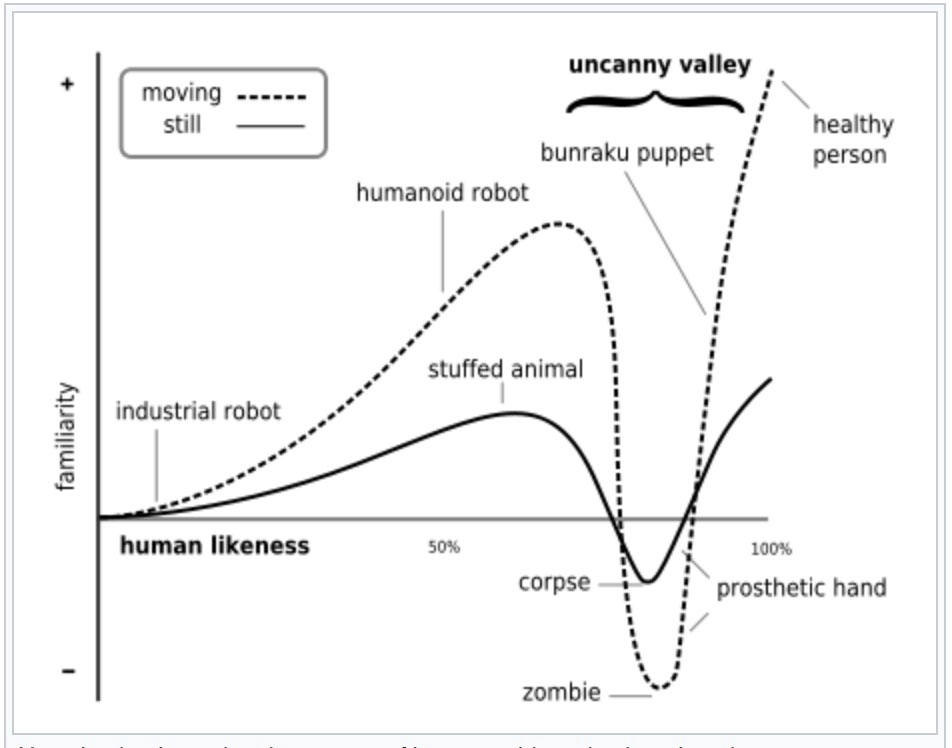

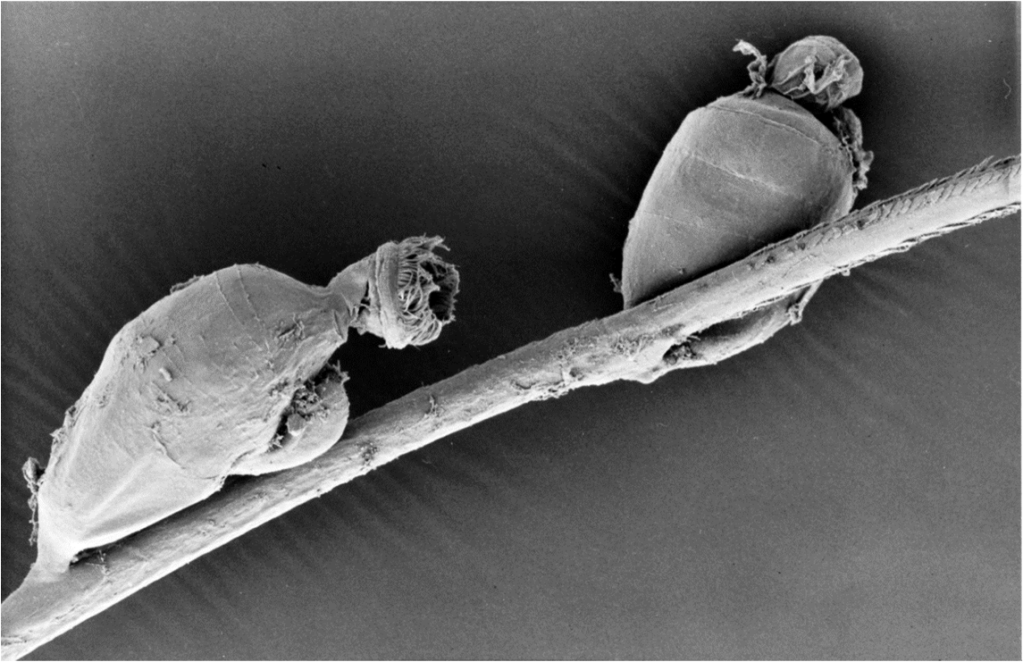
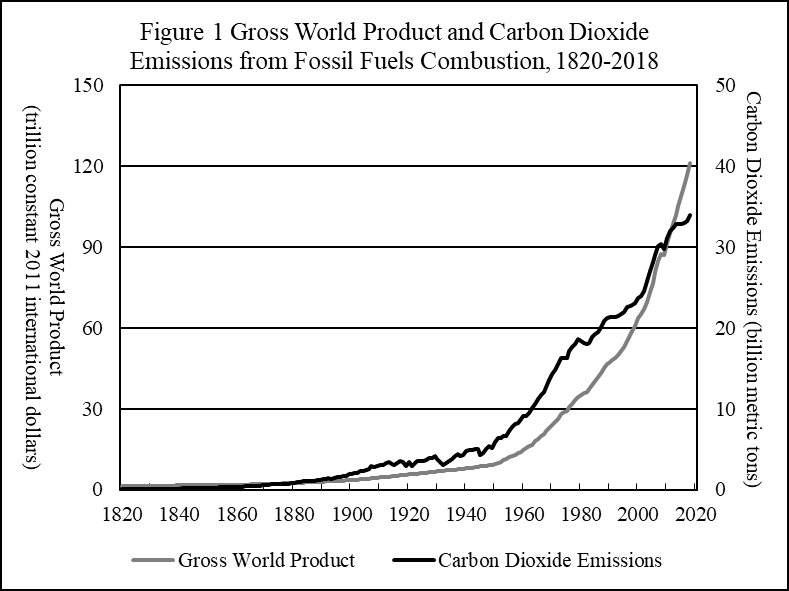
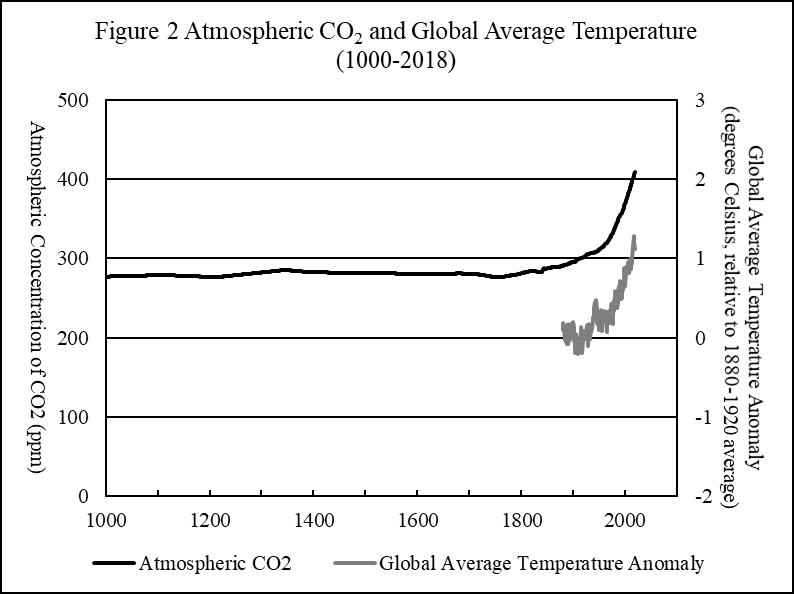
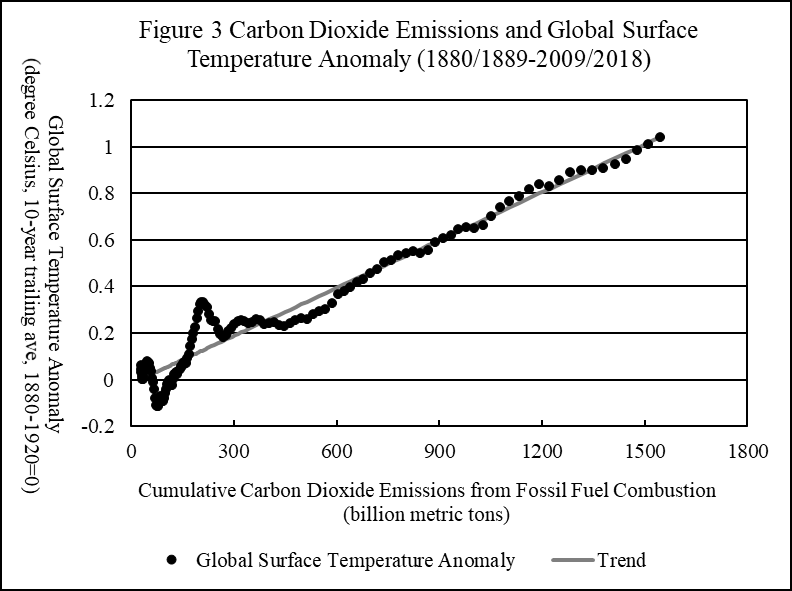
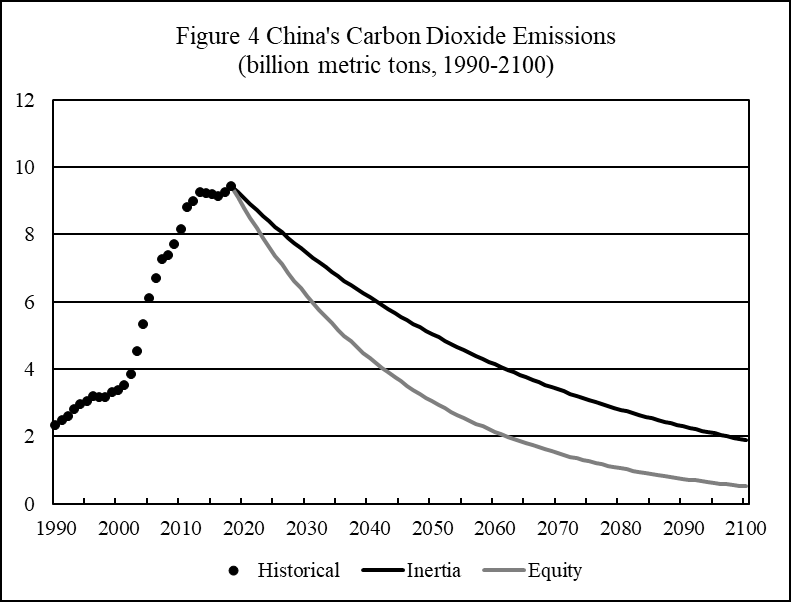
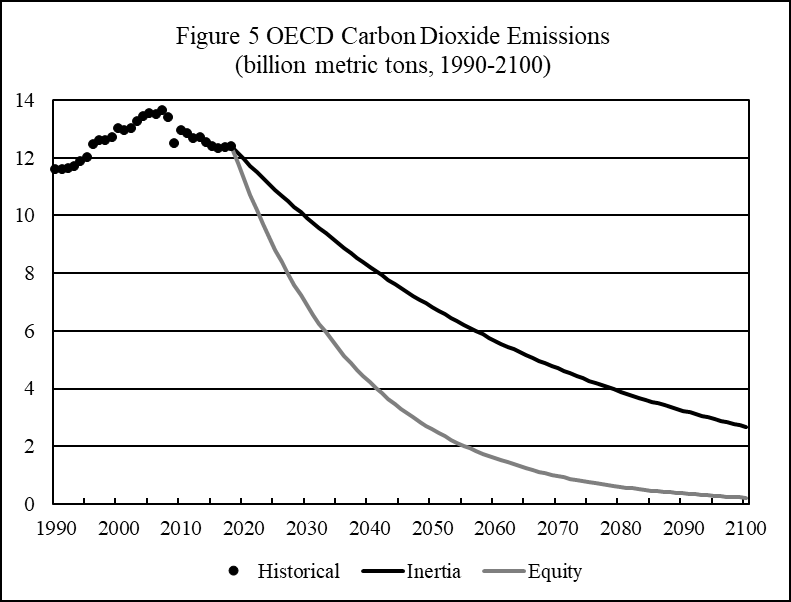
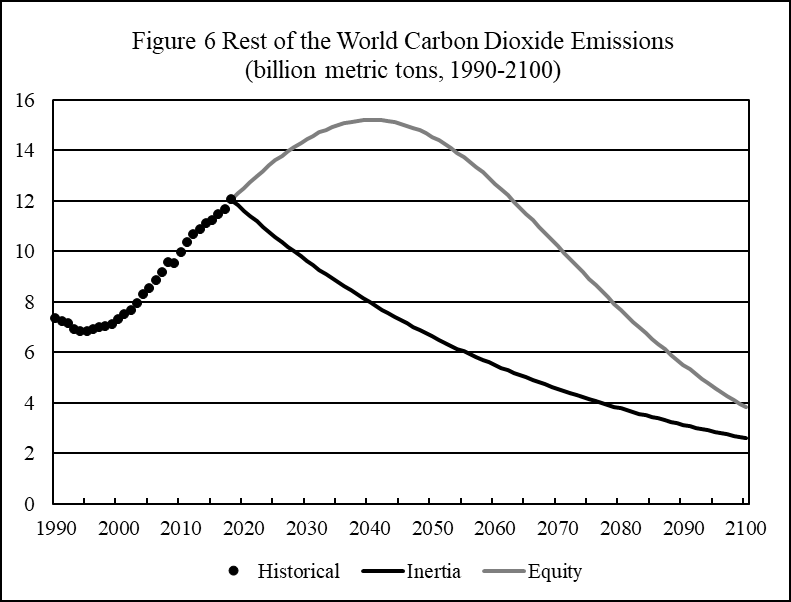
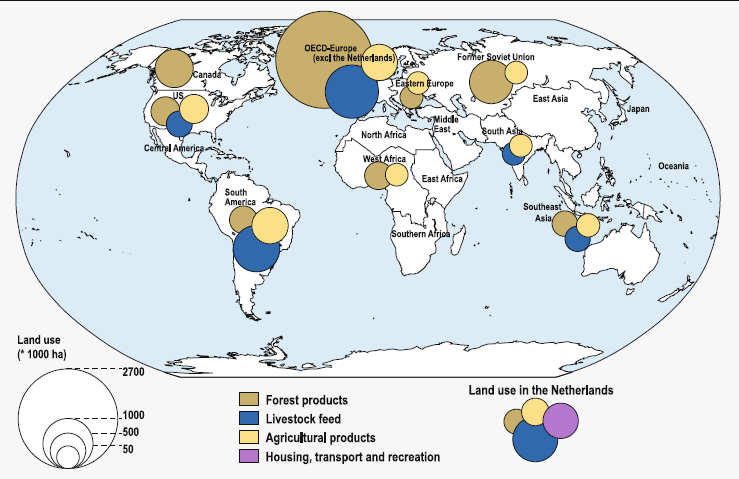
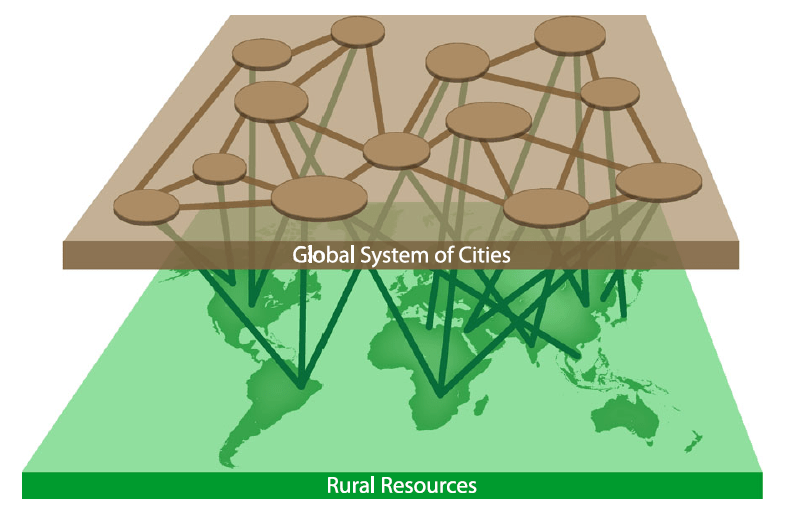
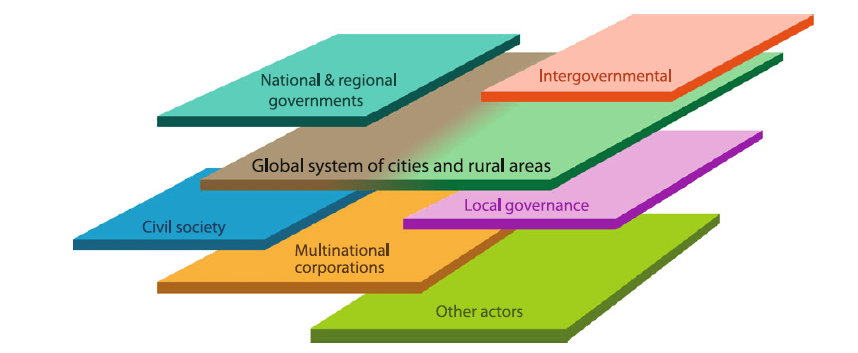
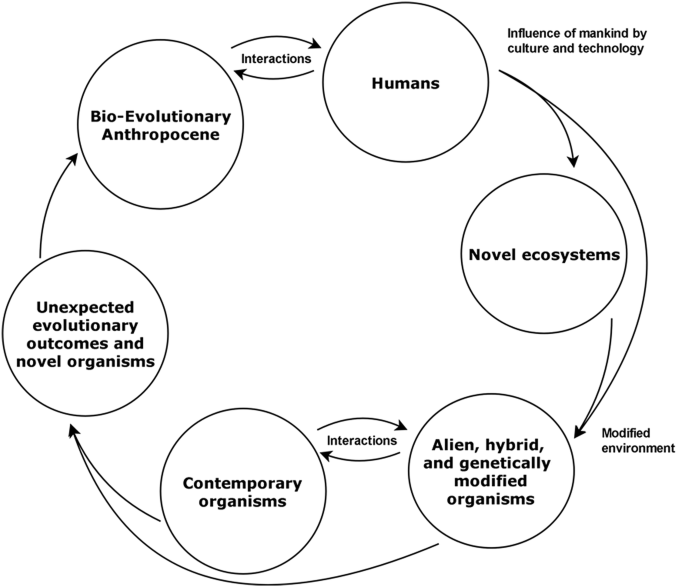
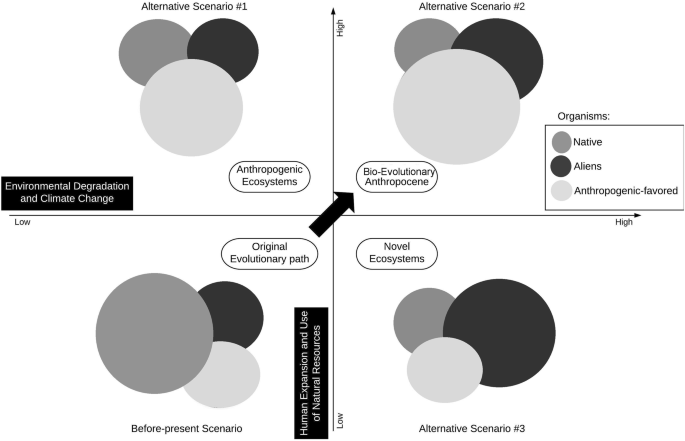


 Institute for Interdisciplinary Research into the Anthropocene